Opinion - (2025) Volume 13, Issue 2
Received: 01-Apr-2025, Manuscript No. jaat-26-183147;
Editor assigned: 03-Apr-2025, Pre QC No. P-183147;
Reviewed: 17-Apr-2025, QC No. Q-183147;
Revised: 22-Apr-2025, Manuscript No. R-183147;
Published:
29-Apr-2025
, DOI: 10.37421/2329-6542.2025.13.346
Citation: Ortega, Carlos M.. ”LISA: New Window On The Universe.” J Astrophys Aerospace Technol 13 (2025):346.
Copyright: © 2025 Ortega M. Carlos This is an open-access article distributed under the terms of the Creative Commons Attribution License, which permits unrestricted use, distribution and reproduction in any medium, provided the original author and source are credited.
The field of gravitational wave astronomy is undergoing a significant expansion, with space-based detectors playing a pivotal role in unlocking new observational windows into the universe. Instruments such as the Laser Interferometer Space Antenna (LISA) are poised to reveal cosmic phenomena that are inaccessible to ground-based observatories, offering unprecedented insights into events like the mergers of supermassive black holes and extreme mass ratio inspirals. The scientific promises of these future observatories are immense, driving considerable technological development and research [1].
The Laser Interferometer Space Antenna (LISA) mission is a prime example of this burgeoning field, with detailed scientific motivations and technical designs being explored. This proposed constellation of three spacecraft, along with its key instrument technologies, is designed to revolutionize our understanding of cosmology and astrophysics. The successful operation hinges on critical components such as drag-free control and advanced interferometry, enabling the detection of gravitational waves from a wide spectrum of sources, ranging from stellar-mass black hole mergers within our galaxy to more exotic phenomena like cosmic strings [2].
The scientific reach and expected sensitivity of the LISA mission are subjects of extensive investigation. Detailed simulations project LISA's ability to detect gravitational waves across a broad frequency band, opening up new avenues for astrophysical exploration. The mission is anticipated to observe a diverse array of astrophysical sources, playing a crucial role in testing fundamental physics, characterizing the populations of black holes, and probing the very early universe [3].
Developing space-based gravitational wave observatories like LISA involves addressing significant technological advancements and challenges. The project necessitates the maturation of critical components, including sophisticated laser interferometry, precise thermal control systems, and robust methods for precise orbit determination. These technologies are being refined to meet the stringent requirements for detecting faint gravitational wave signals emanating from distant cosmic events [4].
LISA promises to offer a new window on the universe, with its capacity to observe the gravitational wave background originating from the early universe and the mergers of supermassive black holes being a key highlight. The mission is expected to yield rich data products that will help address profound scientific questions, such as the nature of dark energy and the intricate evolution of galaxies. The potential for comprehensive understanding is substantial [5].
A comprehensive catalog of predictable gravitational wave sources for LISA is being developed, encompassing phenomena such as compact binary coalescences across various stellar populations and extreme mass-ratio inspirals (EMRIs). The anticipated sensitivity of LISA will facilitate precise measurements of source properties, enabling rigorous tests of general relativity and providing deeper insights into galaxy evolution [6].
The instrument requirements and performance goals for the LISA mission are meticulously detailed, focusing on the sophisticated laser metrology system, the spacecraft attitude control, and the indispensable drag-free technology. Emphasis is placed on the technological readiness of these components, outlining the path forward for their full development and seamless integration into the observatory [7].
The prospects of using gravitational waves detected by future space-based observatories to test fundamental physics are particularly exciting. LISA's observations of black hole mergers and other relativistic phenomena are expected to place strong constraints on theories beyond the Standard Model, search for deviations from the predictions of general relativity, and probe the fundamental nature of gravity itself [8].
Advanced data analysis techniques are crucial for extracting the faint gravitational wave signals expected from compact object mergers observable by LISA. Analyzing the expected data rate and characteristics of these signals is a key focus, enabling scientists to characterize the astrophysical populations responsible for these events and to fully utilize the mission's scientific potential [9].
The transformative impact of space-based gravitational wave detectors like LISA on the field of astronomy is widely anticipated. The potential for multi-messenger astronomy, by combining LISA's gravitational wave observations with electromagnetic and neutrino signals, promises a more complete and nuanced understanding of extreme cosmic events, heralding a new era of discovery [10].
Gravitational wave astronomy is experiencing a significant surge in progress, with a particular focus on the critical role of space-based detectors. These advanced instruments, exemplified by the Laser Interferometer Space Antenna (LISA), are set to unlock entirely new observational windows. This will enable scientists to probe cosmic phenomena that remain elusive to ground-based observatories, such as the complex dynamics of supermassive black hole mergers and extreme mass ratio inspirals. The development of these future observatories is propelled by both their immense scientific promise and the significant technological challenges they present [1].
The Laser Interferometer Space Antenna (LISA) is a mission designed to explore the scientific motivations and technical intricacies of a revolutionary space-based observatory. Its proposed constellation of three spacecraft, coupled with key instrument technologies like drag-free control and high-precision interferometry, has the potential to fundamentally alter our understanding of cosmology and astrophysics. LISA's capabilities extend to detecting gravitational waves from a broad range of sources, including stellar-mass black hole mergers within our galaxy and theoretical entities like cosmic strings [2].
Investigations into the scientific capabilities of the LISA mission reveal its expected sensitivity and broad scientific reach. Detailed simulations are projecting LISA's performance, illustrating its capacity to detect gravitational waves across an extensive frequency band. This broad coverage will allow for the observation of diverse astrophysical sources, significantly contributing to tests of fundamental physics, the characterization of black hole populations, and the exploration of the universe's early stages [3].
The technological landscape for space-based gravitational wave observatories is marked by significant advancements and persistent challenges. Critical components such as laser interferometry systems, sophisticated thermal control mechanisms, and precise orbit determination technologies are under intense development. The ongoing maturation of these technologies is essential to meet the exceptionally stringent requirements for detecting the exceedingly faint gravitational wave signals originating from distant cosmic events [4].
The LISA mission is poised to serve as a novel observational tool, offering a new perspective on the universe. A particularly exciting prospect is its ability to detect the gravitational wave background generated during the early universe and from the mergers of supermassive black holes. The anticipated data products from LISA are expected to address fundamental scientific questions concerning the nature of dark energy and the evolutionary processes of galaxies [5].
Research efforts are dedicated to cataloging the specific gravitational wave sources that LISA is expected to detect. This includes a comprehensive list of predictable sources, such as compact binary coalescences within various stellar populations and extreme mass-ratio inspirals (EMRIs). LISA's projected sensitivity will enable highly accurate measurements of the properties of these sources, thereby facilitating detailed tests of general relativity and providing new insights into galaxy evolution [6].
The intricate instrument requirements and ambitious performance goals for the LISA mission are being rigorously defined. This includes detailed specifications for the laser metrology system, the spacecraft attitude control systems, and the crucial drag-free technology. The focus remains on ensuring the technological readiness of these components and establishing a clear development and integration roadmap [7].
Future space-based observatories like LISA hold significant promise for testing fundamental physics through the detection of gravitational waves. The mission's ability to observe black hole mergers and other extreme astrophysical events will provide crucial data for constraining theories that extend beyond the Standard Model, searching for subtle deviations from general relativity, and probing the fundamental nature of gravity [8].
Sophisticated data analysis techniques are indispensable for extracting the expected gravitational wave signals from compact object mergers that LISA will observe. Analyzing the anticipated data rate and the specific characteristics of these signals is paramount. This process is crucial for characterizing the astrophysical populations responsible for these events and for maximizing the scientific return from the LISA mission [9].
The advent of space-based gravitational wave detectors like LISA represents a significant leap forward for observational astronomy. The potential for multi-messenger astronomy, integrating gravitational wave data with electromagnetic and neutrino observations, will offer a more holistic and comprehensive understanding of the universe's most extreme events, ushering in a new era of cosmic exploration [10].
This collection of research highlights the transformative potential of space-based gravitational wave astronomy, particularly focusing on the Laser Interferometer Space Antenna (LISA). LISA aims to detect gravitational waves from sources inaccessible to ground-based detectors, such as supermassive black hole mergers and extreme mass ratio inspirals. The mission's scientific motivations include revolutionizing cosmology and astrophysics, testing fundamental physics, characterizing black hole populations, and exploring the early universe. Key technological advancements in laser interferometry, drag-free control, and precise orbit determination are crucial for LISA's success. The mission is expected to provide a new window on the universe, enabling multi-messenger astronomy and yielding detailed insights into cosmic phenomena and fundamental physics. Comprehensive data analysis techniques and a catalog of expected gravitational wave sources are being developed to maximize LISA's scientific impact.
None
None
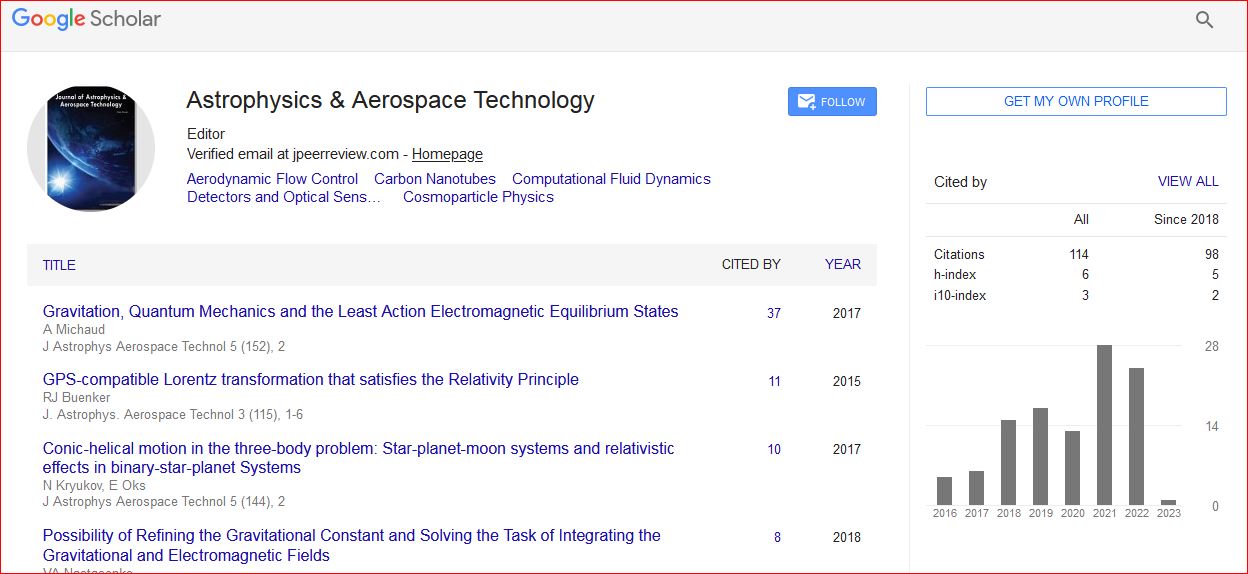
Astrophysics & Aerospace Technology received 114 citations as per Google Scholar report