Perspective - (2025) Volume 16, Issue 5
Received: 01-Oct-2025, Manuscript No. jmbd-26-179569;
Editor assigned: 03-Oct-2025, Pre QC No. P-179569;
Reviewed: 15-Oct-2025, QC No. Q-179569;
Revised: 23-Oct-2025, Manuscript No. R-179569;
Published:
30-Oct-2025
, DOI: 10.37421/2155-9929.2025.16.724
Citation: Volkov, Anya. ”Liquid Biopsies: Advancing Disease Detection And Monitoring.” J Mol Biomark Diagn 16 (2025):724.
Copyright: © 2025 Volkov A. This is an open-access article distributed under the terms of the Creative Commons Attribution License, which permits unrestricted use, distribution
and reproduction in any medium, provided the original author and source are credited.
The field of non-invasive disease detection is rapidly evolving, with circulating molecular biomarkers in bodily fluids emerging as a highly promising avenue for early diagnosis, prognosis, and personalized treatment selection across a spectrum of diseases. This burgeoning area of research holds the potential to revolutionize healthcare by offering less invasive alternatives to traditional diagnostic methods, thereby improving patient outcomes and reducing healthcare burdens. The Department of Human Genetics, in particular, is poised to benefit significantly from advancements in this domain, as understanding the molecular underpinnings of disease at a genetic level can inform the interpretation and application of these biomarkers. The development of robust and reliable biomarkers is a critical step towards realizing the full potential of these non-invasive tools. Extensive research is underway to identify and validate these molecules, which could range from nucleic acids and proteins to metabolites and extracellular vesicles. The inherent accessibility of bodily fluids like blood, urine, and saliva makes them ideal matrices for the detection of these disease-associated indicators. Early detection through such non-invasive means can lead to timely interventions, potentially preventing disease progression and improving survival rates. Furthermore, the ability to monitor disease status and treatment response non-invasively can enable more dynamic and adaptive therapeutic strategies. The ultimate goal is to translate these laboratory findings into clinically actionable tools that can be widely implemented in routine patient care. This introduction will briefly touch upon the diverse types of circulating biomarkers and their specific applications, setting the stage for a deeper exploration of the current status and future prospects in this dynamic research landscape [1].
The advent of liquid biopsies, particularly those leveraging circulating tumor DNA (ctDNA), represents a monumental leap forward in the field of cancer diagnostics. These techniques offer unprecedented opportunities for early cancer detection, allowing for the identification of malignancies at their nascent stages, when therapeutic interventions are most effective. Beyond initial diagnosis, liquid biopsies are proving invaluable in monitoring treatment response, providing real-time insights into how a tumor is reacting to therapy. Furthermore, their ability to detect even the smallest traces of cancer, known as minimal residual disease, is crucial for preventing recurrence and guiding adjuvant treatment decisions. The technical hurdles associated with isolating and analyzing these trace amounts of ctDNA are substantial, requiring highly sensitive and specific detection methodologies. However, the clinical utility of these advancements in oncology is undeniable, promising to transform the way cancer is managed from detection through survivorship [2].
Exosomes, recognized as small extracellular vesicles secreted by virtually all cell types, are emerging as exceptionally attractive candidates for biomarker discovery due to their unique composition and biological functions. These vesicles encapsulate a diverse cargo of biomolecules, including proteins, lipids, and various nucleic acids like microRNAs and mRNAs. This rich payload reflects the physiological state of their parent cells, making exosomal contents potent indicators of disease. Research specifically highlighting the potential of exosomal microRNAs as non-invasive diagnostic markers for neurodegenerative diseases offers compelling insights into the early pathogenic processes underlying conditions such as Alzheimer's and Parkinson's. By analyzing these microRNAs, clinicians may be able to identify these debilitating diseases at their earliest stages, paving the way for proactive management and therapeutic interventions before significant neurological damage occurs [3].
The complexity of many diseases, such as cancer, autoimmune disorders, and neurodegenerative conditions, necessitates a comprehensive understanding of their underlying molecular mechanisms. To achieve this, the integration of multi-omics data, encompassing genomics, transcriptomics, proteomics, and metabolomics, is becoming increasingly crucial for the robust identification of circulating biomarkers. By combining insights from different molecular profiling techniques, researchers can generate a more holistic view of the disease state, leading to the discovery of more accurate and reliable diagnostic markers. This approach allows for the detection of subtle molecular signatures that might be missed when considering only a single data type. The challenges and opportunities inherent in combining these diverse datasets are significant, requiring sophisticated analytical tools and bioinformatics pipelines to extract meaningful information. Nevertheless, the potential for achieving higher diagnostic accuracy for complex diseases through multi-omics integration is immense [4].
Plasma protein biomarkers represent a cornerstone in the development of non-invasive diagnostic tools, offering significant potential for early disease detection. The landscape of protein biomarker discovery is continually expanding, driven by rapid advances in high-throughput proteomic technologies, particularly mass spectrometry-based methods, and the refinement of highly sensitive immunoassay techniques. These innovations are enabling the identification of panels of proteins that can serve as early indicators of various pathologies. For instance, in the realm of cardiovascular disease, the identification of specific protein signatures in plasma holds promise for detecting early-stage conditions, allowing for timely interventions aimed at preventing serious cardiovascular events. The translation of these discoveries from the laboratory to clinical application is a key focus of ongoing research [5].
Circulating cell-free DNA (cfDNA), fragments of DNA released from cells into the bloodstream, is emerging as a significant biomarker in the diagnosis and monitoring of autoimmune and inflammatory diseases. The analysis of cfDNA fragmentation patterns and specific methylation profiles offers a novel paradigm for assessing immunological disease activity. These molecular signatures can provide valuable insights into the underlying pathogenic processes, potentially enabling earlier and more accurate diagnosis of conditions such as rheumatoid arthritis, lupus, and inflammatory bowel disease. The ability to detect and quantify these changes in cfDNA offers a less invasive approach to monitoring disease progression and treatment efficacy compared to traditional methods that may involve tissue biopsies or extensive immune profiling [6].
The journey of a promising circulating biomarker from initial discovery in the laboratory to its widespread adoption in clinical practice is often fraught with challenges. Translating these benchtop findings to the bedside requires meticulous attention to key issues in biomarker validation. This includes robust study design, ensuring adequate sample sizes and appropriate control groups, as well as the standardization of assay methodologies to guarantee reproducible and reliable results across different laboratories and platforms. Furthermore, navigating the complex regulatory pathways for diagnostic tools is essential to ensure their safety and efficacy. Addressing these translational challenges is paramount for the successful development and implementation of circulating biomarkers as dependable diagnostic tools that can truly impact patient care [7].
Metabolomics, the study of small molecules involved in cellular processes, provides a dynamic snapshot of cellular function and is increasingly being explored for its potential in identifying metabolic signatures of disease. Circulating metabolites found in bodily fluids such as urine and blood can serve as early indicators of metabolic dysfunction. This approach is particularly relevant for the early detection of complex metabolic disorders like metabolic syndrome and type 2 diabetes, conditions often characterized by subtle metabolic alterations long before overt clinical symptoms manifest. By analyzing the metabolic profile, researchers aim to identify specific patterns that can predict the onset of these diseases, enabling earlier interventions and potentially preventing or delaying their progression [8].
The accurate detection of circulating biomarkers, especially those present at low concentrations, hinges on the development and application of highly sensitive and specific analytical assays. Significant technological advancements in platforms such as digital PCR (dPCR), next-generation sequencing (NGS), and sophisticated immunoassay technologies are fundamentally enabling more precise molecular diagnostics. These cutting-edge techniques offer enhanced sensitivity and specificity, allowing for the detection of even minute quantities of target molecules in complex biological matrices. Such advancements are critical for unlocking the full diagnostic potential of circulating biomarkers, facilitating earlier disease detection and more refined monitoring of therapeutic responses across a wide range of clinical applications [9].
Germline genetic variations can profoundly influence the presence, behavior, and diagnostic utility of circulating biomarkers. Understanding these genetic predispositions is crucial for interpreting biomarker data accurately and for tailoring personalized diagnostic and therapeutic strategies. This concept is particularly relevant in the context of human genetics research and the broader field of personalized medicine. Pharmacogenomics, which examines how an individual's genes affect their response to drugs, and the identification of germline genetic predispositions can help predict an individual's risk for certain diseases and their likely response to specific treatments. By integrating genetic information with biomarker profiles, clinicians can move towards more precise and individualized healthcare approaches, optimizing both diagnosis and treatment [10].
The identification and validation of circulating molecular biomarkers in bodily fluids represent a transformative frontier in non-invasive disease detection, promising to redefine early diagnosis, prognostication, and therapeutic selection across diverse pathologies. This area of research is of particular interest to departments focused on Human Genetics, where an understanding of molecular underpinnings can enhance the interpretation and application of these biomarkers. The development of reliable biomarkers is paramount for realizing the potential of non-invasive diagnostics, offering alternatives to more invasive procedures and potentially improving patient outcomes. These biomarkers can encompass a wide array of biological molecules, including nucleic acids, proteins, and metabolites, all readily accessible through bodily fluids like blood and urine. Early detection facilitated by these markers can lead to prompt interventions, mitigating disease progression and enhancing survival rates. Furthermore, the capacity for non-invasive monitoring of disease status and treatment efficacy allows for more adaptive and personalized therapeutic regimens. The ultimate aim is to translate these laboratory discoveries into clinically applicable tools for routine healthcare. This description will elaborate on the various categories of circulating biomarkers and their specific roles in disease management [1].
The emergence of liquid biopsies, particularly those analyzing circulating tumor DNA (ctDNA), signifies a major advancement in cancer diagnostics. These technologies offer the capability to detect cancers at their earliest stages, a critical window for effective treatment. Moreover, liquid biopsies are instrumental in monitoring therapeutic responses in real-time and in identifying minimal residual disease, which is key to preventing cancer recurrence. The technical demands of isolating and analyzing ctDNA are considerable, necessitating highly sensitive detection methods. Despite these challenges, the clinical impact of liquid biopsies in oncology is substantial, fundamentally altering the approach to cancer care from detection through long-term management [2].
Exosomes, minuscule extracellular vesicles secreted by cells, are increasingly recognized for their potential as biomarker sources due to their rich and diverse molecular cargo. These vesicles contain a complex mixture of proteins, lipids, and nucleic acids, including microRNAs, which reflect the state of their originating cells. The investigation into exosomal microRNAs as non-invasive biomarkers for neurodegenerative diseases, such as Alzheimer's and Parkinson's, provides compelling evidence of their utility in early pathogenesis detection. Analyzing these exosomal microRNAs could enable the identification of these conditions at their nascent stages, allowing for preemptive therapeutic strategies before irreversible damage occurs [3].
Addressing the complexity of diseases like cancer and autoimmune disorders requires an integrated approach to molecular profiling. The combination of multi-omics data, including genomics, transcriptomics, and proteomics, is essential for the reliable discovery of circulating biomarkers. This integrative strategy allows for a more comprehensive understanding of disease mechanisms, leading to the identification of more accurate and robust diagnostic markers. While the analysis of diverse datasets presents significant computational and methodological challenges, the potential for enhancing diagnostic accuracy for multifaceted diseases is substantial. The pursuit of robust biomarkers through multi-omics is a critical step towards precision medicine [4].
Plasma protein biomarkers are a vital component of non-invasive diagnostics, offering significant promise for early disease detection. Advances in mass spectrometry-based proteomics and sensitive immunoassay technologies are continuously expanding the repertoire of discoverable protein biomarkers. These technological strides are crucial for identifying protein panels that can indicate early-stage diseases, such as cardiovascular conditions. The early identification of such biomarkers can facilitate timely interventions, thereby reducing the risk of severe health complications and improving patient prognosis. The ongoing research focuses on bridging the gap between laboratory discovery and clinical application [5].
Circulating cell-free DNA (cfDNA) is gaining prominence as a biomarker for autoimmune and inflammatory diseases, offering a less invasive method for diagnosis and monitoring. The analysis of cfDNA fragmentation patterns and methylation status can provide critical insights into the underlying pathological processes of these conditions. This approach offers a new avenue for assessing disease activity and progression in autoimmune disorders, potentially leading to earlier and more accurate diagnoses. The ability to detect these molecular alterations non-invasively represents a significant shift in the management of immunological diseases [6].
The transition of circulating biomarkers from laboratory research to clinical implementation faces considerable hurdles. Key issues in biomarker validation, including the design of rigorous clinical studies, the standardization of assay protocols, and adherence to regulatory requirements, must be addressed to ensure the reliability and reproducibility of these diagnostic tools. Overcoming these translational challenges is essential for the successful integration of circulating biomarkers into routine medical practice, ultimately benefiting patient care [7].
Metabolomics offers a dynamic view of cellular activity, and its application in identifying disease-specific metabolic signatures is rapidly growing. Circulating metabolites in biofluids like urine and blood can serve as early indicators of metabolic disorders. This is particularly relevant for the early detection of conditions such as metabolic syndrome and type 2 diabetes, where metabolic alterations may precede overt clinical symptoms. Profiling these metabolites can aid in identifying individuals at risk, enabling timely lifestyle modifications and interventions to prevent or delay disease onset [8].
The development of highly sensitive and specific assays is fundamental to the detection of low-abundance circulating biomarkers. Technological breakthroughs in areas such as digital PCR (dPCR), next-generation sequencing (NGS), and advanced immunoassay platforms are enhancing the precision of molecular diagnostics. These advancements are crucial for maximizing the diagnostic utility of circulating biomarkers, enabling earlier detection and more accurate monitoring of disease states across a variety of clinical applications [9].
Germline genetic variations can significantly influence the utility and interpretation of circulating biomarkers. Understanding these genetic factors is essential for personalized medicine, enabling tailored diagnostic and therapeutic strategies. Pharmacogenomics and the study of germline predispositions play a critical role in predicting individual responses to treatments and in assessing disease risk. By integrating genetic information with biomarker data, clinicians can provide more individualized and effective healthcare, optimizing both diagnosis and treatment outcomes [10].
Circulating molecular biomarkers in bodily fluids offer a promising avenue for non-invasive disease detection and monitoring. Research is progressing in identifying and validating these biomarkers for early diagnosis, prognosis, and treatment selection across various diseases. Liquid biopsies, using circulating tumor DNA (ctDNA), are advancing cancer diagnostics. Exosomes and their cargo, like microRNAs, show potential for diagnosing neurodegenerative diseases. Multi-omics data integration is crucial for discovering robust biomarkers for complex diseases. Plasma protein biomarkers are being explored for early detection of conditions such as cardiovascular disease. Cell-free DNA (cfDNA) is emerging as a biomarker for autoimmune and inflammatory diseases. Translational challenges in biomarker development, including validation and standardization, are being addressed. Metabolomics offers insights into early metabolic disorders. Technological advancements in assay development are improving the sensitivity and specificity of biomarker detection. Germline genetics plays a role in interpreting biomarker utility for personalized medicine.
None
None
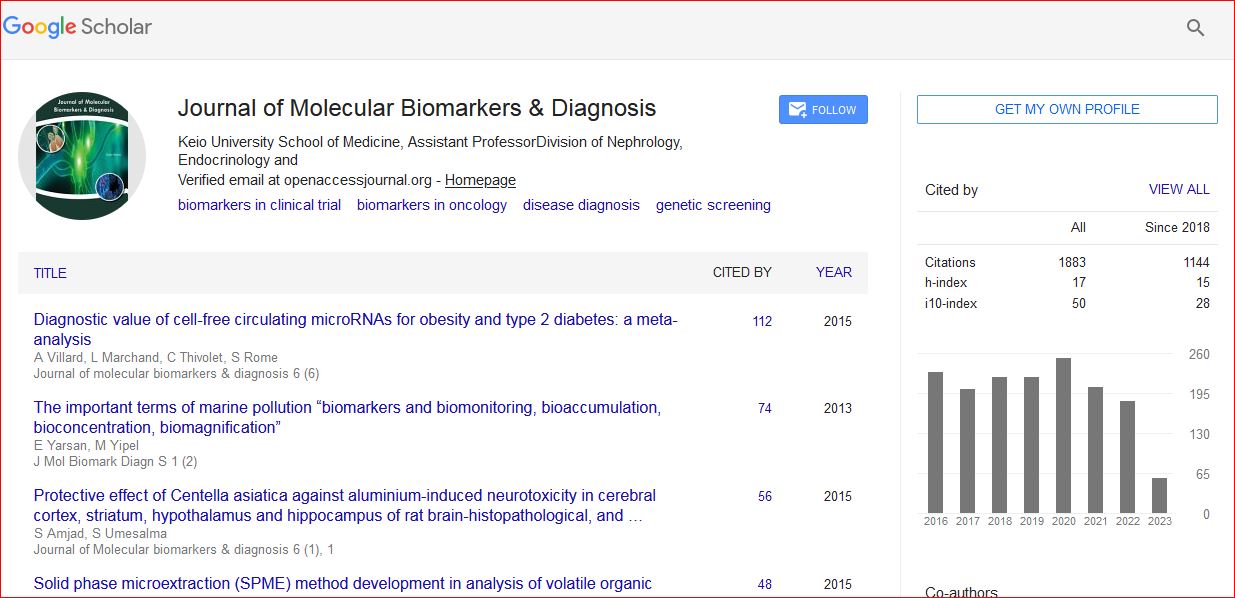
Journal of Molecular Biomarkers & Diagnosis received 2054 citations as per Google Scholar report