Brief Report - (2025) Volume 14, Issue 3
Received: 02-May-2025, Manuscript No. aim-25-177348;
Editor assigned: 05-May-2025, Pre QC No. P-177348;
Reviewed: 19-May-2025, QC No. Q-177348;
Revised: 23-May-2025, Manuscript No. R-177348;
Published:
30-May-2025
, DOI: 10.37421/2427-5162.2025.14.569
Citation: Joshi, Priyanka. ”Integrative Approaches for Chronic Conditions Management.” Alt Integr Med 14 (2025):569.
Copyright: © 2025 Joshi P. This is an open-access article distributed under the terms of the Creative Commons Attribution License, which permits unrestricted use, distribution and reproduction in any medium, provided the original author and source are credited.
Contemporary healthcare is increasingly acknowledging the efficacy of integrative approaches in managing chronic pain, shifting focus towards patient-centered models of care. These comprehensive strategies incorporate a diverse array of non-pharmacological methods, such as yoga, mindfulness practices, and acupuncture. The fundamental principle behind this paradigm is the crucial integration of both conventional medical treatments and complementary therapies, designed to optimize patient outcomes through evidence-based practices [1].
Mindfulness-based interventions represent a pivotal component in the management of persistent pain conditions. These approaches do not aim to eliminate the sensation of pain entirely, but rather to fundamentally alter an individual's relationship with their pain experience. This transformation is achieved through enhanced emotional regulation and cognitive reappraisal techniques. Practices like Mindfulness-Based Stress Reduction (MBSR) have been shown to significantly modify pain perception, thereby improving the overall quality of life for those afflicted by chronic discomfort [2].
For individuals suffering from chronic low back pain, yoga has emerged as a particularly effective therapeutic modality. Systematic reviews and meta-analyses consistently confirm its capacity to reduce pain intensity and enhance functional ability. This positions yoga as a highly viable non-pharmacological adjunct to standard medical care, providing a gentle yet profoundly impactful method for managing enduring back issues and fostering improvements in general physical well-being [3].
Acupuncture, a traditional medical practice, has demonstrated considerable promise in alleviating chronic musculoskeletal pain. Rigorous systematic reviews and meta-analyses of randomized controlled trials indicate that acupuncture provides significant pain relief and promotes improved physical function. Consequently, it stands as a valuable complementary approach within an integrative pain management framework, offering patients a means to potentially lessen their reliance on conventional pharmaceutical interventions and enhance their daily activities [4].
Lifestyle medicine is recognized as an indispensable framework for the comprehensive management of chronic diseases. This field emphasizes that fundamental aspects of daily living, including dietary choices, regular physical exercise, effective stress management techniques, and adequate sleep, are not merely supplementary treatments but constitute foundational interventions. These integrated approaches hold substantial potential not only to prevent but also to reverse numerous chronic conditions, serving as a primary and proactive strategy for long-term health maintenance [5].
The influence of specific dietary patterns on the progression and severity of chronic inflammatory diseases is a subject of growing scientific interest. Systematic reviews and meta-analyses have illustrated how carefully constructed, personalized nutritional strategies can effectively modulate inflammatory responses within the body. This body of evidence underscores the profound power of diet as a potent non-pharmacological tool, essential for integration into a holistic and comprehensive management plan for inflammatory conditions [6].
Health and wellness coaching represents an impactful intervention within the realm of chronic disease management. Systematic reviews highlight its capacity to empower patients, guiding them towards achieving their health objectives through tailored support and the implementation of effective behavior change strategies. This patient-centered approach fosters increased patient engagement and strengthens self-efficacy, thereby establishing coaching as a crucial and valuable component of integrative healthcare models [7].
Mind-body interventions have been rigorously evaluated for their effectiveness in mitigating the debilitating symptoms of chronic fatigue syndrome. Systematic reviews and meta-analyses consistently demonstrate that these therapies can significantly alleviate symptom burden and improve the overall quality of life for affected individuals. These compelling findings provide robust support for the integration of such interventions into comprehensive care plans, offering a complementary pathway for managing this complex and challenging condition [8].
The therapeutic potential of botanical medicines in addressing chronic inflammatory conditions is an area of extensive exploration. Research indicates that plant-derived compounds possess intrinsic anti-inflammatory properties, often presenting with a more favorable side effect profile compared to some conventional pharmacological agents. This positions botanical medicine as a potentially significant and valuable component within an integrative strategy aimed at promoting long-term health and mitigating chronic inflammation [9].
Integrative medicine models, which seamlessly blend conventional and complementary therapeutic approaches, are increasingly vital for optimizing the prevention and management of cardiovascular disease. This holistic framework encompasses a spectrum of interventions, including strategic dietary modifications, effective stress reduction techniques, and the judicious use of natural products. This multi-faceted, patient-centric approach is designed to provide comprehensive support for enduring cardiovascular health outcomes [10].
This particular overview comprehensively examines the application of integrative approaches within the context of chronic pain management, advocating for a fundamental paradigm shift towards patient-centered care models. It thoroughly investigates various non-pharmacological methodologies, such as yoga, mindfulness-based practices, and acupuncture. The core assertion is that the judicious combination of conventional medical treatments with complementary therapies is paramount for achieving genuinely effective pain management, emphasizing the strategic integration of evidence-based interventions to enhance patient well-being [1]. A detailed narrative review elucidates the profound utility of mindfulness-based interventions in assisting individuals to navigate the complexities of chronic pain. The emphasis is not on the eradication of pain sensation itself, but rather on cultivating a transformative shift in one's relationship with discomfort through advanced techniques of emotional regulation and cognitive reappraisal. Crucially, established practices such as Mindfulness-Based Stress Reduction (MBSR) have been empirically shown to significantly alter the perception of pain and substantially elevate the quality of life for those enduring persistent discomfort [2]. Extensive systematic review and meta-analysis provide compelling evidence that yoga serves as an efficacious intervention for reducing chronic low back pain and notably improving functional capacity. This robust conclusion firmly establishes yoga as a viable and beneficial non-pharmacological adjunct to conventional medical care. It offers a gentle yet profoundly effective modality for addressing persistent spinal discomfort and concurrently fostering overall improvements in physical well-being and mobility [3]. A comprehensive systematic review and meta-analysis has conclusively demonstrated that acupuncture confers significant pain relief and enhanced function for patients experiencing chronic musculoskeletal pain. This evidence positions acupuncture as a valuable and integral component within an integrative pain care framework. It provides a distinct complementary approach that can empower patients to diminish their reliance on traditional pharmacological interventions, thereby substantially improving their daily lives and overall functional status [4]. This insightful overview rigorously highlights the critical and foundational role of lifestyle medicine in the sustained management of chronic diseases. It explicitly emphasizes that core elements such as meticulously chosen diet, regular physical activity, adept stress management strategies, and restorative sleep are not merely supplementary treatments but constitute essential, primary interventions. The overarching implication is that these integrated approaches possess immense potential to actively prevent and, in many instances, reverse a multitude of chronic health conditions, thus serving as a pivotal primary strategy for optimizing health [5]. Through a systematic review and meta-analysis, the intricate mechanisms by which specific dietary patterns exert influence on chronic inflammatory diseases have been thoroughly explored. The findings reveal that precisely tailored, personalized nutritional strategies are demonstrably effective in modulating inflammatory cascades and consequently improving patient outcomes. This research unequivocally underscores the substantial impact and immense power of diet as a potent non-pharmacological therapeutic tool, rendering it an indispensable element within a comprehensive integrative management plan [6]. This systematic review thoroughly investigates the therapeutic impact of health and wellness coaching within the dynamic landscape of chronic disease management. It conclusively establishes that coaching plays a pivotal role in empowering patients to proactively achieve their health-related objectives through highly personalized support and the implementation of evidence-based behavior change strategies. A critical insight derived is that this coaching approach fosters significantly greater patient engagement and enhances self-efficacy, positioning it as an invaluable asset within contemporary integrative care models [7]. A rigorous systematic review and meta-analysis meticulously evaluates the efficacy of mind-body interventions in ameliorating the debilitating symptoms and enhancing the quality of life for individuals grappling with chronic fatigue syndrome. The compiled findings unequivocally provide strong empirical support for the principled integration of these therapeutic modalities into comprehensive patient care plans. This offers a distinct and highly beneficial complementary pathway for effectively managing the multifaceted challenges presented by this complex and often misunderstood condition [8]. This scholarly article delves into the substantial therapeutic potential inherent in botanical medicines for the management of chronic inflammatory conditions. It meticulously elucidates how plant-derived compounds can effectively exert potent anti-inflammatory effects, often demonstrating a more favorable safety profile with fewer adverse reactions compared to conventional pharmaceutical agents. The central tenet conveyed is that botanical medicine can indeed constitute a significant and robust component of a sophisticated integrative strategy aimed at fostering long-term health and mitigating chronic inflammation [9]. This comprehensive narrative review meticulously examines how various integrative medicine approaches, which strategically combine both conventional and complementary therapies, contribute to the optimized prevention and effective management of cardiovascular disease. The scope encompasses a broad array of interventions, including crucial dietary modifications, advanced stress reduction techniques, and the judicious application of natural products, thereby underscoring a truly holistic and patient-centered model of care. The overarching conclusion emphasizes that a truly multi-faceted approach is indispensable for sustaining long-term cardiovascular health [10].
The provided research highlights the increasing importance of integrative approaches in managing chronic conditions, particularly chronic pain and inflammatory diseases. These approaches emphasize patient-centered care, combining conventional medicine with complementary therapies. Key non-pharmacological interventions discussed include yoga for chronic low back pain, mindfulness-based interventions for altering pain perception, and acupuncture for musculoskeletal pain relief. Lifestyle medicine, encompassing diet, exercise, stress management, and sleep, is presented as a foundational strategy for preventing and reversing chronic diseases. Personalized nutritional strategies, botanical medicines, and mind-body interventions are shown to effectively modulate inflammation, alleviate symptoms of chronic fatigue, and contribute to overall well-being. Furthermore, health and wellness coaching empowers patients in chronic disease management by fostering engagement and self-efficacy. Collectively, these studies advocate for a holistic, multi-faceted approach to healthcare, demonstrating the potential for improved patient outcomes and reduced reliance on conventional pharmaceuticals across various chronic health challenges.
None
None
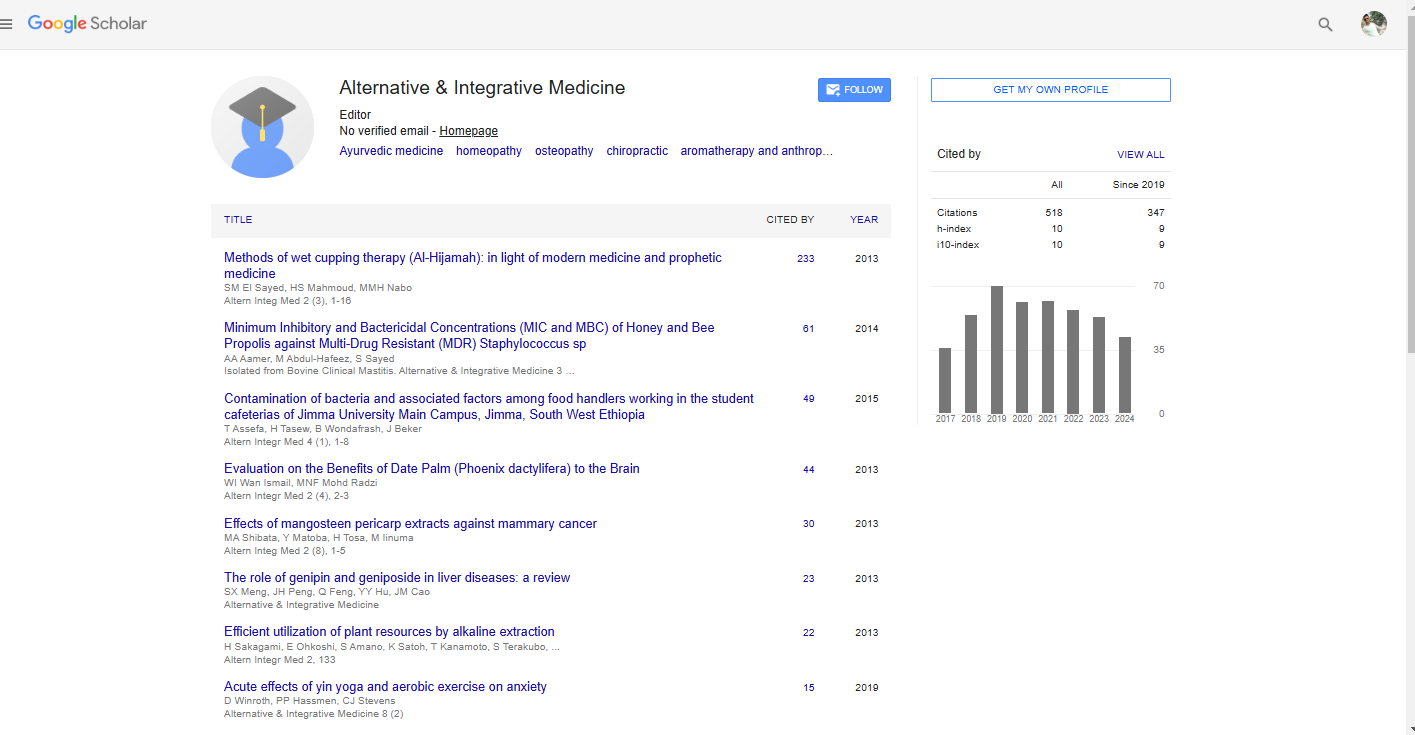
Alternative & Integrative Medicine received 476 citations as per Google Scholar report