Commentary - (2025) Volume 11, Issue 4
Received: 01-Aug-2025, Manuscript No. icoa-25-173593;
Editor assigned: 04-Aug-2025, Pre QC No. P-173593;
Reviewed: 18-Aug-2025, QC No. Q-173593;
Revised: 22-Aug-2025, Manuscript No. R-173593;
Published:
29-Aug-2025
, DOI: 10.37421/2469-9756.2025.11.308
Citation: El-Sayed, Ahmed R.. ”Inflammation: Pathways, Resolution, Chronic Disease, Therapy.” Immunochem Immunopathol 11 (2025):308.
Copyright: © 2025 El-Sayed R. Ahmed This is an open-access article distributed under the terms of the Creative Commons Attribution License, which permits unrestricted use,
distribution and reproduction in any medium, provided the original author and source are credited.
Inflammation, a fundamental biological response, involves a complex interplay of cellular and molecular mechanisms essential for host defense and tissue repair. Macrophages, for instance, play a multifaceted role in this process, initially contributing to its onset and progression through phagocytosis and the release of various cytokines. These versatile immune cells are also crucial for the resolution of inflammation and subsequent tissue repair. Their remarkable plasticity allows them to shift between pro-inflammatory (M1) and anti-inflammatory (M2) phenotypes based on signals from their microenvironment, making them critical regulators of the entire inflammatory response and promising targets for therapeutic interventions [1].
The resolution of inflammation, far from being a passive decay, represents an active and highly programmed sequence of events. This intricate process is orchestrated by specialized pro-resolving mediators, often referred to as SPMs, which include molecules like lipoxins, resolvins, protectins, and maresins. These potent mediators are responsible for halting leukocyte infiltration, facilitating the clearance of cellular debris, and initiating tissue repair. This phase is vital for restoring the body's homeostasis and preventing the transition to chronic inflammatory states [2].
Conversely, chronic inflammation is marked by the persistent activation of immune cells and the prolonged production of inflammatory mediators. This sustained inflammatory state is a foundational element in the development of numerous non-communicable diseases. These include severe conditions such as cardiovascular disease, neurodegenerative disorders, metabolic syndrome, and various forms of cancer. Grasping the underlying mechanisms that drive chronic inflammation is paramount for developing effective strategies to prevent and treat these widespread health challenges [3].
Key components of the innate immune system, inflammasomes, are multi-protein complexes designed to detect a range of pathogen-associated molecular patterns (PAMPs) and danger-associated molecular patterns (DAMPs). Once activated, inflammasomes trigger the maturation and release of potent pro-inflammatory cytokines, specifically interleukin-1 beta (IL-1β) and interleukin-18 (IL-18). They also induce pyroptosis, a distinct and highly inflammatory form of programmed cell death. This contributes significantly to host defense but also plays a role in the pathology of inflammatory diseases [4].
Neutrophils are among the earliest immune cells to migrate to sites of infection or injury, effectively initiating the acute inflammatory response. Their actions include phagocytosis, degranulation, and the formation of neutrophil extracellular traps (NETs). While indispensable for protecting the host, their overactivity or prolonged presence can lead to considerable tissue damage, thereby contributing to the pathology observed in various inflammatory and autoimmune conditions [5].
Cytokines, small protein messengers, are central to modulating the intensity and duration of the inflammatory response. Pro-inflammatory cytokines, such as Tumor Necrosis Factor-alpha (TNF-α), Interleukin-1 (IL-1), and Interleukin-6 (IL-6), are responsible for amplifying immune reactions. In contrast, anti-inflammatory cytokines, including Interleukin-10 (IL-10) and Transforming Growth Factor-beta (TGF-β), work to dampen inflammation and promote healing. The delicate balance and intricate interplay of these cytokines ultimately dictate the outcome of inflammatory processes, and their dysregulation is a common feature in many inflammatory diseases [6].
Inflammation can also occur in the absence of infectious pathogens, a phenomenon known as sterile inflammation. This type of inflammation is triggered by endogenous danger-associated molecular patterns (DAMPs) released from damaged cells or tissues, often resulting from trauma, ischemia, or metabolic stress. While crucial for tissue repair, if dysregulated, sterile inflammation can contribute significantly to autoimmune diseases and chronic non-infectious conditions, underscoring the complex role of DAMPs in initiating immune responses without microbial involvement [7].
Addressing the inflammatory response is a critical aspect of managing a wide array of diseases, from autoimmune disorders to acute injuries. Current therapeutic strategies encompass traditional non-steroidal anti-inflammatory drugs (NSAIDs) and corticosteroids. More recently, emerging biotherapeutics offer targeted approaches by focusing on specific cytokines, like TNF-α and IL-6, or particular signaling pathways. Some therapies even aim to actively promote the resolution of inflammation, providing more precise and personalized treatment options [8].
Necroptosis represents a programmed form of necrotic cell death that is highly immunogenic, differing from apoptosis. This process releases DAMPs into the extracellular environment, actively fueling and intensifying the inflammatory response. This regulated necrosis is implicated in the pathogenesis of various inflammatory and autoimmune diseases, infectious diseases, and even cancer, establishing it as a significant contributor to disease pathology and a promising therapeutic target [9].
Finally, the gut microbiota exerts a profound influence on systemic inflammatory responses. A balanced microbial community is essential for maintaining immune homeostasis, whereas an imbalance, or dysbiosis, can foster chronic low-grade inflammation. This critical gut-immune axis has implications for numerous conditions, including inflammatory bowel disease, various metabolic disorders, and even neuroinflammation, highlighting the gut microbiome's role as a crucial modulator of the body's overall inflammatory state [10].
Inflammation is a fundamental physiological process that plays a pivotal role in the body's defense mechanisms and tissue repair, yet its dysregulation underpins a vast array of pathological conditions. Immune cells are central to this process. Macrophages, for example, exhibit remarkable plasticity, adopting M1 pro-inflammatory or M2 anti-inflammatory phenotypes in response to microenvironmental cues [1]. They are crucial for both initiating inflammation through phagocytosis and cytokine release, and later participating in its resolution and tissue repair, positioning them as key regulators and potential therapeutic targets. Similarly, neutrophils are among the first responders to infection or injury, driving the acute inflammatory response via phagocytosis, degranulation, and the release of Neutrophil Extracellular Traps (NETs). While vital for host defense, their unchecked activation can inflict significant tissue damage and contribute to inflammatory and autoimmune diseases [5].
Beyond cellular players, molecular mediators are critical in orchestrating the inflammatory response. Cytokines, small proteins acting as intercellular messengers, finely tune the intensity and duration of inflammation. Pro-inflammatory cytokines like TNF-α, IL-1, and IL-6 amplify immune reactions, while anti-inflammatory cytokines such as IL-10 and TGF-β work to suppress inflammation and promote healing. An imbalance in this cytokine network is frequently observed in inflammatory diseases [6]. Another crucial molecular complex is the inflammasome, part of the innate immune system. These multi-protein complexes detect pathogen-associated molecular patterns (PAMPs) and danger-associated molecular patterns (DAMPs), subsequently triggering the maturation and secretion of pro-inflammatory cytokines IL-1β and IL-18, and inducing pyroptosis, an inflammatory form of programmed cell death [4].
The nature and progression of inflammation vary significantly. While acute inflammation is typically a protective, self-limiting process, its prolonged or dysregulated form leads to chronic inflammation. This persistent state, characterized by ongoing immune cell activation and mediator production, is a cornerstone in the pathogenesis of numerous non-communicable diseases, including cardiovascular disease, neurodegenerative disorders, metabolic syndrome, and cancer [3]. Moreover, inflammation can occur without infection, termed sterile inflammation, activated by endogenous DAMPs released from damaged cells during trauma, ischemia, or metabolic stress. While necessary for tissue repair, dysregulated sterile inflammation can contribute to autoimmune conditions and chronic non-infectious diseases [7]. Adding to the complexity, necroptosis, a programmed necrotic cell death, is highly immunogenic and releases DAMPs, actively fueling inflammation. This process is implicated in various inflammatory and autoimmune diseases, infectious diseases, and cancer, making it a relevant therapeutic target [9].
Importantly, the resolution of inflammation is not a passive decay but an active, programmed series of events involving specialized pro-resolving mediators (SPMs) such as lipoxins, resolvins, protectins, and maresins. These SPMs orchestrate the cessation of leukocyte infiltration, clearance of debris, and tissue repair, representing a crucial phase for restoring homeostasis and preventing chronic inflammation [2]. Furthermore, the gut microbiota profoundly influences systemic inflammatory responses. A balanced microbial community fosters immune homeostasis, whereas dysbiosis can promote chronic low-grade inflammation. This intricate gut-immune axis impacts a range of conditions, from inflammatory bowel disease to metabolic disorders and neuroinflammation, underscoring the gut microbiome's role as a significant modulator of the body's inflammatory state [10].
Given the wide-ranging implications of inflammation, modulating this response is a cornerstone of therapy for many diseases. Current strategies involve non-steroidal anti-inflammatory drugs (NSAIDs) and corticosteroids. More advanced biotherapeutics target specific cytokines like TNF-α and IL-6, or specific signaling pathways, with some even designed to promote inflammation resolution. These approaches aim for more precise and personalized treatment strategies for conditions spanning autoimmune disorders to acute injuries [8].
Inflammation is a crucial physiological response involving a complex interplay of immune cells and molecular mediators. Macrophages play a dual role, initiating inflammation and contributing to its resolution, exhibiting plasticity between pro-inflammatory (M1) and anti-inflammatory (M2) phenotypes [1]. Neutrophils are early responders, initiating acute inflammation but potentially causing tissue damage if overactivated [5]. The resolution of inflammation is an active process driven by specialized pro-resolving mediators (SPMs) that orchestrate tissue repair and prevent chronicity [2]. Chronic inflammation, marked by persistent immune cell activation, underlies numerous non-communicable diseases like cardiovascular disease, neurodegenerative disorders, metabolic syndrome, and cancer [3]. Key molecular players include inflammasomes, which detect danger signals and trigger inflammatory cytokine release and pyroptosis [4]. Cytokines, such as pro-inflammatory TNF-α, IL-1, IL-6, and anti-inflammatory IL-10, TGF-β, regulate the inflammatory response, with dysregulation central to many diseases [6]. Sterile inflammation, triggered by endogenous danger-associated molecular patterns (DAMPs) without pathogens, is vital for tissue repair but can also contribute to autoimmune and chronic conditions [7]. Necroptosis, an immunogenic programmed cell death, actively fuels inflammation by releasing DAMPs and is implicated in various diseases [9]. The gut microbiota significantly influences systemic inflammatory responses, with dysbiosis promoting chronic low-grade inflammation across multiple conditions [10]. Therapeutic strategies aim to modulate this response, ranging from NSAIDs and corticosteroids to targeted biotherapeutics that promote resolution, offering personalized treatment for diverse inflammatory diseases [8].
None
None
1. Krzysztof K, Ewelina B, Mariola S. "Macrophages and inflammation".Adv Clin Exp Med 32 (2023):631â??636.
Indexed at, Google Scholar, Crossref
2. Charles NS, Jihye H, Jesmond D. "Resolution of inflammation: current status and future outlook".Semin Immunopathol 46 (2024):161-175.
Indexed at, Google Scholar, Crossref
3. Jinchuan L, Weiwei F, Huina Z. "Chronic Inflammation and Disease Development".Cell Biochem Biophys 81 (2023):1059-1070.
Indexed at, Google Scholar, Crossref
4. Xinyan W, Bing L, Bin L. "Inflammasomes and Inflammatory Diseases".Front Cell Dev Biol 8 (2020):765.
Indexed at, Google Scholar, Crossref
5. Shota K, Yuichi M, Takahiro O. "Neutrophil Roles in Inflammatory Diseases".Biomolecules 13 (2023):331.
Indexed at, Google Scholar, Crossref
6. Xiaojie Z, Jianhua L, Ying Z. "Cytokines as key mediators in inflammatory diseases: a review".Inflamm Res 71 (2022):1193-1207.
Indexed at, Google Scholar, Crossref
7. Kevin CWC, Stephen MG, Joshua DW. "Sterile Inflammation: Sensing and Responding to Danger".Front Immunol 11 (2020):500.
Indexed at, Google Scholar, Crossref
8. Sarah JW, Mark AD, Rachel KC. "Targeting the Inflammatory Response: A Comprehensive Review of Current and Emerging Therapies".J Clin Pharmacol 62 (2022):S3-S19.
Indexed at, Google Scholar, Crossref
9. Jing L, Lin L, Guojun S. "Necroptosis and its emerging roles in inflammatory diseases".Cell Death Dis 12 (2021):980.
Indexed at, Google Scholar, Crossref
10. Zhiying Z, Yu H, Li Z. "The gut microbiota and its implication in inflammation: An overview".Front Cell Infect Microbiol 12 (2022):995733.
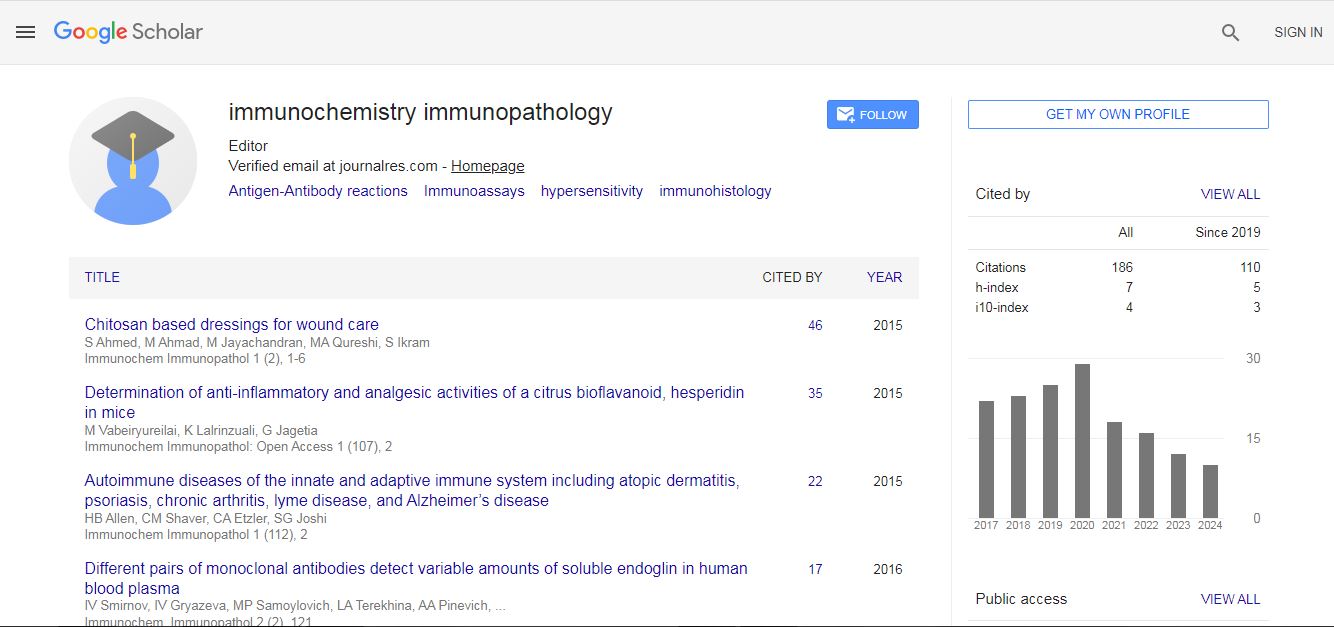
Immunochemistry & Immunopathology received 174 citations as per Google Scholar report