Opinion - (2025) Volume 10, Issue 4
Received: 01-Aug-2025, Manuscript No. jidm-26-188076;
Editor assigned: 04-Aug-2025, Pre QC No. P-188076;
Reviewed: 18-Aug-2025, QC No. Q-188076;
Revised: 22-Aug-2025, Manuscript No. R-188076;
Published:
29-Aug-2025
, DOI: 10.37421/2576-1420.2025.10.413
Citation: Quiroz, Rosa. ”Infection Prevention and Control: A
Cornerstone of Safety.” J Infect Dis Med 10 (2025):413.
Copyright: © 2025 Quiroz R. This is an open-access article distributed under the terms of the Creative Commons Attribution License, which permits unrestricted use,
distribution and reproduction in any medium, provided the original author and source are credited.
Effective infection prevention and control (IPC) is paramount in healthcare facilities to safeguard patients, healthcare workers, and the wider community from the spread of infectious agents. This involves a multi-faceted approach encompassing hand hygiene, environmental cleaning and disinfection, sterilization of medical equipment, appropriate use of personal protective equipment (PPE), and adherence to isolation precautions. Understanding transmission routes and implementing evidence-based strategies are key to reducing healthcare-associated infections (HAIs) [1].
The COVID-19 pandemic underscored the critical need for robust IPC programs. The rapid spread of SARS-CoV-2 highlighted challenges in healthcare settings, including shortages of PPE, the importance of airborne and droplet precautions, and the need for effective diagnostic testing and contact tracing. Adaptability and strong leadership were essential for managing outbreaks and maintaining patient safety [2].
Hand hygiene remains the cornerstone of IPC. Regular and correct application of alcohol-based hand rub or handwashing with soap and water is crucial for removing transient microorganisms from the hands of healthcare personnel, thereby preventing transmission to patients. Compliance with hand hygiene protocols is often suboptimal, necessitating continuous education and monitoring [3].
Environmental cleaning and disinfection play a vital role in reducing the environmental reservoir of pathogens in healthcare facilities. Proper cleaning of surfaces, especially high-touch areas, and appropriate use of disinfectants are essential. The selection of disinfectants should consider their efficacy against relevant microorganisms and their safety for staff and patients [4].
Sterilization and disinfection of reusable medical devices are critical to prevent the transmission of infections. Strict adherence to validated reprocessing protocols, including cleaning, disinfection, and sterilization, is essential. The choice of sterilization method depends on the device material and intended use, with autoclaving and ethylene oxide being common methods [5].
The appropriate use of personal protective equipment (PPE), including gloves, gowns, masks, and eye protection, is a fundamental component of IPC. PPE acts as a barrier to prevent contamination of healthcare workers' skin and clothing from infectious agents. Correct donning and doffing procedures are crucial to prevent self-contamination [6].
Isolation precautions are designed to prevent the transmission of infectious agents from infected or colonized patients. These include standard precautions (applied to all patients) and transmission-based precautions (contact, droplet, and airborne precautions) used in addition to standard precautions for specific infections. Effective implementation requires clear communication and adherence by all healthcare personnel [7].
Antimicrobial resistance (AMR) poses a significant threat to public health and patient safety. Effective IPC strategies are crucial in preventing the spread of multidrug-resistant organisms (MDROs) within healthcare facilities. Judicious use of antibiotics (antimicrobial stewardship) and infection prevention measures are complementary in combating AMR [8].
Surveillance of healthcare-associated infections (HAIs) is essential for monitoring trends, identifying outbreaks, and evaluating the effectiveness of IPC interventions. Robust surveillance systems provide data to guide resource allocation and prioritize IPC efforts. This includes tracking rates of specific HAIs like central line-associated bloodstream infections (CLABSIs), catheter-associated urinary tract infections (CAUTIs), and surgical site infections (SSIs) [9].
Education and training of healthcare personnel are fundamental to successful IPC programs. Regular, targeted training on IPC principles and practices, including hand hygiene, PPE use, and safe injection practices, is necessary to ensure competency and promote a culture of safety. Training should be evidence-based and adapted to the specific roles and responsibilities of different staff members [10].
Infection prevention and control (IPC) is a critical strategy within healthcare settings, aiming to protect individuals from infectious agents. This comprehensive approach integrates various elements, such as meticulous hand hygiene, thorough environmental cleaning and disinfection, proper sterilization of medical instruments, correct utilization of personal protective equipment (PPE), and disciplined adherence to isolation protocols. A deep understanding of how infections spread, coupled with the application of evidence-based practices, is fundamental to diminishing the incidence of healthcare-associated infections (HAIs) [1].
The global COVID-19 pandemic starkly illuminated the indispensable nature of well-established IPC programs. The swift propagation of SARS-CoV-2 exposed vulnerabilities in healthcare environments, including shortages of essential PPE, the critical importance of airborne and droplet precautions, and the urgent need for efficient diagnostic testing and contact tracing mechanisms. The capacity for swift adaptation and decisive leadership proved vital in managing outbreaks and upholding patient safety standards [2].
At the core of any effective IPC strategy lies hand hygiene. The consistent and correct use of alcohol-based hand sanitizers or washing hands with soap and water is indispensable for eradicating transient microbes from the hands of healthcare providers, thereby averting the transmission of pathogens to patients. Despite its recognized importance, adherence to hand hygiene protocols frequently falls short of ideal standards, underscoring the continuous requirement for robust education and diligent monitoring [3].
The practice of environmental cleaning and disinfection serves a crucial function in mitigating the presence of infectious agents within the healthcare facility environment. Thorough cleaning of all surfaces, with particular attention to frequently touched areas, and the judicious application of appropriate disinfectants are non-negotiable. The selection of disinfectants must be guided by their proven efficacy against relevant pathogens and their safety profile for both healthcare workers and patients [4].
Ensuring the sterilization and disinfection of reusable medical devices is paramount for interrupting the chain of infection transmission. Unwavering compliance with meticulously validated reprocessing procedures, which encompass cleaning, disinfection, and sterilization, is indispensable. The selection of the most suitable sterilization technique is contingent upon the material composition of the device and its intended application, with autoclaving and ethylene oxide sterilization being widely employed methods [5].
The proper application of personal protective equipment (PPE), encompassing items such as gloves, gowns, masks, and eye protection, constitutes a foundational element of IPC. PPE functions as a physical barrier, preventing healthcare professionals' skin and clothing from becoming contaminated by infectious agents. The meticulous execution of donning and doffing procedures is essential to preclude inadvertent self-contamination [6].
Isolation precautions are specifically designed to curtail the spread of infectious agents originating from patients who are infected or colonized. These measures encompass standard precautions, applicable to all individuals receiving care, and transmission-based precautions, which include contact, droplet, and airborne precautions. These are implemented in conjunction with standard precautions for specific infectious conditions. Successful execution necessitates clear communication and consistent adherence by all members of the healthcare team [7].
Antimicrobial resistance (AMR) represents a formidable global health challenge, profoundly impacting patient safety and the efficacy of medical treatments. Robust IPC measures are instrumental in preventing the proliferation of multidrug-resistant organisms (MDROs) within healthcare environments. The responsible and judicious use of antibiotics, alongside comprehensive infection prevention strategies, forms a critical dual approach in the fight against AMR [8].
The systematic surveillance of healthcare-associated infections (HAIs) is indispensable for tracking epidemiological trends, promptly identifying outbreaks, and rigorously assessing the effectiveness of implemented IPC interventions. Well-structured surveillance systems furnish the data necessary for informed resource allocation and the strategic prioritization of IPC initiatives. This surveillance typically involves monitoring rates of specific HAIs such as central line-associated bloodstream infections (CLABSIs), catheter-associated urinary tract infections (CAUTIs), and surgical site infections (SSIs) [9].
Comprehensive education and ongoing training for healthcare personnel are foundational to the success of any IPC program. This training must be regular, targeted, and focused on core IPC principles and practices, including hand hygiene techniques, the correct use of PPE, and safe injection procedures, to ensure staff competency and foster a pervasive culture of safety. Training methodologies should be grounded in scientific evidence and tailored to the unique roles and responsibilities of different healthcare professionals [10].
Effective infection prevention and control (IPC) is crucial in healthcare to prevent the spread of infections, encompassing hand hygiene, environmental cleaning, sterilization, PPE use, and isolation precautions. The COVID-19 pandemic highlighted the importance of robust IPC, challenges with PPE, and the need for adaptability. Hand hygiene remains a cornerstone, though compliance is often suboptimal. Environmental cleaning reduces pathogen reservoirs, while proper sterilization of medical devices is vital to prevent transmission. PPE acts as a barrier against infectious agents, with correct usage being essential. Isolation precautions, including standard and transmission-based measures, aim to prevent pathogen spread. Antimicrobial resistance (AMR) necessitates strong IPC to curb the spread of MDROs. Surveillance of HAIs is key to monitoring trends and evaluating interventions. Continuous education and training of healthcare personnel are fundamental to successful IPC programs and fostering a culture of safety.
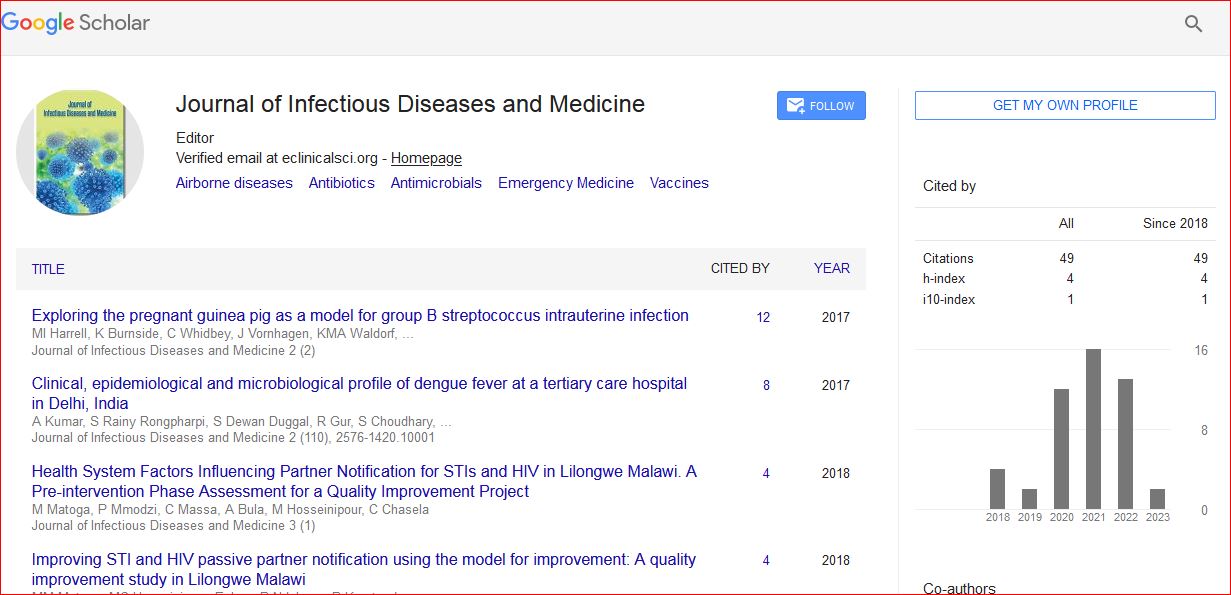
Journal of Infectious Diseases and Medicine received 1059 citations as per Google Scholar report