Short Communication - (2025) Volume 9, Issue 4
Received: 01-Jul-2025, Manuscript No. hps-26-184467;
Editor assigned: 03-Jul-2025, Pre QC No. P-184467;
Reviewed: 17-Jul-2025, QC No. Q-184467;
Revised: 22-Jul-2025, Manuscript No. R-184467;
Published:
29-Jul-2025
, DOI: 10.37421/2573-4563.2025.9.360
Citation: Al-Mansour, Omar A. ”Immune Dysregulation Drives Chronic Liver Disease Progression.” J Hepatol Pancreat Sci 09 (2025):360.
Copyright: © 2025 Al-Mansour A. Omar This is an open-access article distributed under the terms of the Creative Commons Attribution License, which permits unrestricted use, distribution and reproduction in any medium, provided the original author and source are credited.
Chronic liver disease and cirrhosis are intricate conditions marked by persistent inflammation and tissue damage, fundamentally leading to profound immune dysregulation. This intricate interplay involves significantly altered innate and adaptive immune responses, which in turn contribute to the progression of the disease, the development of severe complications such as portal hypertension and spontaneous bacterial peritonitis, and a heightened susceptibility to various infections. A comprehensive understanding of these nuanced immune shifts is paramount for the successful development of effective and targeted therapeutic strategies [1].
The gut-liver axis has emerged as a critical mediator of immune modulation throughout the course of liver disease. Disruptions in the delicate balance of the gut microbiota, a condition known as dysbiosis, are frequently observed in cirrhosis. This imbalance leads to increased intestinal permeability, a phenomenon that allows bacterial products to translocate from the gut into the portal circulation, subsequently reaching the liver. This translocation initiates and perpetuates a chronic inflammatory state within the liver, primarily orchestrated by Kupffer cells and other resident immune cells, thereby exacerbating ongoing liver injury and promoting the development of fibrosis [2].
Within the liver microenvironment, various immune cells, especially Kupffer cells and infiltrating myeloid cells, undergo activation. These cells adopt a distinctly pro-inflammatory phenotype in the context of chronic liver disease. This sustained activation plays a pivotal role in driving the progression of liver fibrosis through the continuous release of pro-inflammatory cytokines and chemokines. Moreover, this compromised immune state impairs the host's innate ability to effectively clear invading pathogens, consequently increasing the risk and severity of infections [3].
Adaptive immunity also undergoes substantial alterations in chronic liver disease. There is a discernible shift in T cell populations, with a tendency towards a more exhausted or regulatory phenotype. This shift results in a diminished capacity for effective anti-viral and anti-tumor immune responses. Such immune exhaustion is a significant contributing factor to the relentless progression of viral hepatitis and the subsequent development of hepatocellular carcinoma (HCC) [4].
Natural killer (NK) cells, which are indispensable components of the innate immune system responsible for combating viral infections and eliminating cancerous cells, exhibit markedly impaired function in the cirrhotic liver. This impairment manifests as reduced cytotoxic activity, altered patterns of cytokine production, and a decrease in their overall numbers. These functional deficits collectively contribute to an increased vulnerability to viral hepatitis reactivation and the pathogenesis of HCC [5].
The inflammatory milieu characteristic of cirrhosis creates a fertile ground for the development and progression of hepatocellular carcinoma (HCC). The immune dysregulation inherent in this condition, including the establishment of an immunosuppressive tumor microenvironment, actively facilitates tumor growth and enables cancer cells to evade immune surveillance. This underscores the profound and often detrimental link between chronic inflammation and the oncogenic process [6].
Spontaneous bacterial peritonitis (SBP) represents a common yet particularly serious complication frequently encountered in patients with advanced cirrhosis. Its pathogenesis is closely linked to the compromised immune defenses present within the ascitic fluid. Dysfunctional neutrophils and aberrant cytokine profiles within the peritoneum contribute to the host's inability to effectively clear bacterial pathogens, thereby leading to infection [7].
Emerging therapeutic strategies are increasingly focused on modulating the immune system to combat chronic liver diseases. These innovative approaches encompass targeting specific inflammatory pathways, aiming to restore the delicate balance of the gut microbiota, and developing methods to enhance the functional capacity of immune cells. The ultimate goal of these immunomodulatory therapies is to improve patient outcomes and mitigate the incidence and severity of disease-related complications [8].
Fibrosis progression, a hallmark of chronic liver disease, is significantly influenced by the intricate activities of immune cells. Activated hepatic stellate cells, which are a primary driver of fibrogenesis, are often propelled by pro-inflammatory cytokines released by various immune cells. This immune-driven activation leads to excessive deposition of extracellular matrix and scar tissue formation, ultimately culminating in the development of cirrhosis [9].
The role of regulatory T cells (Tregs) in the complex landscape of chronic liver disease is multifaceted and often paradoxical. While Tregs are generally recognized for their immunosuppressive capacity, which can be beneficial in limiting excessive inflammation, their impaired function in the context of advanced disease and cirrhosis may contribute to a state of immune tolerance towards persistent pathogens and a diminished capacity for effective anti-tumor immunity [10].
Chronic liver disease and cirrhosis are characterized by persistent inflammation and tissue damage, leading to profound immune dysregulation. This involves altered innate and adaptive immune responses, contributing to disease progression, complications like portal hypertension and spontaneous bacterial peritonitis, and increased susceptibility to infections. Understanding these immune shifts is crucial for developing targeted therapies [1].
The gut-liver axis plays a pivotal role in immune modulation during liver disease. Disruption of the gut microbiota (dysbiosis) in cirrhosis leads to increased intestinal permeability, allowing bacterial products to translocate to the liver. This triggers a chronic inflammatory state mediated by Kupffer cells and other immune cells, exacerbating liver injury and fibrosis [2].
Immune cells, particularly Kupffer cells and infiltrating myeloid cells, become activated and exhibit a pro-inflammatory phenotype in chronic liver disease. This chronic activation contributes to liver fibrosis progression through the release of cytokines and chemokines, and it also impairs the host's ability to clear pathogens, increasing infection risk [3].
Adaptive immunity is also significantly altered. T cell populations shift towards a more exhausted or regulatory phenotype, diminishing effective anti-viral and anti-tumor responses. This immune exhaustion contributes to the progression of viral hepatitis and the development of hepatocellular carcinoma (HCC) [4].
Natural killer (NK) cells, crucial for innate immunity against viral infections and cancer, show impaired function in cirrhosis. Reduced cytotoxicity, altered cytokine production, and decreased numbers contribute to increased susceptibility to viral hepatitis reactivation and HCC [5].
The inflammatory milieu in cirrhosis can promote the development of hepatocellular carcinoma (HCC). Immune dysregulation, including the formation of an immunosuppressive tumor microenvironment, facilitates tumor growth and evasion from immune surveillance, highlighting the link between chronic inflammation and cancer [6].
Spontaneous bacterial peritonitis (SBP) is a common and serious complication of advanced cirrhosis, occurring due to impaired immune defenses in ascites fluid. Dysfunctional neutrophils and altered cytokine profiles contribute to the inability to clear bacterial pathogens, leading to infection [7].
Therapeutic strategies aimed at modulating the immune system are emerging. These include targeting specific inflammatory pathways, restoring gut microbiota balance, and enhancing immune cell function to improve outcomes and reduce complications in patients with chronic liver disease and cirrhosis [8].
Fibrosis progression in chronic liver disease is significantly influenced by immune cells. Activated hepatic stellate cells, driven by pro-inflammatory cytokines produced by immune cells, contribute to extracellular matrix deposition and scar formation, leading to cirrhosis [9].
The role of regulatory T cells (Tregs) in chronic liver disease is complex. While they can exert immunosuppressive effects to limit inflammation, in the context of advanced disease and cirrhosis, their impaired function may contribute to immune tolerance of pathogens and reduced anti-tumor immunity [10].
Chronic liver disease and cirrhosis are characterized by immune dysregulation, affecting both innate and adaptive immunity. This dysfunction contributes to disease progression, complications like portal hypertension and spontaneous bacterial peritonitis, and increased infection susceptibility. The gut-liver axis plays a key role, with dysbiosis leading to increased intestinal permeability and inflammation. Activated Kupffer cells and other immune cells promote fibrosis and impair pathogen clearance. T cell exhaustion reduces anti-viral and anti-tumor responses, while impaired NK cell function increases susceptibility to viral hepatitis and HCC. The inflammatory microenvironment also fosters HCC development. SBP is a common complication due to weakened immune defenses. Emerging therapies focus on immune modulation, targeting inflammatory pathways, gut microbiota, and immune cell function. Immune cells also drive fibrosis progression by activating hepatic stellate cells. The role of regulatory T cells is complex, with impaired function potentially contributing to pathogen tolerance and reduced anti-tumor immunity.
None
None
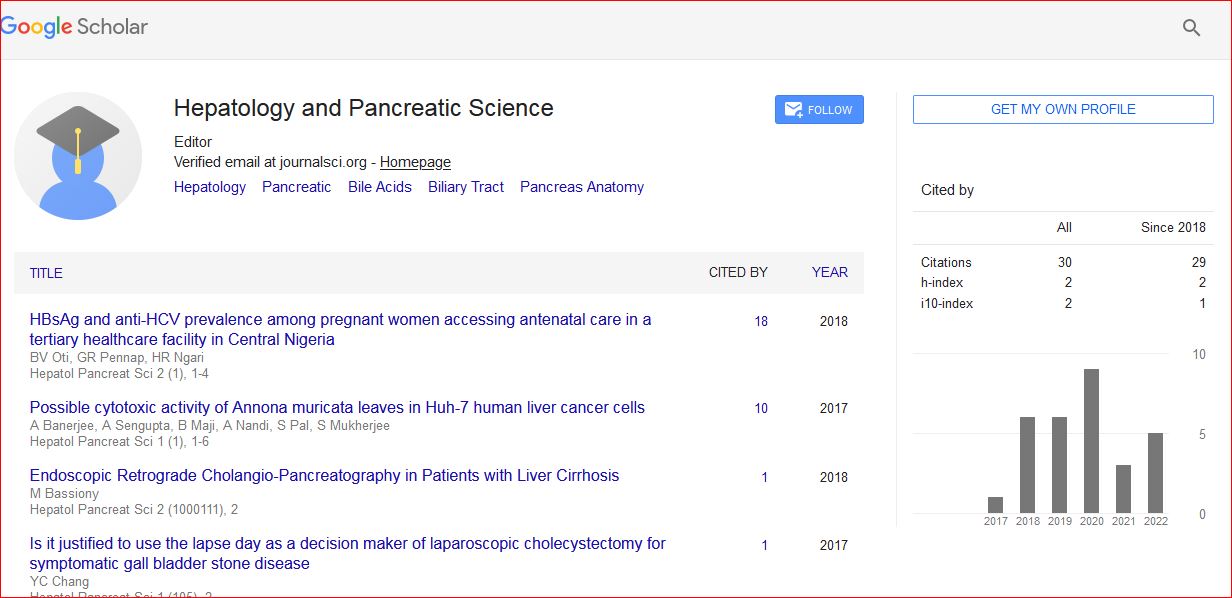
Hepatology and Pancreatic Science received 34 citations as per Google Scholar report