Short Communication - (2025) Volume 14, Issue 3
Received: 02-Jun-2025, Manuscript No. jhoa-26-187788;
Editor assigned: 04-Jun-2025, Pre QC No. P-187788;
Reviewed: 18-Jun-2025, QC No. Q-187788;
Revised: 23-Jun-2025, Manuscript No. R-187788;
Published:
30-Jun-2025
, DOI: 10.37421/2167-1095.2025.14.519
Citation: Muller, Markus. ”Hypertension: A Driver of Cardiovascular Disease.” J Hypertens 14 (2025):519.
Copyright: © 2025 Muller M. This is an open-access article distributed under the terms of the Creative Commons Attribution License, which permits unrestricted use, distribution and reproduction in any medium, provided the original author and source are credited.
Hypertension significantly elevates cardiovascular disease risk by damaging blood vessels, straining the heart, and contributing to atherosclerosis. Uncontrolled high blood pressure accelerates arterial stiffening and promotes plaque buildup, leading to conditions like heart attack, stroke, and heart failure. Effective management through lifestyle modifications and medication is crucial for mitigating these severe outcomes. [1] The interplay between endothelial dysfunction and hypertension is a critical driver of cardiovascular complications. Chronic elevated blood pressure impairs the ability of blood vessels to dilate properly, promoting inflammation and oxidative stress. This dysfunction creates a pro-thrombotic environment and contributes to the development of atherosclerotic plaques. [2] Left ventricular hypertrophy (LVH) is a common consequence of sustained hypertension, representing the heart's adaptive response to increased afterload. While initially compensatory, prolonged LVH leads to diastolic and systolic dysfunction, increasing the risk of heart failure and arrhythmias. Regression of LVH with antihypertensive treatment can improve cardiovascular outcomes. [3] Hypertension is a primary modifiable risk factor for stroke, significantly increasing the likelihood of both ischemic and hemorrhagic events. Elevated blood pressure damages cerebral arteries, making them more prone to rupture or blockage. Aggressive blood pressure control is a cornerstone of stroke prevention strategies. [4] The impact of hypertension extends to renal health, where high blood pressure can lead to chronic kidney disease (CKD). Glomerular damage and interstitial fibrosis are common pathological changes driven by sustained hypertension, which can progress to end-stage renal disease requiring dialysis or transplantation. [5] The interaction between hypertension and diabetes mellitus significantly amplifies cardiovascular risk. Both conditions contribute to endothelial dysfunction, inflammation, and oxidative stress, creating a synergistic effect that accelerates atherosclerosis and increases the incidence of heart attack, stroke, and kidney disease. [6] Resistant hypertension, defined as blood pressure that remains elevated despite the use of three or more antihypertensive medications, is associated with a higher risk of cardiovascular events. Identifying and managing secondary causes and optimizing treatment regimens are critical for improving outcomes in these patients. [7] Lifestyle modifications, including dietary changes (e.g., DASH diet), regular physical activity, weight management, and smoking cessation, play a pivotal role in both preventing and managing hypertension. These interventions not only lower blood pressure but also improve overall cardiovascular health and reduce risk factors. [8] The advent of novel antihypertensive drug classes and combination therapies has improved blood pressure control and cardiovascular outcomes. Understanding the pharmacological mechanisms and individual patient profiles is key to selecting the most effective treatment strategy and minimizing side effects. [9] Hypertension exerts significant oxidative stress on the cardiovascular system, contributing to endothelial dysfunction, inflammation, and vascular remodeling. Antioxidant therapies and strategies to reduce reactive oxygen species production are being explored as adjuncts to conventional antihypertensive treatments. [10]
Hypertension significantly elevates cardiovascular disease risk by damaging blood vessels, straining the heart, and contributing to atherosclerosis. Uncontrolled high blood pressure accelerates arterial stiffening and promotes plaque buildup, leading to conditions like heart attack, stroke, and heart failure. Effective management through lifestyle modifications and medication is crucial for mitigating these severe outcomes. [1] The interplay between endothelial dysfunction and hypertension is a critical driver of cardiovascular complications. Chronic elevated blood pressure impairs the ability of blood vessels to dilate properly, promoting inflammation and oxidative stress. This dysfunction creates a pro-thrombotic environment and contributes to the development of atherosclerotic plaques. [2] Left ventricular hypertrophy (LVH) is a common consequence of sustained hypertension, representing the heart's adaptive response to increased afterload. While initially compensatory, prolonged LVH leads to diastolic and systolic dysfunction, increasing the risk of heart failure and arrhythmias. Regression of LVH with antihypertensive treatment can improve cardiovascular outcomes. [3] Hypertension is a primary modifiable risk factor for stroke, significantly increasing the likelihood of both ischemic and hemorrhagic events. Elevated blood pressure damages cerebral arteries, making them more prone to rupture or blockage. Aggressive blood pressure control is a cornerstone of stroke prevention strategies. [4] The impact of hypertension extends to renal health, where high blood pressure can lead to chronic kidney disease (CKD). Glomerular damage and interstitial fibrosis are common pathological changes driven by sustained hypertension, which can progress to end-stage renal disease requiring dialysis or transplantation. [5] The interaction between hypertension and diabetes mellitus significantly amplifies cardiovascular risk. Both conditions contribute to endothelial dysfunction, inflammation, and oxidative stress, creating a synergistic effect that accelerates atherosclerosis and increases the incidence of heart attack, stroke, and kidney disease. [6] Resistant hypertension, defined as blood pressure that remains elevated despite the use of three or more antihypertensive medications, is associated with a higher risk of cardiovascular events. Identifying and managing secondary causes and optimizing treatment regimens are critical for improving outcomes in these patients. [7] Lifestyle modifications, including dietary changes (e.g., DASH diet), regular physical activity, weight management, and smoking cessation, play a pivotal role in both preventing and managing hypertension. These interventions not only lower blood pressure but also improve overall cardiovascular health and reduce risk factors. [8] The advent of novel antihypertensive drug classes and combination therapies has improved blood pressure control and cardiovascular outcomes. Understanding the pharmacological mechanisms and individual patient profiles is key to selecting the most effective treatment strategy and minimizing side effects. [9] Hypertension exerts significant oxidative stress on the cardiovascular system, contributing to endothelial dysfunction, inflammation, and vascular remodeling. Antioxidant therapies and strategies to reduce reactive oxygen species production are being explored as adjuncts to conventional antihypertensive treatments. [10]
Hypertension is a major contributor to cardiovascular disease, causing damage to blood vessels, straining the heart, and accelerating atherosclerosis, leading to conditions like heart attack, stroke, and heart failure. Endothelial dysfunction, a key consequence of elevated blood pressure, further exacerbates these risks by impairing blood vessel dilation and promoting inflammation. Left ventricular hypertrophy, a common adaptation to chronic hypertension, can result in cardiac dysfunction and increased risk of heart failure and arrhythmias. Hypertension is also a primary driver of stroke and contributes significantly to the development and progression of chronic kidney disease. The coexistence of hypertension and diabetes mellitus creates a synergistic effect, amplifying cardiovascular risks. Resistant hypertension, defined by failure to achieve blood pressure control despite multiple medications, carries a higher risk of cardiovascular events. Effective management strategies involve a combination of lifestyle modifications, such as dietary changes, exercise, and weight management, alongside pharmacological interventions. Advances in antihypertensive drug therapies offer improved control and outcomes. Oxidative stress plays a crucial role in hypertension-related cardiovascular damage, prompting research into antioxidant therapies.
None
None
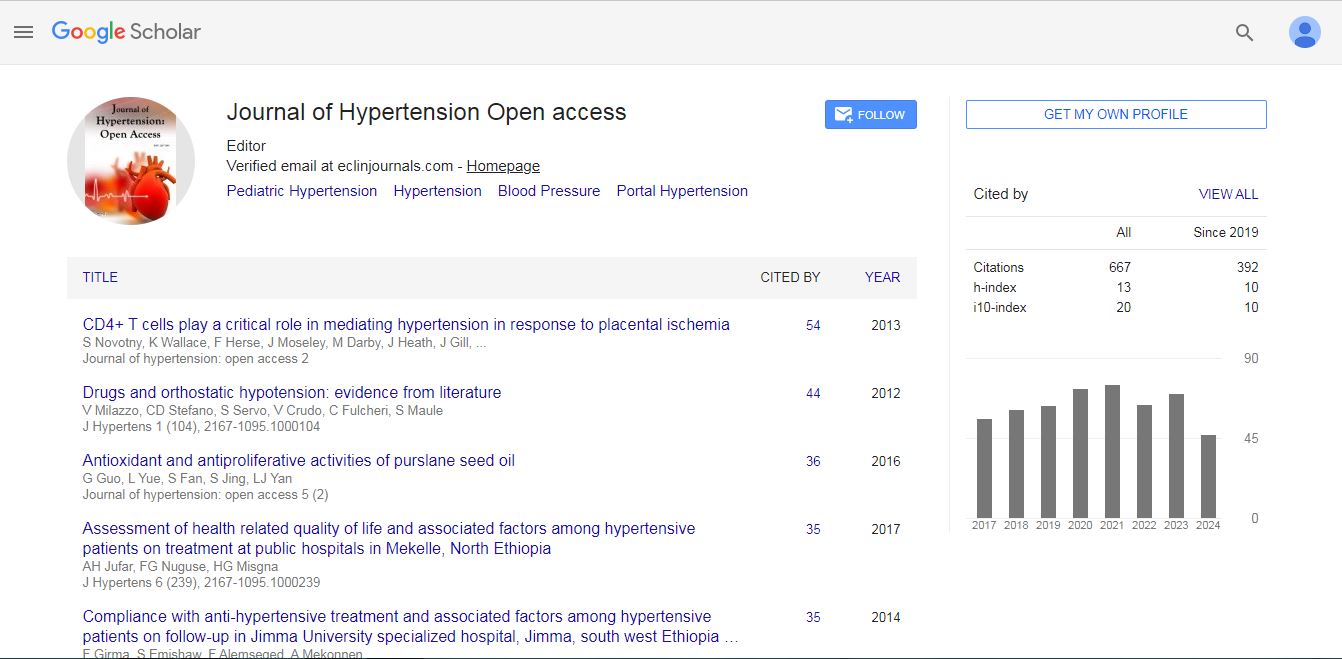
Journal of Hypertension: Open Access received 614 citations as per Google Scholar report