Short Communication - (2025) Volume 11, Issue 6
Received: 01-Dec-2024, Manuscript No. cdp-26-185472;
Editor assigned: 03-Dec-2025, Pre QC No. P-185472;
Reviewed: 17-Dec-2025, QC No. Q-185472;
Revised: 22-Dec-2025, Manuscript No. R-185472;
Published:
29-Dec-2025
, DOI: 10.37421/2572-0791.2025.11.213
Citation: Petrovic, Valentina. ”Holistic Care Models For Depression: Improving Outcomes.” Clin Depress 11 (2025):213.
Copyright: © 2025 Petrovic V. This is an open-access article distributed under the terms of the Creative Commons Attribution License, which permits unrestricted use, distribution and reproduction in any medium, provided the original author and source are credited.
Integrative care models represent a paradigm shift in the treatment of depression, moving towards a more holistic approach that encompasses various therapeutic modalities. These models recognize the complex and multifaceted nature of depression, seeking to address the interplay of biological, psychological, and social factors that contribute to the condition. By blending conventional medical interventions with complementary and alternative therapies, the aim is to achieve enhanced patient outcomes and overall well-being. This comprehensive approach often incorporates psychotherapy and pharmacotherapy alongside lifestyle interventions and mind-body practices to foster a more complete recovery process [1].
A key strategy within integrative care is the implementation of collaborative care models, which are designed to improve depression outcomes by embedding behavioral health specialists directly within primary care settings. This integration is crucial for enhancing accessibility to evidence-based treatments, fostering greater patient engagement in their care, and improving the critical communication pathways between primary care physicians and mental health providers, thereby creating a more seamless care experience [2].
Mindfulness-based interventions have emerged as a promising component of depression management, particularly for individuals grappling with recurrent or chronic forms of the illness. Integrating mindfulness techniques into treatment plans empowers patients with valuable coping mechanisms and cultivates enhanced emotional regulation, contributing to greater resilience in managing depressive symptoms [3].
The significant role of physical activity in managing depression is increasingly acknowledged within the therapeutic landscape. When exercise interventions are thoughtfully incorporated into comprehensive treatment plans, they demonstrate a notable capacity to improve mood states and substantially reduce the severity of depressive symptoms, highlighting the mind-body connection in mental health recovery [4].
Psychoeducation serves as a foundational element in integrative care, playing a vital role in empowering both patients and their families with essential knowledge about depression. This includes a thorough understanding of available treatment options and effective management strategies, which ultimately enhances treatment adherence and promotes greater patient self-management capabilities [5].
Telehealth services are proving to be an invaluable avenue for delivering integrated mental healthcare, especially for individuals who encounter geographical barriers or have mobility limitations. The remote delivery of psychotherapy and psychiatric consultations through telepsychiatry significantly enhances accessibility, ensuring that timely and effective depression treatment is available when and where it is needed [6].
Personalized medicine approaches are steadily gaining prominence in the field of depression treatment, focusing on tailoring interventions to the unique characteristics of each individual. This involves considering genetic predispositions, biological markers, and specific symptom profiles to optimize treatment efficacy and minimize the likelihood of adverse effects, ushering in an era of precision psychiatry [7].
The integration of digital mental health tools, such as mobile applications and online platforms, is opening up new possibilities for supporting individuals in their depression management journeys. These innovative tools can facilitate crucial self-monitoring, deliver essential psychoeducational content, and effectively connect individuals with vital support networks, extending care beyond traditional settings [8].
Peer support services represent a valuable and often underutilized component of integrative care, offering empathy, understanding, and shared lived experiences from individuals who have successfully navigated their own mental health challenges. These services are instrumental in reducing feelings of isolation and fostering a stronger sense of hope and recovery among those affected by depression [9].
Finally, the successful implementation of integrative care models hinges upon robust interdisciplinary collaboration among all healthcare professionals involved. This necessitates open communication, shared decision-making processes, and a unified approach to treatment planning to ensure that individuals with depression receive comprehensive, coordinated, and patient-centered care [10].
Integrative care models for depression treatment represent a holistic approach that synergistically combines conventional medical practices with complementary and alternative therapies. The overarching goal is to enhance overall patient well-being and achieve improved treatment outcomes by acknowledging the complex, multifaceted nature of depression. These sophisticated models frequently incorporate established interventions such as psychotherapy and pharmacotherapy, alongside lifestyle modifications and mind-body practices, to provide a comprehensive therapeutic framework [1].
A cornerstone of effective depression management within primary care is the collaborative care model, which integrates behavioral health specialists directly into the primary care setting. This strategic integration significantly enhances patient access to evidence-based treatments, boosts engagement levels, and streamlines communication between primary care physicians and mental health professionals, thereby fostering a more cohesive and responsive care system [2].
Mindfulness-based interventions have demonstrated considerable promise in mitigating depressive symptoms, particularly among individuals experiencing recurrent or chronic depression. The incorporation of mindfulness practices into treatment plans equips patients with practical coping mechanisms and cultivates improved emotional regulation skills, contributing to greater mental resilience [3].
The recognized importance of physical activity in the management of depression is continually growing. When exercise interventions are thoughtfully woven into comprehensive treatment strategies, they have been shown to significantly elevate mood and reduce the overall severity of depressive symptoms, underscoring the profound link between physical health and mental well-being [4].
Psychoeducation plays a critical role in empowering individuals with depression and their support systems. By providing comprehensive knowledge about the condition, available treatment options, and effective self-management strategies, psychoeducation enhances patient adherence to treatment plans and fosters a greater sense of control and agency in their recovery process [5].
Telehealth services have emerged as a vital modality for delivering integrated mental healthcare, offering a crucial solution for individuals facing geographical barriers or mobility challenges. The remote provision of psychotherapy and psychiatric consultations through telepsychiatry significantly improves accessibility, ensuring timely and effective interventions for depression treatment [6].
Personalized medicine is increasingly being adopted in depression treatment, focusing on tailoring therapeutic interventions to individual patient profiles. This approach considers factors such as genetic predispositions, biological markers, and specific symptom presentations to optimize treatment effectiveness and minimize the occurrence of adverse effects, moving towards a more precise and individualized form of psychiatric care [7].
The integration of digital mental health tools, including mobile applications and online platforms, offers innovative avenues for supporting individuals in managing their depression. These tools are instrumental in facilitating self-monitoring, delivering targeted psychoeducational content, and connecting individuals with valuable support networks, thereby extending the reach and impact of mental health support [8].
Peer support services are a highly valuable component of integrative care, offering unique benefits through empathy, understanding, and shared experiences from individuals who have successfully navigated their own mental health journeys. This form of support is instrumental in reducing feelings of isolation and promoting a robust sense of recovery and hope among those affected by depression [9].
Effective implementation of integrative care models fundamentally relies on strong interdisciplinary collaboration among all healthcare professionals involved. This collaborative environment, characterized by open communication, shared decision-making, and a unified approach to treatment planning, is essential for delivering comprehensive and coordinated care to individuals with depression [10].
Integrative care models for depression treatment offer a holistic approach by combining conventional therapies with complementary and alternative methods to improve patient outcomes. Key components include collaborative care models integrating behavioral health specialists into primary care, mindfulness-based interventions, and the recognized role of physical activity. Psychoeducation empowers patients and families, while telehealth services enhance accessibility. Personalized medicine tailors treatments, and digital tools support self-management and connectivity. Peer support services provide valuable emotional and experiential aid. Effective implementation requires strong interdisciplinary collaboration among healthcare professionals to ensure coordinated and comprehensive care.
None
None
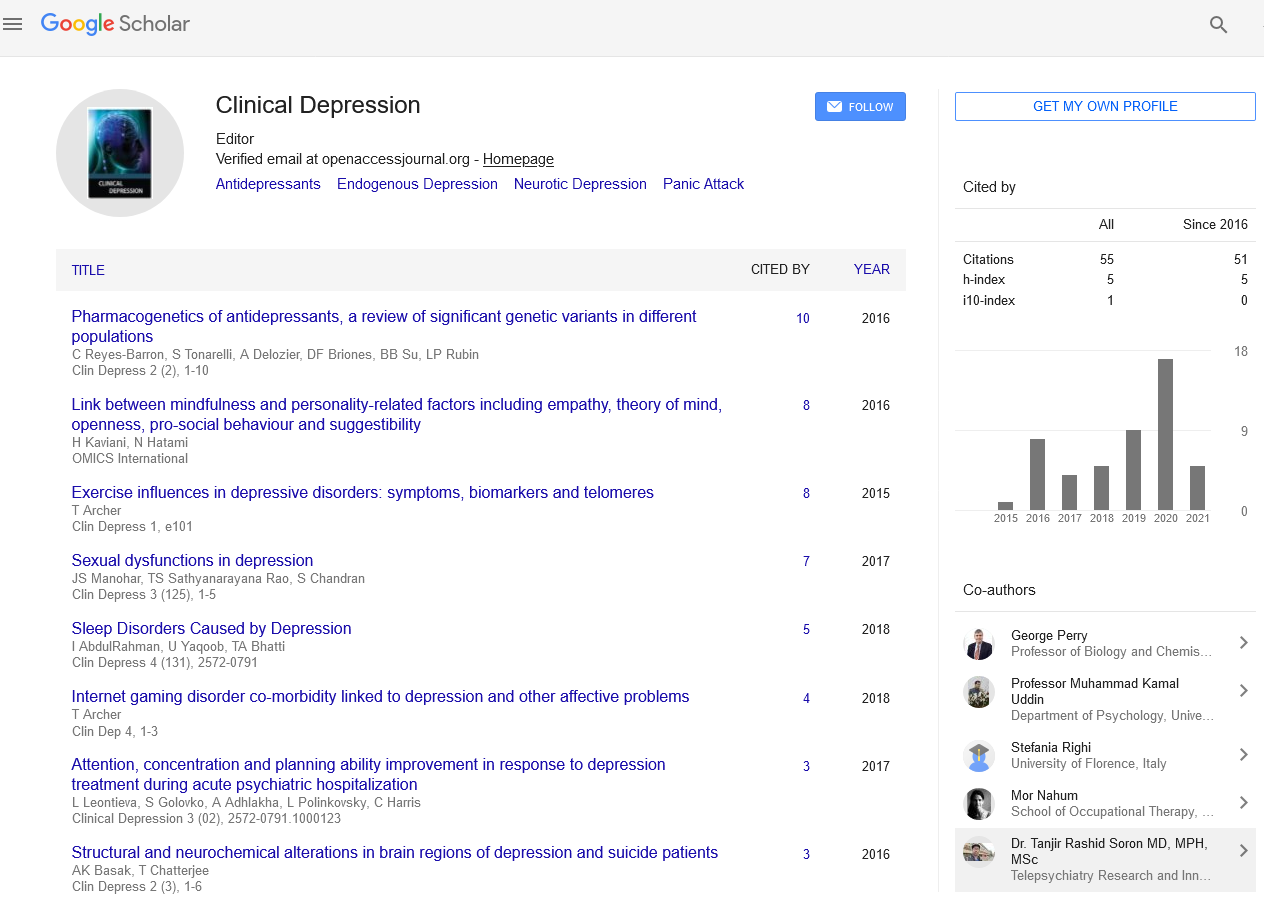
Clinical Depression received 89 citations as per Google Scholar report