Perspective - (2025) Volume 16, Issue 6
Received: 01-Dec-2025, Manuscript No. jar-25-177635;
Editor assigned: 03-Dec-2025, Pre QC No. P-177635;
Reviewed: 17-Dec-2025, QC No. Q-177635;
Revised: 22-Dec-2025, Manuscript No. R-177635;
Published:
29-Dec-2025
, DOI: 10.37421/2155-6113.2025.16.1097
Citation: Koenig, Julia. ”HIV Mental Health: Stigma, Disparities,
Integrated Care.” J AIDS Clin Res 16 (2025):1097.
Copyright: © 2025 Koenig J. This is an open-access article distributed under the terms of the Creative Commons Attribution License, which permits unrestricted use, distribution
and reproduction in any medium, provided the original author and source are credited.
The mental health landscape for people living with HIV (PLWH) is complex and multifaceted, characterized by significant challenges that impact various aspects of their lives. A comprehensive understanding of these issues is crucial for developing effective, integrated care models. Stigma, depression, and anxiety are prominent factors that profoundly affect the mental well-being of PLWH. The intricate interplay of these psychological stressors not only diminishes their quality of life but also creates substantial barriers to treatment adherence, underscoring the vital need for person-centered, integrated mental health services within existing HIV care frameworks [1].
High rates of neurocognitive impairment (NCI) are frequently observed among PLWH, exhibiting a strong correlation with psychiatric comorbidities, notably depression and anxiety. Addressing these intertwined neurological and mental health challenges requires diligent comprehensive assessment and the implementation of integrated interventions to foster improved overall outcomes for individuals living with HIV [2].
Interventions specifically designed to alleviate HIV-related stigma and enhance mental health outcomes among PLWH have been critically evaluated. Research suggests that multi-component approaches, particularly those targeting internalized stigma and fostering robust social support networks, demonstrate considerable promise in mitigating psychological distress and promoting overall mental well-being [3].
There is a recognized high comorbidity of substance use disorders (SUDs) and mental health disorders in PLWH. These dual diagnoses critically exacerbate HIV progression, compromise adherence to essential antiretroviral therapy, and inevitably lead to poorer health outcomes. Therefore, integrated treatment strategies are indispensable, addressing both SUDs and mental health concerns within dedicated HIV care settings [4].
PLWH residing in rural areas often encounter unique and intensified mental health challenges. This is largely due to significant barriers to accessing adequate care, including substantial geographical distances, the scarcity of specialized services, and heightened levels of stigma. Tailored interventions and robust community-based mental health support are essential to mitigate these disparities in rural HIV care [5].
Adolescents and young adults living with HIV face a distinct mental health landscape, characterized by elevated rates of depression, anxiety, and trauma-related disorders. Their unique developmental stages are often compounded by their HIV status. This highlights the critical importance of providing age-appropriate, stigma-sensitive mental health services that are seamlessly integrated into youth-friendly HIV care models [6].
The intricate relationship between chronic pain and mental health disorders in PLWH is a significant area of concern. A high co-occurrence of chronic pain with conditions such as depression, anxiety, and PTSD has been observed. This bidirectional relationship where pain exacerbates psychological distress and vice versa necessitates the integration of comprehensive pain management and mental health services [7].
Women living with HIV experience particularly distinct and often exacerbated mental health challenges. They face high rates of depression, anxiety, and PTSD, often influenced by gender-specific stigma, the prevalence of intimate partner violence, and various socioeconomic vulnerabilities. This mandates the implementation of critically needed gender-sensitive mental health interventions within HIV care [8].
Racial and ethnic disparities in mental health outcomes among PLWH are well-documented. Minority groups disproportionately suffer from higher rates of depression, anxiety, and other mental health conditions. These disparities stem from intersecting factors such as systemic racism, pervasive discrimination, and unequal access to quality care, underscoring the urgent demand for culturally competent and equitable mental health services [9].
The effective implementation of integrated mental health and HIV care models faces both barriers and facilitators. Challenges include significant provider training gaps, persistent funding limitations, and pervasive stigma. Conversely, facilitators such as collaborative care teams and patient-centered approaches can significantly aid. Strategic planning is crucial to successfully embed mental health services within HIV clinics, ultimately improving overall patient outcomes [10].
People living with HIV (PLWH) frequently encounter a heavy burden of mental health challenges, significantly impacting their overall well-being and clinical outcomes. This complex intersectionality of conditions demands focused attention within healthcare systems. Stigma, depression, and anxiety are critical factors that not only profoundly affect mental health but also critically interfere with treatment adherence and diminish the overall quality of life. This persistent issue clearly underscores the dire need for person-centered, integrated care models to effectively tackle these pervasive mental health challenges [1]. Beyond these commonly recognized issues, neurocognitive impairment (NCI) is remarkably prevalent among PLWH, often exhibiting a strong association with psychiatric comorbidities, most notably depression and anxiety. Addressing these intertwined neurological and mental health aspects requires diligent comprehensive assessment and the implementation of robust, integrated interventions to foster improved overall outcomes [2]. The comorbidity of substance use disorders (SUDs) and mental health disorders presents another significant challenge. These dual diagnoses critically exacerbate HIV progression, severely compromise adherence to essential antiretroviral therapy, and inevitably lead to poorer health outcomes. Therefore, integrated treatment strategies are indispensable, addressing both SUDs and mental health concerns concurrently within dedicated HIV care settings [4]. Furthermore, chronic pain frequently co-occurs with mental health disorders such as depression, anxiety, and Post Traumatic Stress Disorder (PTSD), revealing a bidirectional relationship where chronic pain can significantly worsen psychological distress and vice versa. This intricate connection underscores the urgent need for comprehensive, integrated pain management and mental health services to provide holistic care [7].
HIV-related stigma remains a pervasive and insidious issue, profoundly influencing the mental health of PLWH across diverse populations. Given its detrimental impact, research has focused on interventions aimed at effectively reducing this stigma and consequently improving mental health outcomes. Systematic reviews indicate that multi-component interventions, particularly those that meticulously address internalized stigma and actively promote robust social support networks, show considerable promise. These approaches prove effective in mitigating psychological distress and enhancing overall mental well-being, highlighting the transformative potential of targeted psychosocial support in improving lives and fostering resilience [3].
It is imperative to acknowledge that certain populations of PLWH face amplified mental health challenges due to a confluence of unique circumstances and deeply entrenched systemic inequities. For instance, in rural settings, geographical distance from specialized services, a pervasive lack of such services, and heightened levels of stigma collectively create substantial barriers to accessing adequate mental healthcare. This situation clearly necessitates tailored interventions and the establishment of robust community-based mental health support to effectively address these significant disparities [5]. Similarly, adolescents and young adults living with HIV contend with a distinct mental health landscape, exhibiting notably high rates of depression, anxiety, and trauma-related disorders. Their unique developmental stages are often tragically compounded by their HIV status. This confluence of factors strongly underscores the critical importance of providing age-appropriate, stigma-sensitive mental health services that are seamlessly integrated into youth-friendly HIV care models [6]. Women living with HIV, too, confront particularly distinct and often exacerbated mental health challenges. They report high rates of depression, anxiety, and PTSD, which are frequently influenced by gender-specific stigma, the unfortunate prevalence of intimate partner violence, and various socioeconomic vulnerabilities. This complex scenario mandates the implementation of critically needed gender-sensitive mental health interventions within HIV care [8]. Moreover, racial and ethnic minority groups disproportionately experience higher rates of depression, anxiety, and other mental health conditions among PLWH. These disparities are rooted in intersecting factors such as systemic racism, pervasive discrimination, and differential access to quality care, thereby emphasizing the urgent and ongoing need for culturally competent and equitable mental health services [9].
The successful implementation of integrated mental health and HIV care models is not only essential for holistic patient care but also presents its own unique set of barriers and facilitators that must be carefully navigated. Key challenges identified include significant provider training gaps, persistent limitations in funding, and the pervasive impact of stigma within healthcare settings, which can deter both providers and patients. Conversely, certain facilitators have been identified that can significantly aid this integration, such as the formation of collaborative care teams and the adoption of genuinely patient-centered approaches to service delivery. Therefore, strategic planning is absolutely crucial to effectively embed mental health services within HIV clinics, ultimately leading to improved overall patient outcomes and fostering a more comprehensive, holistic approach to care for PLWH [10].
People living with HIV (PLWH) face substantial mental health challenges, prominently including high rates of depression, anxiety, and trauma-related disorders. Stigma is a significant factor, impacting mental well-being, treatment adherence, and quality of life. Various comorbidities exacerbate these issues, such as neurocognitive impairment, substance use disorders, and chronic pain, all of which are frequently observed in PLWH and necessitate integrated care approaches. Specific populations encounter unique and heightened vulnerabilities. Individuals in rural settings face barriers like geographical distance, lack of specialized services, and intensified stigma. Adolescents and young adults living with HIV confront developmental challenges alongside their HIV status. Women living with HIV often experience gender-specific stigma, intimate partner violence, and socioeconomic vulnerabilities, leading to higher rates of mental distress. Furthermore, racial and ethnic minority groups disproportionately experience mental health disparities due to systemic racism and unequal access to quality care. Interventions to address HIV-related stigma, particularly multi-component approaches focusing on internalized stigma and social support, show promise. The successful integration of mental health services into HIV care settings is critical but faces barriers such as provider training gaps, funding limitations, and persistent stigma. Conversely, facilitators like collaborative care teams and patient-centered approaches can enhance integration. There's a consistent emphasis across the literature for comprehensive, integrated, and culturally competent care models to improve mental health outcomes and overall well-being for PLWH.
Indexed at, Google Scholar, Crossref
Indexed at, Google Scholar, Crossref
Indexed at, Google Scholar, Crossref
Indexed at, Google Scholar, Crossref
Indexed at, Google Scholar, Crossref
Indexed at, Google Scholar, Crossref
Indexed at, Google Scholar, Crossref
Indexed at, Google Scholar, Crossref
Indexed at, Google Scholar, Crossref
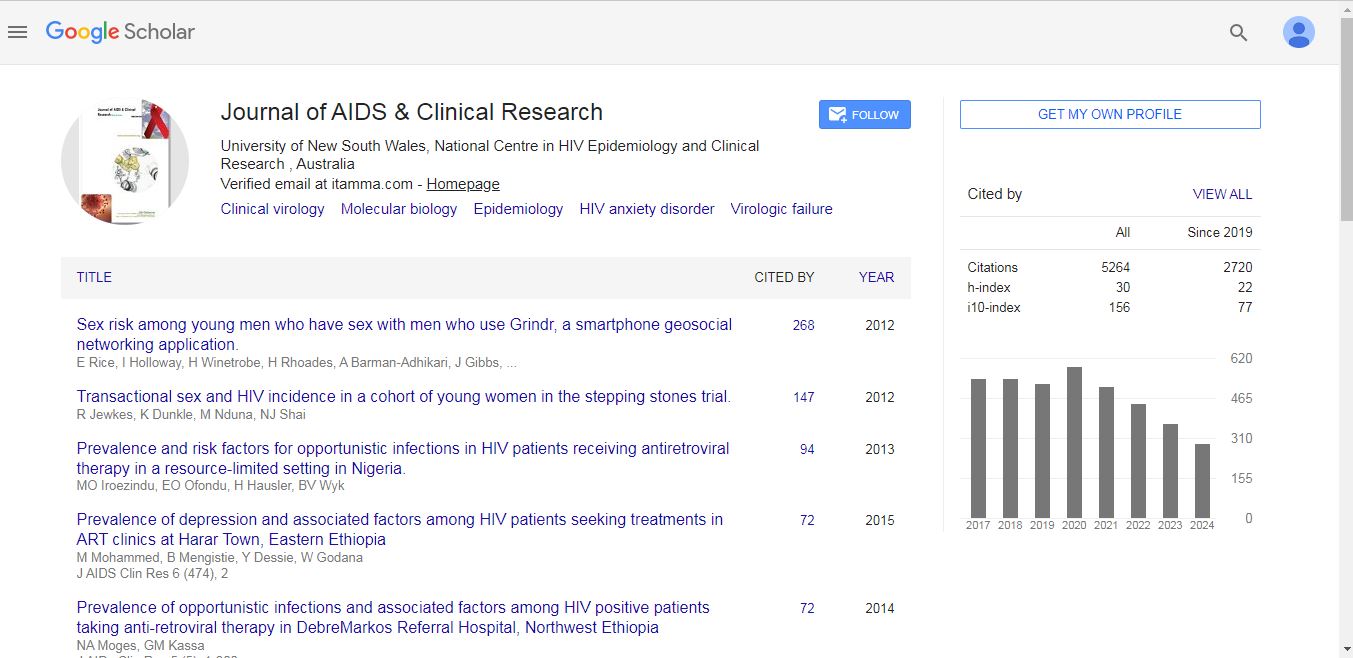
Journal of AIDS & Clinical Research received 5264 citations as per Google Scholar report