Short Communication - (2025) Volume 10, Issue 5
Received: 01-Oct-2025, Manuscript No. jidm-26-188087;
Editor assigned: 04-Oct-2025, Pre QC No. P-188087;
Reviewed: 18-Oct-2025, QC No. Q-188087;
Revised: 22-Oct-2025, Manuscript No. R-188087;
Published:
29-Oct-2025
, DOI: 10.37421/2576-1420.2025.10.420
Citation: Nguyen, David. ”Global Pandemic Preparedness: A
Dynamic Framework.” J Infect Dis Med 10 (2025):420.
Copyright: © 2025 Nguyen D. This is an open-access article distributed under the terms of the Creative Commons Attribution License, which permits unrestricted use,
distribution and reproduction in any medium, provided the original author and source are credited.
The escalating frequency and severity of emerging infectious diseases (EIDs) present a formidable global health challenge, demanding a comprehensive and coordinated approach to pandemic preparedness. Enhanced surveillance systems are paramount for early detection and monitoring of novel pathogens, enabling timely interventions and mitigating widespread transmission. Rapid diagnostic capabilities are essential to quickly identify infected individuals, facilitating prompt treatment and preventing further spread within communities.
The development of broad-spectrum therapeutics and vaccines offers a critical line of defense, providing tools to combat diverse pathogens and minimize disease impact. International collaboration is indispensable for fostering information exchange, equitable resource allocation, and synchronized response efforts during global health crises. Genomic surveillance, through real-time sequencing of pathogens, plays a pivotal role in understanding EID evolution, detecting novel strains, and informing public health strategies. Investment in genomic infrastructure and expertise is vital for bolstering our capacity to track and respond to infectious disease threats effectively. One Health approaches, recognizing the interconnectedness of human, animal, and environmental health, are fundamental to preventing zoonotic spillover events that can initiate EID outbreaks. Interdisciplinary collaboration among public health, veterinary, and environmental sectors is crucial for identifying and mitigating risks at their source, thereby enhancing EID prevention. The development and equitable distribution of vaccines and therapeutics are critical components of pandemic response, though challenges in accelerating R&D timelines and ensuring global access persist. Antimicrobial resistance (AMR) poses a significant threat, complicating the management of infectious diseases and exacerbating the challenges of pandemic preparedness. Integrated strategies that address antibiotic stewardship, infection prevention and control, and the development of new antimicrobials are essential for combating AMR. The impact of climate change on the emergence and spread of infectious diseases is increasingly recognized, necessitating adaptive preparedness strategies to address altered ecological factors. Strengthening health systems, including primary healthcare infrastructure and workforce capacity, is fundamental for effective pandemic preparedness and response at all levels. The economic and social impacts of pandemics are profound, underscoring the importance of preparedness in mitigating these consequences and demonstrating its cost-effectiveness. Continuous improvement in EID preparedness requires a cyclical process of risk assessment, planning, training, and evaluation, with regular simulations to refine response capabilities. Effective communication and risk management are essential for maintaining public trust and ensuring adherence to public health measures during pandemics, with a focus on combating misinformation. Public engagement strategies must be tailored to diverse communities, ensuring that clear and consistent information from trusted sources is accessible and understood. Preparedness for novel EIDs necessitates a robust framework for action, encompassing ongoing refinement of strategies based on lessons learned and evolving threats. These multifaceted strategies, from advanced diagnostics to interdisciplinary collaboration and resilient health systems, are collectively vital for navigating the complex landscape of emerging infectious diseases.The increasing prevalence and significant impact of emerging infectious diseases (EIDs) underscore the urgent need for a robust global strategy in pandemic preparedness. Central to this strategy are enhanced surveillance systems capable of early detection and continuous monitoring of pathogen evolution and spread. Rapid diagnostic capabilities are indispensable for swift identification of infected individuals, enabling timely treatment and containment efforts to prevent widespread outbreaks.
The proactive development of broad-spectrum therapeutics and vaccines provides crucial tools for combating a range of potential pathogens and mitigating their detrimental effects on public health. International collaboration is a cornerstone of effective pandemic preparedness, facilitating vital information sharing, equitable resource distribution, and coordinated response actions during health emergencies. Genomic surveillance has emerged as a powerful tool, allowing for real-time sequencing of pathogens to understand their evolutionary dynamics, identify novel strains, and guide public health interventions. Significant investment in genomic infrastructure and the cultivation of specialized expertise are critical for maintaining a high level of preparedness against evolving infectious disease threats. The integration of One Health approaches, which acknowledge the interconnectedness of human, animal, and environmental health, is fundamental in preventing zoonotic diseases from spilling over into human populations. Effective EID preparedness hinges on fostering interdisciplinary collaboration among public health professionals, veterinarians, and environmental scientists to proactively identify and mitigate risks at their origin. The development and equitable global distribution of vaccines and therapeutics remain critical for effective pandemic response, although challenges in accelerating research and development timelines and ensuring broad accessibility persist. Antimicrobial resistance (AMR) represents a substantial and growing threat that intensifies the challenges of managing infectious diseases and complicates existing pandemic preparedness efforts. Addressing AMR requires the implementation of integrated strategies that prioritize antibiotic stewardship, robust infection prevention and control measures, and the continuous development of novel antimicrobial agents. The influence of climate change on the emergence and geographic spread of infectious diseases is a growing concern, necessitating the development of adaptive preparedness strategies that account for shifting ecological and environmental conditions. Strengthening national and local health systems, including the enhancement of primary healthcare infrastructure and the expansion of workforce capacity, is foundational for robust pandemic preparedness and effective response. The economic and social ramifications of pandemics are substantial, highlighting the critical importance of preparedness as a measure to mitigate these devastating consequences and demonstrating its economic prudence. A commitment to continuous improvement in EID preparedness is essential, involving a systematic cycle of risk assessment, strategic planning, comprehensive training exercises, and thorough evaluation of response capabilities. Effective communication strategies and rigorous risk management are paramount for fostering public trust and ensuring widespread adherence to essential public health measures during pandemic situations. Tailored public engagement strategies are required to address diverse community needs, ensuring that clear, consistent, and accurate information is disseminated from reliable sources. Preparedness for emerging infectious diseases demands a dynamic and responsive framework for action, incorporating lessons learned from past events and adapting to novel threats. These interconnected strategies, encompassing technological advancements, intersectoral cooperation, and resilient health infrastructure, collectively form the bedrock of global pandemic preparedness and response.The increasing threat of emerging infectious diseases (EIDs) necessitates a robust global pandemic preparedness strategy. This involves enhancing surveillance systems for early detection, improving rapid diagnostic capabilities, and developing broad-spectrum therapeutics and vaccines. International collaboration is crucial for information sharing and resource allocation. Genomic surveillance plays a key role in tracking pathogen evolution and informing interventions. One Health approaches are fundamental to preventing zoonotic spillover, requiring interdisciplinary collaboration. Equitable distribution of medical countermeasures remains a challenge. Antimicrobial resistance (AMR) exacerbates EID threats, demanding integrated strategies for stewardship and infection control. Climate change also influences EID emergence, requiring adaptive measures. Strengthening health systems, particularly primary healthcare, is vital for resilience. Preparedness is economically prudent, and continuous improvement through risk assessment, planning, and simulations is essential. Effective communication and risk management, including combating misinformation, are critical for public trust and adherence to health measures. Tailored engagement strategies are needed for diverse communities. A dynamic framework for action is required to adapt to novel EID threats.
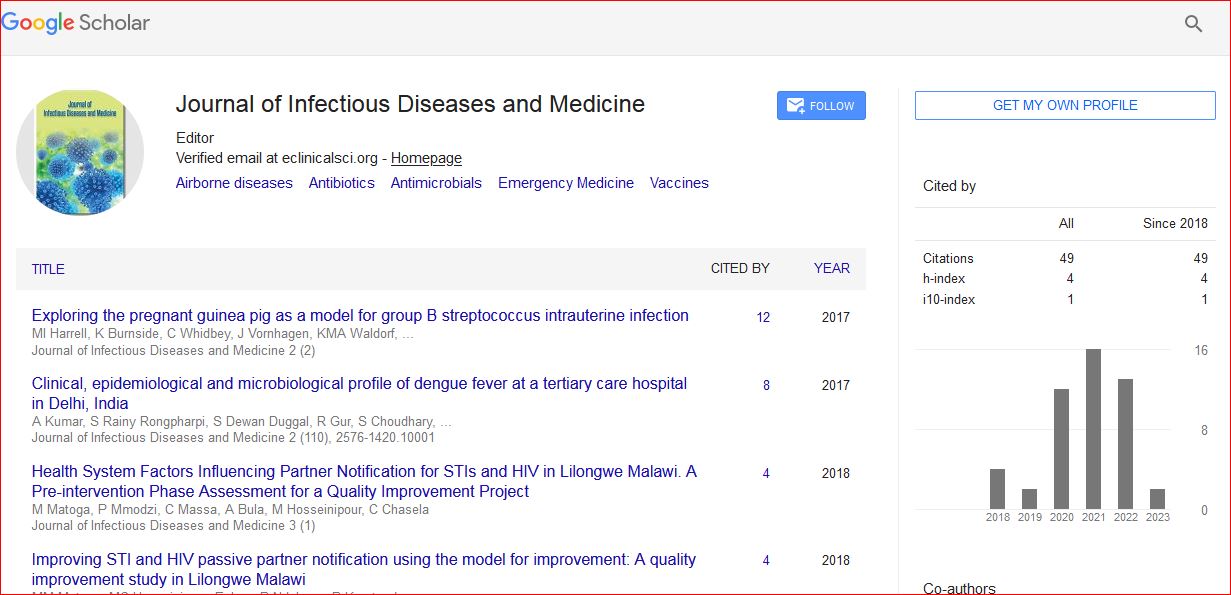
Journal of Infectious Diseases and Medicine received 1059 citations as per Google Scholar report