Opinion - (2025) Volume 16, Issue 6
Received: 01-Dec-2025, Manuscript No. jar-25-177634;
Editor assigned: 03-Dec-2025, Pre QC No. P-177634;
Reviewed: 17-Dec-2025, QC No. Q-177634;
Revised: 22-Dec-2025, Manuscript No. R-177634;
Published:
29-Dec-2025
, DOI: 10.37421/2155-6113.2025.16.1096
Citation: Khan, Asim. ”Ginseng: Enhancing Health, Cognition,
and Vitality.” J AIDS Clin Res 16 (2025):1096.
Copyright: © 2025 Khan A. This is an open-access article distributed under the terms of the Creative Commons Attribution License, which permits unrestricted use, distribution
and reproduction in any medium, provided the original author and source are credited.
Research extensively examines how ginseng and its vital components contribute to managing metabolic syndrome. Key findings demonstrate ginseng's promising potential to significantly enhance insulin sensitivity, effectively reduce inflammatory processes, and meticulously manage blood lipid levels. This positions ginseng as a valuable natural option for both the prevention and treatment of this widespread condition [1].
Studies meticulously detail how Korean Red Ginseng provides crucial neuroprotection against damage stemming from ischemia-reperfusion injury, a common and debilitating consequence of strokes. These investigations summarize compelling findings regarding its potent antioxidant, remarkable anti-inflammatory, and vital anti-apoptotic properties. Such evidence strongly suggests its potential as an important therapeutic agent for neuroprotection [2].
An updated review highlights the profound anti-cancer effects of ginsenosides, the primary active compounds found in ginseng. This work elaborates on their specific mechanisms, which include the crucial induction of apoptosis, effective inhibition of cell proliferation, and the significant prevention of metastasis. These actions underscore their considerable promise as potential complementary cancer therapies [3].
Investigations robustly explore how ginseng and its various components skillfully modulate the immune system. This research discusses how these natural compounds possess the capacity to enhance immune responses in healthy individuals while simultaneously regulating exaggerated responses often observed in disease states. This highlights their multifaceted potential for both immune support and therapeutic intervention [4].
Human studies specifically examine ginseng's impact on diverse cognitive functions. The evidence strongly suggests that ginseng may improve several critical aspects of cognition, encompassing memory, attention span, and overall processing speed. These insights point to its potential as a natural and effective cognitive enhancer for individuals seeking to boost mental performance [5].
A comprehensive review describes the profound anti-inflammatory properties of ginsenosides, which are the potent active compounds within ginseng. This scholarly work meticulously details their precise mechanisms in suppressing various inflammatory pathways. This provides a solid scientific basis for ginseng's long-standing traditional use in treating inflammatory conditions and highlights its significant potential in modern therapeutic applications [6].
Ginseng emerges as a compelling candidate for anti-aging and longevity medicine, a topic of growing scientific interest. This paper thoroughly examines its underlying molecular mechanisms, which include powerful antioxidant effects, crucial anti-inflammatory actions, and innovative telomerase-activating properties. Together, these provide a strong and compelling case for its significant role in promoting healthy aging and extending lifespan [7].
Studies delve into the intricate and fascinating interaction between ginseng, its constituent ginsenosides, and the complex gut microbiota. This research highlights how these natural compounds can positively influence the composition of gut bacteria, which, in turn, contributes substantially to their overall therapeutic effects. This suggests an exciting new pathway for understanding and leveraging ginseng's extensive health benefits [8].
Comprehensive reviews detail the specific antidiabetic effects of ginseng and its various active components. These studies meticulously outline how ginseng can effectively aid in managing blood glucose levels, significantly improve insulin resistance, and offer vital protection to pancreatic Beta cells. This firmly positions ginseng as a promising natural intervention for the effective management of diabetes [9].
Systematic reviews compile extensive preclinical and clinical evidence regarding ginseng's remarkable anti-fatigue effects. This compelling evidence demonstrates ginseng's consistent ability to significantly reduce both physical and mental fatigue, likely achieved through its profound improvements in energy metabolism and its capacity to reduce oxidative stress. This firmly establishes it as a promising natural remedy for chronic fatigue and enhancing vitality [10].
Ginseng and its components are deeply investigated for their role in managing metabolic syndrome. This research highlights recent findings, showing ginseng's potential to improve insulin sensitivity, reduce inflammation, and manage blood lipid levels, suggesting it could be a valuable natural option for prevention and treatment [1]. Expanding on this, comprehensive reviews detail the antidiabetic effects of ginseng and its active components. These studies outline how ginseng can effectively help manage blood glucose levels, improve insulin resistance, and protect pancreatic Beta cells, positioning it as a promising natural intervention for diabetes management [9]. Together, these studies establish a strong basis for ginseng's use in metabolic health.
Focusing on neurological benefits, Korean Red Ginseng demonstrates significant protective effects on the brain. Specifically, this review details how it shields the brain from damage caused by ischemia-reperfusion injury, a frequent issue in strokes. It summarizes findings on its antioxidant, anti-inflammatory, and anti-apoptotic properties, suggesting it could be a valuable therapy for neuroprotection [2]. Furthermore, ginseng's influence extends to cognitive function. Human studies have specifically examined ginseng's impact, suggesting it may improve various aspects of cognition, including memory, attention, and processing speed, offering important insights into its potential as a natural cognitive enhancer [5]. These findings highlight ginsengâ??s dual role in both protecting the brain from injury and enhancing its functional capabilities.
Ginseng also plays a crucial role in immune system modulation and combating inflammation. Papers explore how ginseng and its components modulate the immune system, discussing how these natural compounds can enhance immune responses in healthy individuals and regulate exaggerated responses in disease states, highlighting their potential for immune support and therapy [4]. Complementing this, other reviews detail the anti-inflammatory properties of ginsenosides, the active compounds in ginseng. They explain their mechanisms in suppressing inflammatory pathways, providing a scientific basis for ginseng's traditional use in inflammatory conditions and its significant potential in modern therapeutics [6]. This demonstrates ginseng's comprehensive ability to fine-tune the bodyâ??s defensive and healing processes.
Beyond acute conditions, ginseng shows promise in areas of long-term health like cancer prevention and anti-aging. A review provides an update on how ginsenosides, the active compounds in ginseng, fight cancer. It details their mechanisms, including inducing apoptosis, inhibiting proliferation, and preventing metastasis, showing their promise as potential complementary cancer therapies [3]. Additionally, ginseng is presented as a strong candidate for anti-aging and longevity medicine. Research examines its molecular mechanisms, including antioxidant, anti-inflammatory, and telomerase-activating effects, providing a compelling case for its role in promoting healthy aging [7]. These insights point to ginsengâ??s profound impact on cellular health and longevity.
Further investigations reveal ginsengâ??s influence on gut health and energy levels. Reviews explore the fascinating interaction between ginseng, ginsenosides, and the gut microbiota. It highlights how these compounds can positively influence gut bacterial composition, which in turn contributes to their therapeutic effects, suggesting a new pathway for ginseng's health benefits [8]. Lastly, systematic reviews compile preclinical and clinical evidence on ginseng's anti-fatigue effects. This evidence demonstrates ginseng's ability to reduce physical and mental fatigue, likely through improving energy metabolism and reducing oxidative stress, making it a promising natural remedy for fatigue [10]. This broad spectrum of benefits underscores ginsengâ??s holistic potential for well-being.
Ginseng, along with its active components like ginsenosides, exhibits a broad spectrum of therapeutic benefits for human health. It shows significant promise in managing metabolic syndrome and diabetes by improving insulin sensitivity, reducing inflammation, and regulating blood lipid and glucose levels. The plant offers neuroprotective effects, especially against ischemia-reperfusion injury, through its antioxidant and anti-inflammatory actions, and enhances cognitive functions such as memory and attention. Ginseng also modulates the immune system, boosting responses in healthy individuals and calming overactive ones in disease. Its anti-inflammatory properties are well-documented, supporting its traditional use in various inflammatory conditions. Furthermore, research highlights ginseng's anti-cancer potential by inducing apoptosis, inhibiting proliferation, and preventing metastasis. It is also recognized as a candidate for anti-aging and longevity medicine, acting through antioxidant, anti-inflammatory, and telomerase-activating mechanisms. The interaction between ginseng and gut microbiota is also explored, indicating a positive influence on gut bacterial composition that contributes to its overall health benefits. Lastly, preclinical and clinical studies confirm ginseng's anti-fatigue effects, improving energy metabolism and reducing oxidative stress, making it a valuable natural remedy for enhancing vitality.
Indexed at, Google Scholar, Crossref
Indexed at, Google Scholar, Crossref
Indexed at, Google Scholar, Crossref
Indexed at, Google Scholar, Crossref
Indexed at, Google Scholar, Crossref
Indexed at, Google Scholar, Crossref
Indexed at, Google Scholar, Crossref
Indexed at, Google Scholar, Crossref
Indexed at, Google Scholar, Crossref
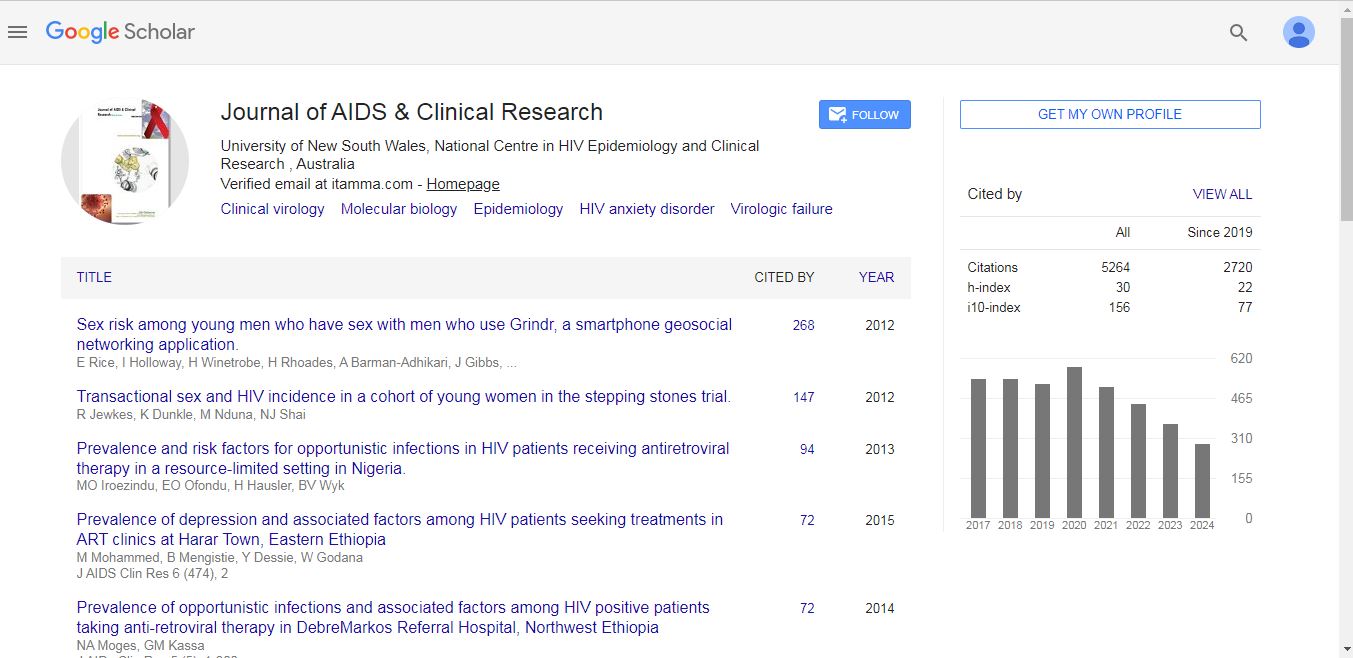
Journal of AIDS & Clinical Research received 5264 citations as per Google Scholar report