Opinion - (2025) Volume 10, Issue 5
Received: 01-Oct-2025, Manuscript No. jidm-26-188096;
Editor assigned: 04-Oct-2025, Pre QC No. P-188096;
Reviewed: 18-Oct-2025, QC No. Q-188096;
Revised: 22-Oct-2025, Manuscript No. R-188096;
Published:
29-Oct-2025
, DOI: 10.37421/2576-1420.2025.10.425
Citation: Koskinen, Sanna. ”Genomic Surveillance: Powering
Infectious Disease Control and Response.” J Infect Dis Med 10 (2025):425.
Copyright: © 2025 Koskinen S. This is an open-access article distributed under the terms of the Creative Commons Attribution License, which permits unrestricted use,
distribution and reproduction in any medium, provided the original author and source are credited.
Genomic surveillance has emerged as a fundamental pillar in the contemporary landscape of infectious disease control, offering unprecedented insights into the evolutionary trajectories of pathogens, their transmission dynamics, and the alarming rise of drug resistance and novel variants [1].
The capacity to rapidly sequence pathogen genomes empowers public health agencies to pinpoint outbreaks at their origin, meticulously track their dissemination in real-time, and strategically inform targeted interventions, including vaccination drives and treatment regimens. This molecular-level comprehension is indispensable for proactive pandemic preparedness and the orchestration of effective response mechanisms, facilitating a paradigm shift from reactive measures towards data-driven preventative strategies. The judicious integration of genomic data with established epidemiological information unlocks sophisticated analytical capabilities, which are paramount for deciphering the intricate interplay between hosts, pathogens, and the environment in the complex process of disease propagation. The widespread application of whole-genome sequencing (WGS) has profoundly transformed the methodology of outbreak investigations, enabling the precise delineation of transmission chains and the accurate attribution of infections to their definitive sources [2].
This level of granular resolution proves exceptionally vital for pathogens exhibiting complex transmission patterns or for those where the urgency of early detection cannot be overstated, such as in the context of healthcare-associated infections or outbreaks linked to contaminated food sources. WGS effectively generates a unique molecular fingerprint that possesses the capability to link individual cases with a remarkably high degree of confidence, thereby significantly aiding in the swift implementation of containment efforts and providing crucial evidence to inform public health policy decisions. Continuous monitoring of pathogen evolution through the lens of genomic surveillance stands as a critical strategy for both anticipating and effectively responding to the emergence of strains exhibiting drug resistance and variants capable of evading vaccine-induced immunity [3].
The routine sequencing of pathogens circulating within populations allows for the earliest possible detection of mutations that are intrinsically associated with diminished drug efficacy or altered transmissibility characteristics. This proactive stance empowers public health authorities to enact timely modifications to treatment guidelines, accelerate vaccine development pipelines, and refine public health recommendations, ultimately serving to mitigate the far-reaching impact of antimicrobial resistance and emerging infectious threats. Such foresight is crucial for maintaining the effectiveness of our medical interventions. The seamless integration of real-time genomic data into sophisticated public health decision-making platforms is an absolute necessity for achieving agile and responsive infectious disease control measures [4].
The development and deployment of cloud-based bioinformatics pipelines, coupled with robust data-sharing initiatives, are instrumental in facilitating the swift analysis and dissemination of critical genomic information. This technological infrastructure ensures that epidemiologists and clinicians can access vital insights with remarkable speed, thereby supporting well-informed decisions regarding the allocation of scarce resources, the formulation of public health messaging campaigns, and the strategic implementation of intervention measures during periods of outbreak or widespread pandemic. The speed of information is key. Establishing and sustaining comprehensive genomic surveillance programs necessitates substantial and ongoing investment in critical infrastructure, the cultivation of a highly skilled workforce, and the rigorous adherence to standardized operational protocols [5].
Addressing the multifaceted challenges that encompass data standardization across different platforms, ensuring inter-laboratory comparability of results, and promoting equitable global access to advanced genomic technologies are paramount considerations. Fostering collaborative efforts and investing in capacity-building initiatives are absolutely crucial to guarantee that all regions worldwide can fully benefit from the power of genomic surveillance for effective infectious disease control, thereby significantly enhancing overall global health security. The profound impact of the COVID-19 pandemic has unequivocally highlighted the indispensable role of genomic surveillance in meticulously tracking the emergence and subsequent spread of novel viral variants [6].
The ability to perform rapid sequencing and engage in swift data sharing facilitated the identification of variants of significant concern, which in turn informed the development of appropriate public health responses, guided necessary vaccine modifications, and underpinned the selection of effective therapeutic strategies. This unprecedented global experience has emphatically underscored the critical need for sustained financial investment and robust international collaboration in the field of genomic surveillance to ensure adequate preparedness for future pandemic threats. Genomic epidemiology furnishes an indispensable suite of tools for gaining a profound understanding of the population structures and intricate transmission networks that characterize infectious pathogens [7].
Through the meticulous analysis of genomic variations observed within pathogen populations, researchers are empowered to infer the precise origins of outbreaks, identify pivotal transmission events that drove dissemination, and critically assess the effectiveness of implemented control measures. This molecular evidence serves as a powerful complement to traditional epidemiological data, collectively offering a more holistic and comprehensive understanding of disease dynamics and their underlying mechanisms. The continuous advancement and widespread adoption of rapid and cost-effective genomic sequencing technologies, such as the innovative nanopore sequencing platforms, have dramatically improved both the accessibility and the scalability of essential genomic surveillance efforts [8].
These portable and versatile technologies offer the significant advantage of enabling on-site or near-site sequencing capabilities, which critically expedites the process of detection and allows for a more timely and responsive public health intervention, particularly in settings where resources are constrained. This democratization of powerful genomic tools serves to substantially strengthen global capacity for the effective control of infectious diseases. Genomic surveillance plays an absolutely vital role in the crucial monitoring of the zoonotic origins and subsequent transmission pathways of infectious diseases that can jump from animals to humans [9].
By undertaking the sequencing of pathogens sampled from both animal reservoirs and human populations, scientists are equipped to identify potential zoonotic spillover events as they occur and to comprehensively understand the diverse pathways through which transmission takes place. This indispensable One Health approach, which recognizes the interconnectedness of human, animal, and environmental health, is fundamentally crucial for preventing the emergence of future zoonotic pandemics and for broadly improving the health outcomes of both animals and humans. The careful consideration of ethical implications and the establishment of robust data governance frameworks surrounding the practice of genomic surveillance are of paramount importance for fostering public trust and ensuring the successful and responsible implementation of these powerful public health tools [10].
Maintaining transparency throughout the entire lifecycle of data, from collection and sharing to ultimate use, coupled with the implementation of strong privacy protections for individuals whose genetic information is analyzed, are absolutely essential components. Developing clear, well-defined guidelines and actively engaging all relevant stakeholders are key strategies for navigating the inherent complexities of these issues and for guaranteeing the ethical and responsible utilization of genomic information in the pursuit of improved public health outcomes.
Genomic surveillance has become an indispensable component of modern infectious disease control, providing unparalleled insights into pathogen evolution, transmission patterns, and the development of drug resistance and novel variants [1].
Public health agencies leverage the rapid sequencing of pathogen genomes to identify outbreaks at their inception, monitor their spread in real-time, and inform the development of targeted interventions like vaccination campaigns and treatment strategies. This detailed molecular understanding is vital for proactive pandemic preparedness and effective response, enabling a shift towards data-driven prevention rather than solely reactive measures. The amalgamation of genomic data with epidemiological information facilitates sophisticated analyses crucial for understanding the complex interactions between hosts, pathogens, and the environment in disease dissemination. The implementation of whole-genome sequencing (WGS) has revolutionized the investigation of outbreaks, allowing for the precise identification of transmission chains and the attribution of infections to specific origins [2].
This high-resolution capability is particularly critical for pathogens with intricate transmission patterns or those requiring early detection, such as healthcare-associated infections or foodborne illnesses. WGS provides a unique molecular fingerprint that can establish links between cases with a high degree of confidence, supporting rapid containment efforts and informing public health policy with robust evidence. Monitoring pathogen evolution through genomic surveillance is a key strategy for anticipating and responding to the emergence of drug-resistant strains and vaccine-escape variants [3].
Regular sequencing of circulating pathogens enables the early detection of mutations associated with reduced drug efficacy or altered transmissibility. This forward-looking approach allows for timely adjustments to treatment guidelines, vaccine development, and public health recommendations, thereby mitigating the impact of antimicrobial resistance and emerging infectious threats effectively. Integrating real-time genomic data into public health decision-making platforms is essential for agile infectious disease control [4].
Cloud-based bioinformatics pipelines and data-sharing initiatives streamline the rapid analysis and dissemination of genomic information. This allows epidemiologists and clinicians to access critical insights promptly, supporting informed decisions on resource allocation, public health messaging, and intervention strategies during outbreaks and pandemics, enhancing responsiveness. Establishing robust genomic surveillance programs requires significant investment in infrastructure, skilled personnel, and standardized protocols [5].
Addressing challenges such as data standardization, inter-laboratory comparability, and ensuring equitable global access to genomic technologies is paramount. Collaborative efforts and capacity-building initiatives are crucial to ensure that all regions can benefit from genomic surveillance for infectious disease control, thereby strengthening global health security and preparedness. The COVID-19 pandemic underscored the critical role of genomic surveillance in tracking the emergence and spread of novel viral variants [6].
Rapid sequencing and data sharing enabled the identification of variants of concern, informing public health responses, vaccine modifications, and therapeutic strategies. This experience emphasized the necessity for sustained investment and international collaboration in genomic surveillance to prepare for future pandemics, building resilience. Genomic epidemiology provides essential tools for understanding the population structure and transmission networks of pathogens [7].
By analyzing genomic variation, researchers can infer outbreak origins, identify key transmission events, and assess the effectiveness of control measures. This molecular evidence complements traditional epidemiological data, offering a more comprehensive understanding of disease dynamics and transmission pathways. The development of rapid and cost-effective genomic sequencing technologies, such as nanopore sequencing, has significantly enhanced the accessibility and scalability of genomic surveillance [8].
These portable technologies permit on-site or near-site sequencing, enabling faster detection and response, particularly in resource-limited settings. This democratization of genomic tools strengthens global capacity for infectious disease control, promoting wider application. Genomic surveillance plays a vital role in monitoring the zoonotic origins and transmission of infectious diseases [9].
By sequencing pathogens from both animal and human populations, scientists can identify potential zoonotic spillover events and understand transmission pathways. This One Health approach is crucial for preventing future zoonotic pandemics and improving overall animal and human health outcomes. Ethical considerations and data governance frameworks surrounding genomic surveillance are critical for public trust and effective implementation [10].
Transparency in data collection, sharing, and use, alongside robust privacy protections, are essential. Establishing clear guidelines and engaging stakeholders are key to navigating these complex issues and ensuring the responsible use of genomic information in public health initiatives.
Genomic surveillance is a critical tool in modern infectious disease control, providing deep insights into pathogen evolution, transmission, and resistance. Whole-genome sequencing (WGS) has revolutionized outbreak investigations by enabling precise identification of transmission chains and infection sources. Monitoring pathogen evolution through genomic surveillance is key to anticipating and responding to drug-resistant strains and vaccine-escape variants. Integrating real-time genomic data into public health decision-making platforms enhances agile control measures. Establishing robust surveillance programs requires significant investment and addressing challenges related to data standardization and global access. The COVID-19 pandemic highlighted the importance of genomic surveillance for tracking variants and informed public health responses. Genomic epidemiology offers essential tools for understanding pathogen transmission networks and assessing control measure effectiveness. Advancements in rapid sequencing technologies have improved accessibility and scalability, especially in resource-limited settings. Genomic surveillance is vital for monitoring zoonotic origins and transmission pathways, supporting a One Health approach. Ethical considerations and data governance are crucial for public trust and the responsible use of genomic information.
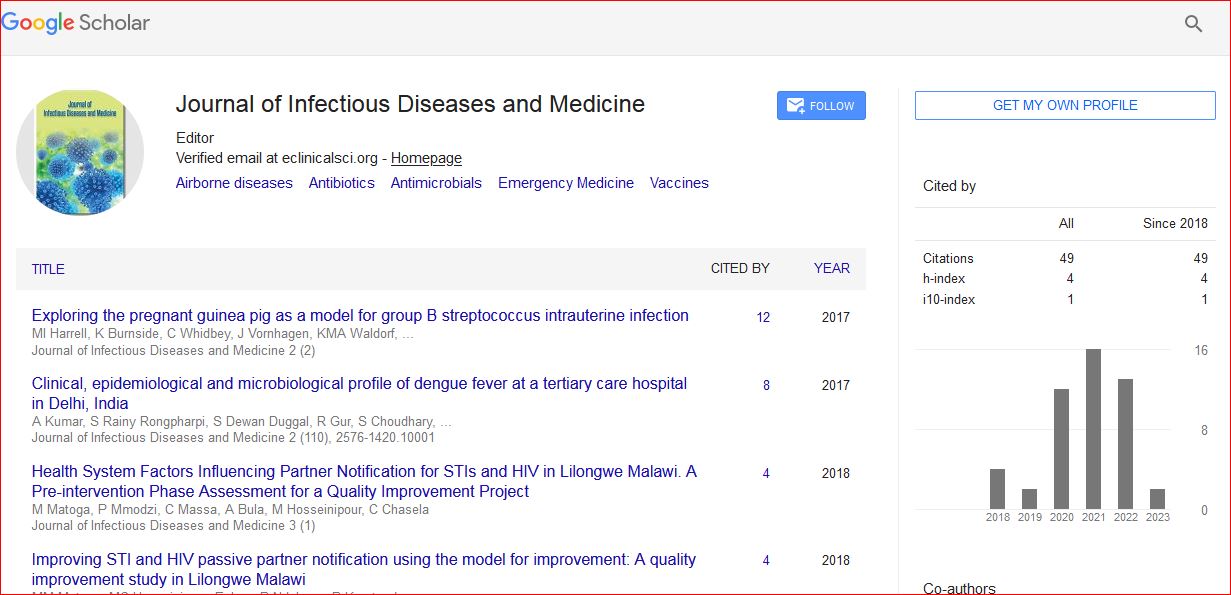
Journal of Infectious Diseases and Medicine received 1059 citations as per Google Scholar report