Short Communication - (2025) Volume 13, Issue 4
Received: 02-Aug-2025, Manuscript No. JGPR-26-190217;
Editor assigned: 04-Aug-2025, Pre QC No. P-190217;
Reviewed: 18-Aug-2025, QC No. Q-190217;
Revised: 25-Aug-2025, Manuscript No. R-190217;
Published:
30-Aug-2025
, DOI: 10.37421/2329-9126.2025.13.627
Citation: Novak, Peter. ”General Practitioners’ Role in Anxiety Disorder Management.” J Gen Pract 13 (2025):627.
Copyright: © 2025 Novak P. This is an open-access article distributed under the terms of the Creative Commons Attribution License, which permits unrestricted use, distribution and reproduction in any medium, provided the original author and source are credited.
General practitioners (GPs) are instrumental in the primary care management of anxiety disorders, serving as the initial point of contact for many patients. Their role encompasses recognizing diverse presentations of anxiety, initiating foundational treatments such as psychoeducation and lifestyle modifications, and judiciously referring patients to specialized mental health services when necessary. A cornerstone of effective GP management involves cultivating a strong therapeutic alliance, undertaking accurate diagnostic assessments, and implementing evidence-based treatment strategies that are individualized to patient needs. This foundational role is critical for ensuring timely and appropriate care for individuals experiencing anxiety. [1] Within the primary care setting, GPs face both challenges and opportunities in effectively addressing anxiety. These challenges highlight a clear need for enhanced training and greater access to resources for GPs, aiming to bolster their diagnostic accuracy and boost their confidence in managing anxiety conditions. Such improvements are essential for reducing the significant treatment gap that exists for these common mental health issues. [2] A key strategy for improving anxiety disorder management in general practice is the integration of stepped care models. This approach allows for a tiered system of interventions, commencing with low-intensity options and progressing to more intensive treatments as dictated by patient response and needs, all under the coordination of the GP. This ensures a flexible and responsive care pathway. [3] The effectiveness of brief psychological interventions delivered by GPs for common mental health problems, including anxiety, has been a focus of research. This area emphasizes the critical importance of training GPs in the delivery of evidence-based, time-limited therapeutic approaches that are suitable for the primary care environment. [4] Pharmacological management remains a vital component of anxiety disorder treatment in primary care. Guidance for GPs on prescribing appropriate medications, monitoring their effectiveness, and managing potential side effects is crucial. This approach necessitates a balanced consideration of both pharmacological and non-pharmacological interventions for optimal patient outcomes. [5] The impact of patient factors, such as the presence of comorbidities and the severity of symptoms, significantly influences how GPs manage anxiety disorders. This underscores the importance of personalized care plans and shared decision-making between the GP and the patient as integral elements of effective primary care practice. [6] Digital health tools and telehealth solutions are increasingly being explored for their utility in primary care anxiety management. This research investigates how GPs can effectively leverage these technologies to enhance patient access to care and improve treatment adherence, thereby expanding the reach of mental health support. [7] The differential diagnosis of anxiety disorders in primary care settings presents complexities, as anxiety symptoms can overlap with other medical and psychological conditions. This necessitates clear diagnostic algorithms and clinical insights to assist GPs in improving the accuracy of their diagnoses. [8] The therapeutic relationship between GPs and patients with anxiety disorders is of paramount importance. Research highlights that elements such as trust, empathy, and effective communication are significant contributors to positive treatment outcomes and patient engagement in care. [9] Collaborative care models, fostering a partnership between GPs and specialist mental health professionals, are essential for managing anxiety disorders effectively. These models outline strategies for seamless referrals and shared care planning, ensuring continuity and comprehensiveness of care for patients. [10]
General practitioners (GPs) are the first point of contact for many individuals experiencing anxiety disorders, playing a critical role in their initial assessment, diagnosis, and ongoing management. This involves recognizing the varied ways anxiety can present, initiating appropriate interventions like psychoeducation and lifestyle changes, and knowing when to refer patients to specialized mental health services. Effective GP management is characterized by a strong therapeutic alliance, accurate diagnostic formulation, and the application of evidence-based strategies tailored to each patient's unique needs. [1] Studies focusing on anxiety disorders in primary care settings highlight the specific challenges and opportunities faced by GPs. These investigations emphasize the necessity of enhanced training programs and the provision of more comprehensive resources for GPs. Such enhancements are vital to improving their diagnostic precision and increasing their confidence in managing these conditions, with the ultimate goal of reducing the existing treatment gap for anxiety. [2] The integration of stepped care models into general practice is a significant development for managing anxiety disorders. This framework involves offering a spectrum of interventions, beginning with lower-intensity options and escalating to more intensive treatments as required, all within a system coordinated by the GP. This ensures a flexible and responsive approach to care. [3] Research has explored the efficacy of brief psychological interventions delivered by GPs for common mental health issues, including anxiety. This line of inquiry underscores the importance of equipping GPs with the skills to deliver evidence-based, time-limited therapeutic approaches that are well-suited to the primary care context. [4] Pharmacological management of anxiety disorders in general practice is a critical area. This involves providing GPs with clear guidance on selecting and prescribing appropriate medications, effectively monitoring treatment efficacy, and managing any adverse effects. A balanced approach that considers both medication and non-pharmacological interventions is essential. [5] The influence of patient-specific factors, such as the presence of comorbidities and the severity of anxiety symptoms, on management strategies employed by GPs is a key consideration. This highlights the importance of adopting personalized care plans and engaging in shared decision-making with patients to optimize treatment effectiveness. [6] The application of digital health tools and telehealth services in primary care for anxiety management is gaining traction. Research in this area examines how GPs can effectively utilize these technologies to improve patient access to mental health services and enhance adherence to treatment regimens. [7] Accurate differential diagnosis is crucial in primary care for anxiety disorders, given the potential for symptom overlap with other medical and psychological conditions. This requires GPs to have access to diagnostic algorithms and clinical guidance to improve their diagnostic accuracy and ensure appropriate patient pathways. [8] The therapeutic relationship established between GPs and patients with anxiety disorders is a vital factor influencing treatment outcomes. Studies indicate that trust, empathy, and effective communication are fundamental to building a strong alliance that supports patient engagement and positive therapeutic results. [9] Collaborative care models are increasingly recognized as effective for managing anxiety disorders, emphasizing a partnership between GPs and mental health specialists. These models provide strategies for efficient referral processes and shared care planning to ensure seamless and comprehensive support for patients transitioning between care settings. [10]
General practitioners (GPs) play a vital role in the initial assessment, diagnosis, and management of anxiety disorders in primary care. They are responsible for recognizing anxiety presentations, initiating treatments like psychoeducation and lifestyle changes, and referring patients to specialists when needed. Effective management hinges on a strong therapeutic alliance, accurate diagnosis, and tailored, evidence-based treatments. GPs face challenges in primary care, necessitating enhanced training and resources to improve diagnostic accuracy and reduce the treatment gap. The implementation of stepped care models and brief psychological interventions is crucial for providing flexible and accessible care. Pharmacological management, guided by specific recommendations, is also important, requiring a balanced approach with non-pharmacological strategies. Patient factors, digital health tools, differential diagnosis, and the therapeutic relationship are all significant considerations for GPs. Collaborative care models that bridge primary and specialist mental healthcare further enhance the comprehensive management of anxiety disorders.
None
None
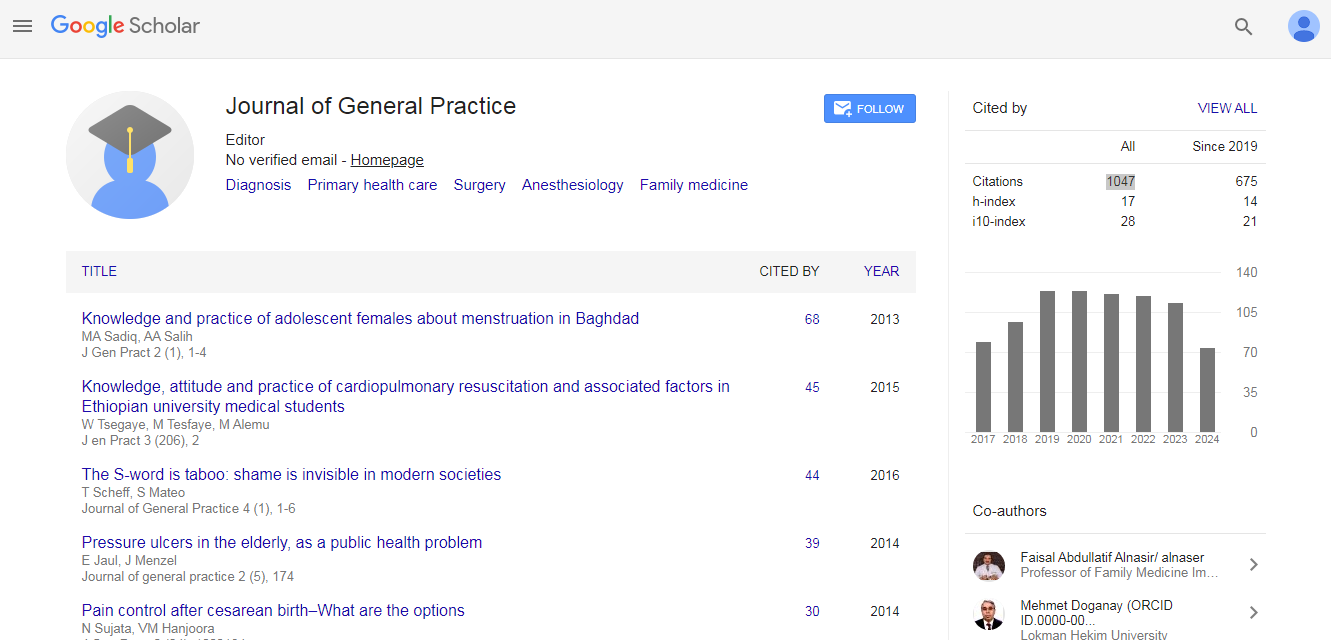
Journal of General Practice received 1047 citations as per Google Scholar report