Perspective - (2025) Volume 11, Issue 6
Received: 01-Dec-2025, Manuscript No. elj-25-176221;
Editor assigned: 03-Dec-2025, Pre QC No. P-176221;
Reviewed: 17-Dec-2025, QC No. Q-176221;
Revised: 22-Dec-2025, Manuscript No. R-176221;
Published:
29-Dec-2025
, DOI: 10.37421/2472-0895.2025.11.350
Citation: Popova, Irina. ”Febrile Seizures: Etiology, Management, Outcomes.” Epilepsy J 11 (2025):350.
Copyright: © 2025 Popova I. This is an open-access article distributed under the terms of the Creative Commons Attribution License, which permits unrestricted use, distribution and reproduction in any medium, provided the original author and source are credited.
Febrile seizures represent a common neurological emergency in childhood, prompting extensive research into their etiology, management, and long-term consequences. Significant progress has been made in identifying key risk factors for their recurrence. For example, a younger age at the first seizure, a family history of febrile seizures, and a short duration of fever before the seizure are consistently highlighted as significant predictors of recurrence, aiding clinicians in guiding parental counseling and refining risk assessments[1].
Further studies reinforce these findings, noting that a young age at onset, a positive family history, and the presence of complex features during the initial seizure are strong indicators for future recurrences, contributing to improved risk stratification for children experiencing these events[6].
Building on this, efforts to stratify risk in children presenting with febrile seizures pinpoint clinical factors that help categorize patients based on their likelihood of recurrence or progression to more severe forms, thereby enabling more targeted surveillance and the development of personalized management plans[8].
The comprehensive management of febrile seizures encompasses various aspects, including acute treatment strategies, guidelines for diagnostic workup, and crucial considerations for parental counseling. It is vital to distinguish between simple and complex presentations to guide appropriate interventions and alleviate parental anxiety, ensuring effective care[2].
Current trends in management reflect an evolving landscape, with advancements in emergency care recommendations, antipyretic strategies, and the roles of diagnostic imaging and electroencephalography, underscoring a shift towards more evidence-based and individualized treatment approaches[9].
Understanding the genetic underpinnings of febrile seizures has also advanced considerably. Research indicates how various gene mutations contribute to susceptibility, emphasizing the complex interplay between genetic predispositions and environmental triggers. This deeper understanding of genetic links promises to inform future diagnostic and therapeutic strategies, offering new avenues for intervention[4].
Beyond genetics, specific viral infections have been strongly associated with the occurrence of febrile seizures. Common pathogens like human herpesvirus 6, influenza virus, and respiratory syncytial virus are frequently identified as triggers, suggesting that a better grasp of these links can lead to improved preventative strategies[7].
The pathophysiology of febrile seizures is increasingly understood, with recent advances discussing mechanisms related to neuronal excitability, inflammatory responses, and genetic predispositions. Here's the thing: high fever interacts with developing brain circuits to trigger seizures, and this knowledge is paving the way for targeted therapeutic interventions[10].
Regarding long-term outcomes, meta-analyses investigate the neurodevelopmental trajectories in children post-febrile seizures. While most children exhibit typical development, a subgroup might face an elevated risk for specific neurodevelopmental issues, including language delays or behavioral problems, emphasizing the need for vigilant follow-up[5].
Specifically, for febrile status epilepticus (FSE), which is a more prolonged form, while most children generally have a good prognosis, there remains an increased risk of epilepsy development and potential subtle cognitive impairments in a subgroup, highlighting the necessity for careful, long-term follow-up and monitoring[3].
The ongoing research across these domains continues to refine our comprehension and improve care for children affected by febrile seizures.
Febrile seizures, a prevalent childhood neurological condition, are the subject of extensive research aimed at understanding their triggers, clinical course, and long-term implications. A significant area of focus is identifying and understanding the factors that predict seizure recurrence. Multiple studies consistently point to a younger age at the first seizure, a positive family history of febrile seizures, and a short duration of fever preceding the seizure as crucial indicators for future episodes [1, 6]. These factors are instrumental in developing effective parental counseling strategies and in conducting accurate risk assessments, allowing clinicians to anticipate and prepare for potential recurrences. Further investigations into risk stratification help in categorizing patients based on their likelihood of recurrence or progression to more complex forms, facilitating tailored surveillance and management plans [8].
The management of febrile seizures has evolved, emphasizing a comprehensive approach that includes immediate acute treatment, appropriate diagnostic workup, and empathetic parental counseling. It is critical to differentiate between simple and complex febrile seizures to ensure that interventions are suitable and to reduce the understandable anxiety experienced by parents [2]. Recent advancements in clinical practice guide emergency care protocols, the judicious use of antipyretics, and the application of diagnostic tools such as imaging and electroencephalography. What this really means is a move towards more individualized, evidence-based treatment strategies that cater to the specific needs of each child [9].
Exploring the underlying mechanisms of febrile seizures reveals a complex interplay of genetic and environmental factors. Genetic research has identified various gene mutations that increase susceptibility, highlighting the intricate relationship between an individual's genetic makeup and external triggers [4]. Furthermore, specific viral infections are frequently implicated in initiating febrile seizures. Common culprits include human herpesvirus 6, influenza virus, and respiratory syncytial virus. Understanding these viral associations is key to developing preventative measures and improving clinical management strategies, as it can inform strategies to mitigate seizure risk during periods of common viral illness [7].
The pathophysiology of febrile seizures is becoming clearer, involving intricate mechanisms such as altered neuronal excitability, inflammatory responses within the brain, and predisposed genetic factors. Here's the thing: the interaction of a high fever with developing brain circuits is a primary trigger for these seizures. A deeper insight into these biological processes is crucial for developing targeted therapeutic interventions that could potentially prevent or mitigate seizure activity [10]. This ongoing discovery is vital for moving beyond symptomatic treatment towards more foundational interventions.
Long-term outcomes following febrile seizures are a significant concern for parents and clinicians alike. While the majority of children who experience febrile seizures go on to have typical neurodevelopmental trajectories, it's worth noting that some children may face an elevated risk for certain neurodevelopmental challenges, including language delays or behavioral problems [5]. More severe presentations, such as febrile status epilepticus (FSE), which involves prolonged seizures, warrant particular attention. Although most children with FSE generally have a good prognosis, there is a recognized increased risk of developing epilepsy and potential subtle cognitive impairments in a subset of these individuals. This underscores the critical importance of careful, long-term follow-up and comprehensive monitoring to identify and address any emerging developmental or neurological issues early [3].
Research into febrile seizures provides a comprehensive understanding of their etiology, clinical course, and long-term implications. Key studies consistently identify a younger age at the first seizure, a family history of febrile seizures, and a brief duration of fever before the event as significant predictors of recurrence. The presence of complex features in the initial seizure further aids in prognostic assessment, informing parental counseling and refining risk stratification efforts. Effective management involves differentiating between simple and complex febrile seizure presentations to guide acute treatment and diagnostic workup, thereby reducing parental anxiety. Current trends reflect a shift towards more individualized, evidence-based approaches, integrating advancements in emergency care, antipyretic strategies, and the utility of diagnostic imaging and electroencephalography. Beyond clinical management, investigations into the genetic underpinnings reveal how various gene mutations contribute to susceptibility, emphasizing the complex interplay between genetic factors and environmental triggers. Specific viral infections, such as human herpesvirus 6, influenza, and respiratory syncytial virus, are frequently identified as direct triggers, pointing towards potential preventative strategies. The pathophysiology is increasingly understood to involve neuronal excitability, inflammatory responses, and genetic predispositions, clarifying how high fever interacts with developing brain circuits to initiate seizures. Regarding long-term outcomes, while most children experience typical neurodevelopment, a subset faces an elevated risk for issues like language delays or behavioral problems. For those with febrile status epilepticus, there's an increased risk of epilepsy development and subtle cognitive impairments, underscoring the vital need for vigilant, long-term follow-up.
None
None
Indexed at, Google Scholar, Crossref
Indexed at, Google Scholar, Crossref
Indexed at, Google Scholar, Crossref
Indexed at, Google Scholar, Crossref
Indexed at, Google Scholar, Crossref
Indexed at, Google Scholar, Crossref
Indexed at, Google Scholar, Crossref
Indexed at, Google Scholar, Crossref
Indexed at, Google Scholar, Crossref
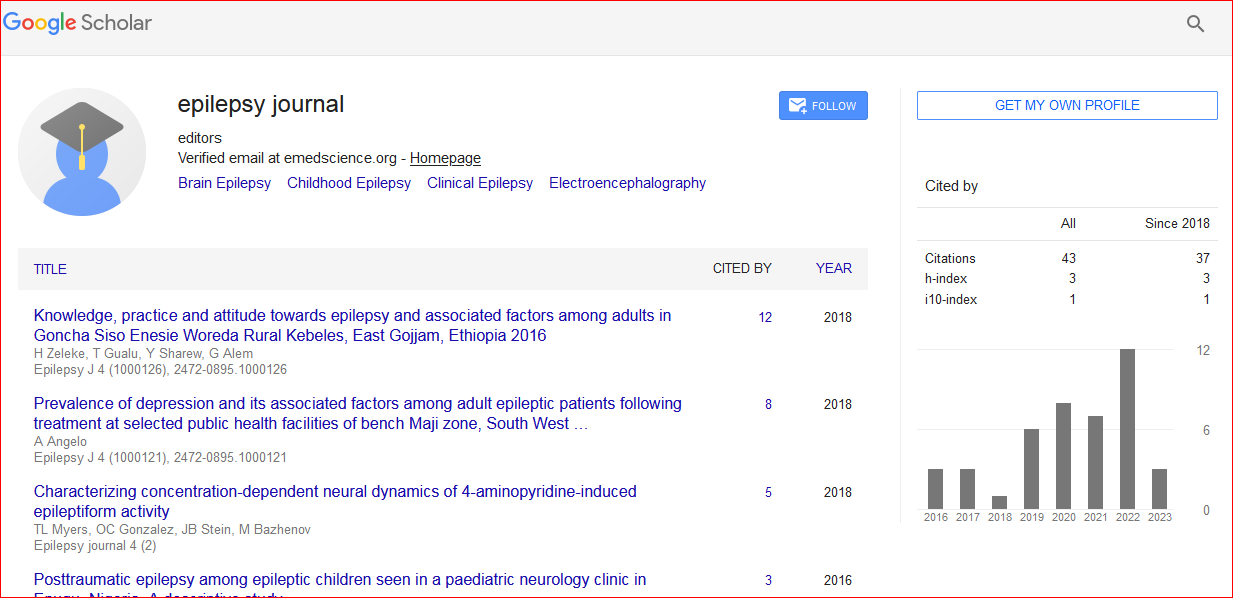
Epilepsy Journal received 41 citations as per Google Scholar report