Opinion - (2025) Volume 13, Issue 5
Received: 01-Oct-2025, Manuscript No. JGPR-26-190231;
Editor assigned: 03-Oct-2025, Pre QC No. P-190231;
Reviewed: 17-Oct-2025, QC No. Q-190231;
Revised: 22-Oct-2025, Manuscript No. R-190231;
Published:
29-Oct-2025
, DOI: 10.37421/2329-9126.2025.13.641
Citation: Horvat, Ivan. ”Family Physicians: Cornerstone of Public`Health.” J Gen Pract 13 (2025):641.
Copyright: © 2025 Horvat I. This is an open-access article distributed under the terms of the Creative Commons Attribution License, which permits unrestricted use, distribution and reproduction in any medium, provided the original author and source are credited.
Family physicians are fundamental pillars in the architecture of public health initiatives, serving as the primary and most accessible point of contact for a vast spectrum of the population. Their multifaceted role transcends the traditional scope of individual patient care, extending into crucial areas such as proactive disease prevention, the promotion of overall health and well-being, the ongoing management of chronic conditions, and the timely identification of potential health issues at a community level. They are instrumental in bridging the gap between broad public health guidelines and the practical, actionable advice needed by patients and their families, thereby significantly contributing to increased vaccine uptake, greater participation in screening programs, and improved adherence to various public health interventions. Their profound understanding of the unique needs of local communities, coupled with their intimate knowledge of individual patient circumstances, enables the development and implementation of public health strategies that are not only more effective but also demonstrably more sustainable in the long run [1].
Furthermore, family physicians play a pivotal role in identifying and actively addressing health disparities that manifest within their patient populations, paying close attention to the intricate web of social determinants of health. They are vital advocates for policy changes that are designed to bolster community well-being and are instrumental in the practical implementation of programs specifically targeted towards vulnerable demographic groups. The established relationships of trust that family physicians cultivate with their patients make them exceptionally effective conduits for disseminating crucial public health messages, particularly concerning essential lifestyle modifications, vital mental health support services, and facilitating access to critical social services. This direct, trusted engagement proves invaluable in the early identification of potential disease outbreaks and in the swift, coordinated facilitation of public health responses [2].
The collaborative synergy between family physicians and public health agencies is indispensable for the successful and widespread implementation of population-level health strategies. They provide essential, real-time data derived from primary care settings, which is critically important for informing public health surveillance efforts, evaluating the efficacy of existing programs, and guiding the strategic allocation of limited resources. By effectively bridging the often-perceived chasm between the realities of clinical practice and the broader aims of public health policy, family physicians ensure that interventions are firmly grounded in the actual needs of patients and are culturally sensitive and appropriate. Their active involvement is paramount in championing preventative services, effectively managing chronic diseases that impose a considerable burden on public health systems, and proactively addressing emerging health threats with timely and informed action [3].
At the vanguard of numerous public health initiatives, family physicians are actively involved in critical programs such as widespread vaccination campaigns, systematic chronic disease screening protocols, and comprehensive health education efforts. The profound trust they have cultivated with their patient base empowers them to communicate the significance of these interventions with unparalleled effectiveness, directly leading to higher rates of patient compliance and engagement. They also shoulder a significant responsibility in identifying and adeptly managing non-communicable diseases, which currently represent a major public health concern globally, and in diligently promoting mental health and overall well-being throughout their communities. Their inherent accessibility makes them ideally positioned to confront health inequalities and to effectively reach and serve previously underserved populations [4].
Functioning as crucial gatekeepers and adept navigators within the complex landscape of public health programs, family physicians skillfully guide patients toward the most appropriate preventive services and necessary screenings. They are absolutely essential for the early detection of a wide range of diseases and are critical in managing the multifaceted needs of individuals grappling with chronic conditions, thereby significantly reducing the strain on public health resources. Their deep understanding of the myriad social and environmental factors that exert influence on an individual's health status allows them to deliver truly holistic care and to passionately advocate for community-level interventions specifically designed to foster healthier lifestyles and actively reduce persistent health disparities [5].
Extending their crucial role in public health, family physicians are dedicated to the vital task of educating and empowering patients, equipping them with the knowledge and confidence to make informed decisions about their own health. They stand as key figures in the promotion of health literacy, acting as strong advocates for the adoption of healthy behaviors, and actively facilitating patient access to essential community resources. Their innate ability to connect with a wide diversity of patient groups renders them absolutely indispensable in the successful execution of public health campaigns, particularly those focused on infectious disease control, raising awareness around mental health issues, and preventing the onset of chronic diseases. By consistently integrating core public health principles into their daily clinical practice, they make a tangible and significant contribution to the development and sustenance of healthier communities overall [6].
Family physicians are unequivocally essential for the successful deployment and broad reach of public health programs, effectively acting as trusted intermediaries that connect complex health systems with the individuals they serve. They are tireless champions of preventative care, actively promoting essential services such as cancer screenings and cardiovascular risk assessments, and play a critical role in the ongoing management of chronic conditions that represent major public health challenges. Their active involvement in diverse health promotion activities, encompassing critical areas like smoking cessation support and personalized nutrition counseling, directly and positively impacts community health outcomes. Moreover, their nuanced understanding of individual patient circumstances and contexts enables them to effectively address the underlying social determinants of health and to actively promote greater health equity across populations [7].
Within the critical domain of public health surveillance and emergency response, family physicians are recognized as key players, significantly enabling the early identification of disease outbreaks and emerging health trends. Their inherent proximity to the communities they serve, coupled with the deep-seated patient relationships they have established, greatly facilitates the effective communication of vital public health messages, thereby encouraging greater adherence to guidelines and fostering the adoption of preventative behaviors. They are instrumental in the complex management of chronic diseases, which constitute a substantial burden on public health systems, and in delivering essential health education that empowers patients. Their inherently holistic approach to patient care ensures that public health interventions are thoughtfully tailored to meet the specific needs of individuals and families, ultimately fostering greater overall effectiveness and impact [8].
Serving as indispensable conduits that effectively link individual patient care with the broader, overarching goals of public health, family physicians are central to the successful implementation of preventive strategies. This includes crucial activities such as routine screening for common cancers and cardiovascular diseases, and the effective management of chronic conditions that impact significant portions of the population. Their distinct ability to comprehend and proactively address the complex social determinants of health within their patient panels makes them vital contributors to the ongoing effort to reduce health inequities. Furthermore, the trusted position they occupy within their respective communities grants them the influence needed to effectively disseminate vital public health information and to vigorously promote the adoption of healthy behaviors among a diverse populace [9].
Indispensable to the successful operation and wide-reaching impact of public health programs, family physicians are valued for their inherent accessibility, the deep trust they engender in their patients, and their comprehensive grasp of community health needs. They fulfill a critical mandate in disease prevention, robust health promotion, and the early detection of developing health issues. By seamlessly integrating fundamental public health principles into the fabric of primary care, they make substantial contributions to the effective management of chronic diseases, the enhancement of vaccination rates, and the targeted addressing of health disparities. Their role is profoundly crucial in translating abstract public health policies into tangible, practical patient care and in actively advocating for the creation and maintenance of healthier communities. The consistent, ongoing relationships they build with patients are fundamental to achieving effective follow-up and fostering sustained positive changes in health behaviors [10].
Family physicians are recognized as central to the success of public health programs, acting as accessible first points of contact for diverse populations and extending their role beyond individual patient care to encompass disease prevention, health promotion, chronic disease management, and early detection of health issues at a community level. They are instrumental in translating public health guidelines into actionable advice for patients and families, contributing to vaccine uptake, screening participation, and adherence to public health interventions. Their deep understanding of local community needs and individual patient contexts allows for tailored public health strategies that are more effective and sustainable [1].
These physicians significantly contribute to public health by identifying health disparities and addressing social determinants of health within their patient populations. They are crucial in advocating for policy changes that support community well-being and in implementing programs aimed at vulnerable groups. Their established patient relationships foster trust, making them effective conduits for public health messages, particularly regarding lifestyle modifications, mental health support, and access to social services. This direct engagement helps in early identification of outbreaks and in facilitating rapid public health responses [2].
The collaborative role of family physicians with public health agencies is vital for the effective implementation of population-level health strategies. They provide essential data from primary care settings that informs public health surveillance, program evaluation, and resource allocation. By bridging the gap between clinical practice and public health policy, family physicians ensure that interventions are grounded in real-world patient needs and are culturally appropriate. Their involvement is key to promoting preventative services, managing chronic diseases that place a burden on public health systems, and addressing emerging health threats [3].
Family physicians are at the forefront of public health initiatives like vaccination campaigns, chronic disease screening, and health education programs. Their trusted relationship with patients allows them to effectively communicate the importance of these interventions, leading to higher compliance rates. They also play a critical role in identifying and managing non-communicable diseases, which are a significant public health concern, and in promoting mental health and well-being within communities. Their accessibility makes them ideal for addressing health inequalities and reaching underserved populations [4].
These physicians serve as crucial gatekeepers and navigators in public health programs, guiding patients towards appropriate preventive services and screenings. They are essential for early detection of diseases and for managing the complex needs of individuals with chronic conditions, thereby reducing the burden on public health resources. Their understanding of the social and environmental factors influencing health allows them to provide holistic care and to advocate for community-level interventions that promote healthier lifestyles and reduce health disparities [5].
Their role in public health extends to educating and empowering patients to make informed decisions about their health. They are key figures in promoting health literacy, advocating for healthy behaviors, and facilitating access to community resources. Their ability to connect with diverse patient groups makes them indispensable in implementing public health campaigns related to infectious disease control, mental health awareness, and chronic disease prevention. By integrating public health principles into daily practice, they contribute to building healthier communities [6].
Family physicians are essential for the successful implementation and reach of public health programs, acting as trusted intermediaries between health systems and individuals. They champion preventative care, such as cancer screenings and cardiovascular risk assessments, and are critical in managing chronic conditions that are major public health challenges. Their involvement in health promotion activities, including smoking cessation and nutrition counseling, directly impacts community health outcomes. Furthermore, their understanding of patient circumstances enables them to address social determinants of health and promote health equity [7].
They are key players in public health surveillance and response, enabling the early identification of disease outbreaks and trends. Their proximity to communities and established patient relationships facilitate effective communication of public health messages, encouraging adherence to guidelines and promoting preventative behaviors. They are instrumental in managing chronic diseases, which represent a significant public health burden, and in providing essential health education. Their holistic approach to patient care ensures that public health interventions are tailored to individual and family needs, fostering greater effectiveness [8].
Family physicians serve as crucial links between individual patient care and broader public health goals. They are essential for the implementation of preventive strategies, such as screening for common cancers and cardiovascular diseases, and for the management of chronic conditions that affect large segments of the population. Their ability to understand and address the social determinants of health within their patient panels makes them vital in reducing health inequities. Furthermore, their trusted position within communities allows them to effectively disseminate public health information and promote healthy behaviors [9].
Indispensable in public health programs due to their accessibility, patient trust, and comprehensive understanding of community health needs, family physicians play a critical role in disease prevention, health promotion, and early detection of health issues. By integrating public health principles into primary care, they contribute to managing chronic diseases, improving vaccination rates, and addressing health disparities. Their role is crucial in translating public health policies into practical patient care and in advocating for healthier communities. Their consistent patient relationships allow for effective follow-up and sustained health behavior change [10].
Family physicians are integral to public health, acting as accessible first points of contact for diverse populations. They engage in disease prevention, health promotion, and chronic disease management, translating public health guidelines into actionable advice for patients and families. Their role extends to identifying health disparities, advocating for policy changes, and implementing programs for vulnerable groups. Physicians collaborate with public health agencies, providing essential data for surveillance and program evaluation. They are at the forefront of initiatives like vaccination campaigns and chronic disease screening, leveraging patient trust to ensure compliance. Acting as gatekeepers and navigators, they guide patients towards preventive services and manage chronic conditions, reducing the burden on public health resources. They educate and empower patients, promote health literacy, and facilitate access to community resources, contributing to healthier communities. Their involvement is crucial for addressing social determinants of health and promoting health equity, and their proximity to communities aids in public health surveillance and response. Ultimately, their consistent patient relationships enable effective follow-up and sustained health behavior change.
None
None
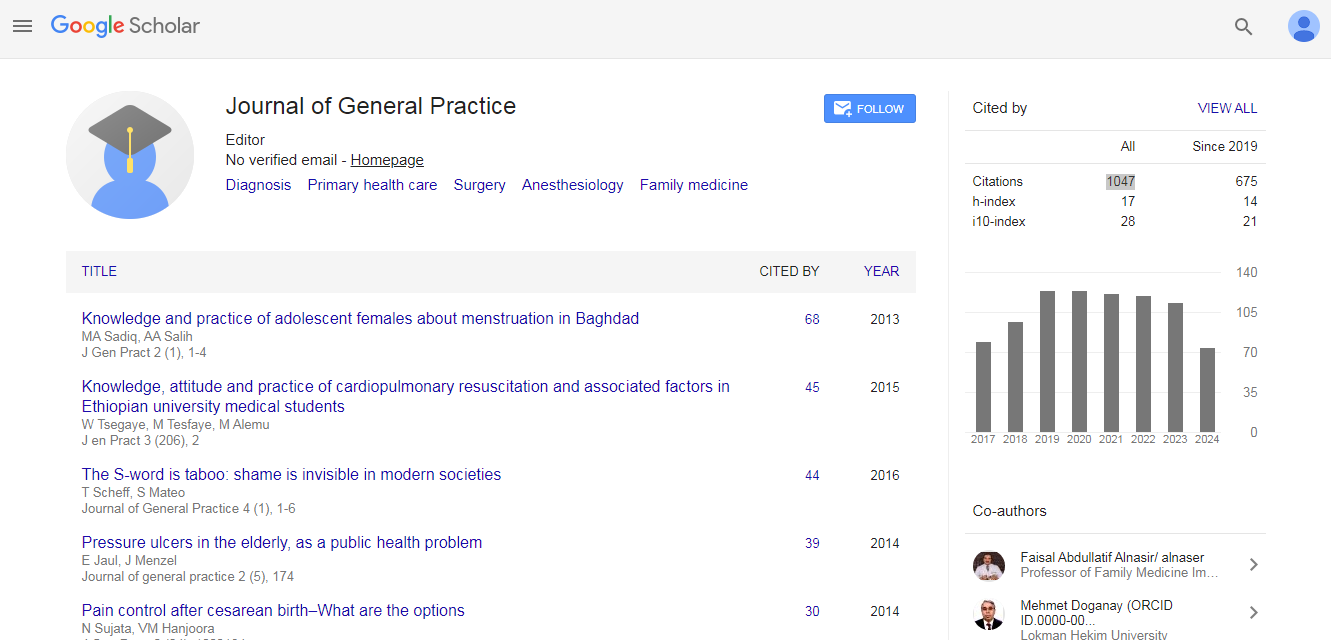
Journal of General Practice received 1047 citations as per Google Scholar report