Brief Report - (2025) Volume 14, Issue 5
Received: 02-Oct-2025, Manuscript No. jsp-26-182271;
Editor assigned: 06-Oct-2025, Pre QC No. P-182271;
Reviewed: 20-Oct-2025, QC No. Q-182271;
, Manuscript No. R-182271;
Published:
30-Oct-2025
, DOI: 10.37421/2165-7939.2025.14.740
Citation: Gómez, Alejandro P.. ”Facet Joint Arthropathy: Chronic Low Back Pain Management.” J Spine 14 (2025):740.
Copyright: © 2025 Gómez P. Alejandro This is an open-access article distributed under the terms of the Creative Commons Attribution License, which permits unrestricted use, distribution and reproduction in any medium, provided the original author and source are credited.
Facet joint arthropathy represents a significant clinical challenge, often manifesting as chronic low back pain. This degenerative condition affects the spinal facet joints, leading to a cascade of pathological changes. These changes typically involve inflammation, progressive wear of the articular cartilage, and the formation of osteophytes or bone spurs. The cumulative effect of these alterations is the development of characteristic symptoms such as pain, stiffness, and a marked reduction in spinal mobility. The management of facet joint arthropathy is multifaceted, encompassing a range of therapeutic approaches designed to alleviate symptoms and improve function. Conservative strategies, including physical therapy and pharmacological pain management, form the initial line of treatment for many patients. When conservative measures prove insufficient, interventional procedures, such as facet joint injections and radiofrequency ablation, are considered to target specific pain generators within the joints and their associated structures [1].
Degenerative changes within the lumbar facet joints are recognized as a principal etiological factor contributing to pain in a substantial proportion of individuals suffering from chronic low back pain. A thorough understanding of the underlying biomechanical forces that stress these joints, as well as the intricate inflammatory pathways that drive the disease process, is indispensable for the development of precisely targeted and effective therapeutic interventions. This knowledge allows clinicians and researchers to focus on strategies that address the root causes of pain and joint dysfunction, moving beyond symptomatic relief to potentially disease-modifying treatments. The complexity of the lumbar spine necessitates a nuanced approach, considering the interplay of anatomical structures and physiological processes in the pathogenesis of facet joint-related pain. Identifying specific biomechanical vulnerabilities and inflammatory mediators can pave the way for novel treatment modalities that offer more durable and effective outcomes for patients debilitated by chronic low back pain [2].
Minimally invasive procedures have emerged as a crucial component in the therapeutic armamentarium for facet joint pain, particularly for patients whose symptoms are refractory to conventional conservative care. Among these, radiofrequency ablation of the medial branches of the dorsal rami, which innervate the facet joints, has demonstrated considerable promise. This technique selectively targets the nerves responsible for transmitting pain signals from the facet joints, offering a viable and often effective treatment option. The minimally invasive nature of these procedures generally leads to reduced recovery times and fewer complications compared to more extensive surgical interventions. The success of radiofrequency ablation underscores the importance of precise anatomical targeting and a clear understanding of the neuroanatomy of the facet joints. Careful patient selection is paramount to ensure optimal outcomes, as not all patients with facet joint pain will respond favorably to this intervention [3].
Imaging modalities, particularly magnetic resonance imaging (MRI) and computed tomography (CT), play an indispensable role in the accurate diagnosis and characterization of facet joint arthropathy. These advanced imaging techniques provide detailed visualization of the anatomical structures of the spine, allowing for the identification of subtle as well as overt degenerative changes within the facet joints. Clinicians can assess the degree of cartilage wear, the presence of synovial inflammation, and the extent of associated bony abnormalities, such as osteophytes and joint space narrowing. This comprehensive imaging assessment is critical for confirming the diagnosis, staging the severity of the arthropathy, and guiding the selection of appropriate management strategies. By offering a non-invasive window into the pathological processes occurring within the facet joints, imaging facilitates a more precise and personalized approach to patient care [4].
The role of intra-articular corticosteroid injections in the management of facet joint pain remains a subject of ongoing clinical debate and research. While some studies have reported transient or short-term symptomatic relief following these injections, others have raised concerns regarding their potential for long-term adverse effects on articular cartilage. The anti-inflammatory properties of corticosteroids can indeed reduce pain and swelling within the joint, providing a window for patients to engage more effectively in physical therapy. However, repeated or high-dose corticosteroid injections may lead to chondrotoxicity, potentially accelerating the degenerative process. Therefore, a careful risk-benefit assessment is essential when considering this therapeutic option, balancing the potential for short-term pain relief against the risk of long-term joint damage. The development of evidence-based guidelines for their use is crucial to optimize patient outcomes and minimize potential harm [5].
Facet joint distraction arthroplasty represents an innovative and emerging technique designed to address the functional limitations imposed by degenerated facet joints. The primary objective of this procedure is to decompress the facet joint and restore its natural range of motion, offering a potential alternative to spinal fusion in carefully selected patients. Spinal fusion, while effective in stabilizing the spine, often results in adjacent segment disease and a loss of mobility. Distraction arthroplasty, by contrast, aims to preserve or improve joint function. This technique involves the insertion of implants to create space within the joint, thereby alleviating pressure on the articular surfaces and reducing pain. As a pilot study suggests, this approach holds promise for patients suffering from facet joint pain who have not responded to less invasive treatments, potentially offering a less destructive pathway to pain relief and improved function [6].
The intricate innervation of the facet joints is a fundamental aspect of understanding the mechanisms of pain and guiding therapeutic interventions. These joints are primarily innervated by the medial branches of the dorsal rami of the spinal nerves. This anatomical arrangement is crucial for both diagnostic procedures, such as medial branch blocks, and therapeutic interventions, like radiofrequency ablation. A precise knowledge of this innervation pattern allows clinicians to accurately identify the source of facet joint pain and to target the nerves responsible for transmitting those pain signals. Disrupting this neural pathway through ablation can provide significant and prolonged pain relief for select patients. Therefore, a deep appreciation for the anatomy and neurophysiology of facet joint innervation is central to effective management [7].
Biologic therapies, including the application of platelet-rich plasma (PRP) and stem cell injections, are increasingly being explored for their potential in managing facet joint arthropathy. These innovative approaches aim to harness the body's own regenerative capabilities to promote tissue healing and reduce inflammation within the affected joints. PRP, derived from the patient's blood, contains a high concentration of growth factors that can stimulate cellular repair. Similarly, stem cells possess the potential to differentiate into various cell types, including chondrocytes, and to modulate the inflammatory environment. While preclinical and early clinical studies show promising results, the evidence supporting the efficacy and long-term benefits of these biologic therapies for facet joint pain remains preliminary. Further rigorous research is needed to establish their definitive role in clinical practice [8].
The pathophysiological processes underlying facet joint arthropathy are characterized by a complex interplay of mechanical stress and an inflammatory milieu within the degenerated joints. Sustained mechanical forces, particularly during spinal loading and movement, can lead to the breakdown of articular cartilage and the exacerbation of joint inflammation. This inflammatory environment is further fueled by the release of pro-inflammatory cytokines, such as interleukin-1 and tumor necrosis factor-alpha. These cytokines not only amplify the inflammatory response but also play a critical role in promoting further cartilage degradation and sensitizing pain receptors. Understanding this bidirectional relationship between mechanical stress and inflammation is key to developing comprehensive treatment strategies that address both aspects of the disease [9].
Physical therapy interventions represent a cornerstone in the conservative management of facet joint pain. These interventions encompass a broad spectrum of modalities aimed at improving the overall biomechanical function of the spine and reducing symptomatic complaints. Key components of a comprehensive physical therapy program include targeted exercise regimens designed to strengthen the paraspinal muscles, improve core stability, and enhance proprioception. Manual therapy techniques may be employed to restore joint mobility and reduce muscle guarding. Crucially, patient education plays a vital role in empowering individuals to understand their condition, adopt ergonomic principles, and actively participate in their recovery. By addressing strength, flexibility, and biomechanical control, physical therapy aims to create a more resilient spinal column capable of withstanding daily stresses and minimizing pain [10].
Facet joint arthropathy, a common etiology of chronic low back pain, is characterized by degenerative changes within the spinal facet joints. These changes precipitate inflammation, cartilage wear, and the formation of bone spurs, ultimately manifesting as pain, stiffness, and limited mobility. Management strategies are comprehensive, encompassing conservative treatments like physical therapy and pain medication, alongside interventional procedures such as facet joint injections and radiofrequency ablation. The selection of treatment is individualized based on patient presentation and disease severity. A thorough comprehension of the underlying mechanisms of facet joint pain is pivotal for advancing therapeutic interventions. Degenerative alterations in the lumbar facet joints are identified as a primary driver of pain in a significant patient cohort experiencing chronic low back pain. Consequently, understanding the biomechanical forces and inflammatory pathways involved is crucial for the development of precisely targeted therapeutic modalities. Minimally invasive interventions, notably radiofrequency ablation of the medial branches of the dorsal rami that innervate the facet joints, offer a viable therapeutic avenue for select patients whose facet joint pain has proven refractory to conventional conservative management. The success of such procedures hinges on accurate anatomical targeting and a deep understanding of the neuroanatomy of the facet joints. Advanced imaging techniques, including magnetic resonance imaging (MRI) and computed tomography (CT), are indispensable for the accurate diagnosis of facet joint arthropathy. These modalities facilitate the visualization of degenerative joint changes, synovial inflammation, and associated osseous abnormalities, thereby informing treatment decisions. The clinical utility of intra-articular corticosteroid injections for the management of facet joint pain remains a subject of ongoing debate; while some studies suggest short-term symptomatic relief, others highlight potential long-term adverse effects on articular cartilage. Thus, a judicious approach that considers individual patient factors and the risk-benefit profile is warranted. Facet joint distraction arthroplasty represents an innovative and emerging technique designed to decompress and restore motion to degenerated facet joints, potentially serving as an alternative to spinal fusion in carefully selected individuals. This approach aims to enhance functional outcomes and alleviate pain through joint preservation. Biologic therapies, such as platelet-rich plasma (PRP) and stem cell injections, are currently under investigation for their regenerative potential in facet joint arthropathy, with a focus on promoting tissue healing and modulating inflammation. Although initial findings appear encouraging, further robust research is imperative to solidify their role in clinical practice. The complex pathophysiology of facet joint arthropathy is intricately linked to the interplay between mechanical stress and an inflammatory milieu within the joint. The release of pro-inflammatory cytokines contributes to pain exacerbation and progressive cartilage degradation. Physical therapy interventions are a foundational aspect of managing facet joint pain, focusing on enhancing muscular strength, improving joint flexibility, and optimizing overall biomechanical control of the spine to promote stability and function [1].
Degenerative changes within the lumbar facet joints are recognized as a principal etiological factor contributing to pain in a substantial proportion of individuals suffering from chronic low back pain. The elucidation of the specific biomechanical forces that impact these joints, along with the intricate inflammatory pathways that drive the disease process, is indispensable for the development of precisely targeted and effective therapeutic interventions. Minimally invasive procedures, particularly radiofrequency ablation of the medial branches of the dorsal rami that innervate the facet joints, have emerged as a crucial component in the therapeutic armamentarium for facet joint pain, especially for patients whose symptoms are refractory to conventional conservative care. This technique selectively targets the nerves responsible for transmitting pain signals from the facet joints, offering a viable and often effective treatment option. Advanced imaging modalities, including magnetic resonance imaging (MRI) and computed tomography (CT), play an indispensable role in the accurate diagnosis and characterization of facet joint arthropathy. These techniques provide detailed visualization of degenerative changes, synovial inflammation, and associated bony abnormalities, which is critical for accurate diagnosis and subsequent treatment planning. The role of intra-articular corticosteroid injections in the management of facet joint pain remains a subject of ongoing clinical debate and research. While some studies have reported transient or short-term symptomatic relief, others have raised concerns regarding their potential for long-term adverse effects on articular cartilage. Therefore, a careful risk-benefit assessment is essential when considering this therapeutic option. Facet joint distraction arthroplasty represents an innovative and emerging technique designed to address the functional limitations imposed by degenerated facet joints. The primary objective of this procedure is to decompress the facet joint and restore its natural range of motion, offering a potential alternative to spinal fusion in carefully selected patients. Biologic therapies, including the application of platelet-rich plasma (PRP) and stem cell injections, are increasingly being explored for their potential in managing facet joint arthropathy. These approaches aim to harness the body's own regenerative capabilities to promote tissue healing and reduce inflammation within the affected joints. While preclinical and early clinical studies show promising results, the evidence supporting the efficacy and long-term benefits of these biologic therapies for facet joint pain remains preliminary. The complex pathophysiology of facet joint arthropathy involves a combination of mechanical stress and an inflammatory environment within the degenerated joints, where pro-inflammatory cytokines contribute to pain exacerbation and cartilage degradation. Physical therapy interventions are a cornerstone in the conservative management of facet joint pain, encompassing targeted exercise regimens, manual therapy, and patient education, all aimed at improving strength, flexibility, and biomechanical control of the spine [2].
Minimally invasive procedures, including radiofrequency ablation of the medial branches of the dorsal rami innervating the facet joints, offer a viable treatment option for select patients with facet joint pain refractory to conservative care. Understanding the precise innervation of the facet joints by these nerves is fundamental for both diagnostic nerve blocks and therapeutic interventions. Imaging modalities, such as MRI and CT, are critical for diagnosing facet joint arthropathy, allowing for the visualization of degenerative changes, synovial inflammation, and associated bony abnormalities. This detailed imaging is essential for accurate diagnosis and guiding treatment strategies. The efficacy of intra-articular corticosteroid injections for facet joint pain is a subject of ongoing investigation, with some studies suggesting short-term benefits while others highlight potential long-term adverse effects on cartilage. Thus, a judicious approach considering individual patient factors and the risk-benefit profile is warranted. Facet joint distraction arthroplasty is an emerging technique aimed at decompressing and restoring motion to degenerated facet joints, presenting a potential alternative to spinal fusion in selected patients. This approach holds promise for improving functional outcomes and reducing pain. Biologic therapies, including platelet-rich plasma and stem cell injections, are being explored for their regenerative potential in facet joint arthropathy, with a focus on promoting healing and modulating inflammation. Although initial findings are encouraging, further robust clinical trials are required to validate their efficacy and long-term outcomes. The pathophysiology of facet joint arthropathy involves a complex interplay between mechanical stress and an inflammatory environment within the degenerated joints, where pro-inflammatory cytokines contribute to pain exacerbation and cartilage degradation. Physical therapy interventions are foundational in managing facet joint pain, focusing on improving muscular strength, enhancing joint flexibility, and optimizing overall biomechanical control of the spine to promote stability and function. Degenerative changes in the lumbar facet joints are a significant contributor to chronic low back pain, emphasizing the importance of understanding biomechanical factors and inflammatory pathways for developing targeted therapeutic interventions. The management of facet joint arthropathy often involves a combination of conservative measures and interventional procedures tailored to the individual patient [3].
Imaging modalities, particularly MRI and CT scans, are crucial for the accurate diagnosis of facet joint arthropathy, enabling detailed visualization of degenerative changes, synovial inflammation, and associated bony abnormalities. This diagnostic precision is fundamental for guiding appropriate treatment strategies. A thorough understanding of the innervation of the facet joints, primarily via the medial branches of the dorsal rami, is essential for comprehending pain mechanisms and identifying targets for both diagnostic and therapeutic interventions. This anatomical knowledge informs procedures like medial branch blocks and radiofrequency ablation. The role of intra-articular corticosteroid injections for facet joint pain is a subject of ongoing clinical debate; while some evidence suggests short-term symptomatic relief, concerns persist regarding potential long-term adverse effects on articular cartilage. Therefore, a careful risk-benefit assessment is paramount when considering this treatment modality. Facet joint distraction arthroplasty is an emerging technique designed to decompress and restore motion to degenerated facet joints, offering a potential alternative to spinal fusion in carefully selected patients. This approach seeks to improve functional outcomes and alleviate pain. Biologic therapies, such as platelet-rich plasma and stem cell injections, are under investigation for their capacity to promote healing and reduce inflammation in facet joint arthropathy. While preliminary results are promising, further comprehensive research is needed to establish their definitive role in clinical practice. The pathophysiology of facet joint arthropathy involves a complex interplay of mechanical stress and an inflammatory environment, with pro-inflammatory cytokines contributing to pain amplification and cartilage degradation. Physical therapy interventions are a cornerstone in managing facet joint pain, focusing on enhancing muscular strength, joint flexibility, and overall biomechanical control of the spine to improve stability and function. Degenerative changes in the lumbar facet joints are a major cause of chronic low back pain, underscoring the importance of understanding biomechanical factors and inflammatory pathways for the development of targeted therapies. Minimally invasive procedures, including radiofrequency ablation, are effective treatment options for patients experiencing facet joint pain that is refractory to conservative measures [4].
The role of intra-articular corticosteroid injections in managing facet joint pain is a subject of considerable clinical debate, with some studies indicating short-term pain relief while others raise concerns about potential long-term adverse effects on articular cartilage. Careful consideration of the risk-benefit profile is necessary. Facet joint distraction arthroplasty represents an innovative technique aimed at decompressing and restoring motion to degenerated facet joints, potentially serving as an alternative to spinal fusion in carefully selected patients. This approach seeks to preserve joint function and alleviate pain. Biologic therapies, such as platelet-rich plasma (PRP) and stem cell injections, are being explored for their regenerative potential in facet joint arthropathy, focusing on promoting healing and modulating inflammation. While preliminary evidence is encouraging, more extensive research is needed. The pathophysiology of facet joint arthropathy involves a complex interaction of mechanical stress and an inflammatory environment, with pro-inflammatory cytokines contributing to pain and cartilage degradation. Physical therapy interventions are foundational in managing facet joint pain, focusing on improving strength, flexibility, and biomechanical control of the spine to enhance stability and function. Degenerative changes in lumbar facet joints are a significant contributor to chronic low back pain, necessitating a deep understanding of biomechanics and inflammation for targeted interventions. Minimally invasive procedures, including radiofrequency ablation, are important therapeutic options for patients with facet joint pain resistant to conservative care. The innervation of the facet joints by the medial branches of the dorsal rami is critical for understanding pain mechanisms and guiding therapeutic interventions, such as nerve blocks and ablations [5].
Facet joint distraction arthroplasty is an emerging technique designed to decompress and restore mobility to degenerated facet joints, offering a potential alternative to spinal fusion in selected patients. This approach aims to preserve joint function while alleviating pain. Biologic therapies, including platelet-rich plasma (PRP) and stem cell injections, are being investigated for their regenerative potential in facet joint arthropathy, focusing on promoting healing and reducing inflammation. While initial findings are promising, further research is required to establish their clinical utility. The pathophysiology of facet joint arthropathy involves the interplay of mechanical stress and an inflammatory environment, where pro-inflammatory cytokines exacerbate pain and cartilage degradation. Physical therapy interventions are foundational in managing facet joint pain, encompassing exercise, manual therapy, and patient education to improve strength, flexibility, and biomechanical control of the spine. These interventions enhance spinal stability and overall function. Degenerative changes in the lumbar facet joints are a primary cause of chronic low back pain, highlighting the importance of understanding biomechanical factors and inflammatory pathways for developing targeted therapeutic interventions. Minimally invasive procedures, such as radiofrequency ablation, offer effective treatment options for patients with facet joint pain that is refractory to conservative care. Imaging modalities, including MRI and CT, are indispensable for diagnosing facet joint arthropathy, providing detailed visualization of degenerative changes and inflammation, which guides treatment decisions. The innervation of the facet joints by the medial branches of the dorsal rami is crucial for understanding pain mechanisms and identifying targets for intervention [6].
The innervation of the facet joints, predominantly by the medial branches of the dorsal rami, is a critical anatomical consideration for understanding pain mechanisms and guiding diagnostic and therapeutic interventions. This knowledge informs targeted procedures such as medial branch blocks and radiofrequency ablation. Biologic therapies, including platelet-rich plasma (PRP) and stem cell injections, are being explored for their regenerative potential in facet joint arthropathy, aiming to promote healing and reduce inflammation. Preliminary evidence is encouraging, but further research is needed to confirm their efficacy. The pathophysiology of facet joint arthropathy involves the interplay of mechanical stress and inflammation, with pro-inflammatory cytokines contributing to pain and cartilage degradation. Physical therapy interventions are foundational in managing facet joint pain, focusing on improving strength, flexibility, and biomechanical control of the spine to enhance stability and function. Degenerative changes in lumbar facet joints are a significant contributor to chronic low back pain, emphasizing the importance of understanding biomechanics and inflammatory pathways for developing targeted therapies. Minimally invasive procedures, such as radiofrequency ablation, offer effective treatment options for patients with facet joint pain that is refractory to conservative care. Imaging modalities, including MRI and CT, are indispensable for diagnosing facet joint arthropathy, providing detailed visualization of degenerative changes and inflammation, which guides treatment decisions. The role of intra-articular corticosteroid injections is debated due to potential short-term relief versus long-term cartilage concerns. Facet joint distraction arthroplasty is an emerging technique to decompress and restore motion to degenerated joints, potentially offering an alternative to fusion [7].
Biologic therapies, including platelet-rich plasma (PRP) and stem cell injections, are under investigation for their potential to promote healing and reduce inflammation in facet joint arthropathy. While preliminary findings are promising, further research is needed to establish their definitive role in clinical practice. The pathophysiology of facet joint arthropathy involves a complex interplay of mechanical stress and an inflammatory environment within the degenerated joints, where pro-inflammatory cytokines contribute to pain exacerbation and cartilage degradation. Physical therapy interventions are a cornerstone in the management of facet joint pain, focusing on improving muscular strength, enhancing joint flexibility, and optimizing overall biomechanical control of the spine to promote stability and function. Degenerative changes in the lumbar facet joints are a primary cause of chronic low back pain, highlighting the importance of understanding biomechanical factors and inflammatory pathways for developing targeted therapeutic interventions. Minimally invasive procedures, such as radiofrequency ablation, offer effective treatment options for patients with facet joint pain that is refractory to conservative care. Imaging modalities, including MRI and CT, are indispensable for diagnosing facet joint arthropathy, providing detailed visualization of degenerative changes and inflammation, which guides treatment decisions. The innervation of the facet joints by the medial branches of the dorsal rami is crucial for understanding pain mechanisms and identifying targets for intervention. The role of intra-articular corticosteroid injections is debated due to potential short-term relief versus long-term cartilage concerns. Facet joint distraction arthroplasty is an emerging technique to decompress and restore motion to degenerated joints, potentially offering an alternative to fusion [8].
The mechanical stress and inflammatory milieu within degenerated facet joints contribute to the release of pro-inflammatory cytokines, which exacerbate pain and accelerate cartilage degradation. Physical therapy interventions are fundamental in managing facet joint pain by improving strength, flexibility, and biomechanical control of the spine. These interventions aim to enhance spinal stability and overall function. Degenerative changes in lumbar facet joints are a significant contributor to chronic low back pain, emphasizing the importance of understanding biomechanical factors and inflammatory pathways for developing targeted therapeutic interventions. Minimally invasive procedures, such as radiofrequency ablation, offer effective treatment options for patients with facet joint pain that is refractory to conservative care. Imaging modalities, including MRI and CT, are indispensable for diagnosing facet joint arthropathy, providing detailed visualization of degenerative changes and inflammation, which guides treatment decisions. The innervation of the facet joints by the medial branches of the dorsal rami is crucial for understanding pain mechanisms and identifying targets for intervention. The role of intra-articular corticosteroid injections is debated due to potential short-term relief versus long-term cartilage concerns. Facet joint distraction arthroplasty is an emerging technique to decompress and restore motion to degenerated joints, potentially offering an alternative to fusion. Biologic therapies like PRP and stem cell injections are being explored for their regenerative properties, though evidence is still preliminary [9].
Physical therapy interventions, including exercise, manual therapy, and patient education, are foundational in managing facet joint pain by improving strength, flexibility, and biomechanical control. These interventions are critical for enhancing spinal stability and overall function. Degenerative changes in the lumbar facet joints are a primary cause of chronic low back pain, highlighting the importance of understanding biomechanical factors and inflammatory pathways for developing targeted therapeutic interventions. Minimally invasive procedures, such as radiofrequency ablation, offer effective treatment options for patients with facet joint pain that is refractory to conservative care. Imaging modalities, including MRI and CT, are indispensable for diagnosing facet joint arthropathy, providing detailed visualization of degenerative changes and inflammation, which guides treatment decisions. The innervation of the facet joints by the medial branches of the dorsal rami is crucial for understanding pain mechanisms and identifying targets for intervention. The role of intra-articular corticosteroid injections is debated due to potential short-term relief versus long-term cartilage concerns. Facet joint distraction arthroplasty is an emerging technique to decompress and restore motion to degenerated joints, potentially offering an alternative to fusion. Biologic therapies, such as platelet-rich plasma and stem cell injections, are being explored for their regenerative potential, although the supporting evidence is still preliminary [10].
Facet joint arthropathy is a common cause of chronic low back pain, stemming from degenerative changes in the spinal facet joints. These changes lead to inflammation, cartilage wear, and bone spur formation, resulting in pain, stiffness, and limited mobility. Management involves conservative treatments like physical therapy and pain medication, as well as interventional procedures such as facet joint injections and radiofrequency ablation. Degenerative changes in lumbar facet joints are a primary pain driver, requiring understanding of biomechanics and inflammation for targeted therapies. Minimally invasive procedures, particularly radiofrequency ablation, offer treatment options for refractory cases. Imaging (MRI, CT) is crucial for diagnosis. The use of corticosteroid injections is debated due to potential cartilage concerns. Emerging techniques include facet joint distraction arthroplasty as an alternative to fusion. Biologic therapies like PRP and stem cells are being explored for regenerative potential, though evidence is preliminary. The pathophysiology involves mechanical stress and inflammation, with cytokines exacerbating pain and cartilage degradation. Physical therapy is foundational for improving strength, flexibility, and biomechanical control.
None
None
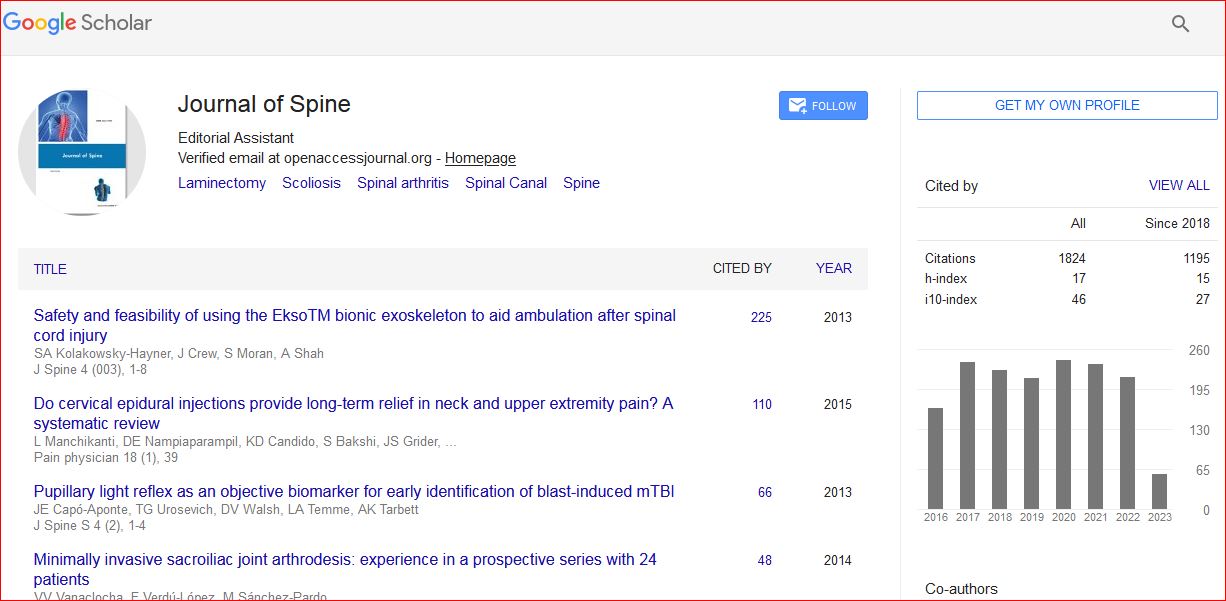
Journal of Spine received 2022 citations as per Google Scholar report