Commentary - (2025) Volume 10, Issue 2
Received: 01-Apr-2025, Manuscript No. jidm-26-188056;
Editor assigned: 03-Apr-2025, Pre QC No. P-188056;
Reviewed: 17-Apr-2025, QC No. Q-188056;
Revised: 22-Apr-2025, Manuscript No. R-188056;
Published:
29-Apr-2025
, DOI: 10.37421/2576-1420.2025.10.396
Citation: Murphy, Sean. ”Vaccination: A Global Strategy for
Health.” J Infect Dis Med 10 (2025):396.
Copyright: © 2025 Murphy S. This is an open-access article distributed under the terms of the Creative Commons Attribution License, which permits unrestricted use,
distribution and reproduction in any medium, provided the original author and source are credited.
Vaccination stands as a cornerstone in the global strategy to prevent infectious diseases. By introducing weakened or inactivated pathogens, or their components, vaccines stimulate the immune system to develop specific defenses. This immunological memory allows the body to mount a rapid and effective response upon subsequent exposure to the actual disease-causing agent, thereby preventing infection or significantly reducing its severity [1].
The development of novel vaccine technologies, such as mRNA and viral vector platforms, has revolutionized vaccine design and deployment. These platforms offer unprecedented speed in developing vaccines against emerging infectious agents. Their adaptability and potential for multi-target vaccines hold significant promise for future infectious disease control [2].
Vaccine hesitancy, characterized by a delay in acceptance or refusal of vaccines despite availability of vaccination services, poses a significant challenge to achieving optimal public health outcomes. Understanding the complex drivers of vaccine hesitancy, including misinformation, distrust, and cultural factors, is crucial for developing effective communication strategies and rebuilding public confidence in immunization programs [3].
The economic benefits of vaccination are substantial, extending beyond direct healthcare cost savings. By preventing disease, vaccines reduce productivity losses due to illness and premature death, enable children to attend school consistently, and facilitate economic activity by preventing widespread outbreaks [4].
The role of vaccines in preventing antimicrobial resistance (AMR) is an emerging area of research. By reducing the incidence of bacterial and viral infections, vaccines can decrease the need for antibiotic treatment, thereby alleviating pressure on antibiotic use and slowing the development of AMR [5].
The effectiveness and safety of vaccines are continuously monitored through robust post-marketing surveillance systems. These systems are critical for detecting rare adverse events, assessing vaccine effectiveness in real-world settings, and building public trust. The long history of vaccination demonstrates a remarkable safety profile, with serious side effects being exceedingly rare compared to the risks associated with the diseases they prevent [6].
The eradication of infectious diseases through vaccination represents one of public health's greatest achievements. Smallpox has been globally eradicated, and polio is on the verge of elimination, primarily due to sustained, coordinated vaccination efforts. These successes highlight the power of vaccines to not only protect individuals but also to eliminate diseases from entire populations [7].
Vaccine development for neglected tropical diseases (NTDs) remains a critical area, with ongoing research focused on creating effective and accessible vaccines for diseases like schistosomiasis and leishmaniasis. While challenges exist in this field, progress in understanding disease pathogenesis and host-parasite interactions is paving the way for future vaccine candidates that could significantly impact the burden of these debilitating conditions [8].
The impact of routine childhood immunization on child survival and long-term health outcomes is profound. Comprehensive vaccination schedules protect infants and children from a range of serious and potentially fatal diseases, contributing significantly to reductions in infant mortality rates and improving overall child health and development [9].
Global collaborations and funding initiatives are essential for strengthening immunization programs worldwide, particularly in low- and middle-income countries. Organizations like the World Health Organization (WHO) and Gavi, the Vaccine Alliance, play a crucial role in ensuring equitable access to vaccines, supporting vaccine research and development, and advocating for the widespread adoption of immunization [10].
Vaccination stands as a cornerstone in the global strategy to prevent infectious diseases. By introducing weakened or inactivated pathogens, or their components, vaccines stimulate the immune system to develop specific defenses. This immunological memory allows the body to mount a rapid and effective response upon subsequent exposure to the actual disease-causing agent, thereby preventing infection or significantly reducing its severity. The widespread implementation of vaccination programs has led to the eradication or near-eradication of devastating diseases like smallpox and polio, and continues to be crucial in controlling outbreaks of measles, influenza, and COVID-19. Herd immunity, a phenomenon where a sufficient proportion of a population is immune, indirectly protects those who cannot be vaccinated, underscoring the collective benefit of high vaccination rates [1].
The development of novel vaccine technologies, such as mRNA and viral vector platforms, has revolutionized vaccine design and deployment. These platforms offer unprecedented speed in developing vaccines against emerging infectious agents. Their adaptability and potential for multi-target vaccines hold significant promise for future infectious disease control. This innovation has been particularly evident in the rapid response to the COVID-19 pandemic, showcasing the power of modern biotechnology in public health [2].
Vaccine hesitancy, characterized by a delay in acceptance or refusal of vaccines despite availability of vaccination services, poses a significant challenge to achieving optimal public health outcomes. Understanding the complex drivers of vaccine hesitancy, including misinformation, distrust, and cultural factors, is crucial for developing effective communication strategies and rebuilding public confidence in immunization programs. Addressing these concerns through targeted interventions and open dialogue is essential for maintaining high vaccination coverage [3].
The economic benefits of vaccination are substantial, extending beyond direct healthcare cost savings. By preventing disease, vaccines reduce productivity losses due to illness and premature death, enable children to attend school consistently, and facilitate economic activity by preventing widespread outbreaks. Investing in vaccination programs is therefore a highly cost-effective public health intervention with significant societal and economic returns [4].
The role of vaccines in preventing antimicrobial resistance (AMR) is an emerging area of research. By reducing the incidence of bacterial and viral infections, vaccines can decrease the need for antibiotic treatment, thereby alleviating pressure on antibiotic use and slowing the development of AMR. Vaccines against bacterial pneumonia, influenza, and rotavirus, for instance, have been shown to indirectly reduce antibiotic prescriptions [5].
The effectiveness and safety of vaccines are continuously monitored through robust post-marketing surveillance systems. These systems are critical for detecting rare adverse events, assessing vaccine effectiveness in real-world settings, and building public trust. The long history of vaccination demonstrates a remarkable safety profile, with serious side effects being exceedingly rare compared to the risks associated with the diseases they prevent [6].
The eradication of infectious diseases through vaccination represents one of public health's greatest achievements. Smallpox has been globally eradicated, and polio is on the verge of elimination, primarily due to sustained, coordinated vaccination efforts. These successes highlight the power of vaccines to not only protect individuals but also to eliminate diseases from entire populations [7].
Vaccine development for neglected tropical diseases (NTDs) remains a critical area, with ongoing research focused on creating effective and accessible vaccines for diseases like schistosomiasis and leishmaniasis. While challenges exist in this field, progress in understanding disease pathogenesis and host-parasite interactions is paving the way for future vaccine candidates that could significantly impact the burden of these debilitating conditions [8].
The impact of routine childhood immunization on child survival and long-term health outcomes is profound. Comprehensive vaccination schedules protect infants and children from a range of serious and potentially fatal diseases, contributing significantly to reductions in infant mortality rates and improving overall child health and development. These programs are a fundamental component of pediatric primary care [9].
Global collaborations and funding initiatives are essential for strengthening immunization programs worldwide, particularly in low- and middle-income countries. Organizations like the World Health Organization (WHO) and Gavi, the Vaccine Alliance, play a crucial role in ensuring equitable access to vaccines, supporting vaccine research and development, and advocating for the widespread adoption of immunization. These collective efforts are vital for achieving global health security [10].
Vaccination is a critical global strategy for infectious disease prevention, leveraging the immune system's memory to combat pathogens. Advances in vaccine technology, such as mRNA and viral vectors, enable rapid development against emerging threats. Despite these advancements, vaccine hesitancy, fueled by misinformation and distrust, presents a significant challenge to public health goals. The economic benefits of vaccination are considerable, encompassing reduced healthcare costs and increased productivity. Furthermore, vaccines play a role in combating antimicrobial resistance by lessening the need for antibiotics. Continuous monitoring through post-marketing surveillance ensures vaccine safety and effectiveness, with a strong historical safety record. Notable successes include the eradication of smallpox and progress in polio elimination. Efforts are ongoing for vaccine development against neglected tropical diseases. Routine childhood immunization profoundly impacts child survival and long-term health. Global partnerships and funding are vital for equitable vaccine access and strengthening immunization programs worldwide.
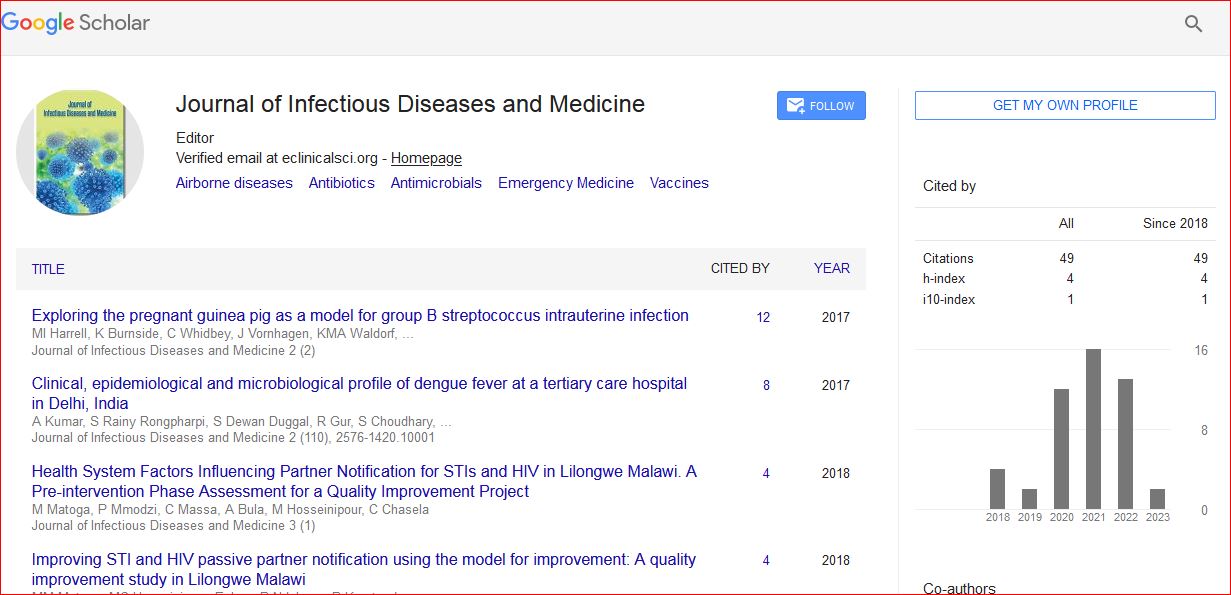
Journal of Infectious Diseases and Medicine received 1059 citations as per Google Scholar report