Short Communication - (2025) Volume 9, Issue 5
Received: 01-Sep-2025, Manuscript No. hps-26-184481;
Editor assigned: 03-Sep-2025, Pre QC No. P-184481;
Reviewed: 17-Sep-2025, QC No. Q-184481;
Revised: 22-Sep-2025, Manuscript No. R-184481;
Published:
29-Sep-2025
, DOI: 10.37421/2573-4563.2025.9.364
Citation: Walker, Benjamin R.. ”Epigenetic Control of Liver Disease Progression and Therapy.” J Hepatol Pancreat Sci 09 (2025):364.
Copyright: © 2025 Walker R. Benjamin This is an open-access article distributed under the terms of the Creative Commons Attribution License, which permits unrestricted use, distribution and reproduction in any medium, provided the original author and source are credited.
Epigenetic modifications are fundamental to understanding the complex pathogenesis of various liver diseases, offering insights into disease progression and potential therapeutic avenues. These modifications, including alterations in DNA methylation and histone marks, play a critical role in orchestrating cellular processes that can lead to liver dysfunction and disease development. Aberrant epigenetic patterns are increasingly recognized as drivers of hepatocellular carcinoma (HCC) by influencing the expression of key genes, such as oncogenes and tumor suppressors. This intricate epigenetic regulation extends to other liver conditions as well, highlighting its broad impact on liver health. Furthermore, the dysregulation of epigenetic mechanisms is a significant contributor to the pathogenesis of non-alcoholic fatty liver disease (NAFLD) and liver fibrosis. These epigenetic changes can profoundly affect metabolic pathways crucial for liver function and modulate the expression of genes involved in fibrogenesis. Understanding these complex epigenetic mechanisms provides a foundation for identifying novel therapeutic targets for effective liver disease intervention and management. The continuous unraveling of these molecular mechanisms promises to unlock new strategies for combating a spectrum of liver ailments. The depth of this research underscores the importance of epigenetics in liver health and disease. The insights gained are crucial for advancing our understanding and treatment of liver disorders. The ongoing exploration in this field continues to yield significant discoveries. This comprehensive understanding is vital for future therapeutic developments. Recent research has underscored the pivotal involvement of non-coding RNAs (ncRNAs) in the epigenetic regulation of liver functions and diseases. Molecules such as microRNAs and long non-coding RNAs are not merely bystanders but active participants, targeting and influencing epigenetic modifiers within the liver. This targeted action can significantly alter gene expression profiles, playing a crucial role in conditions like liver fibrosis and HCC. Consequently, the modulation of these ncRNAs is emerging as a promising strategy for the development of innovative therapeutic interventions aimed at treating liver diseases. These ncRNAs act as crucial intermediaries, connecting regulatory networks to epigenetic machinery. Their dysregulation is increasingly linked to disease phenotypes. The potential to target them offers a novel therapeutic paradigm. Understanding their precise roles is key to harnessing their therapeutic potential. This area of research is rapidly evolving. The epigenetic landscape of hepatocellular carcinoma (HCC) is notably characterized by widespread and significant alterations in DNA methylation patterns. A hallmark of this transformation is the hypermethylation of tumor suppressor genes, which leads to their silencing and loss of function, thereby promoting uncontrolled cell growth. Conversely, hypomethylation of oncogenes can lead to their aberrant activation, further driving tumor development. These epigenetic changes are considered fundamental drivers of tumor initiation and progression, impacting critical cellular processes such as proliferation, apoptosis, and metastasis. Consequently, therapeutic interventions that aim to reverse these detrimental epigenetic marks are actively under investigation, offering hope for new treatment strategies against HCC. The epigenetic alterations are not static but dynamic processes. They reflect the evolving nature of the tumor. The reversibility of these marks offers a therapeutic window. Targeting these specific methylation events could offer precision medicine approaches. The complexity of the HCC epigenome necessitates sophisticated analytical tools. Non-alcoholic fatty liver disease (NAFLD) is demonstrably associated with substantial epigenetic reprogramming, affecting a range of cellular functions critical to liver health. Changes in histone acetylation and methylation patterns are particularly implicated, as they can profoundly influence the expression of genes that regulate essential processes like lipid metabolism, inflammation, and fibrosis. A thorough understanding of these epigenetic contributions is therefore vital for the development of targeted and effective therapies for NAFLD and its more severe progressive forms, such as non-alcoholic steatohepatitis (NASH). The epigenetic machinery acts as a rheostat for gene expression. Its dysregulation in NAFLD contributes to metabolic chaos. Targeting these epigenetic regulators could restore metabolic homeostasis. This provides a new dimension to NAFLD management. The interplay between metabolism and epigenetics is a key area of focus. Liver fibrosis, a common and often irreversible endpoint for a multitude of chronic liver diseases, is profoundly influenced by epigenetic modifications that drive its pathogenesis. Alterations in DNA methylation and histone marks play a significant role in the activation of hepatic stellate cells (HSCs), the primary cells responsible for producing extracellular matrix (ECM) in the fibrotic process. These epigenetic changes promote the excessive deposition of ECM, leading to scar tissue formation and impaired liver function. Consequently, targeting these epigenetic pathways offers a highly promising strategy for halting or even potentially reversing the progression of liver fibrosis. Fibrosis represents a critical stage in chronic liver disease. Epigenetic control over fibrogenic cells is paramount. Reversing epigenetic marks could promote liver regeneration. The complexity of fibrotic signaling pathways is influenced by epigenetic regulators. Developing targeted epigenetic therapies is a significant goal. The role of histone deacetylase (HDAC) inhibitors in modulating the progression of liver diseases is a subject of growing scientific and clinical interest. These epigenetic drugs have demonstrated the ability to influence key pathological processes, including inflammatory responses and fibrogenesis, within the liver. This capacity suggests significant potential therapeutic benefits for liver conditions such as NASH and liver fibrosis. However, further dedicated research is essential to fully optimize their clinical application, precisely understand their specific molecular mechanisms of action, and ensure their safety and efficacy in diverse patient populations. HDAC inhibitors represent a class of epigenetic modulators. Their impact on gene expression is broad. Understanding downstream effects is crucial for therapeutic development. Clinical trials are ongoing to evaluate their potential. Personalized approaches may be necessary for optimal outcomes. Epigenetic regulation mediated by DNA methyltransferases (DNMTs) is a central mechanism implicated in the development and progression of liver cancer, particularly hepatocellular carcinoma. The activity of DNMTs, which are responsible for adding methyl groups to DNA, can be pharmacologically targeted. Inhibition of DNMT activity has been shown to lead to the re-expression of silenced tumor suppressor genes, thereby effectively suppressing tumor growth and progression. Therefore, gaining a deeper understanding of the specific DNMTs involved in the pathogenesis of different liver pathologies is absolutely crucial for the development of highly targeted and effective therapeutic strategies against liver cancer. DNMTs are key enzymes in the epigenetic machinery. Their aberrant activity is a hallmark of cancer. Targeting DNMTs offers a way to reprogram cancer cells. The specificity of DNMT inhibitors is an important consideration. Developing next-generation DNMT inhibitors is an active area of research. The intricate interplay between epigenetics and metabolic dysfunction within the context of non-alcoholic fatty liver disease (NAFLD) is becoming increasingly evident and significant. Epigenetic modifications can directly influence the expression of genes that are critical for controlling glucose and lipid metabolism, thereby exacerbating the progression of NAFLD and contributing to its severity. Consequently, therapeutic strategies that effectively target these specific epigenetic changes, particularly when combined with conventional metabolic interventions, hold considerable promise for the successful treatment and management of NAFLD. Metabolic pathways are tightly regulated by both genetic and epigenetic factors. In NAFLD, this regulation is profoundly disrupted. Epigenetic modifications can create a vicious cycle of metabolic dysfunction. Integrated therapeutic approaches are likely to be most effective. This highlights the need for a holistic view of NAFLD pathogenesis. Long non-coding RNAs (lncRNAs) are rapidly emerging as crucial regulators of epigenetic reprogramming, playing a significant role in the development and progression of chronic liver diseases. These lncRNAs possess the remarkable ability to interact with chromatin-modifying enzymes and transcription factors, thereby altering gene expression patterns that are known to drive critical pathological processes such as fibrogenesis and hepatocarcinogenesis. As a result, targeting specific lncRNAs presents a highly promising and novel avenue for developing effective therapeutic strategies against these debilitating liver conditions. LncRNAs are a diverse class of regulatory molecules. Their epigenetic functions are multifaceted. They can act as scaffolds or decoys for epigenetic regulators. The identification of disease-specific lncRNAs is a key research goal. Therapeutic development targeting lncRNAs is still in its early stages. The epigenetic landscape governing liver inflammation is highly dynamic and plays a substantial role in the progression of chronic liver damage. Changes in DNA methylation and histone modifications can significantly alter the expression of pro-inflammatory cytokines and affect immune cell function, leading to a perpetuation of chronic liver injury. This sustained inflammation further increases the risk of developing liver fibrosis and hepatocellular carcinoma (HCC). Therefore, strategies aimed at modulating these critical epigenetic events are considered a promising approach for therapeutic intervention in chronic liver diseases. Inflammation is a core process in many chronic diseases. Its epigenetic regulation in the liver is complex. Controlling inflammatory gene expression through epigenetic means is a therapeutic target. Understanding the specific epigenetic pathways involved is key to developing effective treatments. This area offers significant potential for novel interventions.
Epigenetic modifications, encompassing DNA methylation and histone alterations, are integral to the orchestration of liver disease progression, impacting conditions from hepatocellular carcinoma (HCC) to non-alcoholic fatty liver disease (NAFLD) and liver fibrosis. Aberrant epigenetic patterns are potent drivers of HCC development by modulating the expression of oncogenes and tumor suppressors, fundamentally altering cellular behavior. The pathogenesis of NAFLD and liver fibrosis is also significantly shaped by epigenetic dysregulation, which affects crucial metabolic pathways and the expression of fibrogenic genes, underscoring the pervasive influence of epigenetics in liver health and disease. Understanding these intricate mechanisms provides a fertile ground for identifying novel therapeutic targets to combat liver diseases effectively. Non-coding RNAs (ncRNAs), including microRNAs and long non-coding RNAs (lncRNAs), are critical players in the epigenetic regulatory networks within the liver. These molecules exert their influence by targeting epigenetic modifiers, thereby shaping gene expression profiles in various liver pathologies such as liver fibrosis and HCC. This targeted interaction positions ncRNAs as key mediators of epigenetic control and highlights their potential as targets for developing novel therapeutic strategies aimed at reversing disease-associated epigenetic alterations and restoring normal liver function. The epigenetic milieu of hepatocellular carcinoma (HCC) is characterized by widespread DNA methylation changes, notably the hypermethylation of tumor suppressor genes and hypomethylation of oncogenes. These alterations are instrumental in driving tumor initiation and progression by affecting cellular proliferation, apoptosis, and metastatic potential. The reversibility of these epigenetic marks presents an avenue for therapeutic intervention, with ongoing research focused on developing strategies to counteract these detrimental epigenetic changes and suppress tumor growth. Non-alcoholic fatty liver disease (NAFLD) exhibits significant epigenetic reprogramming, with alterations in histone acetylation and methylation patterns influencing the expression of genes involved in lipid metabolism, inflammation, and fibrosis. These epigenetic changes contribute to the metabolic derangements and inflammatory processes that characterize NAFLD. Understanding these epigenetic contributions is essential for developing targeted therapies to manage NAFLD and its progressive forms, such as non-alcoholic steatohepatitis (NASH). Liver fibrosis, a common outcome of chronic liver diseases, is profoundly shaped by epigenetic modifications that promote the activation of hepatic stellate cells and the excessive deposition of extracellular matrix. These epigenetic alterations, including changes in DNA methylation and histone marks, drive the fibrogenic process. Targeting these epigenetic pathways represents a promising therapeutic strategy to halt or even reverse the progression of liver fibrosis and preserve liver function. Histone deacetylase (HDAC) inhibitors are gaining attention for their potential to modulate liver disease progression by influencing inflammatory responses and fibrogenesis. These epigenetic drugs offer potential therapeutic benefits for liver conditions like NASH and liver fibrosis. However, further research is required to optimize their use, elucidate their specific mechanisms, and determine their efficacy and safety in clinical settings. DNA methyltransferases (DNMTs) are key epigenetic regulators involved in the development and progression of liver cancer. Their activity influences the methylation status of genes critical for cell growth and survival. Inhibition of DNMTs can restore the expression of silenced tumor suppressor genes, thereby impeding tumor growth. Identifying the specific DNMTs involved in different liver pathologies is crucial for developing targeted therapeutic strategies against liver cancer. The relationship between epigenetics and metabolic dysfunction in NAFLD is increasingly understood, with epigenetic modifications influencing genes controlling glucose and lipid metabolism. These changes can exacerbate disease progression. Therapeutic strategies targeting these epigenetic alterations, in conjunction with metabolic interventions, show promise for effective NAFLD treatment. Long non-coding RNAs (lncRNAs) are emerging as significant epigenetic regulators in chronic liver diseases, influencing fibrogenesis and hepatocarcinogenesis by interacting with chromatin-modifying enzymes. Targeting specific lncRNAs offers a novel therapeutic approach to address these conditions. Epigenetic regulation of liver inflammation involves dynamic changes in DNA methylation and histone modifications that affect inflammatory cytokine expression and immune cell function. These changes perpetuate chronic liver damage and increase the risk of fibrosis and HCC. Modulating these epigenetic events is a potential therapeutic strategy to mitigate inflammation and its consequences.
Epigenetic modifications, including DNA methylation and histone modifications, are crucial in the progression of liver diseases like hepatocellular carcinoma (HCC), non-alcoholic fatty liver disease (NAFLD), and liver fibrosis. Aberrant epigenetic patterns drive HCC by altering gene expression, while in NAFLD and fibrosis, they impact metabolic pathways and fibrogenic gene expression. Non-coding RNAs, such as microRNAs and long non-coding RNAs, also play a significant role in epigenetic regulation within the liver, targeting epigenetic modifiers and influencing gene expression in fibrosis and HCC. Therapeutic strategies are being developed to target these epigenetic mechanisms, including DNA methyltransferase inhibitors and histone deacetylase inhibitors, to reverse disease progression and offer new treatment avenues. The interplay between epigenetics and metabolic dysfunction in NAFLD is a key area of research, as are the roles of long non-coding RNAs in fibrogenesis and hepatocarcinogenesis. Modulating epigenetic control of liver inflammation is also a promising therapeutic strategy.
None
None
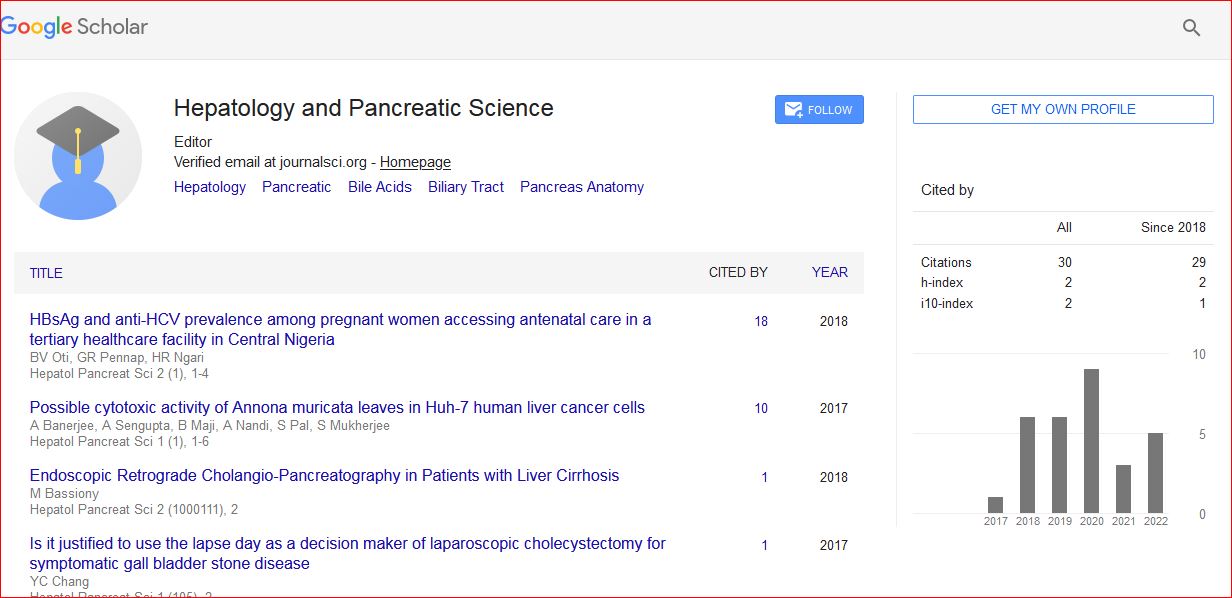
Hepatology and Pancreatic Science received 34 citations as per Google Scholar report