Short Communication - (2025) Volume 13, Issue 2
Received: 01-Apr-2025, Manuscript No. JGPR-26-188001;
Editor assigned: 03-Apr-2025, Pre QC No. P-188001;
Reviewed: 17-Apr-2025, QC No. Q-188001;
Revised: 22-Apr-2025, Manuscript No. R-188001;
Published:
29-Apr-2025
, DOI: 10.37421/2329-9126.2025.13.607
Citation: Mwangi, David. ”Enhancing Patient Satisfaction: Communication, Access, Competence.” J Gen Pract 13 (2025):607.
Copyright: © 2025 Mwangi D. This is an open-access article distributed under the terms of the Creative Commons Attribution License, which permits unrestricted use, distribution and reproduction in any medium, provided the original author and source are credited.
Enhancing patient satisfaction in primary care is a multifaceted endeavor, with service quality emerging as a paramount factor. Improving the overall patient experience within primary care settings necessitates a deep understanding of the various components that contribute to satisfaction. These components often encompass the fundamental interactions between patients and the healthcare system, as well as the perceived value and effectiveness of the care received. One critical driver of patient satisfaction is the quality of communication established between patients and their healthcare providers. Clear, empathetic, and comprehensive communication fosters trust and ensures that patients feel heard and understood, which are foundational elements of positive healthcare experiences. Effective communication can bridge gaps in understanding and promote active patient participation in their own care. The accessibility of primary care services is another significant determinant of patient satisfaction. This includes not only the physical availability of appointments but also the ease with which patients can contact their providers, navigate the healthcare system, and receive timely care. Barriers to access can lead to frustration and dissatisfaction, undermining the perceived quality of care. Furthermore, the perceived competence of healthcare professionals plays a vital role in shaping patient satisfaction. When patients believe their providers possess the necessary knowledge, skills, and judgment, they are more likely to feel confident in the care they receive. This perceived competence builds trust and reassurance, contributing to a positive overall experience. Addressing these key aspectsâ??communication, accessibility, and perceived competenceâ??can lead to a cascade of positive outcomes. Improved patient satisfaction is often correlated with better adherence to treatment plans, as patients who feel well-cared for and understood are more likely to follow medical advice and engage in self-care behaviors. Ultimately, the goal of enhancing patient satisfaction in primary care is to foster a healthcare environment where patients feel valued, respected, and well-supported. This focus on patient-centered care not only improves individual health outcomes but also strengthens the patient-provider relationship and the overall effectiveness of the primary care system. The patient-provider relationship itself stands as a cornerstone of service quality in primary care. Building strong, trusting relationships is essential for fostering open communication and encouraging shared decision-making, both of which are critical for positive patient perceptions. Training and development for primary care physicians to enhance their relational skills, such as empathy and active listening, can directly translate into higher patient satisfaction scores. Investing in these skills is an investment in patient well-being and the quality of care delivered. Moreover, the physical environment in which care is delivered can significantly influence patient perceptions. A clean, comfortable, and welcoming facility contributes to a positive patient experience and enhances the overall sense of quality and professionalism. Finally, the integration of technology, such as patient portals and telehealth, offers new avenues for improving accessibility and communication, further contributing to enhanced patient satisfaction. However, careful implementation is crucial to ensure these tools are user-friendly and benefit all patient populations.
The core of improving patient satisfaction in primary care lies in a concerted effort to elevate service quality. This enhancement is driven by several key factors, each contributing to a more positive and effective healthcare experience for individuals seeking care within these essential settings. Effective communication between patients and providers is a foundational pillar of high-quality primary care. When providers engage in active listening, explain medical information clearly, and demonstrate empathy, patients feel more connected and understood, fostering trust and a sense of partnership in their health journey. Accessibility to primary care services is a critical determinant of patient satisfaction. This encompasses the ease of scheduling appointments, minimizing wait times, and ensuring convenient access to care through various channels, thereby reducing patient frustration and improving their overall experience. The perceived competence of healthcare professionals is integral to patient confidence and satisfaction. Patients are more likely to be satisfied when they believe their providers possess the requisite knowledge, skills, and experience to address their health concerns effectively and efficiently. Addressing these aspectsâ??communication, accessibility, and perceived competenceâ??has a direct and positive impact on patient adherence to treatment plans. When patients feel well-informed and supported, they are more likely to follow through with recommended therapies and lifestyle changes, leading to improved health outcomes. The patient-provider relationship is central to the quality of service in primary care. Cultivating a relationship built on trust, empathy, and shared decision-making significantly enhances patient perceptions of the care they receive, fostering a collaborative approach to health management. Investing in training for primary care physicians to strengthen their relational skills can yield direct improvements in patient satisfaction. Empowering providers to build stronger connections with their patients leads to more positive encounters and better overall care experiences. Accessibility of primary care services, including factors like appointment availability and wait times, is a critical determinant of patient satisfaction. Streamlining administrative processes and offering flexible scheduling options can significantly improve the patient experience and perceived quality of care. Patient expectations play a crucial role in their satisfaction with primary care. Understanding these expectations, particularly regarding communication and information provision, allows practices to tailor their services more effectively, leading to improved quality perceptions and a more patient-centered approach. Technological integration, such as patient portals and telehealth, can enhance service quality and patient satisfaction, provided it is implemented thoughtfully. These tools can improve communication, access to information, and convenience, but must be user-friendly and accessible to all patient demographics.
Improving patient satisfaction in primary care is fundamentally linked to enhancing service quality. Key drivers include effective patient-provider communication, accessibility of services, and the perceived competence of healthcare professionals. These factors not only boost patient satisfaction but also lead to better treatment adherence and improved health outcomes. The patient-provider relationship, built on trust and empathy, is crucial, with training in relational skills directly impacting satisfaction levels. Accessibility, encompassing appointment availability and ease of contact, is also vital. Patient expectations regarding communication and information significantly shape their satisfaction. The physical environment of facilities and the thoughtful integration of technology like patient portals and telehealth can further enhance the patient experience. Team-based care models and robust patient feedback mechanisms are also recognized for their positive influence on service quality and satisfaction. Continuity of care fosters trust and personalized attention, contributing to higher patient satisfaction.
None
None
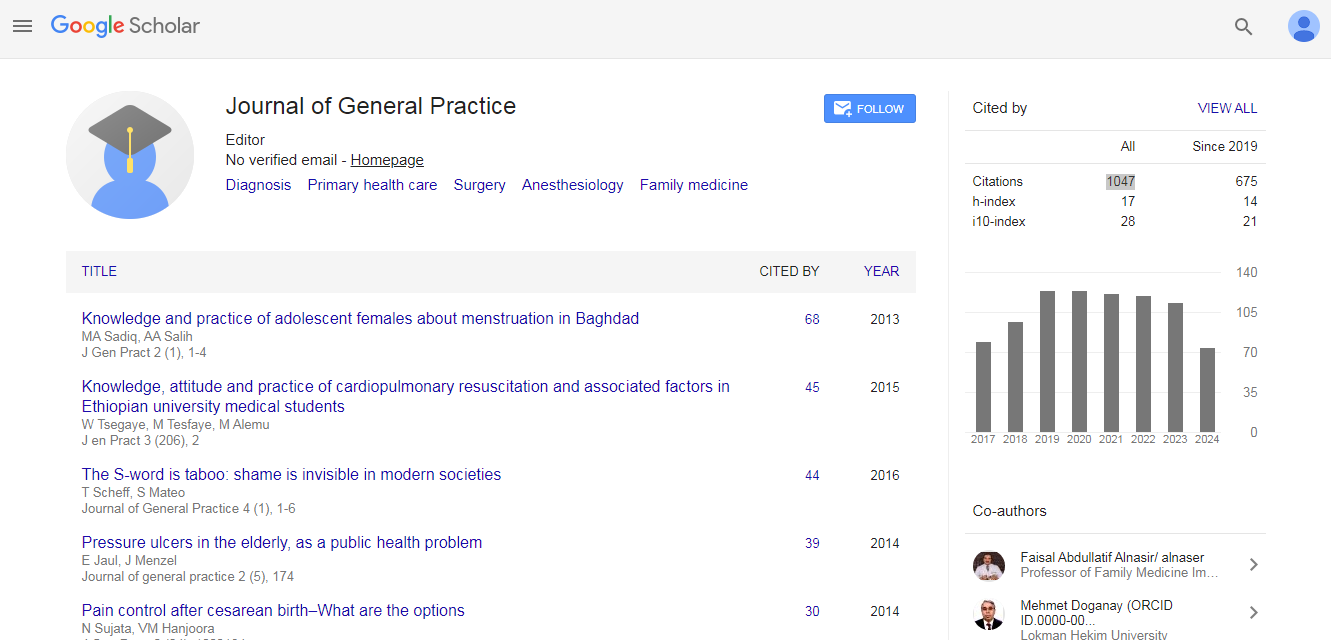
Journal of General Practice received 1047 citations as per Google Scholar report