Perspective - (2025) Volume 11, Issue 4
Received: 01-Jul-2025, Manuscript No. aso-26-184638;
Editor assigned: 03-Jul-2025, Pre QC No. P-184638;
Reviewed: 17-Jul-2025, QC No. Q-184638;
Revised: 22-Jul-2025, Manuscript No. R-184638;
Published:
29-Jul-2025
, DOI: 10.37421/2471-2671.2025.11.183
Citation: Lee, Joshua. ”Enhanced Recovery Pathways: Faster
Healing, Better Outcomes.” Arch Surg Oncol 11 (2025):183.
Copyright: © 2025 Lee J. This is an open-access article distributed under the terms of the Creative Commons Attribution License, which permits unrestricted use, distribution
and reproduction in any medium, provided the original author and source are credited.
Enhanced Recovery Pathways (ERPs), also known as Enhanced Recovery After Surgery (ERAS) protocols, represent a paradigm shift in perioperative care, specifically designed to optimize the surgical patient experience. These multimodal strategies are holistically implemented across the pre-operative, intra-operative, and post-operative phases of surgical intervention, with a particular focus on accelerating patient recovery, minimizing the incidence of complications, and profoundly improving the overall patient experience, especially within the complex domain of surgical oncology. The core tenets of ERPs revolve around several key pillars: pre-operative patient optimization, the application of refined intra-operative anesthetic and surgical techniques, and comprehensive post-operative management encompassing multimodal analgesia, early mobilization, and nutritional support. Evidence strongly suggests that the judicious application of ERPs in surgical oncology settings yields tangible benefits, including significantly shorter hospital stays, a marked reduction in patient readmission rates, and demonstrably better functional recovery, all of which directly translate into an improved quality of life for individuals navigating the challenges of cancer treatments [1].
The implementation of Enhanced Recovery After Surgery (ERAS) protocols has demonstrated substantial advantages, particularly in the context of colorectal cancer surgery. These pathways actively contribute to a reduction in surgical site infections and facilitate a quicker return to normal bowel function, which are critical determinants of improved patient outcomes and enhanced quality of life in the post-operative period. This integrated approach ensures that evidence-based practices are consistently applied from the point of patient admission through to their discharge, thereby guaranteeing a standardized and optimized continuum of care [2].
Within the specialized field of thoracic oncology, specifically concerning lung cancer surgery, Enhanced Recovery Pathways (ERPs) have been closely associated with a range of positive outcomes. Patients managed under these protocols often experience reduced post-operative pain, exhibit earlier ambulation, and demonstrate shorter durations for chest tube use. These improvements collectively contribute to a better quality of life by mitigating the physical burden associated with major surgery and expediting the patient's return to their usual daily activities. The inherent multidisciplinary nature of ERPs is recognized as a pivotal factor in achieving these favorable results [3].
Nutrition emerges as a critically important element within the framework of ERPs for surgical oncology patients. Ensuring adequate pre-operative nutritional status and providing timely and appropriate post-operative nutritional support are paramount for promoting effective wound healing, bolstering immune function, and facilitating overall patient recovery. Proactive identification and management of malnutrition are integral to enhancing patient outcomes and improving the quality of life for this particularly vulnerable patient population [4].
Early mobilization stands as a fundamental cornerstone of Enhanced Recovery Pathways (ERPs), playing a vital role in promoting a more rapid restoration of physical function, substantially reducing the risk of deep vein thrombosis, and significantly improving the psychological well-being of surgical oncology patients. By actively encouraging patients to become out of bed and engage in physical activity as soon as it is safely feasible, ERPs expedite their return to independence and substantially enhance their overall quality of life [5].
Multimodal analgesia represents another critical component of ERPs within surgical oncology, with the primary objective of providing effective pain relief while simultaneously minimizing the reliance on opioids. This comprehensive approach integrates the use of non-opioid medications, the application of regional anesthesia techniques, and the incorporation of non-pharmacological interventions. Collectively, these strategies contribute to a significant reduction in post-operative pain, fewer opioid-related side effects, and an overall improvement in patient comfort and quality of life [6].
The successful implementation of ERPs invariably necessitates a robust and collaborative multidisciplinary team approach. This involves the active participation and seamless coordination of surgeons, anesthesiologists, nurses, physiotherapists, dietitians, and pharmacists. Their collective effort ensures the smooth execution of the pathway, creating an integrated care model that is essential for maximizing the benefits derived from ERPs and thereby improving both clinical outcomes and the quality of life for surgical oncology patients [7].
Patient education and active engagement are recognized as indispensable elements for the successful adoption and efficacy of ERPs in the context of surgical oncology. Empowering patients with comprehensive information about the pathway, clarifying their specific role in the recovery process, and setting clear expectations regarding outcomes can significantly improve adherence to prescribed protocols. This enhanced understanding and participation ultimately contribute to a greater sense of control and a better quality of life for patients undergoing cancer surgery [8].
Beyond clinical benefits, the financial implications associated with the implementation of ERPs in surgical oncology are also substantial and warrant careful consideration. By effectively reducing the length of hospital stays, decreasing complication rates, and lowering the incidence of readmissions, ERPs have the potential to generate significant cost savings for healthcare systems. This economic efficiency makes the delivery of high-quality, evidence-based care more sustainable and broadly accessible [9].
Finally, the concept of tailoring ERPs to align with specific cancer types and surgical procedures is of paramount importance. While the foundational principles of ERPs remain consistent across all applications, it is essential to implement adaptations that address the unique challenges and distinct recovery trajectories associated with different oncological surgeries. This personalized approach is critical for ensuring the optimization of outcomes and the enhancement of quality of life for each distinct patient group undergoing cancer treatment [10].
Enhanced Recovery Pathways (ERPs) are sophisticated multimodal perioperative strategies meticulously designed to refine and optimize the care of surgical patients. Their primary objectives include the acceleration of patient recovery, a significant reduction in the occurrence of post-operative complications, and an overall enhancement of the patient's experience, particularly within the challenging landscape of surgical oncology. These pathways are built upon a foundation of pre-operative optimization, advanced intra-operative anesthetic and surgical techniques, and comprehensive post-operative management. The latter includes multimodal analgesia, early mobilization, and nutritional support, all aimed at facilitating a smoother and more rapid return to health. Compelling evidence substantiates the positive impact of ERPs in surgical oncology, demonstrating shorter hospital stays, decreased readmission rates, and improved functional recovery, which collectively contribute to a superior quality of life for patients undergoing complex cancer treatments [1].
The widespread adoption of Enhanced Recovery After Surgery (ERAS) protocols has yielded significant benefits, especially in the surgical management of colorectal cancer. The application of ERPs in this context has been linked to a notable decrease in surgical site infections and a more rapid restoration of normal bowel function. These outcomes are crucial for improving overall patient well-being and enhancing their quality of life post-surgery. The ERAS pathway ensures a standardized and evidence-based approach to patient care, meticulously managing all stages from admission to discharge [2].
In the realm of thoracic oncology, particularly for patients undergoing lung cancer surgery, Enhanced Recovery Pathways (ERPs) have been associated with a constellation of positive effects. These include a reduction in post-operative pain, earlier ambulation, and a shorter duration of chest tube dependency. Such improvements directly contribute to an enhanced quality of life by diminishing the physical discomfort associated with surgery and expediting the patient's return to everyday activities. The integrated, multidisciplinary approach characteristic of ERPs is fundamental to achieving these beneficial outcomes [3].
Within the framework of Enhanced Recovery Pathways (ERPs) for surgical oncology patients, the role of nutrition is of paramount importance. Adequate nutritional status prior to surgery and timely, effective nutritional support after the procedure are essential for promoting robust wound healing, strengthening immune function, and optimizing overall recovery. Addressing nutritional deficiencies proactively is a core strategy for improving patient outcomes and enhancing the quality of life for individuals dealing with cancer [4].
Early mobilization is recognized as a pivotal component of Enhanced Recovery Pathways (ERPs), playing a crucial role in accelerating the recovery of physical function. It also serves to reduce the incidence of deep vein thrombosis and improve the psychological state of surgical oncology patients. By encouraging patients to engage in physical activity as soon as it is deemed safe, ERPs promote a faster return to independence and significantly enhance their quality of life [5].
Multimodal analgesia is a fundamental element of Enhanced Recovery Pathways (ERPs) in surgical oncology, focusing on providing effective pain management while minimizing the use of opioids. This approach encompasses the use of non-opioid pharmacological agents, regional anesthesia techniques, and non-pharmacological interventions. The synergistic effect of these methods leads to diminished post-operative pain, fewer adverse effects related to opioids, and an improved overall sense of comfort and well-being for patients, thereby enhancing their quality of life [6].
The successful implementation of Enhanced Recovery Pathways (ERPs) fundamentally relies on a collaborative effort from a multidisciplinary team. This team typically includes surgeons, anesthesiologists, nurses, physiotherapists, dietitians, and pharmacists, all working in concert to ensure the seamless execution of the pathway. This integrated model of care is indispensable for maximizing the therapeutic benefits of ERPs and ultimately improving both clinical outcomes and the quality of life experienced by surgical oncology patients [7].
Patient education and active participation are vital for the successful integration and effectiveness of Enhanced Recovery Pathways (ERPs) in surgical oncology. When patients are well-informed about the pathway, understand their own role in the recovery process, and have realistic expectations about outcomes, their adherence to the prescribed protocols tends to improve. This empowerment fosters a greater sense of control and contributes positively to their overall quality of life [8].
Furthermore, the financial implications associated with the implementation of Enhanced Recovery Pathways (ERPs) in surgical oncology are significant. By reducing the length of hospital stays, lowering complication rates, and decreasing the frequency of readmissions, ERPs can lead to substantial cost savings for healthcare systems. This economic benefit contributes to the sustainability and broader accessibility of high-quality, evidence-based patient care [9].
It is crucial to acknowledge that tailoring Enhanced Recovery Pathways (ERPs) to the specific nuances of different cancer types and surgical procedures is essential for optimal results. While the core principles of ERPs remain consistent, necessary adaptations must be made to effectively address the unique challenges and recovery patterns associated with diverse oncological surgeries. This individualized approach ensures that the best possible outcomes and the highest quality of life are achieved for each distinct patient cohort [10].
Enhanced Recovery Pathways (ERPs), also known as ERAS protocols, are multimodal strategies designed to optimize surgical patient care, aiming to speed up recovery, reduce complications, and improve patient experience, particularly in surgical oncology. These pathways focus on pre-operative optimization, advanced intra-operative techniques, and post-operative care including pain management, early mobilization, and nutrition. Studies show ERPs lead to shorter hospital stays, fewer readmissions, and better functional recovery, enhancing quality of life. Specific applications in colorectal, thoracic, and lung cancer surgeries highlight reduced infections, faster bowel function return, less pain, and earlier ambulation. Nutrition and early mobilization are critical for wound healing and physical function. Multimodal analgesia minimizes opioid use and improves comfort. Successful implementation requires a multidisciplinary team approach, and patient education is vital for adherence and empowerment. ERPs also offer financial benefits through reduced healthcare costs, and tailoring pathways to specific cancer types improves outcomes.
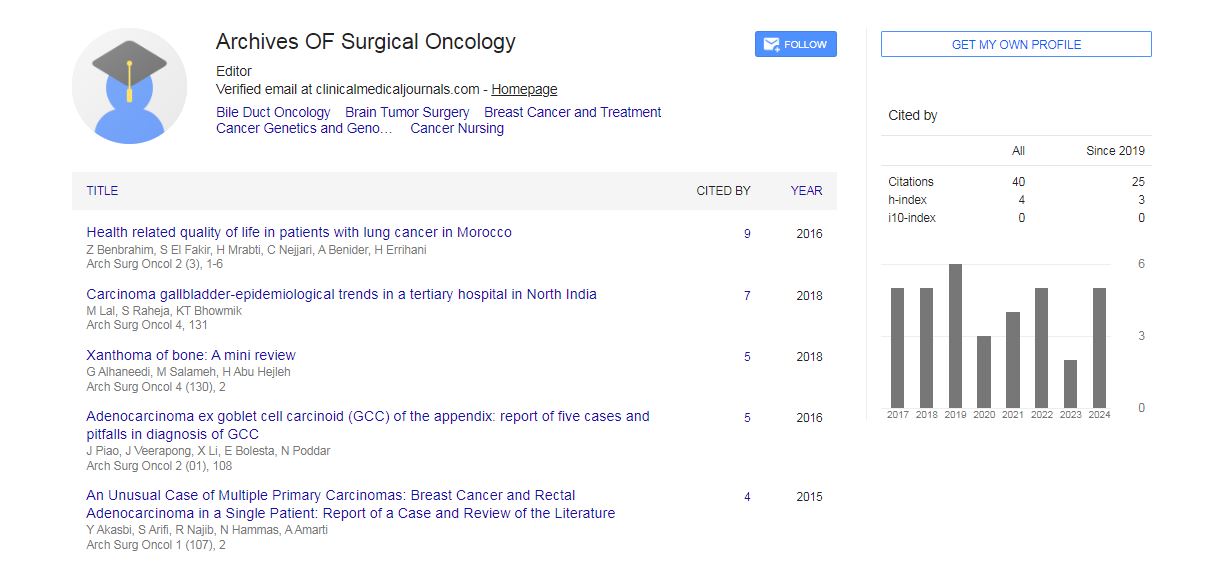
Archives of Surgical Oncology received 37 citations as per Google Scholar report