Short Communication - (2025) Volume 14, Issue 5
Received: 01-Sep-2025, Manuscript No. aim-25-177778;
Editor assigned: 03-Sep-2025, Pre QC No. P-177778;
Reviewed: 17-Sep-2025, QC No. Q-177778;
Revised: 22-Sep-2025, Manuscript No. R-177778;
Published:
29-Sep-2025
, DOI: 10.37421/2427-5162.2025.14.596
Citation: Brown, Hannah Louise. ”Energy Medicine: Modulating Biology, Managing Conditions.” Alt Integr Med 14 (2025):596.
Copyright: © 2025 Brown L. Hannah This is an open-access article distributed under the terms of the Creative Commons Attribution License, which permits unrestricted use, distribution and reproduction in any medium, provided the original author and source are credited.
Photobiomodulation (PBM) is being explored as a non-invasive therapeutic option for chronic neuropathic pain. A systematic review highlights its mechanisms, including interaction with cellular chromophores to reduce inflammation, improve mitochondrial function, and modulate nerve excitability, offering a promising approach for this challenging condition [1].
For chronic pain conditions, pulsed electromagnetic fields (PEMF) therapy has shown significant clinical efficacy and safety. A systematic review and meta-analysis indicates that PEMF can effectively reduce pain intensity and improve functional outcomes. It achieves these benefits by modulating cellular processes and promoting tissue repair, positioning it as a safe complementary approach [2].
Acupuncture's mechanisms for pain management are increasingly understood through a scientific lens, moving beyond traditional energetic concepts. This review emphasizes its neurophysiological basis, involving the modulation of descending pain pathways, neurotransmitter release, and anti-inflammatory effects within the nervous, endocrine, and immune systems [3].
Repetitive transcranial magnetic stimulation (rTMS) serves as a valuable energy-based neuromodulatory intervention for treatment-resistant depression. A comprehensive review details how rTMS modulates neural excitability, connectivity, and neuroplasticity in specific brain circuits, supporting its therapeutic role in psychiatric disorders [4].
Biofield therapies, such as Reiki and Therapeutic Touch, are under investigation for their role in managing stress and anxiety. A systematic review synthesizes findings suggesting potential benefits in reducing psychological distress, although it also acknowledges the clear need for more rigorous research into their subtle energetic mechanisms and clinical effectiveness [5].
Electroacupuncture (EA) is recognized for its analgesic effects, particularly in neuropathic pain. Recent progress indicates that EA modulates neurotransmitter systems, suppresses neuroinflammation, and regulates neuronal plasticity in both the central and peripheral nervous systems. This demonstrates its potential as an energy-based therapeutic modality [6].
The application of low-intensity extracorporeal shock wave therapy (LI-ESWT) for musculoskeletal disorders is gaining attention. A narrative review highlights how the mechanical energy from shockwaves stimulates cellular repair, promotes angiogenesis, and modulates pain perception, making LI-ESWT a promising energy-based approach for various chronic conditions [7].
High-intensity focused ultrasound (HIFU) represents a targeted energy-based intervention for cancer pain management. A systematic review and meta-analysis demonstrate its effectiveness in non-invasively ablating tumor tissue and modulating pain pathways, thereby alleviating severe pain in oncological settings with precision and efficacy [8].
Neurofeedback is presented as an energy-based approach to optimizing neural states for mental disorders. An update discusses its role in self-regulating brain activity, leveraging real-time brain signal monitoring. It trains individuals to alter their own brainwave patterns, influencing conditions like ADHD and depression through enhanced neural self-control [9].
Magnetic resonance-guided focused ultrasound (MRgFUS) offers significant clinical potential for neurological disorders. This review details how this non-invasive, energy-based technology precisely delivers ultrasound energy to specific brain targets for neuromodulation, lesioning, or opening the blood-brain barrier, as seen in essential tremor and Parkinson's disease [10].
A systematic review investigating photobiomodulation (PBM) for chronic neuropathic pain emphasizes its capacity to interact with cellular chromophores. This interaction leads to reduced inflammation, enhanced mitochondrial function, and modulated nerve excitability, establishing PBM as a viable non-invasive therapeutic strategy for complex pain conditions [1]. A comprehensive systematic review and meta-analysis has evaluated pulsed electromagnetic fields (PEMF) therapy, confirming its clinical efficacy and safety for chronic pain. The findings consistently show a significant reduction in pain intensity and improvements in functional outcomes, supporting PEMF as a safe and effective complementary treatment that modulates cellular processes for tissue repair [2]. The therapeutic utility of acupuncture in pain management is increasingly explained by its profound effects on biological systems. This review elucidates its neurophysiological underpinnings, detailing its modulation of descending pain pathways, crucial neurotransmitter release, and potent anti-inflammatory effects across the nervous, endocrine, and immune systems [3]. Repetitive transcranial magnetic stimulation (rTMS) provides an effective energy-based neuromodulatory intervention, particularly for treatment-resistant depression. A detailed review clarifies how rTMS precisely modulates neural excitability, connectivity patterns, and neuroplasticity within specific brain circuits, thereby solidifying its role in addressing challenging psychiatric conditions [4]. Biofield therapies, encompassing practices such as Reiki and Therapeutic Touch, have been systematically reviewed for their potential in managing stress and anxiety. The evidence suggests these therapies may offer benefits in reducing psychological distress, although the review also strongly advocates for more rigorous scientific investigation into their subtle energetic mechanisms and clinical effectiveness [5]. Recent advancements in understanding electroacupuncture (EA) mechanisms for neuropathic pain reveal its multifaceted analgesic actions. This review details how EA achieves its therapeutic effects by modulating critical neurotransmitter systems, effectively suppressing neuroinflammation, and regulating neuronal plasticity within both the central and peripheral nervous systems [6]. Low-intensity extracorporeal shock wave therapy (LI-ESWT) is emerging as a promising energy-based approach for musculoskeletal disorders. A narrative review illustrates how the mechanical energy delivered by shockwaves stimulates cellular repair processes, promotes angiogenesis, and contributes to the modulation of pain perception, offering a new avenue for chronic pain management [7]. For managing cancer-related pain, high-intensity focused ultrasound (HIFU) presents an advanced, targeted energy-based intervention. A systematic review and meta-analysis confirm HIFU's ability to effectively ablate tumor tissue and non-invasively modulate pain pathways, thereby offering a precise method for alleviating severe oncological pain [8]. Neurofeedback is highlighted as an important update in the management of mental disorders, functioning as an energy-based method for self-regulating brain activity. This approach involves training individuals to consciously alter their own brainwave patterns through real-time monitoring, leading to enhanced neural self-control and improvements in conditions like ADHD and depression [9]. Magnetic resonance-guided focused ultrasound (MRgFUS) represents a transformative, non-invasive, energy-based technology for treating various neurological disorders. This review outlines its capability to precisely deliver ultrasound energy to specific brain targets for neuromodulation, targeted lesioning, or the temporary opening of the blood-brain barrier, promising significant clinical advancements for conditions such as essential tremor and Parkinson's disease [10].
This collection of reviews and meta-analyses explores diverse energy-based therapies for a range of medical conditions, primarily chronic pain and neurological or psychiatric disorders. Photobiomodulation and pulsed electromagnetic fields demonstrate efficacy in managing neuropathic and chronic pain by modulating cellular functions and reducing inflammation. Acupuncture and electroacupuncture offer neurophysiological mechanisms for pain relief, impacting neurotransmitter systems and neuronal plasticity. Neuromodulatory techniques like repetitive transcranial magnetic stimulation, neurofeedback, and magnetic resonance-guided focused ultrasound showcase precision in altering brain activity for depression, ADHD, and essential tremor. Extracorporeal shock wave therapy uses mechanical energy for musculoskeletal repair, while high-intensity focused ultrasound targets tumor ablation for cancer pain. Biofield therapies are also discussed for stress and anxiety, though they require further rigorous research. Collectively, these studies underscore a growing paradigm in medicine that leverages various forms of energy to non-invasively influence biological processes, improve functional outcomes, and manage challenging conditions.
None
None
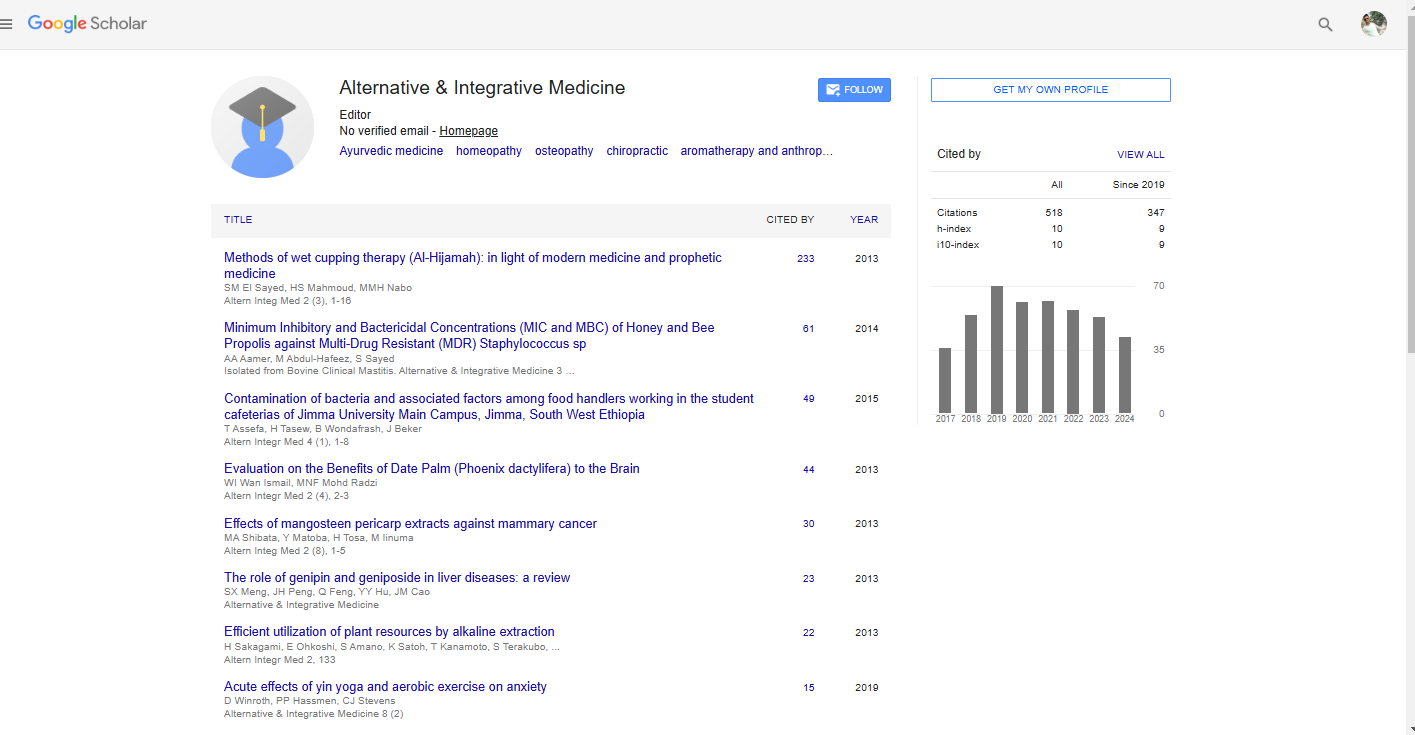
Alternative & Integrative Medicine received 476 citations as per Google Scholar report