Opinion - (2025) Volume 13, Issue 6
Received: 01-Dec-2025, Manuscript No. JGPR-26-190241;
Editor assigned: 03-Dec-2025, Pre QC No. P-190241;
Reviewed: 17-Dec-2025, QC No. Q-190241;
Revised: 22-Dec-2025, Manuscript No. R-190241;
Published:
29-Dec-2025
, DOI: 10.37421/2329-9126.2025.13.651
Citation: Walker, Emily. ”Electronic Prescribing: Safety, Efficiency, And Better Care.” J Gen Pract 13 (2025):651.
Copyright: © 2025 Walker E. This is an open-access article distributed under the terms of the Creative Commons Attribution License, which permits unrestricted use, distribution and reproduction in any medium, provided the original author and source are credited.
Electronic prescribing in general practice has emerged as a transformative technology, offering a multitude of advantages that significantly enhance patient care and operational efficiency. Its primary benefit lies in bolstering patient safety by substantially reducing the incidence of medication errors. This digital transition streamlines the entire prescription management workflow, minimizing the risks associated with illegible handwriting, a persistent issue with traditional paper-based prescriptions. Furthermore, the implementation of electronic prescribing systems fosters improved communication among healthcare providers. The ability to easily share and access up-to-date medication information contributes to more coordinated and effective patient care. This seamless integration of prescription data facilitates comprehensive medication reconciliation, a critical step in preventing adverse drug events and ensuring optimal therapeutic outcomes. The adoption of these digital systems necessitates a strategic and well-thought-out approach to training and support for all clinicians involved. Effective training programs are not merely beneficial but absolutely crucial for ensuring that healthcare professionals can utilize the new electronic prescribing systems efficiently and safely. This minimizes any potential disruption to the continuity of patient care during the transition phase. Addressing user concerns and providing robust, ongoing technical assistance are identified as key factors for the successful adoption of electronic prescribing. When clinicians feel supported and confident in their ability to use the new technology, the likelihood of maximizing the benefits of digital prescribing increases significantly, leading to a more positive and productive work environment. A fundamental aspect of realizing the full potential of electronic prescribing is its seamless integration with other existing health information systems, most notably electronic health records (EHRs). This interoperability is essential for achieving comprehensive patient data management and a holistic view of an individual's health status. When electronic prescribing systems are integrated with EHRs, they significantly improve medication safety. This integration provides clinicians with immediate access to critical patient information, such as known allergies and other relevant medical history. This allows for more informed prescribing decisions, further reducing the risk of adverse reactions. Patient perspectives on electronic prescribing are overwhelmingly positive, with many individuals expressing appreciation for the enhanced convenience it offers. Patients also recognize and value the reduced risk of prescription errors associated with digital systems, leading to greater confidence in their care. However, patient concerns regarding privacy and data security are legitimate and require careful consideration. It is paramount to ensure that patients fully understand how their sensitive health information is being handled and protected by these electronic systems. Open communication builds trust. The role of electronic prescribing in improving medication safety extends beyond simple error reduction to actively decreasing adverse drug events (ADEs). By providing real-time alerts and checks for potential drug interactions, allergies, and contraindications, these systems act as an indispensable safety net for general practitioners. Finally, the efficiency gains derived from electronic prescribing in general practice are substantial and far-reaching. The streamlined process of writing, sending, and managing prescriptions significantly reduces the administrative burden on healthcare professionals, allowing them to dedicate more valuable time to direct patient care and interaction.
Electronic prescribing in general practice offers a significant paradigm shift, marked by enhanced patient safety primarily through the substantial reduction of medication errors. This digital evolution streamlines the complex workflow of prescription management, mitigating risks associated with illegible handwritten scripts and fostering a more accurate and reliable process. The transition to digital systems inherently reduces the likelihood of errors stemming from poor penmanship, a common source of confusion and potential harm in traditional prescribing methods. The improved efficiency observed with electronic prescribing is a key benefit, simplifying the entire process from prescription generation to dispensing. This operational enhancement allows healthcare professionals to dedicate more time to direct patient interaction and care, rather than being consumed by administrative tasks. The ability to quickly access, reissue, and manage prescriptions contributes to a more responsive and agile healthcare service for patients. Effective training and ongoing support are indispensable components for the successful implementation of electronic prescribing systems in general practice. Comprehensive training programs are crucial to ensure that all healthcare professionals are proficient in utilizing these new systems efficiently and safely. This minimizes disruptions to patient care and maximizes the system's potential benefits. Addressing clinicians' concerns and providing consistent technical assistance are vital for fostering widespread adoption of electronic prescribing. When healthcare providers feel adequately supported and empowered to use the technology, the positive impact on their practice and patient care is amplified. This leads to a more seamless integration into daily routines. The integration of electronic prescribing with other critical health information systems, such as electronic health records (EHRs), is a foundational element for achieving true interoperability. This connectivity allows for a unified and comprehensive management of patient data, providing a holistic view of an individual's health across various care settings. This interoperability significantly enhances medication safety by providing clinicians with immediate access to crucial patient information. This includes details about allergies, existing conditions, and other medications, enabling more informed prescribing decisions and reducing the risk of dangerous drug interactions or contraindications. Patient perspectives on electronic prescribing are generally favorable, with many appreciating the convenience and the perceived reduction in medication errors. The ease of managing prescriptions digitally contributes to a more streamlined patient experience and a greater sense of control over their healthcare. However, it is imperative to acknowledge and address patient concerns regarding the privacy and security of their health information within these electronic systems. Transparent communication and robust security measures are essential to build and maintain patient trust in digital health solutions. The impact of electronic prescribing on medication safety is profound, extending to the reduction of adverse drug events (ADEs). By incorporating real-time alerts for potential drug interactions, allergies, and contraindications, these systems serve as a vital safeguard for healthcare providers, directly contributing to improved patient well-being. Ensuring regulatory compliance is a paramount consideration for general practices adopting electronic prescribing. Adherence to legal frameworks concerning data privacy, security, and the accuracy of electronic records is crucial. Staying informed about evolving regulations guarantees operational integrity and upholds the highest standards of patient safety.
Electronic prescribing in general practice offers significant benefits including enhanced patient safety through medication error reduction, improved efficiency in prescription management, and better communication among healthcare providers. The transition to digital systems streamlines workflows, reduces illegible handwriting issues, and facilitates medication reconciliation, leading to more coordinated and effective patient care. Challenges related to system integration, training, and data security require careful consideration during implementation. Effective training and ongoing support are crucial for successful adoption, while integration with EHRs is fundamental for comprehensive patient data management and improved medication safety. Patients generally appreciate the convenience and reduced error risk, though privacy concerns need addressing. Electronic prescribing also reduces adverse drug events and enhances communication among healthcare teams. While initial investments can be substantial, long-term benefits often outweigh costs. Regulatory compliance regarding data privacy and security is also a key aspect for general practices.
None
None
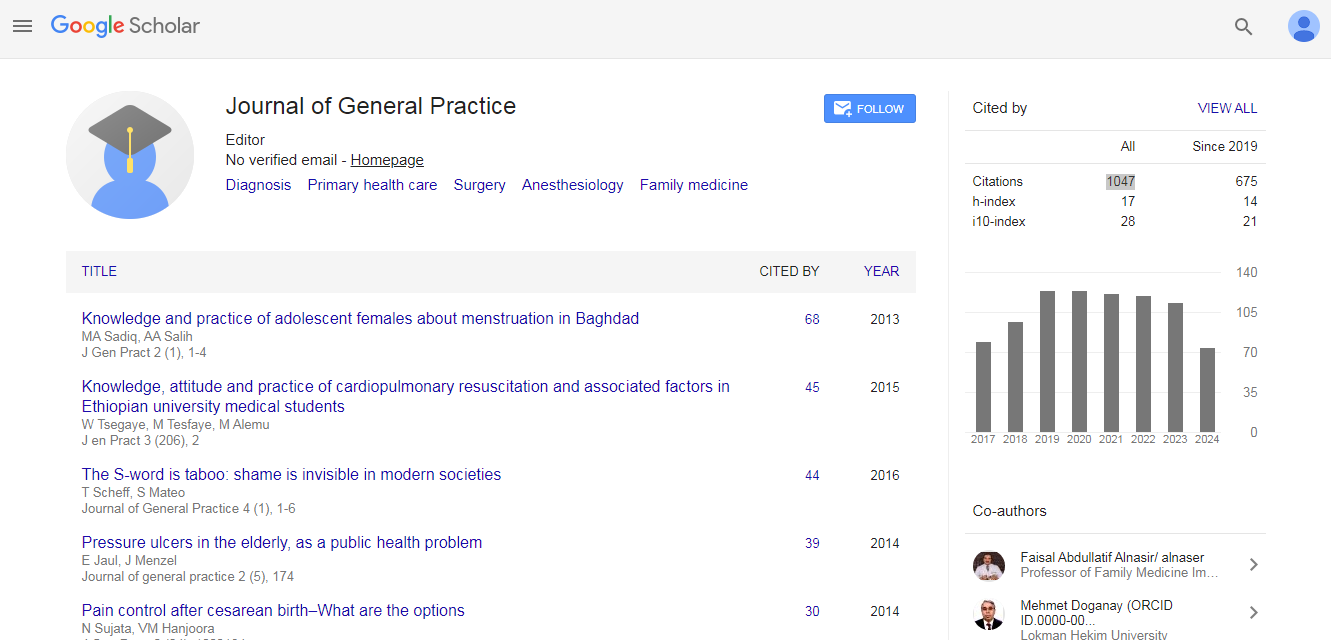
Journal of General Practice received 1047 citations as per Google Scholar report