Opinion - (2025) Volume 16, Issue 3
Received: 01-May-2025, Manuscript No. bej-26-182430;
Editor assigned: 05-May-2025, Pre QC No. P-182430;
Reviewed: 19-May-2025, QC No. Q-182430;
Revised: 22-May-2025, Manuscript No. R-182430;
Published:
29-May-2025
, DOI: 10.37421/2161-6219.2025.16.558
Citation: Silva, Leandro. ”Economics: Principles For Effective
Business Management.” Bus Econ J 16 (2025):558.
Copyright: © 2025 Silva L. This is an open-access article distributed under the terms of the Creative Commons Attribution License, which permits unrestricted use, distribution
and reproduction in any medium, provided the original author and source are credited.
This comprehensive exploration delves into the multifaceted application of fundamental economic principles within the realm of modern business management. It meticulously details how concepts such as supply and demand dynamics, elasticity, various market structures, and the nuanced field of behavioral economics are not merely theoretical constructs but indispensable tools for effective decision-making and strategic implementation. The understanding of these principles empowers managers to make informed choices regarding pricing strategies, optimal resource allocation, the development of competitive advantages, and the prediction and influence of consumer behavior, all contributing to enhanced organizational performance and increased profitability. The practical application of these economic concepts is demonstrably crucial for driving robust strategic planning and ensuring operational efficiency across diverse business landscapes [1].
Further research examines the intricate interplay between established economic theory and its pragmatic application in day-to-day business operations. This investigation specifically highlights how core microeconomic concepts, including cost minimization and profit maximization, serve as guiding principles for critical operational decisions. It underscores the pivotal role that a deep comprehension of market dynamics, encompassing competitive landscapes and evolving consumer preferences, plays in shaping effective business strategies. Through illustrative case examples, the article demonstrates how businesses have successfully harnessed economic insights to navigate complex market challenges and capitalize on emerging opportunities for sustained growth and expansion [2].
An in-depth analysis is presented on the economic concept of market equilibrium and its profound implications for the formulation of effective pricing strategies across a spectrum of business contexts. The research meticulously analyzes the adaptive strategies businesses can employ to respond to fluctuations in supply and demand, thereby maintaining competitive pricing structures and optimizing overall sales volume. Furthermore, the study touches upon the critical importance of understanding the price elasticity of demand, a key factor for proficient revenue management and strategic product positioning in dynamic markets [3].
The application of game theory principles is rigorously investigated as a means to understand and effectively manage inter-firm competition. This research explores the strategic decision-making processes that are significantly influenced by the anticipated actions and reactions of competitors, modeling these interactions using established game theory frameworks. The study provides valuable insights into how businesses can meticulously develop robust competitive strategies by systematically analyzing payoff matrices and identifying optimal strategic moves within oligopolistic market structures [4].
This study critically examines the pivotal role of information economics in addressing the complexities of business management, with a particular focus on the challenges presented by asymmetric information and the resultant market failures. It discusses practical strategies that managers can implement to effectively mitigate the risks inherent in imperfect information, such as adverse selection and moral hazard, through the strategic deployment of mechanisms like signaling and screening. The research emphatically underscores the indispensable importance of transparency and sophisticated information management for fostering robust trust and ensuring the efficient operation of market mechanisms [5].
Further research delves into the application of behavioral economics principles to gain a profound understanding of consumer decision-making patterns, especially within the contemporary digital landscape. It meticulously investigates how various cognitive biases, commonly employed heuristics, and the strategic use of framing effects significantly influence purchasing choices in online environments. The study explores how businesses can ethically leverage these insights within their marketing initiatives and product design processes, highlighting the escalating significance of psychological factors in shaping economic behavior [6].
This paper critically examines the economic principles of externalities and their substantial impact on both day-to-day business operations and the broader landscape of corporate social responsibility. It elaborates on the strategies businesses can adopt to internalize negative externalities or enhance positive ones through judicious strategic investments and the implementation of sustainable practices. The research strongly underscores the intrinsic link between achieving economic efficiency and the crucial consideration of environmental and social responsibilities [7].
The study meticulously investigates the economic principles of economies of scale and scope and their considerable significance in guiding business expansion and diversification strategies. It undertakes a thorough analysis of how achieving larger production volumes or engaging in the production of a diverse range of related products can lead to substantial cost advantages and a significant improvement in overall market competitiveness. The research provides a structured framework for effectively evaluating the potential benefits associated with scaling up and diversifying business operations [8].
This research specifically focuses on the economic concept of principal-agent theory and its significant relevance within the context of modern organizational management. It critically explores the inherent challenges that arise from information asymmetry and the divergence of interests that often exists between principals (such as shareholders) and agents (such as company managers). The study examines various mechanisms designed to effectively align their objectives, including the implementation of incentive contracts and rigorous performance monitoring systems. The research highlights how the effective management of principal-agent relationships is crucial for enhancing organizational efficiency and ensuring robust accountability [9].
Finally, this study investigates the fundamental economic principles of rational choice and bounded rationality as they apply to decision-making processes within business management. It draws a clear contrast between the theoretical assumptions of perfect rationality and the practical realities of cognitive limitations and environmental constraints that managers consistently encounter. The research explores how a thorough understanding of these inherent limitations can lead to the development of more realistic, effective, and adaptable decision-making models and processes, particularly within complex and dynamic business environments [10].
This comprehensive exploration delves into the multifaceted application of fundamental economic principles within the realm of modern business management. It meticulously details how concepts such as supply and demand dynamics, elasticity, various market structures, and the nuanced field of behavioral economics are not merely theoretical constructs but indispensable tools for effective decision-making and strategic implementation. The understanding of these principles empowers managers to make informed choices regarding pricing strategies, optimal resource allocation, the development of competitive advantages, and the prediction and influence of consumer behavior, all contributing to enhanced organizational performance and increased profitability. The practical application of these economic concepts is demonstrably crucial for driving robust strategic planning and ensuring operational efficiency across diverse business landscapes [1].
Further research examines the intricate interplay between established economic theory and its pragmatic application in day-to-day business operations. This investigation specifically highlights how core microeconomic concepts, including cost minimization and profit maximization, serve as guiding principles for critical operational decisions. It underscores the pivotal role that a deep comprehension of market dynamics, encompassing competitive landscapes and evolving consumer preferences, plays in shaping effective business strategies. Through illustrative case examples, the article demonstrates how businesses have successfully harnessed economic insights to navigate complex market challenges and capitalize on emerging opportunities for sustained growth and expansion [2].
An in-depth analysis is presented on the economic concept of market equilibrium and its profound implications for the formulation of effective pricing strategies across a spectrum of business contexts. The research meticulously analyzes the adaptive strategies businesses can employ to respond to fluctuations in supply and demand, thereby maintaining competitive pricing structures and optimizing overall sales volume. Furthermore, the study touches upon the critical importance of understanding the price elasticity of demand, a key factor for proficient revenue management and strategic product positioning in dynamic markets [3].
The application of game theory principles is rigorously investigated as a means to understand and effectively manage inter-firm competition. This research explores the strategic decision-making processes that are significantly influenced by the anticipated actions and reactions of competitors, modeling these interactions using established game theory frameworks. The study provides valuable insights into how businesses can meticulously develop robust competitive strategies by systematically analyzing payoff matrices and identifying optimal strategic moves within oligopolistic market structures [4].
This study critically examines the pivotal role of information economics in addressing the complexities of business management, with a particular focus on the challenges presented by asymmetric information and the resultant market failures. It discusses practical strategies that managers can implement to effectively mitigate the risks inherent in imperfect information, such as adverse selection and moral hazard, through the strategic deployment of mechanisms like signaling and screening. The research emphatically underscores the indispensable importance of transparency and sophisticated information management for fostering robust trust and ensuring the efficient operation of market mechanisms [5].
Further research delves into the application of behavioral economics principles to gain a profound understanding of consumer decision-making patterns, especially within the contemporary digital landscape. It meticulously investigates how various cognitive biases, commonly employed heuristics, and the strategic use of framing effects significantly influence purchasing choices in online environments. The study explores how businesses can ethically leverage these insights within their marketing initiatives and product design processes, highlighting the escalating significance of psychological factors in shaping economic behavior [6].
This paper critically examines the economic principles of externalities and their substantial impact on both day-to-day business operations and the broader landscape of corporate social responsibility. It elaborates on the strategies businesses can adopt to internalize negative externalities or enhance positive ones through judicious strategic investments and the implementation of sustainable practices. The research strongly underscores the intrinsic link between achieving economic efficiency and the crucial consideration of environmental and social responsibilities [7].
The study meticulously investigates the economic principles of economies of scale and scope and their considerable significance in guiding business expansion and diversification strategies. It undertakes a thorough analysis of how achieving larger production volumes or engaging in the production of a diverse range of related products can lead to substantial cost advantages and a significant improvement in overall market competitiveness. The research provides a structured framework for effectively evaluating the potential benefits associated with scaling up and diversifying business operations [8].
This research specifically focuses on the economic concept of principal-agent theory and its significant relevance within the context of modern organizational management. It critically explores the inherent challenges that arise from information asymmetry and the divergence of interests that often exists between principals (such as shareholders) and agents (such as company managers). The study examines various mechanisms designed to effectively align their objectives, including the implementation of incentive contracts and rigorous performance monitoring systems. The research highlights how the effective management of principal-agent relationships is crucial for enhancing organizational efficiency and ensuring robust accountability [9].
Finally, this study investigates the fundamental economic principles of rational choice and bounded rationality as they apply to decision-making processes within business management. It draws a clear contrast between the theoretical assumptions of perfect rationality and the practical realities of cognitive limitations and environmental constraints that managers consistently encounter. The research explores how a thorough understanding of these inherent limitations can lead to the development of more realistic, effective, and adaptable decision-making models and processes, particularly within complex and dynamic business environments [10].
This collection of research underscores the critical role of economic principles in effective business management. Studies highlight how understanding supply and demand, elasticity, and market structures informs pricing and resource allocation, leading to improved profitability. Microeconomic concepts guide operational decisions, while game theory aids in competitive strategy. Information economics addresses market failures and asymmetric information. Behavioral economics sheds light on consumer choices influenced by cognitive biases, while externalities emphasize the link between economic efficiency and social responsibility. Economies of scale and scope are crucial for business growth, and principal-agent theory addresses organizational alignment. Finally, the research explores rational and bounded rationality in managerial decision-making, emphasizing practical application in complex environments.
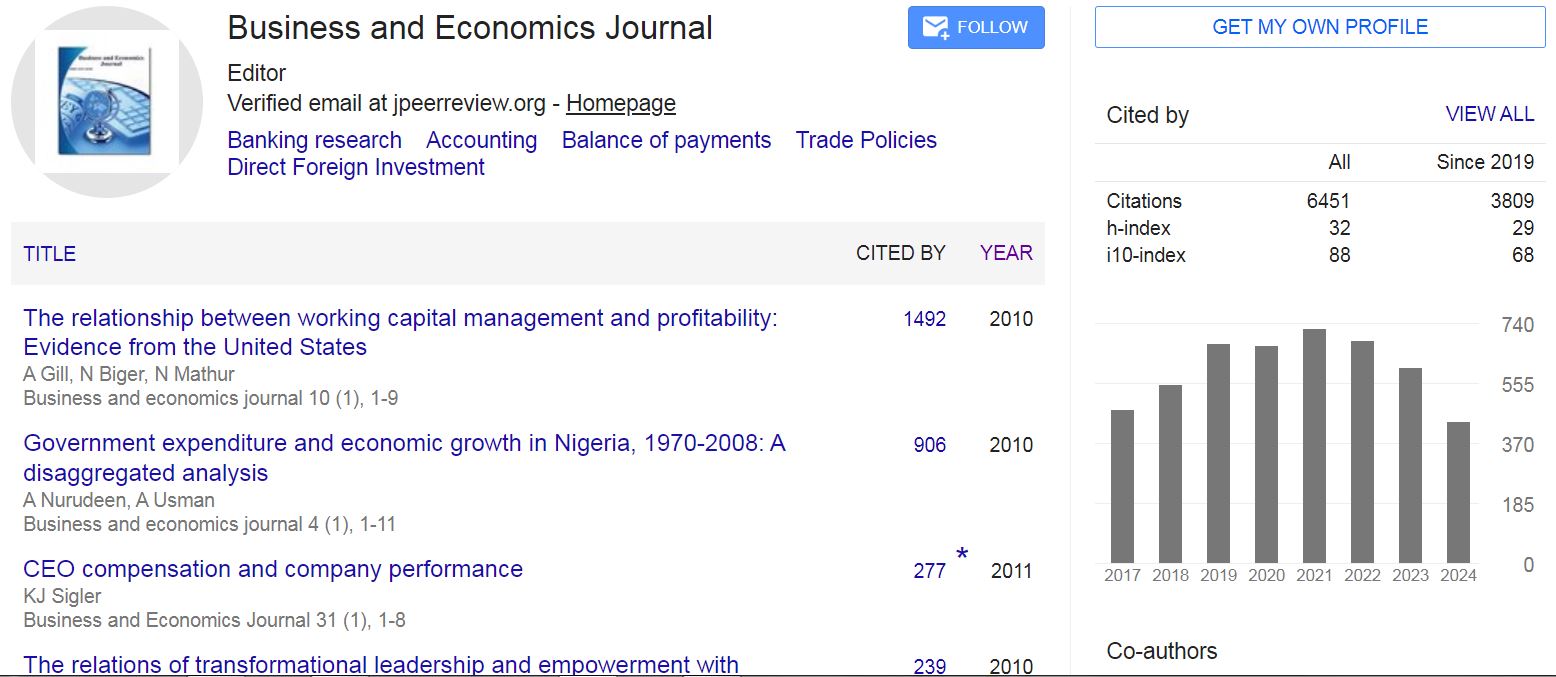
Business and Economics Journal received 6451 citations as per Google Scholar report