Opinion - (2025) Volume 21, Issue 6
Received: 01-Nov-2025, Manuscript No. jos-26-185186;
Editor assigned: 03-Nov-2025, Pre QC No. P-185186;
Reviewed: 17-Nov-2025, QC No. Q-185186;
Revised: 24-Nov-2025, Manuscript No. R-185186;
Published:
01-Dec-2025
, DOI: 10.37421/1584-9341.2024.20.235
Citation: Farouk, Jamal. ”Early Mobilization: Key For Surgical
Recovery.” J Surg 21 (2025):235.
Copyright: © 2025 Farouk J. This is an open-access article distributed under the terms of the Creative Commons Attribution License, which permits unrestricted use, distribution
and reproduction in any medium, provided the original author and source are credited.
Early mobilization following upper gastrointestinal surgery is a critical intervention that significantly enhances postoperative recovery and patient outcomes. Protocols designed to promote early ambulation, typically commencing within 24 to 48 hours post-operation, are instrumental in mitigating a range of potential complications. These include a reduced incidence of pulmonary issues, venous thromboembolism (VTE), and postoperative ileus, contributing to a smoother and faster return to health [1].
The implementation of enhanced recovery after surgery (ERAS) pathways has demonstrably benefited upper gastrointestinal surgery by decreasing both morbidity and the overall length of hospital stays. A central tenet of these comprehensive protocols is the emphasis on early patient mobilization, a strategy supported by substantial evidence for its role in preventing adverse events such as atelectasis and deep vein thrombosis. The success of ERAS hinges on effective multidisciplinary collaboration among healthcare providers [2].
Postoperative pulmonary complications (PPCs) represent a significant source of patient suffering and prolonged recovery periods after upper gastrointestinal procedures. Early mobilization has emerged as a primary strategy to counteract these risks, functioning by encouraging lung expansion and enhancing the clearance of secretions through improved mucociliary action. This approach is backed by a growing body of evidence supporting its effectiveness in promoting better respiratory health post-surgery [3].
The prevention of venous thromboembolism (VTE) is an indispensable component of comprehensive postoperative care for patients undergoing upper gastrointestinal surgery. When combined with appropriate pharmacological prophylaxis, early mobilization plays a pivotal role in substantially lowering the risk of VTE. Research specifically examines the strong correlation between early ambulation and a reduced prevalence of deep vein thrombosis and pulmonary embolism [4].
Postoperative ileus, characterized by a temporary cessation of bowel motility, is a frequently encountered complication following upper GI surgery, often leading to delayed oral intake and extended hospitalizations. Evidence suggests that early mobilization can expedite the restoration of normal bowel function, thereby diminishing both the duration and severity of ileus. This research specifically evaluates the efficacy of early ambulation in managing this common postoperative issue [5].
Patient education and active engagement are fundamental elements for the successful execution of early mobilization protocols. By equipping patients with a thorough understanding of the benefits associated with early ambulation and involving them actively in the planning and decision-making processes, adherence to these protocols can be significantly improved, leading to better patient outcomes. This article explores practical strategies for effective patient education in this surgical context [6].
The integral role of the multidisciplinary team cannot be overstated in facilitating successful early mobilization after upper gastrointestinal surgery. Effective teamwork among physiotherapists, nurses, physicians, and allied health professionals is essential for developing and implementing personalized mobilization plans that cater to individual patient needs. This study underscores the critical importance of interdisciplinary collaboration in optimizing the recovery trajectory of patients [7].
Pain management is a crucial determinant of a patient's capacity and willingness to mobilize early after upper GI surgery. The implementation of effective analgesia strategies, which are designed to minimize sedating effects and other undesirable side effects, is paramount for encouraging patient ambulation. This review critically examines various pain management modalities and their direct impact on the success of early mobilization efforts [8].
The economic advantages associated with the implementation of early mobilization protocols in upper GI surgery are substantial and far-reaching. Shorter hospital stays, a reduction in complication rates, and a quicker return to daily activities collectively contribute to significant reductions in overall healthcare expenditures and more efficient utilization of medical resources. This study aims to quantify the cost-effectiveness of these early mobilization strategies [9].
Standardizing early mobilization protocols across diverse surgical settings where upper GI procedures are performed is essential for ensuring consistent and high-quality patient care. This article outlines a practical framework for developing and implementing such protocols, addressing potential challenges and identifying facilitators that can aid in their widespread adoption. The focus is on establishing a robust and adaptable system that supports early ambulation for all relevant patients [10].
Early ambulation following upper gastrointestinal surgery is a cornerstone of modern surgical care, offering substantial improvements in postoperative recovery. Strategies that encourage patients to move and engage in light physical activity within 24-48 hours of their operation are proven to reduce the risk of serious complications such as pneumonia, blood clots, and a prolonged inability of the bowel to function normally. The integration of these early mobilization principles into Enhanced Recovery After Surgery (ERAS) programs highlights their importance, emphasizing comprehensive patient preparation and support from a unified healthcare team to expedite recovery and shorten hospital stays [1].
The widespread adoption of Enhanced Recovery After Surgery (ERAS) protocols in the realm of upper GI surgery has yielded significant positive results, notably a decrease in patient complications and a reduction in the duration of hospital confinement. Early mobilization is a fundamental component of these protocols, with extensive research validating its efficacy in preventing issues like lung collapse and deep vein thrombosis. The success of ERAS is heavily reliant on the cohesive efforts and effective communication among all members of the healthcare team [2].
Postoperative pulmonary complications (PPCs) continue to be a major contributor to patient illness and extended hospital stays after upper gastrointestinal surgeries. Early mobilization has emerged as a key strategy to lessen these risks by promoting better lung expansion and enhancing the body's natural mechanisms for clearing respiratory secretions. The existing body of evidence strongly supports the implementation of early ambulation as a means to improve respiratory function and recovery [3].
A critical aspect of managing patients after upper GI surgery involves the prevention of venous thromboembolism (VTE). Early mobilization, when employed in conjunction with appropriate pharmaceutical preventive measures, plays a crucial role in diminishing the likelihood of VTE development. This specific area of research focuses on the direct relationship between initiating early movement and a notable decrease in the incidence of deep vein thrombosis and pulmonary embolism [4].
Postoperative ileus, a common challenge after upper GI surgery, can lead to delays in eating and prolonged hospital stays. The practice of early mobilization has been identified as an effective method for speeding up the return of normal bowel activity, thus reducing the duration and severity of ileus. This particular research effort is dedicated to assessing how effective early ambulation is in managing this specific complication [5].
Empowering patients through comprehensive education and encouraging their active participation are vital for the success of early mobilization strategies. When patients are well-informed about the advantages of early movement and are involved in decisions regarding their care, their adherence to mobilization plans improves, leading to better recovery outcomes. This article delves into effective methods for patient education within the context of upper GI surgical recovery [6].
The effective coordination and collaboration of a multidisciplinary team are paramount for enabling and sustaining early mobilization efforts in patients recovering from upper GI surgery. A well-functioning team, comprising physiotherapists, nurses, physicians, and other healthcare professionals, is essential for creating and implementing individualized mobilization plans that best suit each patient's unique needs. This study highlights the indispensable nature of interdisciplinary teamwork in optimizing patient recovery pathways [7].
Addressing postoperative pain effectively is a key factor that influences both a patient's physical ability and their psychological willingness to engage in early mobilization after upper GI surgery. Employing analgesic techniques that provide sufficient pain relief while minimizing side effects such as drowsiness is crucial for promoting patient ambulation. This review examines a variety of pain management approaches and their subsequent impact on the successful implementation of early mobilization [8].
The financial implications of adopting early mobilization protocols in upper GI surgery are significant, offering considerable savings to healthcare systems. By facilitating shorter hospital stays, reducing the occurrence of costly complications, and enabling patients to return to their daily lives sooner, these protocols contribute to lower overall healthcare costs and more efficient use of healthcare resources. This study provides a quantitative analysis of the economic benefits associated with early mobilization [9].
Establishing and implementing standardized early mobilization protocols across various healthcare settings that perform upper GI surgery is essential for ensuring uniform and high-quality patient care. This article proposes a practical framework designed for the development and implementation of such protocols, addressing common barriers and identifying facilitators that can promote their widespread acceptance. The overarching goal is to create a robust and adaptable system that consistently supports early ambulation for patients undergoing these procedures [10].
Early mobilization following upper gastrointestinal surgery is a crucial strategy that significantly improves patient outcomes, reducing complications such as pulmonary issues, venous thromboembolism, and ileus. Enhanced Recovery After Surgery (ERAS) pathways heavily incorporate early ambulation, emphasizing patient education, pain management, and multidisciplinary team involvement. This approach accelerates recovery, shortens hospital stays, and has positive economic implications. Effective implementation requires standardized protocols, patient engagement, and robust pain management. The collaborative efforts of a multidisciplinary team are vital for tailoring and executing successful mobilization plans.
None
None
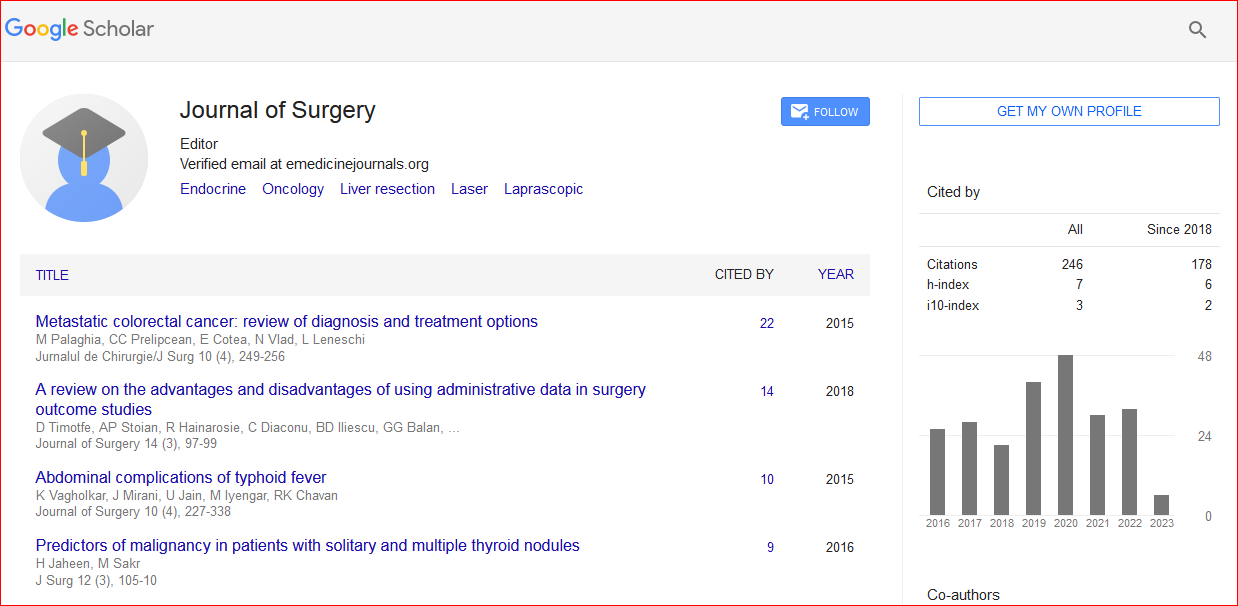
Journal of Surgery received 288 citations as per Google Scholar report