Opinion - (2025) Volume 11, Issue 6
Received: 01-Dec-2025, Manuscript No. cdp-26-185474;
Editor assigned: 03-Dec-2025, Pre QC No. P-185474;
Reviewed: 17-Dec-2025, QC No. Q-185474;
Revised: 22-Dec-2025, Manuscript No. R-185474;
Published:
29-Dec-2025
, DOI: 10.37421/2572-0791.2025.11.211
Citation: AlMansouri, Mariam. ”Early Intervention For Major Depressive Disorder: Key Strategies.” Clin Depress 11 (2025):211.
Copyright: © 2025 AlMansouri M. This is an open-access article distributed under the terms of the Creative Commons Attribution License, which permits unrestricted use, distribution and reproduction in any medium, provided the original author and source are credited.
The imperative for early intervention in Major Depressive Disorder (MDD) cannot be overstated, as prompt action significantly enhances patient outcomes and mitigates the enduring burden of disability. Key strategies encompass the swift identification of symptoms, precise diagnostic procedures, and the immediate commencement of evidence-based therapeutic modalities. These interventions often involve psychotherapies such as Cognitive Behavioral Therapy (CBT) and Interpersonal Therapy (IPT), alongside pharmacotherapy, which is frequently employed in a combined approach. There is a growing emphasis on personalizing treatment plans to align with individual patient characteristics and symptom profiles. Furthermore, preventive measures and public health initiatives designed to elevate awareness and dismantle stigma are instrumental in encouraging individuals to seek help at the earliest possible stage [1].
The efficacy of psychotherapy in the initial management of MDD is firmly established. When initiated without delay, therapeutic approaches like CBT and IPT demonstrate considerable success in reducing symptom severity, preventing the recurrence of depressive episodes, and improving overall functional capacity. The selection of a particular therapy typically considers patient preferences, the specific presentation of symptoms, and the therapist's expertise. Increasingly, digital platforms are being utilized to deliver these therapies, thereby expanding their accessibility and reach within early intervention frameworks [2].
Pharmacological interventions continue to be a fundamental component of MDD treatment, particularly for individuals experiencing moderate to severe symptoms. Selective Serotonin Reuptake Inhibitors (SSRIs) and Serotonin-Norepinephrine Reuptake Inhibitors (SNRIs) are commonly prescribed as initial treatment options. Early initiation of these medications is crucial for achieving remission and minimizing the risk of chronicity. A thorough assessment of potential side effects, drug interactions, and individual patient factors is essential for optimizing medication choice and ensuring adherence during the early phases of treatment [3].
Emerging digital health technologies offer innovative pathways for the early intervention of MDD. Telepsychiatry services, mobile applications for symptom tracking and self-management, and online psychoeducation resources contribute to improved accessibility and engagement, especially for those facing geographical or financial obstacles to conventional care. These technological tools can expedite early detection and facilitate timely access to necessary interventions [4].
A critical element of effective intervention is the early identification of individuals at elevated risk for developing MDD. Factors such as a family history of depression, prior depressive episodes, the presence of chronic medical conditions, and significant life stressors can all indicate increased vulnerability. The implementation of screening tools and proactive outreach programs within primary care settings can significantly enhance the opportunities for earlier detection and intervention [5].
Preventing relapse and recurrence represents a primary objective of early intervention strategies. Following the achievement of remission, continued care, which includes regular follow-up appointments, patient education regarding early warning signs of relapse, and supplementary therapies, can markedly decrease the probability of future episodes. This sustained commitment to care is indispensable for promoting long-term mental well-being [6].
A personalized strategy for early intervention is gaining significant momentum. This approach entails tailoring treatment plans based on an individual's unique symptom presentation, the severity of their condition, the presence of comorbidities, potential genetic predispositions, and their personal treatment preferences. The ultimate goal of precision medicine is to optimize treatment selection and augment therapeutic efficacy from the outset of care [7].
Public health campaigns and initiatives aimed at combating stigma are indispensable for cultivating an environment where individuals feel empowered to seek timely help for depression. By reducing the societal stigma associated with mental illness, these efforts encourage help-seeking behaviors and improve access to early interventions, thereby contributing to the overall mental health of the population [8].
Early intervention for adolescent depression necessitates the application of specifically tailored strategies. The developmental trajectory of adolescence presents a unique set of challenges and opportunities for therapeutic engagement. Prompt identification and treatment can prevent the exacerbation of symptoms and mitigate the long-term adverse effects on academic, social, and emotional development. Family involvement and school-based programs are frequently integral components of these interventions [9].
The integrated approach to mental and physical healthcare is increasingly acknowledged as crucial for delivering comprehensive early intervention for MDD. Co-occurring physical health conditions can intensify depressive symptoms, and conversely, depression can negatively impact physical health. Collaborative care models, which foster close cooperation between mental health professionals and primary care physicians, ensure that both physical and mental health needs are addressed concurrently and promptly [10].
The paramount importance of early intervention in Major Depressive Disorder (MDD) is underscored by its profound impact on improving patient outcomes and diminishing the long-term consequences of disability. Essential components of this approach include the prompt recognition of depressive symptoms, accurate diagnostic assessments, and the timely implementation of evidence-based treatments. These treatments often encompass psychotherapeutic modalities, such as Cognitive Behavioral Therapy (CBT) and Interpersonal Therapy (IPT), as well as pharmacotherapy, frequently utilized in combination. A significant trend is the emphasis on personalized treatment plans that account for individual patient factors and symptom profiles. Moreover, public health initiatives focused on prevention, increasing awareness, and reducing stigma play a vital role in encouraging individuals to seek help early [1].
Psychotherapy's role in the initial stages of managing MDD is well-established. When initiated promptly, therapies like CBT and IPT are effective in alleviating symptom severity, preventing relapse, and enhancing overall functioning. The choice of therapy is often guided by patient preference, symptom presentation, and therapist expertise. The digital delivery of these therapies is also emerging as a practical solution for broadening access and reach in early intervention efforts [2].
Pharmacological interventions remain a cornerstone in the treatment of MDD, particularly for individuals with moderate to severe presentations. Selective Serotonin Reuptake Inhibitors (SSRIs) and Serotonin-Norepinephrine Reuptake Inhibitors (SNRIs) are commonly employed as first-line agents. Early initiation of pharmacotherapy is key to achieving remission and minimizing the risk of developing chronic depression. Careful consideration of potential side effects, drug interactions, and individual patient characteristics is vital for optimizing medication selection and ensuring adherence in the early stages of treatment [3].
Digital health technologies are opening new avenues for early intervention in MDD. Services such as telepsychiatry, mobile health applications for symptom monitoring and self-management, and online psychoeducational platforms can enhance accessibility and patient engagement, especially for individuals facing geographical or financial barriers to traditional care. These digital tools can facilitate early detection and provide timely access to interventions [4].
A crucial aspect of effective early intervention is the identification of individuals at high risk for developing MDD. Factors like a family history of depression, previous depressive episodes, coexisting chronic medical conditions, and significant life stressors can indicate increased vulnerability. The implementation of screening tools and proactive outreach within primary care settings can significantly improve the chances of earlier detection and intervention [5].
Preventing relapse and recurrence is a primary objective of early intervention strategies. Once a patient achieves remission, continued treatment, including regular follow-up, psychoeducation on early warning signs, and adjunctive therapies, can substantially reduce the likelihood of future depressive episodes. This sustained approach is fundamental for long-term mental well-being [6].
The concept of personalized treatment for early intervention is gaining significant traction. This involves tailoring treatment plans based on an individual's specific symptom profile, the severity of their depression, comorbidities, potential genetic predispositions, and personal preferences. The aim of precision medicine is to optimize treatment selection and enhance efficacy from the outset of care [7].
Public health campaigns and initiatives designed to reduce stigma are essential for creating an environment where individuals feel comfortable seeking help for depression early on. By decreasing the societal stigma associated with mental illness, these efforts encourage help-seeking behavior and facilitate access to timely interventions, ultimately improving population mental health [8].
Early intervention for adolescent depression requires strategies that are specifically adapted to this developmental stage. Adolescence presents unique challenges and opportunities for intervention. Prompt identification and treatment can prevent the escalation of symptoms and mitigate long-term negative impacts on academic, social, and emotional development. Family involvement and school-based programs are often key components of these interventions [9].
The integration of mental and physical healthcare is increasingly recognized as vital for comprehensive early intervention in MDD. Comorbid physical health conditions can worsen depressive symptoms, and depression can negatively affect physical health. Collaborative care models, where mental health professionals work closely with primary care physicians, ensure that both physical and mental health needs are addressed concurrently and promptly [10].
Early intervention for Major Depressive Disorder (MDD) is critical for improving outcomes and reducing long-term disability. Strategies involve prompt recognition, accurate diagnosis, and timely initiation of evidence-based treatments including psychotherapy (CBT, IPT) and pharmacotherapy (SSRIs, SNRIs). Personalized treatment approaches are emphasized. Digital health technologies, such as telepsychiatry and mobile apps, enhance accessibility. Identifying individuals at high risk through screening and outreach in primary care is crucial. Preventing relapse and recurrence through continued care and psychoeducation is a key goal. Public health campaigns and anti-stigma initiatives encourage help-seeking. Tailored interventions are needed for adolescent depression, and integrating mental and physical healthcare through collaborative models is vital for comprehensive care.
None
None
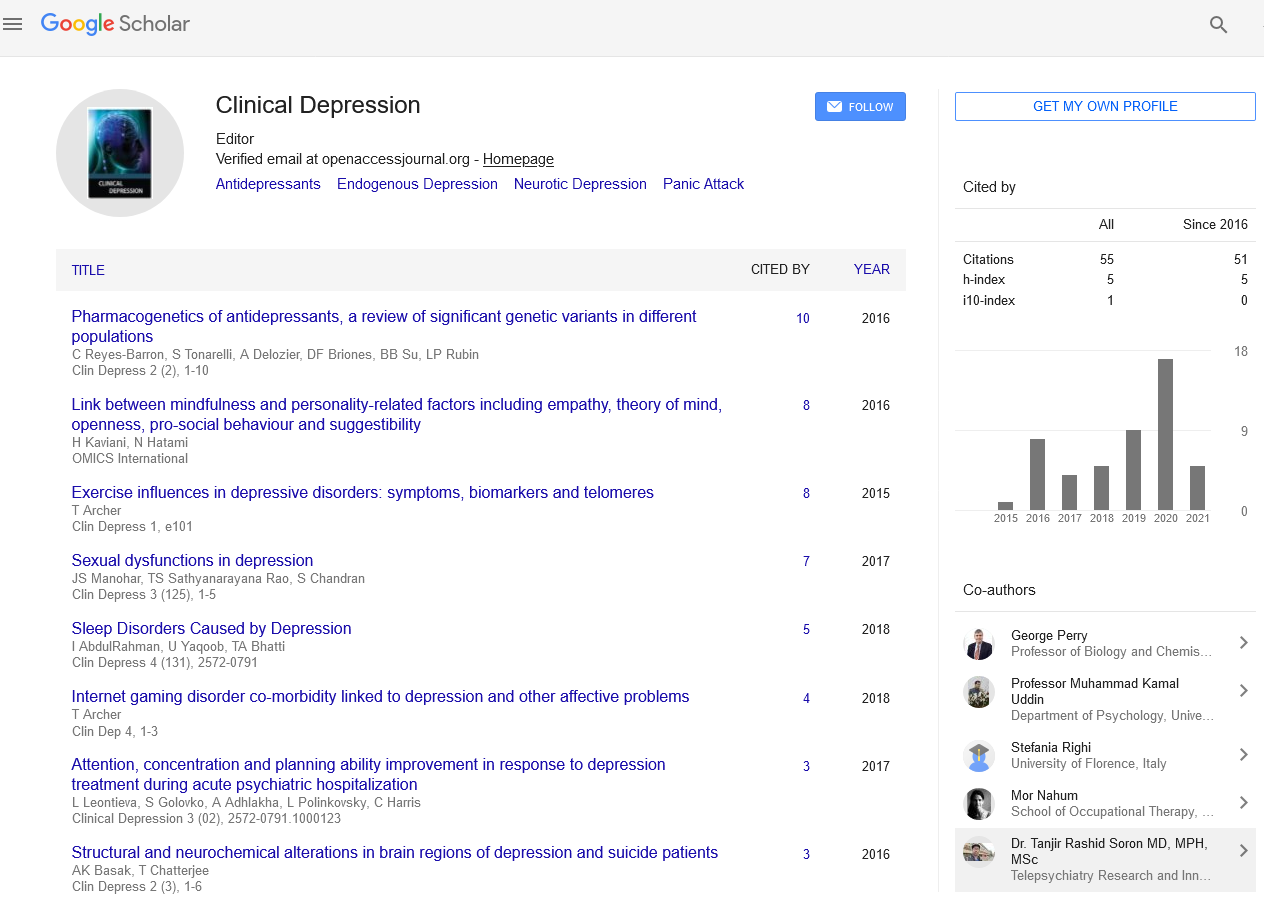
Clinical Depression received 89 citations as per Google Scholar report