Research Article - (2026) Volume 12, Issue 1
Received: 02-Dec-2024, Manuscript No. JPNP-24-153978;
Editor assigned: 04-Dec-2024, Pre QC No. JPNP-24-153978 (PQ);
Reviewed: 18-Dec-2024, QC No. JPNP-24-153978;
Revised: 12-Feb-2026, Manuscript No. JPNP-24-153978 (R);
Published:
19-Feb-2026
, DOI: 10.37421/2472-0992.2026.12.353
Citation: Jasrotia, Sanjay Kumar, Ved Parkash Patial, and Shalu Shukla. "Determination of Some Sulphonyl Chlorides Using Titrimetric and Polarographic Procedures." J Pharmacogn Nat Prod 12 (2026): 353.
Copyright: © 2026 Jasrotia SK, et al. This is an open-access article distributed under the terms of the creative commons attribution license which permits unrestricted use, distribution and reproduction in any medium, provided the original author and source are credited.
Reactive sulfonic acid derivatives, or sulfonyl chlorides, share characteristics and reactivity with carboxylate acid chlorides. On the other hand, the sulfonic acid group is a highly hindered molecule with substituents arranged in a tetrahedral structure. A very packed and unstable pentavalent intermediate is momentarily formed when a nucleophile attacks a sulfonyl chloride. Sulfonic acids are too hindered to allow the formation of such bulky active intermediates, in contrast to the capacity to prepare amide connections between carboxylate groups and amines using alternative condensing agents, such as carbodiimides. Sulphonyl chlorides, RSO2Cl are compounds of extensive economical, diagnostic and synthetic importance. Subsequently, their determination is of enormous opportunity and countless value. They serve as significant and inexpensive intermediates for the synthesis of economically significant compounds such as sulphonamides, sulphonic acids, sulphonyl hydrazides, sulphones, sulphinic acids and mercaptans. Sulphonamides find wide use in chemotherapy as sulpha drugs. Utmost frequently working methods for the determination of these compounds hang on the comparatively facile splitting of their S-Cl bond in hydrolysis kind reactions with water, bases, amines and hydroxylamine, where the chloride is ejected and sulphur leftovers hexavalent in sulphonic acid or their plagiaristic formed in these reactions. Diverse approaches have been conversed and used for the determination of sulphonyl chlorides.
Sulphonyl chlorides • Sulphonyl hydrazides • Sulphones • Sulphinic acids • Sulphonamides • Mercaptans
Sulphonyl chlorides, RSO2Cl find significant uses in leather manufacture-tanning, as fat liquoring mediators and for leather impregnation. Sulphonyl chlorides support as appreciated substances in certification and determination of primary and secondary amines and phenols. Currently they are widely used for the synthesis of juvenile hormone analogues [1] which are further used as potential insecticides and pesticides. Sulphonyl chlorides are equitably reactive compounds; they have therefore, been determined by multiple chemical methods.
Replacement reactions: The reagent embraces water, bases, amines and hydroxylamine.

P-acetylaminobenzene sulphonyl chloride was determined as a significant intermediate in the preparation of sulphanilamides. Recently, Simple hydrolysable halides, including p-acetyl amino benzene sulphonyl chloride, was determined in a comparable technique by means of water/pyridine substance. This reaction was completed as the basis of titrimetric determination of sulphonyl chlorides.
Reduction methods: These approaches are grounded on reduction of sulphur (VI) in sulphonyl chlorides to sulphur (IV) in sulphinates or sulphur (II) in sulphide ion and in some cases organic disulphides. Direct titration technique was employed for a succession of sulphonyl halides, using sodium sulphite as titrant.

Spectrophotometric methods: Simple spectrophotometric methods for determination of sulphonyl chlorides and carbonyl chlorides are projected. Anthraquinone mono sulphonic acid was determined by spectrophotometric titrimetery with barium salts in 50% acetone in the presence of nitchromazo.
Polarographic methods: Polarographic reduction of sulphonyl halides appears normally to be a 2-electron process, yielding sulphinates and halides. However, diverse mechanisms under certain experimental situations was planned as under:
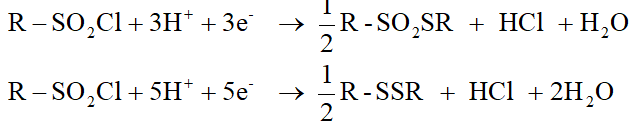
Virtually no polarographic work on sulphonyl halides has been analytically leaning.
Chromatographic methods: Anamalgamation of liquid phase chromatographic separation on silica gel and Infra-Red and emission spectroscopy have been used for the investigation of oil-soluble sulphonates. The reverse phase ion-pair chromatography for the parting of aromatic sulphonic acids on an alkyl altered silica was applied. Analysis of aromatic sulphonic acids and sulphonates by gas chromatography was performed. Gas chromatographic analysis of numerous sulphonyl chlorides with derivatization has been defined recently.
Determination of sulphonyl chlorides
In the current work, the use of mercaptans has been defined for carrying about the reduction of hexavalent sulphur. The technique comprises in reacting each sulphonyl chloride with a mercaptan (benzyl mercaptan used in the current examination in dimethylformamide medium, thereby converting it to sulphinic acids. The additional mercaptan is masked with alkaline acrylonitrile to form cynoethylsulphide (which are non-ionizable) and sulphinic acids measured by an oxidimetric method.

Ammonium hexanitratocerate (IV) (in dilute sulphuric acid) and lead (IV) acetate (in glacial acetic acid) have been found appropriate oxidants for the titrimetric determination of sulphinic acids and consequently of sulphonyl chlorides. The end points may be spotted visually or potentiometrically.

Experimental methods
Preparation/source of compounds:
Sulphonyl chlorides: Benzene sulphonyl chloride was distilled before use.
Pyridine perchlorate: The compound was prepared by mingling equimolar amounts of pyridine (A.R., Ranbaxy) and perchloric acid (Anal, R, BDH) in an ice chilled beaker with persistent stirring. A white compound separates out instantly.
Preparation of reagent solutions: Glacial acetic acid (BDH, AR) was refluxed with a slight potassium permanganate for nearabout two hours and fractionally distilled at 118°.
Dimethyl formamide (BDH) was decontaminated via keeping it over Na2CO3 (AR) for 48 hours. The solvent was removed off, simply distilled and then finally fractionally distilled at 148.5° to 149.5° was gathered in coloured flasks.
K2CS3, potassium trithiocarbonate was made by technique of Deskin. Saturated solution of potassium hydroxide in absolute alcohol was taken in a conical flask and saturated with hydrogen sulphide, followed by sluggish addition of carbon disulphide solution (in absolute alcohol), from dropping funnel with continuous stirring. The stirring was sustained for twenty minutes after this addition. The orange-coloured crystals of the compound were obtained [2]. After that, the compounds were separated by filtration, cleaned with absolute alcohol, dehydrated and kept inside a vacuum desiccator. A known concentration solution of the compound was made by liquifying a little more than the designed quantity in twice distilled boiled water then standardized iodometricallyby means of starch as chemical indicator.
Potassium iodate, 0.02N in water: 0.7133 g of potassium iodate (BDH, AR), dried at 160° were dissolved in distilled water and volume made to one litre.
Sodium thiosulphate, 0.05N in water: 2.40 g of sodium thiosulphate, Na2S2O3.5H2O (BDH, AR) were dissolved in boiled out distilled water and the volume made to one litre. The solution was standardized iodometrically using potassium iodate solution.
Iodine, 0.05N in Water was prepared and standardized as usual.
Ferrous ammonium sulphate, 0.04N in 1N H2SO4: 15.085 g of compound FeSO4. (NH4)2SO4.6H2O (BDH, AR) were liquified in 1N sulphuric acid and the capacity made to one liter with the acid. Ammonium hexanitratocerate (IV), 0.04N in one normal sulphuric acid had been prepared through liquifying a slight extra than the intended quantity of oxidant (Fluka., Switzerland) in 1N sulphuric acid then standardized via titration with requisite standard ferrous ammonium sulphate in the occurrence of dilute H2SO4 by means of ferroin as chemical indicator.
Pyridine perchlorate, 0.05M in dimethyl formamide had been made by liquifying 0.223 g pyridine perchlorate in 25 mL of dimethyl formamide.
Lead (IV) acetate, 0.05N in glacial acetic acid: The compound was prepared by the technique pronounced by Grindley. To a blend of acetic acid (225 mL) with acetic anhydride (85 mL) was added red lead (150 g) gradually and with dynamic shuddering. Subsequently reaction is exothermic, the rate of addition of red lead was controlled so that the temperature progressively fell and near the end of the reaction, the reaction mixture was heated to 60°. The clear solution so attained was permitted to cool when hefty measures of lead (IV) acetate precipitated. The compound was filtered under vacuum and splashed numerous times with acetic acid. It was further recrystallized from warm acetic acid. A solution of known concentration (standard one) was made through liquefying slightly extra than the requisite calculated amount of the oxidant in glacial acetic acid then made it standard one by iodometrically [3].
Indicator solution: Starch 1% aqueous solution.
Ferrous phenanthroline sulphate (ferroin), 0.01 N in water: 0.594 g of 1,10-phenanthroline monohydrate and 0.278 g of ferrous sulphate heptahydrate (BDH, AR) were liquified in 100 mL of water. Diphenylamine: 0.1% solution in concentrated sulphuric acid.
Methyl Red: 0.1% in 60% alcohol.
Quinalizarin (1, 2, 5, 8-tetrahydroxy anthraquinone): 0.2%solution in glacial acetic acid.
Procedure
Procedures based on their reduction with benzyl mercaptan followed by the titrimetric determination of subsequent reduction products viz. Sulphinic acids and/or HCl.
Determination of sulphinic acids: Oxidimetric determination with ammonium hexanitratocerate (IV) aliquots of the dimethylformamide solutions of benzene sulphonyl chloride had been reserved in dehydrated titrationcontainers, mixed with benzyl mercaptan (1 mL of 0.1 N in dimethylformamide) and the volume made to 5 mL with dimethylformamide. After 5 minutes, potassium hydroxide (1 mL of 0.2 M of water) and acrylonitrile (2 mL of 0.5 N in dimethylformamide) were added. Finally, every liquid solution had been mixed through 30-35 mL, 1N H2SO4 then titrated visually and potentiometrically at room temperature (25°) against standard (0.04 N) ammonium hexanitratocerate (IV). In case of visual titrations, ferroin (1-2 droplets) was likewise added and the end point was seen through strident colour alterations of red to very light blue. However, in case of potentiometric titrations, a steep rise of potential had been noticed at the equivalence point. Potentiometric titration curves have been revealed in Figure 1. The results have been appended in Table 1.
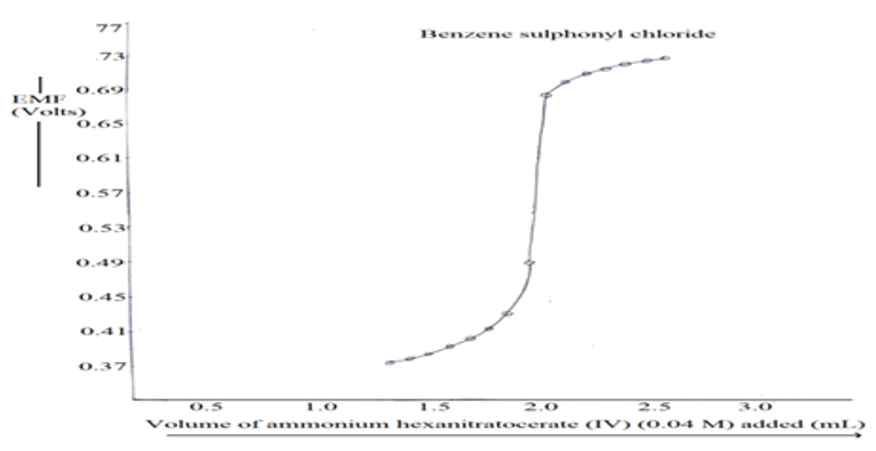
Figure 1. Potentiometric titration curve of sulphinic acids with ammonium hexanitrato cerate (IV).
| Sulphonyl chloride | The values are mean of ten determinations with standard deviation (±) | |||
| Visual procedure | Potentiometric procedure | |||
| Amount found* | Amount found** | Amount found* | Amount found** | |
| mg | mg | mg | mg | |
| Benzene | 3.04, 0.029 | 8.02, 0.046 | 3.07, 0.030 | 8.08, 0.059 |
| Note: *Quantity taken, 3 mg; **Quantity taken, 8 mg | ||||
Table 1. Determination of sulphonyl chloride reaction with benzyl marcaptan followed by oxidimetric titration of resulting sulphinic acids with ammonium hexanitrato cerate (IV).
Oxidimetric determination with lead (IV) acetate
Aliquots of dimethylformamide solutions of each sulphonyl chloride had beenreserved in dehydrated titration flasks, mixed with benzyl mercaptan (1 mL of 0.1 N in dimethylformamide) and the volume made to 5 mL with dimethylformamide. After minutes, potassium hydroxide (1 mL of 0.2 M in water) and acrylonitrile (2 mL of 0.5 M in dimethylformamide) were added [4]. Lastly, each liquid solution was combined with 30-35 mL of glacial acetic acid and titrated visually and potentiometrically at room temperature (25°) against standard (0.04 N) lead (IV) acetate. For visual titrations quinalizarin (1-2 drops) was also added; the completion of reaction i.e., end point was noticed by a steepcolourvariation from orange toward purple. Figure 2 indicated the profiles of potentiometric titrations. The results are presented in Table 2.
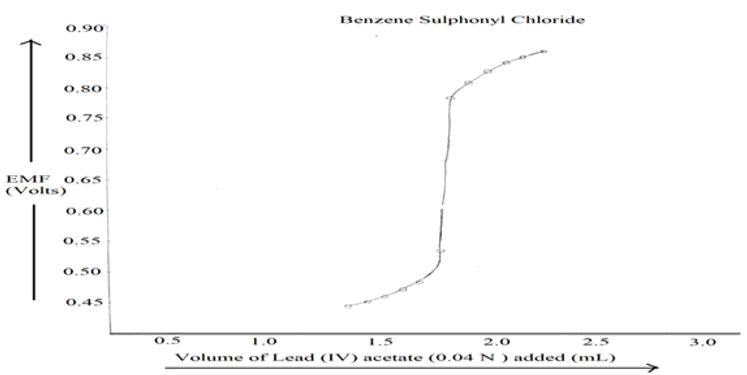
Figure 2. Potentiometric titration curve of sulphinic acids with lead (IV) acetate.
| Sulphonyl chloride | The values are mean of ten determinations with standard deviation (±) | |||
| Visual procedure | Potentiometric procedure | |||
| Amount found* | Quantity found** | Quantity found* | Quantity found** | |
| mg | mg | mg | mg | |
| Benzene | 3.94, 0.036 | 9.98, 0.047 | 4.01, 0.038 | 10.01, 0.052 |
| Note: *Quantity, 4 mg; **Quantity taken, 10 mg | ||||
Table 2. Determination of sulphonyl chloride reaction with benzyl marcaptan followed by oxidimetric titration of resulting sulphinic acids with lead (IV) acetate.
Determination of sulphinic acid and hydrochloric acid
Alkalimetric determination with potassium trithiocarbonate: Aliquots of the dimethylformamide solutions of each sulphonyl chloride had beenreserved in dehydrated titration flasks, mixed with benzyl mercaptan (1 mL of 0.1 M in dimethylformamide) and the capacity made to 5 mL with dimethylformamide. After 5 minutes, potassium hydroxide (1 mL of 0.2 M in water) and acrylonitrile (2 ml of 0.5 M in dimethylformamide) were added. Lastly, individual liquid solution had been mixed with 30-35 mL of distilled water then titrated as above visually besides pH metrically at normal temperature (25°) against standard (0.04 N) potassium trithiocarbonate. In case of visual titrations, the completion i.e., the end point had been noticed through yellow colour reported in the liquid solution by means of the initial droplet of the agent compound pouredinextra amount. In pH titrations, a shrill increase in pH was detected at equivalence point. A succession of visual and pH metric titrations was executed with dissimilar quantities of each compound. The pH titration curves are shown in Figure 3. The results had been shown in Table 3.
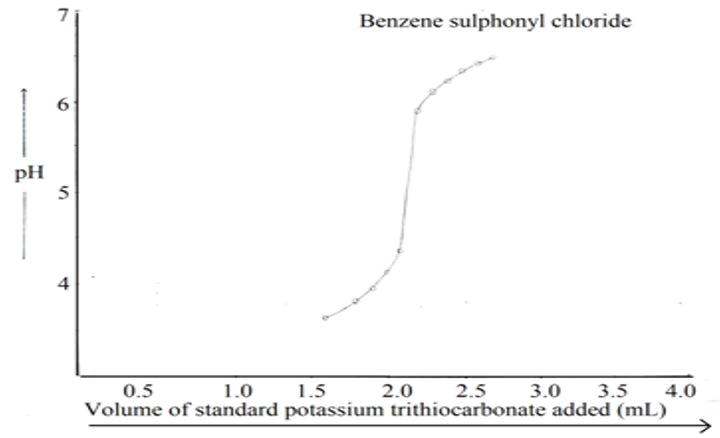
Figure 3. pH titration curve of sulphinic acids and hydrochloric acid with potassium trithiocarbonate.
| Sulphonyl chloride | The values are mean of ten determinations with standard deviation (±) | |||
| Visual procedure | Potentiometric procedure | |||
| Amount found* | Amount found** | Amount found* | Amount found** | |
| mg | mg | mg | mg | |
| Benzene | 3.94, 0.038 | 11.02, 0.079 | 3.98, 0.039 | 11.04, 0.062 |
| Note: *Amount taken, 4 mg; **Amount taken, 11 mg | ||||
Table 3. Determination of sulphonyl chloride reaction with benzyl marcaptan followed by alkalimetric titration of resulting sulphinic acids and hydrochloric acid with potassium trithiocarbonate.
Polarographic analysis
Measurements of half-wave potentials (E1/2): Polarograms of benzene sulphonyl chloride at known concentrations in distilled dimethylformamide medium in presence of pyridine perchlorate (0.05 M in dimethylformamide) at DME were documented. The universal technique for recording a polarogram was as follows:
A known measurement of supporting electrolyte solution (25 ml of 0.05 M pyridine perchlorate in dimethylformamide) was taken in a polarographic cell and essential connections were made. Liquefied oxygen was detached by passing a sluggish stream of clean nitrogen gas for about 5 minutes. The chart recording unit and emf sweep were started instantaneously. Later recording the polarogram of supporting electrolyte alone, the mercury reservoir was dropped and chart recording unit switched off. Then, aliquots in dimethylformamide of each compound were added in polarographic cell, de-aerated and polarograms recorded in the usual manner. Distinctive polarograms, one for each compound, are shown in Figure 4. In Table 4 are listed the values of half wave potential of these compounds [5].
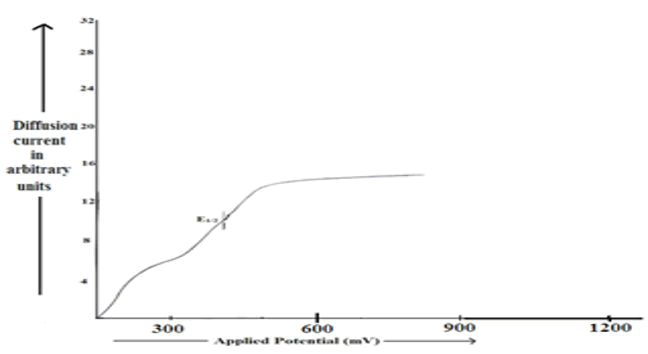
Figure 4. Typical polarogram of benzene sulphonyl chloride.
| Compound | E1/2 in volts (vs. SCE) |
| Benzene sulphonyl chloride | -0.39 |
Table 4. Half wave potential of sulphonyl chlorides.
Preparation of calibration graphs
Aliquots of solutions in dimethylformamide of benzene sulphonyl chloride were taken in the cell comprising pyridine perchlorate (25 ml of 0.05 M in dimethylformamide). Nitrogen gas was bubbled through the solution for 5 minutes besides polarograms were documented in the similar way as defined under universal technique. The standardized calibrated statistics of the benzene sulphonyl chloride has been given in Table 5, the calibration data and their plots are shown in Figures 5-7. Outcomes of determination are given in Table 6.
| Mass of mercury flowing/sec (m)=2.72 mg | Time for each drop (t)=2.5 sec | |||
| Curve | Concentration of benzene sulphonyl chloride | Diffusion current* | I=id/Cm2/3 t1/6 | |
| In g/25 m | In arbitrary units | In amp** | ||
| A | 35.4 | 10 | 1.1 | 0.014 |
| B | 53.1 | 17 | 1.7 | 0.014 |
| C | 70.8 | 23 | 2.4 | 0.015 |
| D | 88.5 | 28 | 2.8 | 0.014 |
Table 5. Calibration data for benzene sulphonyl chloride.
| Amount taken*, g | Amount found**, g |
| 25 | 25.3, 0.20 |
| 50 | 48.6, 0.42 |
| 75 | 75.6, 0.28 |
| 100 | 99.4, 0.42 |
Table 6. Polarographic determination of benzene sulphonyl chloride.
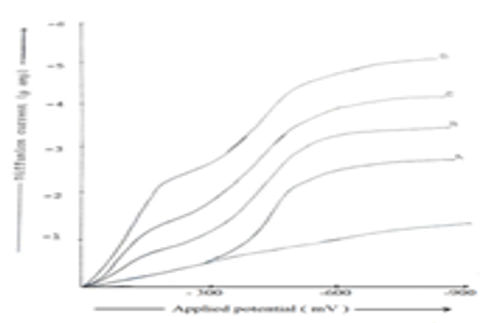
Figure 5. Polarogram of pure benzene sulphonyl chloride in known concentration.
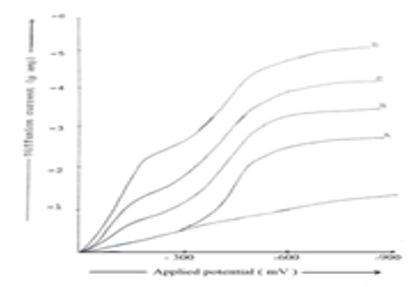
Figure 6. Polarogram of pure benzene sulphonyl chloride in known concentration.
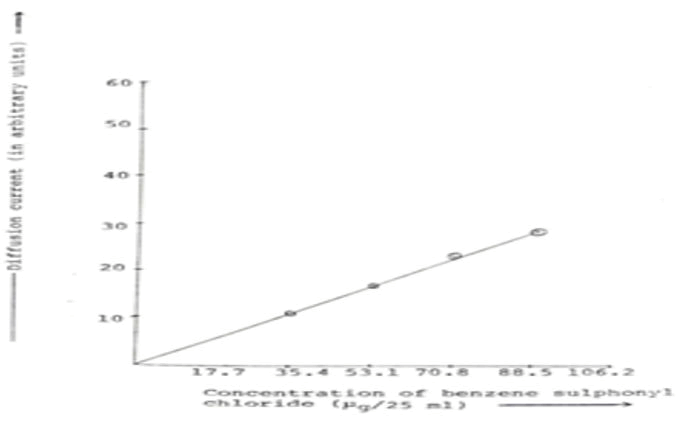
Figure 7. Calivration curve of pure benzene sulphonyl chloride in known concentration.
*Corrected for residual current
**Average diffusion current in μ amp during the life of one drop
**The values stand mean of five determinations through standard deviation (±).
Polarograms of pure benzene sulphonyl chloride at a fixed concentration but at various heights of mercury column were recorded in the usual way. They showed that diffusion current bears a simple linear relationship with the square root of altitude of mercury column. The values of id/hHg1/2 were found to be fairly constant (Table 7).
| Concentration of compound taken=20 g/ml | ||
| Height of mercury column in cm | h1/2 | id/h1/2 |
| Benzene sulphonyl chloride | ||
| 75 | 8.66 | 0.25 |
| 65 | 8.06 | 0.25 |
| 55 | 7.42 | 0.26 |
| 45 | 6.71 | 0.25 |
| 35 | 5.92 | 0.26 |
Table 7. The effect of height of Hg column on diffusion current.
Sulphonyl chlorides are compounds of having economical, synthetic and analytical importance. They can boost the solubility, bioavailability, and permeability of many powerful medications. Subsequently, their determination is of countless future scope and value [6,7]. These compounds can be quantitatively reduced to the equivalent sulphinic acids and the later effectively determined oxidimetrically with cerium (IV)(in 1N-sulphuric acid) or lead (IV) (in glacial acetic acid) visually and potentiometrically, has been made the foundation of modest titrimetric methods for the determination of sulphonyl chlorides. The remaining mercaptan is made unreactive by masking it with alkaline acrylonitrile. The determination of sulphonyl chlorides has also been accomplished by titrating sulphinic acid and HCl, formed in their reaction with benzyl mercaptan, alkalimetrically with potassium trithiocarbonate visually or pH metrically.
Cobalt (II) reacts effortlessly and quantitatively with mercaptans to form brown coloured tetra marcaptocobaltate (II) complex in dimethylformamide-acetonitrile media. This reflection has been made use of in developing a photometric titrimetric technique for the determination of sulphonyl chlorides by titrating excess mercaptan with cobalt (II) at 475 nm.
Sulphonyl chlorides are reduced polarographically at dropping mercury electrode. This has been made the foundation of their determination by polarographic methods. The determination has been carried out in dimethylformamide solvent which acted as medium in the occurrence of pyridine perchlorate (supportive/ subsidiary electrolyte) at the DME [8]. The half-wave potentials have been noticed to be -0.390 V versus SCE in respect of benzene sulphonyl chloride. The reduction of these compounds is diffusion controlled [9]. Since the plot of diffusion current versus the concentration of benzene sulphonyl chloride is linear and the wave is well defined, the polarographic reduction has been used for the quantitative determination of these compounds.
The titrimetric and polarographic procedures for the determination of sulphonyl chlorides are suitable, consistent and are suggested for their repetitive analysis.
Journal of Pharmacognosy & Natural Products received 606 citations as per Google Scholar report