Short Communication - (2025) Volume 11, Issue 4
Received: 01-Aug-2025, Manuscript No. cdp-26-185463;
Editor assigned: 04-Aug-2025, Pre QC No. P-185463;
Reviewed: 18-Aug-2025, QC No. Q-185463;
Revised: 24-Aug-2025, Manuscript No. R-185463;
Published:
29-Aug-2025
, DOI: 10.37421/2572-0791.2025.11.192
Citation: Kimani, David. ”Depression: Assessment, Treatments, and Personalized Care.” Clin Depress 11 (2025):192.
Copyright: © 2025 Kimani D. This is an open-access article distributed under the terms of the Creative Commons Attribution License, which permits unrestricted use, distribution and reproduction in any medium, provided the original author and source are credited.
Depression is a complex and multifaceted mental health condition that significantly impacts individuals' lives, necessitating a thorough understanding of its assessment and management strategies. This review aims to provide a comprehensive overview of depression, delving into its various aspects from diagnosis to therapeutic interventions. The neurobiological underpinnings of depression are a critical area of research, offering insights into the intricate mechanisms that contribute to its development. Understanding these biological factors is paramount for developing more targeted and effective treatments. Accurate diagnosis of depression presents unique challenges, particularly in primary care settings where symptom overlap with other conditions can be a concern. Addressing these diagnostic hurdles is vital for timely and appropriate intervention. Psychotherapy, notably Cognitive Behavioral Therapy (CBT), has emerged as a cornerstone treatment for depression, demonstrating efficacy across various symptom severities and patterns of recurrence. Its structured approach offers tangible benefits to patients. Pharmacological interventions remain a primary modality for managing moderate to severe depression. The landscape of antidepressant medications is diverse, requiring careful consideration of their mechanisms, efficacy, and side effect profiles for optimal patient care. Lifestyle factors play an increasingly recognized role in both the prevention and management of depression. Evidence suggests that integrating healthy habits can significantly contribute to improved mental well-being and treatment outcomes. For severe and treatment-resistant depression, Electroconvulsive Therapy (ECT) continues to be an effective treatment option. Ongoing research and advancements in ECT techniques aim to enhance its efficacy and minimize adverse effects. The comorbidity of anxiety disorders with depression is a common clinical scenario that requires careful assessment and integrated treatment approaches. Addressing both conditions concurrently is crucial for holistic patient recovery. Digital therapeutics represent an innovative frontier in mental health care, offering novel ways to deliver evidence-based interventions for depression. Their potential to increase accessibility is substantial. Long-term psychotherapy is essential for preventing relapse and maintaining remission in individuals with depression. Tailoring therapeutic approaches to individual needs ensures sustained mental health improvements.
The clinical overview of depression emphasizes the multifaceted nature of the condition, underscoring the importance of accurate assessment using validated diagnostic tools. This includes considering symptom presentation, duration, and the impact on an individual's functioning, which are crucial for developing personalized management plans [1].
Research into the neurobiological mechanisms of depression reveals a complex interplay of neurotransmitter dysregulation, neuroinflammation, and hypothalamic-pituitary-adrenal (HPA) axis abnormalities. These biological factors are intrinsically linked to the pathophysiology of depression and are guiding the development of novel therapeutic targets [2].
Diagnosing depression, particularly in primary care, is fraught with challenges due to the overlap of symptoms with other medical conditions and the influence of cultural factors on symptom presentation. Enhanced screening tools and clinician training are advocated to improve diagnostic accuracy and timeliness [3].
Cognitive Behavioral Therapy (CBT) stands as a well-established psychotherapy with proven efficacy in treating various forms of depression, including mild to moderate and recurrent cases. Its core principles and practical applications make it a valuable first-line treatment option [4].
Antidepressant pharmacotherapy is a fundamental component in the management of moderate to severe depression. A comprehensive review of current antidepressant medications, including SSRIs, SNRIs, and atypical antidepressants, details their mechanisms of action, efficacy, and side effect profiles, aiding in treatment selection and augmentation strategies [5].
Lifestyle interventions, encompassing physical activity, diet, and sleep, are increasingly recognized for their role in depression prevention and management. Incorporating healthy habits can significantly reduce the risk of developing depression and enhance treatment outcomes, promoting a holistic approach to mental well-being [6].
Electroconvulsive therapy (ECT) remains a highly effective treatment for severe and treatment-resistant depression. An updated overview of ECT covers its indications, mechanisms of action, safety considerations, and the impact of advancements in techniques on improving efficacy and minimizing side effects [7].
The significant comorbidity of anxiety disorders with depression necessitates integrated treatment approaches. Differentiating and effectively managing both conditions concurrently is vital for improving overall patient well-being and treatment success [8].
Digital therapeutics are emerging as a promising avenue for depression management, leveraging mobile applications, online platforms, and virtual reality to deliver evidence-based interventions. This offers potential advantages in accessibility and patient engagement [9].
Long-term psychotherapy, including approaches like interpersonal psychotherapy and psychodynamic therapy, plays a crucial role in preventing relapse and maintaining remission for individuals with depression. Tailoring therapy to individual needs and preferences is key to achieving sustained recovery [10].
This compilation of research provides a comprehensive overview of depression, encompassing its clinical assessment, neurobiological underpinnings, and diagnostic challenges. It highlights established and emerging treatment modalities, including pharmacotherapy, psychotherapy such as CBT, and electroconvulsive therapy (ECT). The role of lifestyle interventions and digital therapeutics is also explored, alongside the complexities of managing comorbid anxiety disorders. A central theme is the importance of personalized and integrated approaches to optimize patient outcomes and promote long-term well-being. The studies collectively emphasize the need for continued research and innovation in understanding and treating this pervasive mental health condition.
None
None
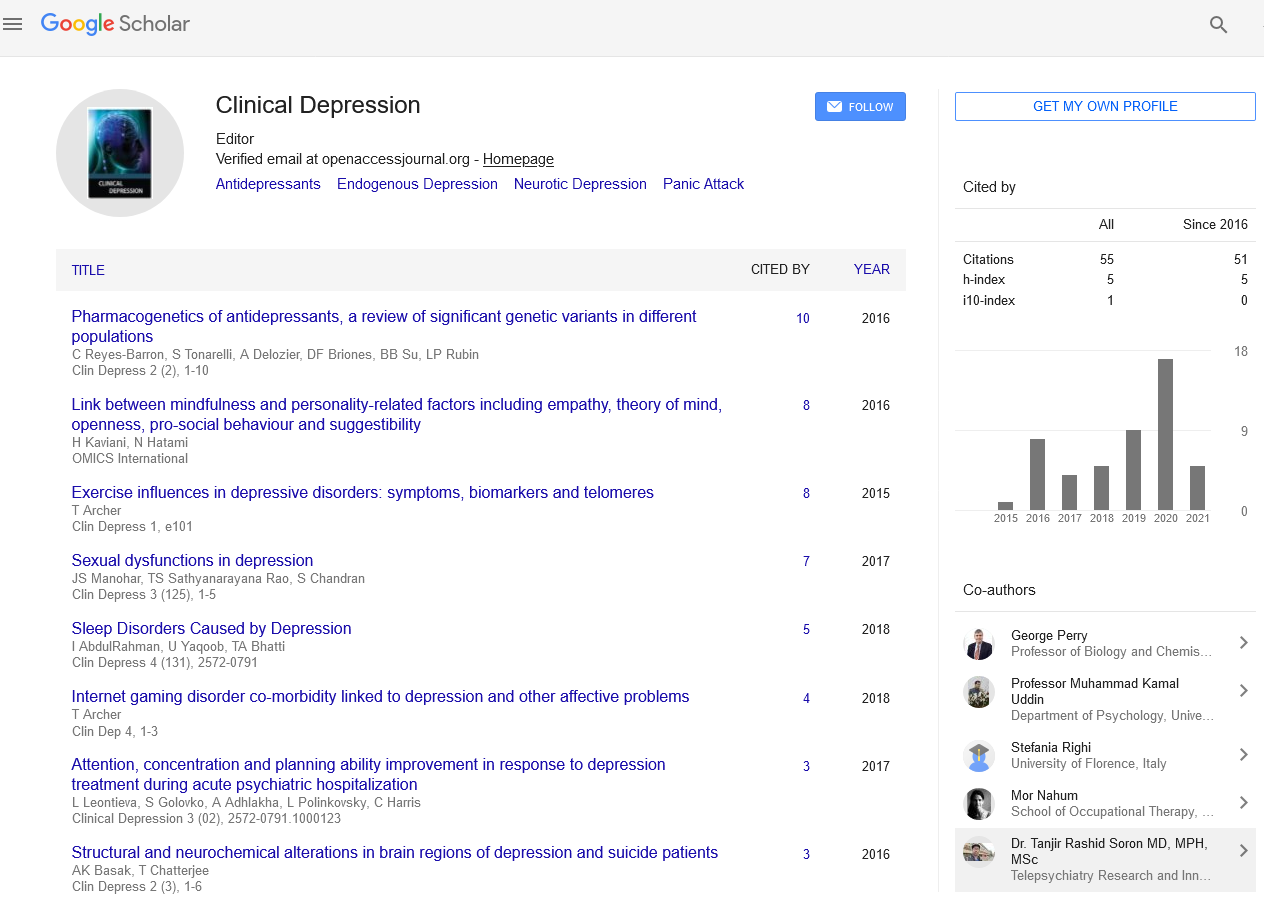
Clinical Depression received 89 citations as per Google Scholar report