Short Communication - (127) Volume 11, Issue 4
Received: 01-Aug-2025, Manuscript No. cdp-26-185462;
Editor assigned: 04-Aug-2025, Pre QC No. P-185462;
Reviewed: 18-Aug-2025, QC No. Q-185462;
Revised: 24-Aug-2025, Manuscript No. R-185462;
Published:
29-Aug-2025
, DOI: 10.37421/2572-0791.2025.11.193
Citation: Lopez, Mariana. ”Depression And Anxiety Comorbidity: Unraveling Shared Pathways.” Clin Depress 11 (2025):193.
Copyright: © 2025 Lopez M. This is an open-access article distributed under the terms of the Creative Commons Attribution License, which permits unrestricted use, distribution and reproduction in any medium, provided the original author and source are credited.
The comorbidity between depression and anxiety disorders presents a significant clinical challenge, profoundly affecting treatment efficacy and patient outcomes. This persistent co-occurrence suggests shared underlying neurobiological pathways, genetic predispositions, and common environmental risk factors. Understanding these complex relationships is paramount for developing improved diagnostic and therapeutic strategies for these conditions [1].
Neuroimaging research consistently reveals overlapping patterns of brain activity and connectivity in individuals experiencing comorbid depression and anxiety. Dysregulation in key brain regions, including the amygdala, prefrontal cortex, and hippocampus, appears to be a common neurobiological basis, contributing to shared symptoms such as emotional dysregulation and cognitive impairment observed in these disorders [2].
Genetic studies highlight shared susceptibility genes that influence the risk for both depression and anxiety disorders. Genome-wide association studies, particularly those employing polygenic risk scores, demonstrate a substantial overlap, indicating common genetic pathways that mediate vulnerability to these comorbid conditions. This genetic overlap underscores the intricate interplay between inherited traits and environmental exposures [3].
Therapeutic interventions for comorbid depression and anxiety often demand a highly individualized approach. While established treatments like cognitive behavioral therapy (CBT) and selective serotonin reuptake inhibitors (SSRIs) exhibit effectiveness for both conditions, the specific symptom profiles and severity may necessitate tailored modifications or additional augmentation strategies to optimize patient response [4].
The diagnostic criteria for major depressive disorder and various anxiety disorders frequently overlap, complicating accurate differential diagnosis. Clinicians must possess the skills to discern the full spectrum of symptoms to prevent misdiagnosis and ensure the selection of appropriate treatment plans, especially in cases involving conditions like generalized anxiety disorder and persistent depressive disorder [5].
Early life adversity emerges as a critical environmental factor implicated in the comorbidity of depression and anxiety. Traumatic experiences during childhood can profoundly alter neurodevelopmental trajectories, consequently increasing an individual's susceptibility to both mood and anxiety disorders in later life, often in a manner that synergistically amplifies risk [6].
The societal and economic impact of comorbid depression and anxiety extends far beyond individual distress. These conditions contribute significantly to societal costs through diminished productivity, increased healthcare resource utilization, and a reduced overall quality of life. Therefore, the effective management of these comorbid conditions represents a pressing public health imperative [7].
Psychosocial factors, including difficulties in interpersonal relationships, the utilization of maladaptive coping mechanisms, and the tendency towards rumination, play a crucial role in the persistence and worsening of comorbid depression and anxiety. Psychosocial interventions specifically targeting these cognitive and behavioral patterns have demonstrated considerable therapeutic promise [8].
The growing adoption of transdiagnostic models offers a valuable framework for understanding the complex interplay in comorbid depression and anxiety. These models posit that common underlying processes, such as emotional dysregulation, cognitive biases, and interpersonal challenges, transcend specific diagnostic boundaries, thereby contributing to the onset and maintenance of multiple mental health conditions [9].
Longitudinal studies are indispensable for illuminating the temporal progression of symptom development and the intricate bidirectional relationships between depression and anxiety. Such research is vital for identifying at-risk individuals and for informing the development of preventative interventions aimed at mitigating the incidence of these comorbid conditions [10].
The comorbidity between depression and anxiety disorders represents a pervasive clinical issue, significantly impacting treatment success and patient prognosis. This persistent co-occurrence points to shared neurobiological pathways, genetic vulnerabilities, and common environmental risk factors, making the understanding of these intricate relationships crucial for developing more effective diagnostic and therapeutic strategies [1].
Neuroimaging investigations reveal consistent overlapping patterns in brain activation and connectivity among individuals with comorbid depression and anxiety. Specifically, disruptions in the amygdala, prefrontal cortex, and hippocampus are frequently observed as common neurobiological substrates, contributing to the shared symptomatology of emotional dysregulation and cognitive deficits characteristic of these conditions [2].
Genetic research consistently indicates shared susceptibility genes that elevate the risk for developing both depression and anxiety disorders. Evidence from genome-wide association studies, utilizing polygenic risk scores, highlights a significant overlap, suggesting common genetic architectures that mediate vulnerability. This genetic intersection underscores the complex interaction between inherited predispositions and environmental influences [3].
Treatment for comorbid depression and anxiety often necessitates a carefully tailored approach. While foundational therapies such as cognitive behavioral therapy (CBT) and selective serotonin reuptake inhibitors (SSRIs) have shown efficacy for both conditions, specific symptom profiles and the severity of illness may require adjustments or additional treatment strategies for optimal patient outcomes [4].
The diagnostic criteria for major depressive disorder and various anxiety disorders frequently overlap, posing considerable challenges for accurate differential diagnosis. It is imperative for clinicians to possess the expertise to identify the full spectrum of symptoms to avoid misdiagnosis and ensure the implementation of appropriate treatment plans, particularly when managing conditions such as generalized anxiety disorder and persistent depressive disorder [5].
Early life adversity is recognized as a significant environmental factor contributing to the development of comorbid depression and anxiety. Traumatic experiences during childhood can profoundly alter neurodevelopmental pathways, thereby increasing an individual's susceptibility to both mood and anxiety disorders later in life, often in a synergistic manner that amplifies overall risk [6].
The societal and economic burden associated with comorbid depression and anxiety extends beyond individual suffering, contributing substantially to lost productivity, increased healthcare expenditures, and a diminished quality of life. Consequently, the effective management of these co-occurring conditions is a critical public health priority [7].
Psychosocial factors, including interpersonal difficulties, the adoption of maladaptive coping strategies, and persistent rumination, play a substantial role in maintaining and exacerbating comorbid depression and anxiety. Interventions specifically targeting these cognitive and behavioral patterns have demonstrated notable therapeutic promise and effectiveness [8].
The increasing prominence of transdiagnostic models offers a valuable perspective for understanding comorbid depression and anxiety. These models propose that common underlying processes, such as emotional dysregulation, cognitive biases, and interpersonal challenges, cut across traditional diagnostic boundaries and contribute to the onset and persistence of multiple mental health conditions [9].
Longitudinal studies are indispensable for elucidating the temporal sequencing of symptom development and the dynamic bidirectional relationships between depression and anxiety. These investigations are crucial for identifying high-risk individuals and for informing the development of preventative strategies aimed at reducing the incidence of comorbid conditions within the population [10].
Comorbidity between depression and anxiety is a significant clinical challenge, stemming from shared neurobiological pathways, genetic factors, and environmental influences. Neuroimaging and genetic studies reveal overlapping brain activity and susceptibility genes, highlighting common etiologies. Effective treatment often requires tailored approaches, as diagnostic criteria for these conditions can overlap, complicating accurate assessment. Early life adversity and psychosocial factors, such as rumination and interpersonal difficulties, are key environmental contributors. Transdiagnostic models offer a framework for understanding these interconnected conditions by focusing on common underlying processes. Longitudinal studies are crucial for tracking symptom development and informing preventative interventions. The societal and economic burden of these comorbid disorders necessitates effective management strategies. Ultimately, a comprehensive understanding of these complex relationships is vital for improving diagnostic accuracy and therapeutic outcomes.
None
None
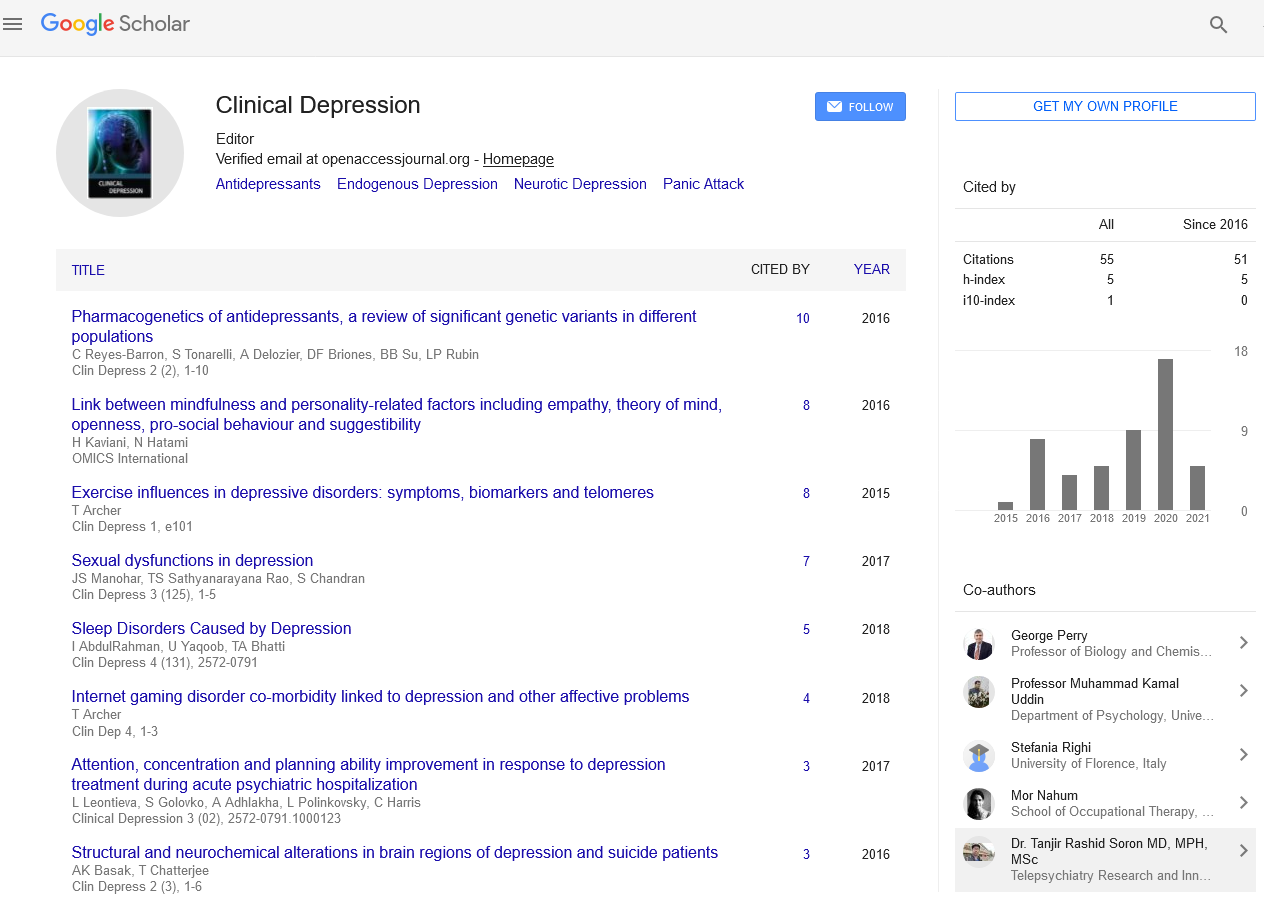
Clinical Depression received 89 citations as per Google Scholar report