Short Communication - (2025) Volume 13, Issue 5
Received: 01-Oct-2025, Manuscript No. JGPR-26-190228;
Editor assigned: 03-Oct-2025, Pre QC No. P-190228;
Reviewed: 17-Oct-2025, QC No. Q-190228;
Revised: 22-Oct-2025, Manuscript No. R-190228;
Published:
29-Oct-2025
, DOI: 10.37421/2329-9126.2025.13.638
Citation: Yılmaz, Mehmet. ”Cultural Competence: Equitable Care Through Understanding.” J Gen Pract 13 (2025):638.
Copyright: © 2025 Yılmaz M. This is an open-access article distributed under the terms of the Creative Commons Attribution License, which permits unrestricted use, distribution and reproduction in any medium, provided the original author and source are credited.
Enhancing cultural competence within general practice is paramount for delivering equitable and effective patient care. This involves a deep recognition and respect for the diverse backgrounds of patients, encompassing their ethnicity, religious beliefs, socioeconomic circumstances, and sexual orientation. Equipping healthcare professionals with the understanding of how cultural factors shape health perceptions, practices, and communication is a fundamental requirement. Such training fosters improved patient-doctor relationships, leading to enhanced treatment adherence and ultimately better health outcomes for all [1].
A significant component of cultural competence in general practice lies in acknowledging and addressing the impact of implicit biases on clinical decision-making. General practitioners must cultivate self-awareness regarding their unconscious biases and proactively develop strategies to mitigate their influence. This necessitates a concerted effort to understand patients from varied cultural backgrounds, consciously avoid stereotyping, and cultivate an environment characterized by trust and open dialogue. These endeavors are indispensable for effectively reducing health disparities among diverse patient populations [2].
Effective cross-cultural communication stands as the very foundation of culturally competent general practice. This encompasses not only linguistic proficiency but also a nuanced understanding of non-verbal cues, diverse communication styles, and the varying roles that family plays in healthcare decisions across different cultures. The integration of specific training techniques, such as the 'teach-back' method, can significantly ensure patient comprehension and bolster engagement with their care plans [3].
The integration of cultural humility into the educational frameworks and practical application within general practice is of utmost importance. Cultural humility is characterized by a perpetual commitment to self-reflection and critical self-assessment, a dedication to understanding and aligning with patients' cultural values and beliefs, and the active cultivation of partnerships with communities. This transformative approach moves beyond a superficial acquisition of competence to foster a more authentic and deeply respectful mode of interaction with individuals from a wide spectrum of diverse populations [4].
Addressing the multifaceted social determinants of health is intrinsically interwoven with the concept of cultural competence in general practice. A comprehensive understanding of how factors such as poverty, housing instability, and access to educational opportunities influence a patient's health status, particularly within their unique cultural context, enables the provision of more holistic and genuinely effective care planning. General practitioners can proactively identify patient needs and connect them with essential community resources [5].
The systematic development of culturally competent care models within the operational framework of general practice necessitates continuous evaluation and ongoing adaptation. This process involves actively soliciting and incorporating feedback from diverse patient populations, embedding cultural considerations into the very fabric of organizational policies, and providing ongoing professional development opportunities for all members of the healthcare team. Such a responsive and dynamic approach ensures that primary care services remain adept at meeting the evolving health needs of increasingly multicultural communities [6].
When patient-centered care is approached through the lens of cultural competence, it fundamentally entails tailoring medical advice and treatment strategies to harmonize with a patient's specific cultural values, deeply held beliefs, and personal preferences. This imperative demands active, empathetic listening and a genuine willingness to collaboratively negotiate care plans, thereby ensuring that patients consistently feel profoundly respected and thoroughly understood [7].
Cultural competence training specifically designed for general practice trainees represents an area of escalating significance in medical education. The strategic integration of diverse pedagogical tools, including real-world case studies, simulated patient encounters involving individuals from various backgrounds, and structured reflective practice sessions, is vital for equipping future practitioners with the essential skills and appropriate attitudes to deliver culturally sensitive care from the very inception of their professional careers [8].
The crucial role of community engagement in actively fostering and strengthening cultural competence within general practice settings cannot be adequately emphasized. Establishing robust partnerships with community leaders and representative organizations can furnish invaluable insights into the specific cultural needs, deeply ingrained health beliefs, and unique health-seeking behaviors of the local population, thereby empowering practices to more precisely and effectively tailor their service offerings [9].
The diligent measurement and comprehensive evaluation of the impact stemming from cultural competence initiatives implemented within general practice are indispensable for substantiating their effectiveness and pinpointing precise areas that require further enhancement. Methodologies for this evaluation can include sophisticated patient satisfaction surveys, meticulous assessment of health outcome disparities across demographic groups, and the systematic collection of qualitative feedback from both patient cohorts and healthcare providers [10].
The enhancement of cultural competence in general practice is a critical imperative for the provision of care that is both equitable and maximally effective. This imperative demands a profound recognition and respectful acknowledgment of the diverse backgrounds that patients bring, including but not limited to their ethnicity, religious affiliations, socioeconomic standing, and sexual orientation. A key element involves the dedicated training of healthcare professionals to thoroughly understand how varied cultural factors exert influence on health-related beliefs, established practices, and interpersonal communication dynamics. Consequently, this leads to a substantial improvement in the quality of patient-doctor relationships, a higher degree of adherence to prescribed treatments, and ultimately, a positive impact on overall health outcomes [1].
Within the realm of clinical decision-making, understanding the pervasive impact of implicit bias represents a significant facet of cultural competence for general practitioners. It is incumbent upon these practitioners to develop a keen awareness of their own unconscious biases and to diligently formulate and implement strategies aimed at mitigating their detrimental influence. This involves a proactive commitment to gaining insights into the experiences of patients from different cultural backgrounds, a conscious effort to avoid resorting to stereotypes, and the active cultivation of an environment conducive to trust and open, honest communication. Such dedicated efforts are absolutely vital for the successful reduction of disparities in healthcare access and outcomes [2].
At the very core of delivering culturally competent general practice lies the principle of effective cross-cultural communication. This encompasses far more than mere linguistic fluency; it necessitates a sophisticated comprehension of non-verbal communication signals, an awareness of differing communication styles prevalent across cultures, and an understanding of the culturally influenced role of family members in healthcare-related decision-making processes. The adoption and skillful application of specific communication techniques, such as the widely recognized 'teach-back' method, can significantly enhance patient understanding and foster greater engagement in their own healthcare journey [3].
The integration of the philosophy of cultural humility into both the educational curricula for general practice and its day-to-day operational practices is an essential development. Cultural humility is defined by an unwavering, lifelong dedication to introspective examination and critical self-analysis, a profound commitment to understanding and actively aligning with the cultural values and deeply held beliefs of patients, and the deliberate cultivation of collaborative partnerships with various communities. This philosophical stance transcends the mere attainment of competence, fostering a more authentic, empathetic, and respectful approach to engaging with individuals from a multitude of diverse populations [4].
The crucial task of addressing the complex web of social determinants of health is inextricably linked to the overarching concept of cultural competence within the general practice setting. A thorough understanding of how extrinsic factors, such as poverty, inadequate housing conditions, and disparities in access to education, profoundly impact a patient's health status, particularly when considered within their specific cultural milieu, allows for the development and implementation of more holistic and truly effective care strategies. General practitioners are uniquely positioned to identify these needs and facilitate connections with vital community resources that can offer support [5].
The systematic and ongoing development of robust, culturally competent care models within the operational framework of general practice is a dynamic process that requires persistent evaluation and agile adaptation. This iterative process should actively incorporate feedback mechanisms from a wide spectrum of diverse patient populations, ensure that cultural considerations are thoughtfully integrated into all organizational policies and procedures, and provide continuous, high-quality professional development opportunities for every member of the staff. Such a responsive and forward-thinking strategy is essential to ensure that primary care services remain relevant and effectively meet the continually evolving health needs of increasingly diverse and multicultural communities [6].
When the widely accepted principle of patient-centered care is intentionally viewed and implemented through the sophisticated lens of cultural competence, it fundamentally involves the careful tailoring of medical advice and therapeutic treatment plans to align harmoniously with a patient's unique cultural values, deeply ingrained beliefs, and personal healthcare preferences. This nuanced approach necessitates not only highly developed active listening skills and profound empathy but also a genuine willingness to engage in collaborative negotiation of care plans, thereby ensuring that patients consistently feel profoundly respected, truly understood, and actively involved in their own healthcare decisions [7].
Specifically targeted cultural competence training programs for individuals undertaking general practice training represent an area of rapidly expanding importance in contemporary medical education. The judicious integration of diverse and engaging pedagogical methodologies, including realistic case studies that reflect diverse patient scenarios, the use of simulated patients representing a variety of cultural backgrounds, and structured reflective practice sessions, is critical for equipping future practitioners with the indispensable skills, foundational knowledge, and appropriate attitudinal frameworks required to deliver highly culturally sensitive care from the very commencement of their professional careers [8].
The vital role that active community engagement plays in the successful fostering and sustained strengthening of cultural competence within the demanding environment of general practice cannot be sufficiently emphasized. The establishment of meaningful and productive partnerships with local community leaders and relevant community organizations can provide an invaluable reservoir of nuanced insights into the specific cultural needs, deeply held health beliefs, and unique patterns of health-seeking behavior characteristic of the local population, thereby enabling healthcare practices to refine and optimize the delivery of their services in a more targeted and effective manner [9].
The systematic process of measuring and rigorously evaluating the demonstrable impact of various cultural competence initiatives implemented within general practice settings is an absolutely crucial step. This evaluation is essential not only for validating the effectiveness of these interventions but also for accurately identifying specific areas that warrant further attention and improvement. Effective evaluation methodologies can encompass the deployment of sophisticated patient satisfaction surveys, the meticulous assessment of health outcome disparities across different demographic groups, and the systematic collection of rich qualitative feedback derived from both the patient population and the healthcare providers themselves [10].
Culturally competent general practice is essential for equitable and effective patient care, requiring respect for diverse backgrounds and training to understand cultural influences on health. Addressing implicit bias is crucial, necessitating self-awareness and strategies to mitigate unconscious prejudices. Effective cross-cultural communication, encompassing non-verbal cues and varying styles, is foundational. Cultural humility, a commitment to self-reflection and patient partnership, is vital. Integrating social determinants of health into culturally competent care planning allows for holistic approaches. Developing and adapting culturally competent care models through patient feedback and continuous professional development ensures responsiveness to diverse communities. Patient-centered care, when culturally informed, involves tailoring treatments to align with patient values and beliefs. Training general practice trainees in cultural competence through case studies and simulations prepares them for diverse patient interactions. Community engagement provides essential insights for tailoring services. Evaluating the impact of cultural competence initiatives through patient feedback and outcome assessment is key to continuous improvement.
None
None
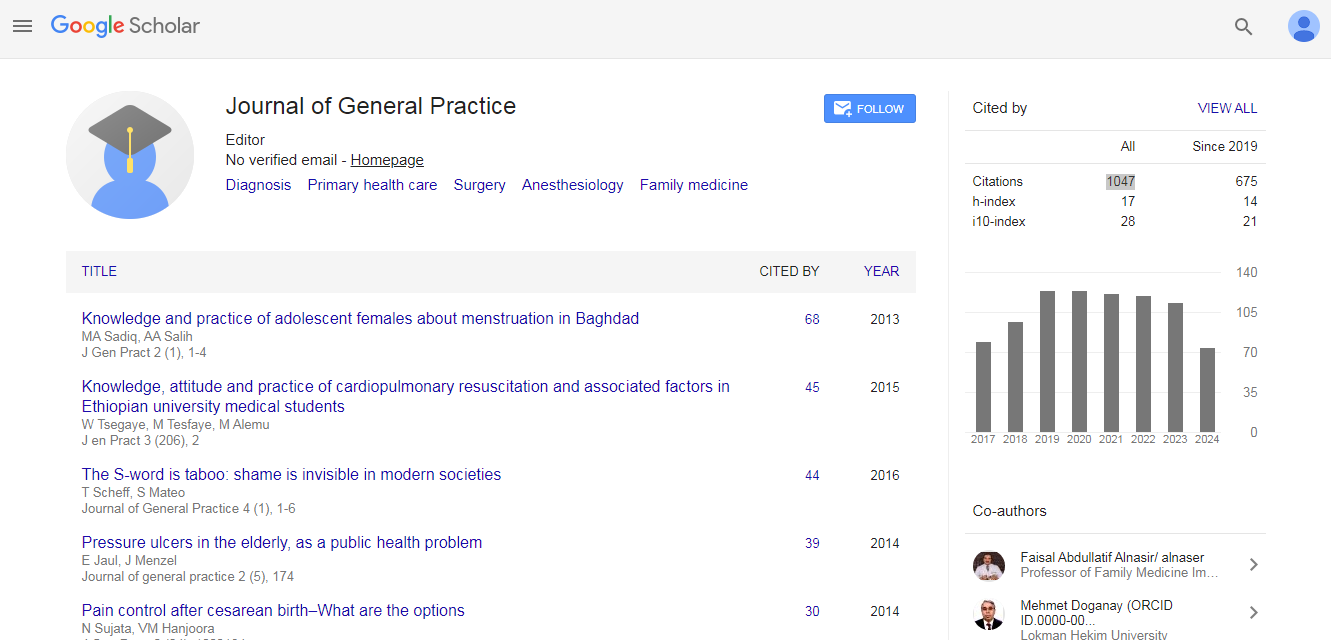
Journal of General Practice received 1047 citations as per Google Scholar report