Research Article - (2025) Volume 16, Issue 2
Received: 29-Jul-2024, Manuscript No. JFR-24-143573;
Editor assigned: 31-Jul-2024, Pre QC No. JFR-24-143573 (PQ);
Reviewed: 14-Aug-2024, QC No. JFR-24-143573;
Revised: 07-Apr-2025, Manuscript No. JFR-24-143573 (R);
Published:
14-Apr-2025
, DOI: 10.37421/2157-7145.2025.16.648
Citation: Chiriac, Simina Elena and Bernard Marc. "CT-Scan Bone Clavicle Imaging for Age Determination: A Clinical Study." J Forensic Res 16 (2025): 648.
Copyright: © 2025 Chiriac SE, et al. This is an open-access article distributed under the terms of the creative commons attribution license which permits unrestricted use, distribution and reproduction in any medium, provided the original author and source are credited.
Age assessment remains a complex process with possible far-reaching consequences for applicants undergoing the assessment. Age assessment methods and processes differ across European Union Member States since age of majority differs from one State to another one. A number of challenges are faced during the undertaking of the age assessment process, such as the limitations of the methods in use concerning intrusiveness and accuracy, fragmented estimations based only on the physical appearance and the accuracy of medical methods, including ionising ones. The European Asylum Support Office practical guide on age assessment states that since no single method currently available can determine the exact age of a person, a combination of methods assessing not only the physical development but also the maturity of the applicant can reduce the range of age in question. Skeletal age is determined from the development stage of bones estimated with development stages from the fusion/maturation of specific bones. The main methods of X-ray include carpal, collarbone, dental or hip. In our Forensic Medical Unit and Radiology Department of GHEF, widest public hospital in the South-Eastern region of Ile-de-France, we make use of these methods in combinations. Carpal, dental and hip fusion/maturation differ mainly from one ethnic group to another one. CT-scan bone clavicle imaging for age determination seems to be the most reliable current method. The aim of this study was to confirm the accuracy of CTscan method described in previous studies by comparing our results. Their peculiar interest was that they have been obtained from a various ethnic population from wide Paris suburb during COVID pandemia where thoracic CT scanners have been widely prescribed to young people with accurate birth dates. We discuss the main sources of error in stage and sub-stage evaluation in this study which are some anatomical variants. Finally, although there is a great ethnic, cultural and socio-economic diversity in the East Paris region, our retrospective evaluation shows that the age estimation method based on the maturation of the clavicular sternal epiphysis can be successfully applied in this location. The results of our study are close to the previous referenced studies and stage 3C of Schmeling classification is clearly the limit over which the age of 18-year-old is reached.
Age assessment • Methods and processes • Development stage of bones • Radiology • CT scan • Ethnic • Unaccompanied minors • Age of majority • Asylum-seekers • Forensic age determination
Age assessment is a main point for legal and forensic reasons. Age is an essential element of a child’s identity and the European Union define childhood by reference to age: A child/minor is any person below 18 years of age. In European Union, every person under 18 years of age is entitled to child-sensitive procedural safeguards and special reception conditions. A number of fundamental rights enshrined by the Charter of Fundamental Rights of the European Union are of particular relevance in the age assessment process. The Best Interests of the Child (BIC) must be primarily considered in all actions concerning children. The principle of the BIC is deeply rooted in the European human rights and asylum legislation and the international legal framework [1].
The BIC are therefore to be applicable from the moment that it is considered that the applicant may be below 18 years of age, throughout the assessment of the age if such assessment is necessary and until conclusive results indicate that the applicant is an adult. This assessment of minority or majority (under or over 18 years of age) requires forensic and anthropologic methods and among them radiologic methods, used for many years (i.e., carpal (hand/wrist) X-ray and dental X-ray) or more recently used (CT-Scan of clavicle).
Carpal (hand/wrist) X-ray consists of the evaluation of the form, the size of bone elements and the degree of epiphyseal ossification through left hand radiographs. An image is compared against the following. For this approach, the Greulich and Pyle atlas has become the standard reference but this method was a result of a 1935 study which aimed to assess skeletal maturity and it did not take into account interracial and socioeconomic differences. A high socioeconomic status accelerates ossification rates, whereas low socioeconomic status delays ossification. Consequently, applying Xray standards to individuals of a lower socioeconomic status leads to underestimating a person’s age. Dental X-ray method involves studying an X-ray of teeth, known as an orthopantogram. Skeletal development is measured through the sequential changes in the eruption and structure of teeth during childhood growth. By the age of 16-20 years of age, all teeth except the third molars (wisdom teeth) are fully formed. At this stage the latter show a wide range of the developing crown and root, occuring many age estimation discrepancies. With regard to the eruption and mineralisation of the third molars, it has been ascertained that black Africans display an accelerated development when compared to Europeans; by contrast, a relative retardation in the development can be recorded in the case of Asians. Despite its wide variability, the development of the third molar probably provides a good way to discriminate between an adult and a child and remain one of the most used age assessment procedures for majority age assessment [2].
Meanwhile, the most suitable methods for processing and interpreting these calcified structures for age determination have not been clearly defined in the past years. Collar bone X-ray method involves assessing the fusion of the clavicle. To be determined an adult, both clavicles of the individual have to be fused. Traditional classification systems differentiate between four stages of development; the last stage has now been divided into two additional stages. Total fusion of the clavicle with the scar no longer showing was first noted in both sexes at the age of 20 years at the earliest.
In the South-eastern region of Ile-de-France, the demographic variation is very important and constantly changing. This leads to great ethnic diversity in the population. Because our forensic pathology unit is frequently used to estimate biological age in young individuals considered as unaccompanied minors in various legal situations, we decided to retrospectively evaluate the bone age on a sample of the young population of the region, from the scans already made [3].
The real motivation of the study is to determine which individuals are already 18 years old and which are still minors (with important implications for the French State, the BIC and the individual concerned). The aim of this work is to provide reliable and accurate methods to estimate age and stage of development characterized by bone conformation. Using bone histology, the age of an individual can often be determined by radiologic methods, allowing growth rates to be estimated and compared with our data and other studies.
The medial end of the collarbone is the last epiphysis of the human body to merge. The collarbone begins to ossify during fetal life and the sternal end finishes its ossification in the 3rd decade of life [4].
According to the guidelines published by the International Study on Forensic Age Diagnostics and the EASO, the estimation of age in living people could include a physical examination, a radiograph of the left hand and a dental examination. A Computed Tomography (CT) scan of the sternal clavicular epiphysis can be performed if the wrist and hand bones are completely united. All studies lead to the conclusion that if the individual’s two collarbones are completely ossified, the individual is at least 18 years old.
The objective of our study was CT analysis of the medial end of the collarbone, using the nine-stage classification accordingly to assess the concordance and applicability in this geographical region of France (Paris wide South-Eastern suburb) known for its population diversity.
We took as a reference scans carried out to individuals of known age, different socio-economic and socio-cultural categories, taking advantage of the ethnic diversity of the Ile-de-France population.
After a selection in our computer archive 266 CT scans were obtained (thoracic, supra-aortic trunks, body-scanner, thoracoabdomino-pelvic, cervical-with slice thickness <1 mm) for elderly patients (age at time of examination) from 15 years 5 months and 23 days (15 a 5 m 23 d) to 29 years 10 months 7 days (29 a 10 m 7 d). The oldest exam is dated December 25, 2011 and the most recent is dated March 12, 2021.
The examinations were carried out at the Grand Hospital de l'Est Francilien (GHEF) with a double blind reading by a medical examiner (BM) and radiologist (SC) performing forensic estimates of age.
The age range was selected because it corresponds to those of the age estimation studies with a similar methodology. The bilateral clavicular medial extremities were analyzed in axial and coronal sections after bone reconstruction (MPR, multiplanar reconstruction), but also in the long axis of each clavicle to observe the difference in maturation rate [5].
If a stage difference was observed between the right and left collarbones, the more advanced stage was retained for the final classification in stages 1, 2 and 3 (1+2 -> 2, 2+3 -> 3) and respectively, the least advanced stage was taken for the final classification in stages 4 and 5 (3+4 -> 3, 4+5 -> 4), according to the observations of Wilschieber et al.
For each scanner the nine-stage classification according. system was used, supplemented. Shown below with scanner images from our sample (Table 1).
| Stage 1: Absence of epiphyseal ossification and metaphyso-epiphyseal union |
| Stage 2: Absence of union with presence of a beginner opacification of the medial epiphyseal nucleus |
| Â 2a: Epiphyseal kernel length is one-third or less than one-third of total metaphyseal length |
| Â 2b: Epiphyseal nucleus length is more than one-third but less than two-thirds of total metaphyseal length |
| Â 2c: Epiphyseal kernel length is more than two-thirds of total metaphyseal length |
| Stage 3: Partial union (even not total) |
| 3a: The length of the fused epiphyso-metaphyseal portion is one-third or less than one-third of the total metaphyseal length |
| 3b: The length of the fused epiphyso-metaphyseal is more than one-third but less than two- thirds of the total metaphyseal length |
| 3c: The length of the fused epiphyso-metaphyseal is more than two-thirds of the total metaphyseal length |
| Stage 4: Total union (with bone scar) |
| Stage 5: Total union (without bone scar) |
Table 1. Nine-stage classification.
266 scanners were included in our study. The sample consisted of 139 women and 127 men. The distribution of individuals by age and sex is shown in Table 2. The mean age of the sample was 22.5 years and the median age 23 a 0 m 2 d [6].
| Age (Years) | Female | Male | Total |
| 15 | 1 | 3 | 4 |
| 16 | 8 | 5 | 13 |
| 17 | 9 | 6 | 15 |
| 18 | 8 | 5 | 13 |
| 19 | 6 | 12 | 18 |
| 20 | 10 | 9 | 19 |
| 21 | 13 | 14 | 27 |
| 22 | 14 | 8 | 22 |
| 23 | 6 | 8 | 14 |
| 24 | 19 | 9 | 28 |
| 25 | 13 | 13 | 26 |
| 26 | 8 | 9 | 17 |
| 27 | 13 | 10 | 23 |
| 28 | 8 | 7 | 15 |
| 29 | 3 | 9 | 12 |
| 30 | 0 | 0 | 0 |
| 139 | 127 | 266 |
Table 2. Distribution of individuals by age and sex.
Table 3 below shows the distribution of stages by sex and status “<18 years, minors” or “>/+ 18 years, adults” in our study sample [7].
| Age (ans) | <18 | ≥ 18 | Total | ||
| Stage | F | M | F | M | |
| 1 | 6 | 5 | 3 | 3 | 17 |
| 2a | 3 | 3 | 6 | 4 | 16 |
| 2b | 3 | 6 | 6 | 7 | 22 |
| 2c | 0 | 0 | 2 | 1 | 3 |
| 3a | 4 | 0 | 12 | 11 | 27 |
| 3b | 2 | 0 | 6 | 10 | 18 |
| 3c | 0 | 0 | 23 | 22 | 45 |
| 4 | 0 | 0 | 56 | 43 | 99 |
| 5 | 0 | 0 | 7 | 12 | 19 |
| 18 | 14 | 121 | 113 | 266 | |
Table 3. Distribution of individuals by stage, sex and age 18.
The distribution by minimum and maximum ages for each stage of the clavicle classification and sex is shown in Table 4 below. In bold, results of stages from 3C to 5 in our study where every individual is an adult. Il must be stressed that adults may also be retrieved in earlier stages [8].
| Stage | Sex | N | Minimum | Maximum |
| 1 | F | 9 | 16a 1m 25j | 24a 9m 28j |
| M | 8 | 15a 5m 23j | 22a 7m 13j | |
| 2 | F | 20 | 15a 8m 17j | 24a 3m 5j |
| M | 21 | 15a 10m 2j | 22a 2m 0j | |
| 2a | F | 9 | 15a 8m 17j | 22a 0m 27j |
| M | 7 | 17a 3m 1j | 22a 2m 0j | |
| 2b | F | 9 | 16a 4m 22j | 24a 3m 5j |
| M | 13 | 15a 10m 2j | 21a 2m 7j | |
| 2c | F | 2 | 18a 7m 24j | 19a 5m 4j |
| M | 1 | 20a 4m 9j | 20a 4m 9j | |
| 3 | F | 47 | 16a 0m 11j | 28a 2m 25j |
| M | 43 | 18a 4m 1j | 28a 9m 1j | |
| 3a | F | 16 | 16a 0m 11j | 22a 11m 11j |
| M | 11 | 18a 5m 15j | 26a 4m 8j | |
| 3b | F | 8 | 16a 8m 7j | 24a 8m 3j |
| M | 10 | 18a 4m 1j | 24a 2m 10j | |
| 3c | F | 23 | 20a 6m 23j | 28a 2m 25j |
| M | 22 | 19a 6m 13j | 28a 9m 1j | |
| 4 | F | 56 | 20a 0m 30j | 29a 6m 12j |
| M | 43 | 21a 7m 4j | 29a 10m 7j | |
| 5 | F | 7 | 22a 0m 10j | 29a 2 m 30j |
| M | 12 | 24a 3m 6j | 29a 3m 18j |
Table 4. Distribution of individuals by stage and age.
The distribution of individuals by stage of the clavicle classification and age is shown in Table 5 below. In bold, results of stages from 3C to 5 in our study where every individual is an adult. Il must be stressed that adults may also be retrieved in earlier stages, even in the first stage [9].
| Stage | N | Minimum | Maximum | Medium age (with SD) |
| 1 | 17 | 15a 5m 23j | 24a 9m 28j | 17.82 ± 2.54 |
| 2 | 41 | 15a 8m 17j | 24a 3m 5j | 18.36 ± 2.03 |
| 2a | 16 | 15a 8m 17j | 22a 2m 0j | 18.75 ± 2.01 |
| 2b | 22 | 15a 10m 2j | 24a 3m 5j | 18 ± 2.13 |
| 2c | 3 | 18a 7m 24j | 20a 4m 9j | 19 ± 1.0 |
| 3 | 90 | 16a 0m 11j | 28a 9m 1j | 21.35 ± 2.63 |
| 3a | 27 | 16a 0m 11j | 26a 4m 8j | 19.37 ± 1.96 |
| 3b | 18 | 16a 8m 7j | 24a 8m 3j | 20.66 ± 2.30 |
| 3c | 45 | 19a 6m 13j | 28a 9m 1j | 22.82 ± 2.20 |
| 4 | 99 | 20a 0m 30j | 29a 10m 7j | 25.4 ± 2.28 |
| 5 | 19 | 22a 0m 10j | 29a 3m 18j | 25.85 ± 2.79 |
Table 5. Distribution of individuals by stage and age.
We have also studied the main sources of error in stage and substage evaluation in this study which are firstly anatomical variants: 21 scanners were rejected due to variants that do not allow classification (example: "crab claw" aspect) (Figure 1) [7,8].
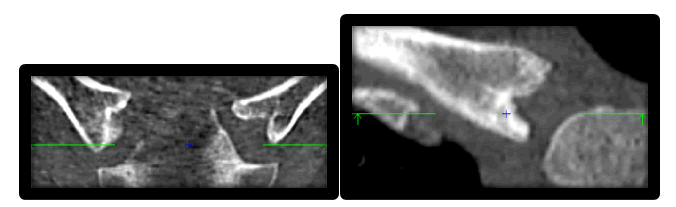
Figure 1. Crab claw aspect on sternal end of the clavicle.
As other sources of errors and discrepancies, calcifications of the joint capsule also play a role.
• Visualization of the scar (Stage 4 versus stage 5).
• Visualization of the fusion (Stage 2 versus stage 3a).
• Comparison with maximum metaphyseal width: Stage 2a versus stage 2b and respectively stage 3a versus stage 3b
• Stage 1 versus stage 5. The appearance of the first coststernal joint (orientation towards stage 1-absence of calcifications at these joints; orientation towards stage 5-more convex aspect of the epiphysis).
Without analysis of other X-rays (hand/wrist, dental), in our study six Stage 5 could have been considered as Stage 1 with the only use of CT-scan of the clavicle.
In the forensic practice of age estimation, thanks to the analysis of the wrist/hand radiograph of the individual made in the same frame it is easier to distinguish between the absence of fusion and the complete fusion.
After the analysis of 46 CT with discordant classification we concluded that the main confusions between stages are: 2a versus 2b (9 scanners), 3c versus 4 (9 scanners) and 3a versus 3b (8 scanners) [10].
Finally, we can compare our results to other mainly cited studies in the following (Table 6).
| n | Age sampling |
Stade/Age (Both sexes) | ||||||||||
| 1 | 2 | 3 | 4 | 5 | ||||||||
| 2a | 2b | 2c | 3a | 3b | 3c | |||||||
| 380 | 0-29 | 0-16 | 11-22 | x | x | x | 16-26 | x | x | x | 22-29 | x |
| 629 | 15-30 | x | 15-23 | x | x | x | 16-28 | x | x | x | 21-30 | 21-30 |
| 592 | 10-35 | 10-15 | 13-20 | 13-20 | 15-20 | 15-20 | 16-26 | 16-22 | 17-25 | 19-26 | 21-35 | 26-35 |
| 674 | 15-25 | 15-20 | 14-22 | x | x | x | 16-23 | x | x | x | 18-26 | 20-26 |
| 493 | 10-40 | 10-15 | 14-20 | 14-18 | 14-20 | 17-20 | 15-36 | 15-23 | 16-36 | 19-30 | 21-40 | 26-40 |
| 409 | 11-29 | 11-16 | 12-21 | Dec-20 | 13-19 | 15-21 | 15-27 | 16-24 | 15-24 | 17-27 | 18-29 | 20-29 |
| 503 | 10-35 | 10-17 | 13-25 | x | x | x | 16-29 | x | x | x | 20-35 | 25-35 |
| 319 | 15-30 | 15-17 | 15-20 | 15-18 | 16-18 | 17-20 | 17-25 | 17-21 | 18-23 | 18-25 | 19-29 | 22-29 |
| 266 | 15-30 | 16-24 | 15-24 | 15-22 | 15-24 | 18 -20 | 16-28 | 16-26 | 16-24 | 19-28 | 20-29 | 22-29 |
Table 6. Results of major studies of the observation of maturation of the sternal end of the collarbone on scanners.
Our results are strictly coherent with other studies for low stages and stages 4 and 5, these two high stages being always found in adults. In our serial based on a various ethnic population in the very recent years, stage 3C is linked to majority (over 18) as in non Asiatic studies the only discordant study being which describes the age estimation of a Thai population.
To carry out this study several impediments were found. The first is that it is already known the long learning time and some experience necessary to correctly use this method of classification of Schmeling and Kellinghaus with the nine stages of development of the sternal end of the collarbone.
The results of the several studies encourage to refer to the stage of complete fusion, the stage 4 classification of Schmeling and Kellinghaus, as the sign of an age at least equal to 18 years and to be very careful with the more complex subdivisions.
Another limitation of the present study is the classification in stage 2c to only 3 individuals. In several works using the same methodology and also in our study is highlighted that stage 3c of bone maturation of the sternal extremity is an interesting indicator for the threshold of 18 years but without being able to say with certainty that the individual is not minor.
Studies suggesting that the socio-economic level of the individual plays a role more than ethnic origin, on bone maturation. It is why the great ethnic, cultural and socio-economic diversity in the South-East wide suburbs of Paris may answer to these specific requirements, in addition with the very recent collection of data.
With the great population diversity in the South-East Ile de France region, our very current retrospective evaluation shows that the age estimation method based on the maturation of the clavicular sternal epiphysis can be successfully applied in this for persons whose minority is questioned. The results of our study are close to the referenced studies already mentioned and brings some strong conclusions as the diagnosis of over 18 years of age for any person with a 3C, 4 or 5 stage of collarbone consolidation. Of the main conclusions that this report reaches, what stands out is the scientific community's conviction that the use of an accurate method with CTscan clavicle bone estimation may avoid the large margins of error involved in various previous age determination techniques, such as the measurement of bone maturity of the left wrist and dental X-rays.
Whatever the quality of the forensic and radiologic method, with double reading of X-rays and CT-scan by a forensic physician and a radiologist, benefit of the doubt is a key principle and safeguard in the field of age assessment since none of the current methods of age assessment are able to determine a specific age with certainty.
When bone estimation is unclear or subject to criticism in respect of the parts supplied, a proper implementation of benefit of the doubt should lead authorities to interpret inconclusive results in the applicant’s favour, in dubio pro refugio or in dubio pro minore (1) “Member States may use medical examinations to determine the age of unaccompanied minors within the framework of the examination of an application for international protection where, following general statements or other relevant indications, Member States have doubts concerning the applicant’s age. If, thereafter, Member States are still in doubt concerning the applicant’s age, they shall assume that the applicant is a minor.’ (Article 25.5 APD).
In front of the judicial court, results of the bone tests can be put to the side if the court believes that it is impossible to determine the age of the applicant in this manner or if he/she considers any other mean of proof.
Forensically and scientifically, the work on this subject encourages us to continue the development of this technique at the Grand Hôpital de l'Est Francilien and to enlarge our data basis from various young people with clearly known birthdates.
[Google Scholar] [Crossref] [PubMed]
[Google Scholar] [Crossref] [PubMed]
[Google Scholar] [Crossref] [PubMed]
[Google Scholar] [Crossref] [PubMed]
[Google Scholar] [Crossref] [PubMed]
[Google Scholar] [Crossref] [PubMed]
[Google Scholar] [Crossref] [PubMed]
[Google Scholar] [Crossref] [PubMed]
[Google Scholar] [CrossRef] [PubMed]
Journal of Forensic Research received 2328 citations as per Google Scholar report