Perspective - (2026) Volume 16, Issue 2
Received: 02-Mar-2026, Manuscript No. jnt-26-191285;
Editor assigned: 04-Mar-2026, Pre QC No. P-191285;
Reviewed: 18-Mar-2026, QC No. Q-191285;
Revised: 23-Mar-2026, Manuscript No. R-191285;
Published:
30-Mar-2026
, DOI: 10.37421/2161-0959.2026.16.617
Citation: Ferreira, Isabella. ”COVID-19’s Lingering Toll on Kidney Health.” J Nephrol Ther 16 (2026):617.
Copyright: © 2026 Ferreira I. This is an open-access article distributed under the terms of the Creative Commons Attribution License, which permits unrestricted use, distribution and reproduction in any medium, provided the original author and source are credited.
COVID-19 has emerged as a significant global health challenge, with its impact extending beyond respiratory symptoms to affect various organ systems, notably the kidneys. Initial observations during the pandemic highlighted a substantial incidence of acute kidney injury (AKI) among hospitalized COVID-19 patients, necessitating a deeper understanding of the virus's nephrotoxic potential. Subsequent research has illuminated the complex pathophysiology underlying this phenomenon, revealing direct viral effects and indirect mechanisms contributing to renal damage. Beyond the acute phase, a growing body of evidence indicates that COVID-19 survivors are at risk for developing or experiencing a worsening of chronic kidney conditions, underscoring the long-term implications of the infection on renal health. This has prompted extensive investigation into the sequelae of COVID-19 related kidney injury. The spectrum of kidney damage observed in COVID-19 is diverse, encompassing not only AKI but also more specific histopathological findings such as interstitial nephritis, glomerular lesions, and thrombotic microangiopathy. These varied manifestations contribute to a complex clinical presentation and a range of potential long-term outcomes. Effective management of post-COVID kidney disease is paramount, requiring a comprehensive and often multidisciplinary approach to address the multifaceted nature of the condition. This involves careful monitoring and tailored therapeutic strategies. The pathogenesis of COVID-19-associated kidney injury is thought to involve a combination of direct viral invasion of renal cells, systemic inflammatory responses, and a pro-coagulant state, all of which can converge to inflict damage on the kidneys. Longitudinal studies are increasingly characterizing the persistent renal abnormalities seen in COVID-19 survivors, with proteinuria and hematuria frequently noted as indicators of ongoing glomerular damage. These findings signal a heightened risk for disease progression. The emergence of new-onset hypertension and a sustained decline in glomerular filtration rate (GFR) are significant long-term complications reported in some COVID-19 survivors, emphasizing the profound impact of the virus on cardiovascular and renal health. Given the established benefits of certain pharmacological agents in managing other forms of chronic kidney disease, their potential role in the context of post-COVID kidney disease is a subject of active research and clinical interest. Furthermore, the psychological burden of a severe illness like COVID-19, compounded by the challenges of managing a chronic kidney condition, can significantly impact a patient's overall well-being and quality of life, necessitating integrated care models.
The initial impact of COVID-19 on renal health was primarily recognized through a high prevalence of acute kidney injury (AKI) in infected individuals, often requiring intensive care and renal replacement therapy [1].
Further investigations have unveiled a broader spectrum of kidney damage beyond AKI, including distinct histopathological patterns such as acute tubular necrosis, interstitial nephritis, and collapsing glomerulopathy, which contribute to the varied clinical presentations observed [2].
Survivors of COVID-19 are increasingly recognized to be at risk for long-term renal complications, which can manifest as a sustained decline in kidney function, the development or exacerbation of chronic kidney disease (CKD), and persistent proteinuria [1].
The mechanisms driving post-COVID renal syndrome are multifactorial, involving direct viral cytotoxicity, immune-mediated inflammation, complement activation, endothelial dysfunction, and a pro-thrombotic state, all contributing to diverse forms of renal pathology [4].
Management strategies for post-COVID kidney disease necessitate a personalized approach, incorporating close monitoring of renal function, blood pressure, and urinary abnormalities, alongside the judicious use of evidence-based therapies [3].
Emerging evidence suggests that certain therapeutic agents, such as SGLT2 inhibitors, previously established for their renoprotective effects in other CKD populations, may hold promise in mitigating renal damage and slowing disease progression in post-COVID kidney disease [6].
Proteinuria and hematuria are frequently observed persistent abnormalities in COVID-19 survivors, serving as important indicators of ongoing glomerular damage and potential predictors of a higher risk for long-term renal sequelae, including progression to end-stage renal disease (ESRD) [5].
Hypertension is a significant and common long-term complication following COVID-19 infection, particularly in individuals who have experienced kidney injury, underscoring the need for aggressive blood pressure management to prevent further renal damage and reduce cardiovascular risk [7].
Inflammatory processes and endothelial dysfunction, which can persist for months after the acute infection, are thought to play a crucial role in the ongoing renal pathology observed in some COVID-19 survivors, suggesting potential targets for therapeutic intervention [8].
While the direct impact of the virus on renal cells is a key factor, genetic predispositions may also influence an individual's susceptibility to developing severe kidney injury and experiencing long-term renal sequelae following SARS-CoV-2 infection [9].
COVID-19 significantly impacts renal health, leading to acute kidney injury (AKI) in many patients and long-term consequences such as chronic kidney disease (CKD) progression, proteinuria, and electrolyte imbalances in survivors. The kidney damage extends beyond AKI, involving interstitial nephritis, glomerular lesions, and thrombotic microangiopathy. Post-COVID renal syndrome can result in a sustained decline in GFR, new-onset hypertension, and increased cardiovascular risk. Management requires a multidisciplinary approach, including monitoring renal function, blood pressure, and proteinuria, with strategies like RAAS inhibition and SGLT2 inhibitors being essential for established CKD. Pathogenesis involves direct viral impact, inflammation, and hypercoagulability. Persistent proteinuria and hematuria indicate ongoing damage, increasing the risk of ESRD. Hypertension control is crucial for preventing further renal and cardiovascular complications. Endothelial dysfunction and inflammation also contribute to ongoing renal pathology. Genetic factors may influence susceptibility and severity. The psychological impact of illness and CKD necessitates integrated care. SGLT2 inhibitors are showing emerging promise in managing post-COVID kidney disease.
None
None
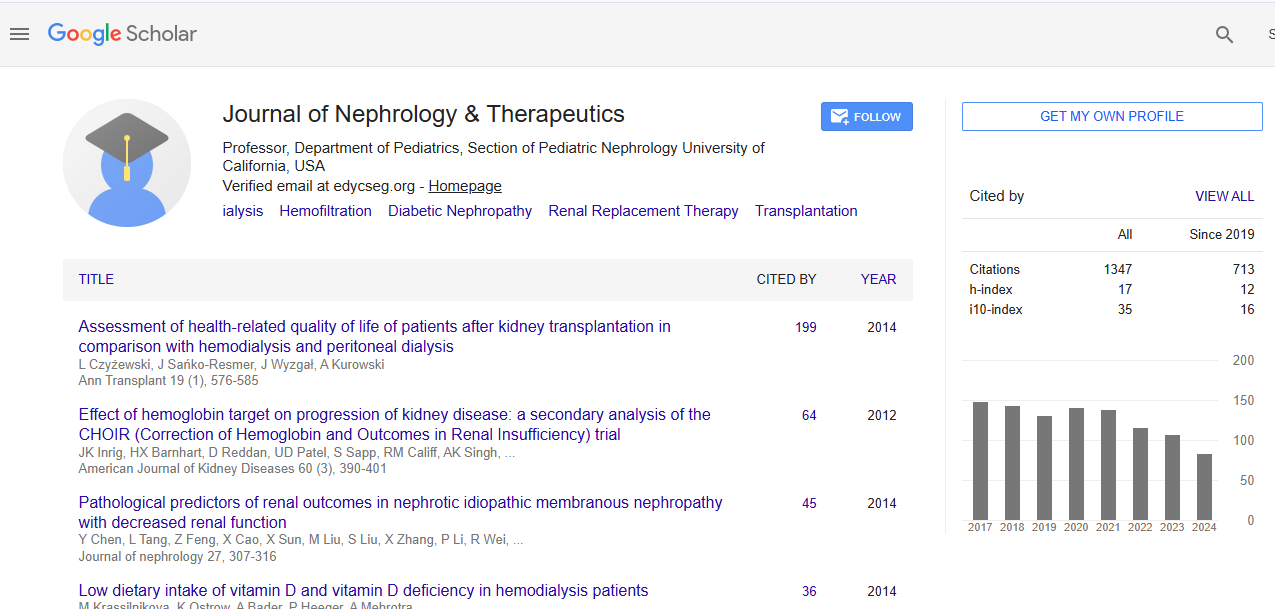
Journal of Nephrology & Therapeutics received 784 citations as per Google Scholar report