Short Communication - (2025) Volume 9, Issue 5
Received: 01-Sep-2025, Manuscript No. jchd-26-185712;
Editor assigned: 03-Sep-2025, Pre QC No. P-185712;
Reviewed: 17-Sep-2025, QC No. Q-185712;
Revised: 22-Sep-2025, Manuscript No. R-185712;
Published:
29-Sep-2025
, DOI: 10.37421/2684-6020.2024.9.268
Citation: Costa, Renata. ”Coronary Heart Disease: Prevention,
Treatment, and Future Directions.” J Coron Heart Dis 09 (2025):268.
Copyright: © 2025 Costa R. This is an open-access article distributed under the terms of the Creative Commons Attribution License, which permits unrestricted use, distribution
and reproduction in any medium, provided the original author and source are credited.
Coronary heart disease (CHD) presents a persistent and evolving challenge, impacting individuals across their lifespan and profoundly shaping future health trajectories. This condition, characterized by the buildup of plaque in the coronary arteries, leads to reduced blood flow to the heart muscle, increasing the risk of heart attack and other cardiovascular events. Understanding its multifaceted nature, from genetic predispositions and lifestyle factors to advanced therapeutic interventions and long-term management strategies, is crucial for mitigating its burden and improving patient outcomes. The ongoing battle against CHD necessitates a comprehensive approach encompassing prevention, early detection, and personalized treatment to enhance survival and quality of life [1].
Preventive strategies for coronary heart disease have seen significant advancements, emphasizing early risk factor identification and intervention. Public health initiatives targeting smoking cessation, healthy diet promotion, and regular physical activity play a vital role in reducing the incidence of CHD. Furthermore, pharmacological approaches, including statins and antihypertensive medications, are instrumental in controlling risk factors like hyperlipidemia and hypertension, thereby diminishing the likelihood of developing or progressing coronary artery disease [2].
The landscape of coronary heart disease diagnosis and treatment continues to evolve, with advancements in imaging techniques and interventional cardiology offering more precise diagnostic capabilities and less invasive treatment options. Percutaneous coronary intervention (PCI) and coronary artery bypass grafting (CABG) remain cornerstone surgical treatments, but their indications and techniques are continuously refined based on patient-specific factors and emerging evidence [3].
Long-term management of coronary heart disease requires vigilant monitoring and adherence to medical regimens. The integration of lifestyle modifications, pharmacotherapy, and regular follow-up appointments is essential to prevent recurrent events and manage complications. Patient education and empowerment are key components, enabling individuals to actively participate in their care and adopt sustainable healthy habits [4].
The genetic underpinnings of coronary heart disease are increasingly being elucidated, offering insights into personalized risk assessment and targeted prevention strategies. Polygenic risk scores are emerging as valuable tools to identify individuals with a higher predisposition to CHD, allowing for earlier and more intensive interventions [5].
Lifestyle modifications remain a cornerstone in the prevention and management of coronary heart disease. Dietary interventions, particularly those emphasizing fruits, vegetables, whole grains, and lean proteins, alongside reduced intake of saturated and trans fats, have a profound impact on cardiovascular health. Similarly, regular aerobic exercise and weight management contribute significantly to reducing CHD risk [6].
The role of inflammation in the pathogenesis of coronary heart disease is increasingly recognized. Targeting inflammatory pathways offers novel therapeutic avenues for managing atherosclerosis. Biomarkers of inflammation are also being explored for risk stratification and prognostication in patients with CHD [7].
Technological advancements, including artificial intelligence and machine learning, are revolutionizing the diagnosis and risk prediction of coronary heart disease. These tools can analyze vast datasets to identify subtle patterns, potentially leading to earlier detection and more personalized treatment plans [8].
The impact of socioeconomic factors on coronary heart disease is a critical consideration. Disparities in access to healthcare, education, and healthy environments contribute to varying CHD burdens across different populations. Addressing these social determinants of health is essential for equitable CHD prevention and management [9].
Rehabilitation programs are vital for individuals recovering from coronary heart disease events. Cardiac rehabilitation encompasses supervised exercise, education on risk factor management, and psychological support, all aimed at improving functional capacity, reducing future cardiac events, and enhancing overall well-being [10].
Coronary heart disease (CHD) is a complex and growing health concern that affects individuals throughout their lives and significantly influences their future health. It is defined by the accumulation of plaque within the coronary arteries, which restricts blood flow to the heart muscle and elevates the risk of heart attacks and other cardiovascular issues. A thorough understanding of its diverse aspects, including genetic vulnerabilities, lifestyle choices, cutting-edge treatments, and enduring management approaches, is vital for lessening its impact and improving patient prognoses. The continuous effort to combat CHD demands a holistic strategy that integrates prevention, early identification, and tailored therapies to boost survival rates and enhance life quality [1].
Substantial progress has been made in the strategies for preventing coronary heart disease, with a strong emphasis on identifying and addressing risk factors early on. Public health initiatives focused on encouraging smoking cessation, promoting nutritious diets, and advocating for regular physical activity are instrumental in decreasing the incidence of CHD. Moreover, pharmacological interventions, such as statins and medications to manage high blood pressure, play a crucial role in controlling risk factors like elevated cholesterol and hypertension, thereby reducing the probability of developing or worsening coronary artery disease [2].
The field of diagnosing and treating coronary heart disease is continually evolving. Innovations in medical imaging and interventional cardiology have led to more precise diagnostic capabilities and less invasive therapeutic options. While percutaneous coronary intervention (PCI) and coronary artery bypass grafting (CABG) remain primary surgical interventions, their application criteria and techniques are constantly being refined based on individual patient circumstances and the latest research findings [3].
Sustained management of coronary heart disease necessitates consistent monitoring and strict adherence to prescribed medical treatments. Combining lifestyle adjustments, drug therapies, and routine medical check-ups is fundamental to preventing subsequent cardiac events and managing complications. Empowering patients through education is a key element, enabling them to actively participate in their healthcare decisions and adopt lasting healthy behaviors [4].
The genetic basis of coronary heart disease is being increasingly understood, providing valuable insights for personalized risk assessment and the development of targeted preventive measures. The use of polygenic risk scores is emerging as a significant tool for identifying individuals with a heightened susceptibility to CHD, paving the way for earlier and more intensive interventions [5].
Fundamental to the prevention and management of coronary heart disease are modifications to lifestyle. Dietary changes, particularly those that prioritize the consumption of fruits, vegetables, whole grains, and lean proteins while limiting saturated and trans fats, have a significant positive effect on cardiovascular health. Similarly, engaging in regular aerobic exercise and maintaining a healthy weight are major contributors to lowering CHD risk [6].
Growing recognition is being given to the role of inflammation in the development of coronary heart disease. Exploring ways to target inflammatory pathways presents promising new therapeutic strategies for addressing atherosclerosis. Additionally, inflammatory biomarkers are being investigated for their utility in categorizing risk and predicting outcomes in patients diagnosed with CHD [7].
Technological breakthroughs, including artificial intelligence and machine learning, are transforming the methods used for diagnosing and predicting the risk of coronary heart disease. These advanced tools possess the capability to analyze extensive datasets, identify subtle patterns, and potentially facilitate earlier detection and the creation of more individualized treatment strategies [8].
An important aspect to consider is the influence of socioeconomic factors on coronary heart disease. Inequalities in accessing healthcare services, educational opportunities, and conducive living environments contribute to differing levels of CHD prevalence among various populations. Addressing these fundamental social determinants of health is essential for achieving fairness in CHD prevention and care [9].
For individuals recovering from coronary heart disease events, rehabilitation programs are of paramount importance. Cardiac rehabilitation programs incorporate supervised physical activity, education on managing risk factors, and psychological support, all designed to enhance physical function, reduce the likelihood of future cardiac events, and improve overall well-being [10].
Coronary heart disease (CHD) is a significant health challenge characterized by plaque buildup in coronary arteries, leading to reduced blood flow and increased risk of heart attack. Management involves a comprehensive approach including prevention, early detection, and personalized treatment. Advances in preventive strategies focus on early risk factor identification and intervention, supported by public health initiatives and pharmacological treatments. Diagnostic and treatment landscapes are evolving with improved imaging and interventional cardiology techniques. Long-term care emphasizes monitoring, lifestyle changes, medication adherence, and patient empowerment. Genetic insights are enabling personalized risk assessment, while lifestyle modifications like diet and exercise remain crucial. Inflammation's role is increasingly understood, offering new therapeutic targets. Technology, including AI, is enhancing diagnosis and risk prediction. Socioeconomic factors significantly influence CHD burden, necessitating attention to social determinants of health. Cardiac rehabilitation programs are vital for recovery, improving function and reducing future events.
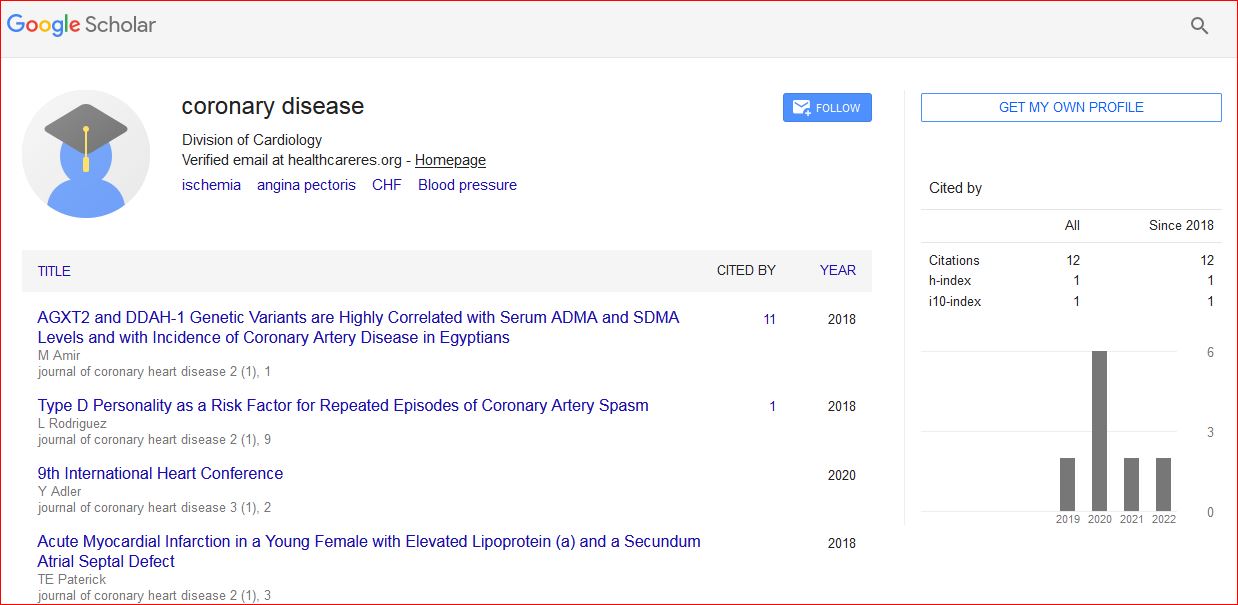
Journal of Coronary Heart Diseases received 15 citations as per Google Scholar report