Perspective - (2025) Volume 9, Issue 3
Received: 01-May-2025, Manuscript No. jchd-26-185691;
Editor assigned: 04-May-2025, Pre QC No. P-185691;
Reviewed: 18-May-2025, QC No. Q-185691;
Revised: 22-May-2025, Manuscript No. R-185691;
Published:
29-May-2025
, DOI: 10.37421/2684-6020.2024.9.247
Citation: Desai, Priya. ”Coronary Heart Disease: Diagnosis,
Treatment, and Prevention.” J Coron Heart Dis 09 (2025):247.
Copyright: © 2025 Desai P. This is an open-access article distributed under the terms of the Creative Commons Attribution License, which permits unrestricted use, distribution
and reproduction in any medium, provided the original author and source are credited.
Coronary heart disease (CHD) is a significant global health concern, necessitating a comprehensive understanding of its diagnosis, treatment, and management. The diagnostic process for CHD is multifaceted, involving a thorough review of patient history, a detailed physical examination, and the application of various diagnostic tools. These tools include electrocardiography (ECG) to assess the electrical activity of the heart, stress testing to evaluate the heart's response to exertion, and advanced imaging techniques such as coronary angiography to visualize the coronary arteries. Risk stratification is a critical component of CHD diagnosis, as identifying key contributing factors allows for personalized risk assessment and preventative strategies. Factors such as advanced age, male sex, a family history of premature heart disease, hypertension, dyslipidemia, diabetes mellitus, smoking, and obesity are recognized as significant contributors to the development of CHD. The underlying pathophysiology of CHD is primarily atherosclerosis, a progressive condition characterized by the buildup of plaque in the arteries, which guides the formulation of effective treatment strategies aimed at mitigating its effects and preventing further arterial narrowing. Early and accurate diagnosis, coupled with rigorous management of identified risk factors, is paramount in preventing disease progression and reducing the incidence of adverse cardiovascular events, such as myocardial infarction and heart failure.
Treatment of CHD adopts a comprehensive strategy that integrates lifestyle modifications, pharmacotherapy, and, when necessary, revascularization procedures. Lifestyle changes form the bedrock of CHD management, encompassing crucial adjustments such as adopting a heart-healthy diet, engaging in regular physical activity, actively pursuing smoking cessation, and achieving and maintaining a healthy body weight. Pharmacotherapy plays a pivotal role in managing CHD by addressing various aspects of the disease process. Commonly prescribed medications include statins to lower cholesterol levels, antiplatelet agents to prevent blood clots, beta-blockers to reduce heart rate and blood pressure, ACE inhibitors to manage blood pressure and improve heart function, and calcium channel blockers to relax blood vessels. For individuals with significant arterial blockages, revascularization procedures offer a means to restore blood flow. Percutaneous coronary intervention (PCI), commonly known as angioplasty with stenting, and coronary artery bypass grafting (CABG) are the principal revascularization strategies employed when indicated by the severity and extent of coronary artery disease. The therapeutic landscape for CHD is continually evolving with the emergence of novel pharmacotherapies that offer expanded options for patient management. Beyond the established classes of drugs, newer agents such as PCSK9 inhibitors and SGLT2 inhibitors are demonstrating substantial benefits in reducing the occurrence of major cardiovascular events. These advanced medications are particularly valuable in high-risk patient populations who may not achieve optimal outcomes with traditional treatment regimens. The development and application of these innovative drugs represent a significant advancement in personalized medicine, offering tailored therapeutic approaches for individuals with complex or refractory CHD, thereby improving prognosis and quality of life. Percutaneous coronary intervention (PCI) techniques have undergone substantial advancements, leading to improved procedural success rates and enhanced patient outcomes. Key innovations in stent technology, particularly the widespread adoption of drug-eluting stents (DES), have significantly reduced the rates of restenosis, a complication where the artery narrows again after treatment. Furthermore, the integration of advanced imaging modalities, such as optical coherence tomography (OCT), provides detailed insights into the coronary anatomy and stent deployment, enabling more precise and effective interventions. The decision-making process for PCI versus optimal medical therapy is a complex interplay of factors, including the complexity of the coronary lesions, the patient's overall health status, and individual preferences, all of which contribute to a tailored treatment plan. Coronary artery bypass grafting (CABG) continues to be recognized as a gold standard treatment for specific patterns of complex coronary artery disease, especially in cases of multi-vessel disease where multiple coronary arteries are significantly narrowed. A critical factor influencing the long-term success of CABG is the choice of graft material. Arterial grafts, such as the internal mammary artery, have demonstrated superior patency rates compared to venous grafts over extended periods, leading to improved long-term outcomes. This consideration significantly influences surgical strategy and the selection of appropriate grafts for individual patients, aiming to maximize the durability of the bypass. Risk factor modification stands as a cornerstone in both the prevention and ongoing management of coronary heart disease. Implementing comprehensive programs that target modifiable risk factors has proven to be highly effective in reducing the incidence of cardiovascular events. These programs typically emphasize smoking cessation, the adoption of a heart-healthy diet, encouragement of regular physical activity, and effective weight management strategies. The collective impact of these interventions plays a vital role in mitigating the progression of atherosclerosis and lowering the overall cardiovascular risk profile of individuals. Cardiac rehabilitation programs are indispensable components of the recovery process and contribute significantly to the long-term well-being of patients diagnosed with CHD. These professionally supervised programs are designed to integrate various therapeutic elements, including tailored exercise training, comprehensive health education, and supportive counseling. By addressing physical, psychological, and social aspects of recovery, cardiac rehabilitation aims to enhance functional capacity, alleviate symptoms such as chest pain and shortness of breath, and ultimately improve the overall quality of life for patients. The diagnosis of stable angina pectoris, a common manifestation of CHD, relies on a combination of characteristic clinical symptoms, findings from electrocardiography (ECG), and often the results of diagnostic tests. Non-invasive imaging techniques such as stress testing or coronary computed tomography angiography (CCTA) may be employed to confirm the diagnosis and assess the severity of coronary artery disease. The management of stable angina primarily focuses on effectively relieving symptoms, preventing the acute event of myocardial infarction, and improving the patient's long-term prognosis through a combination of lifestyle modifications and appropriate pharmacotherapy. Acute coronary syndromes (ACS), a spectrum of conditions that includes unstable angina and myocardial infarction (heart attack), represent critical medical emergencies that demand prompt diagnosis and immediate intervention to minimize myocardial damage and reduce mortality. The management of ACS involves a multi-pronged approach that typically includes potent antiplatelet therapy to prevent further clot formation, anticoagulation to inhibit blood clotting, beta-blockers to reduce cardiac workload, statins to stabilize plaque and lower cholesterol, and, in many cases, urgent revascularization procedures to restore blood flow to the affected heart muscle. The long-term management of patients with CHD is a continuous process that necessitates ongoing vigilance and a sustained commitment to optimal care. This includes regular medical surveillance to monitor disease progression and treatment effectiveness, strict adherence to prescribed medical therapies, and persistent control of cardiovascular risk factors to prevent recurrent events and enhance long-term survival. Crucially, patient education plays a vital role in empowering individuals to understand their condition and actively participate in their care, fostering shared decision-making to achieve the best possible health outcomes.The diagnostic pathway for Coronary Heart Disease (CHD) is a comprehensive evaluation encompassing several key elements essential for accurate identification and risk assessment. It begins with a detailed patient history to understand symptoms and risk factors, followed by a physical examination to assess overall cardiovascular health. Electrocardiography (ECG) is a fundamental tool used to detect abnormalities in heart rhythm and signs of past or present heart muscle damage. Stress testing, often performed on a treadmill or stationary bike, evaluates the heart's performance under physical exertion, revealing potential issues not apparent at rest. Advanced imaging modalities, such as coronary angiography, provide detailed visualization of the coronary arteries, identifying the location and severity of any blockages. Risk stratification is integral to this process, involving the careful consideration of various factors that predispose individuals to CHD, including age, sex, family history, hypertension, dyslipidemia, diabetes, smoking, and obesity. Understanding the primary pathophysiology, atherosclerosis, is crucial for guiding subsequent treatment decisions and interventions. The ultimate goal of early diagnosis and proactive risk factor management is to prevent disease progression and avert serious adverse cardiovascular events.
Treatment strategies for Coronary Heart Disease (CHD) are designed to manage the condition comprehensively, focusing on three main pillars: lifestyle modifications, pharmacotherapy, and revascularization procedures when necessary. Lifestyle changes are fundamental and include dietary adjustments toward a heart-healthy eating pattern, regular engagement in physical exercise, complete cessation of smoking, and effective weight management. Pharmacological interventions are tailored to individual patient needs and commonly involve medications such as statins to control cholesterol levels, antiplatelet agents to prevent blood clots, beta-blockers to regulate heart rate and blood pressure, ACE inhibitors to manage hypertension and protect the heart, and calcium channel blockers to improve blood flow. For patients with significant arterial blockages, revascularization procedures like percutaneous coronary intervention (PCI), which involves angioplasty and stenting, and coronary artery bypass grafting (CABG) are employed to restore adequate blood flow to the heart muscle. The field of pharmacotherapy for Coronary Heart Disease (CHD) is continually advancing, with novel drug classes offering enhanced efficacy in managing the condition and reducing cardiovascular risk. Beyond conventional treatments, newer agents like PCSK9 inhibitors and SGLT2 inhibitors are demonstrating significant promise in lowering the incidence of adverse cardiovascular events, particularly among individuals at high risk. These cutting-edge therapies provide more personalized treatment options for patients who may not achieve optimal results with standard medications, representing a significant step forward in individualized patient care and improved outcomes. Percutaneous coronary intervention (PCI) techniques have seen substantial evolution, leading to improved procedural success and better long-term outcomes for patients. Advancements in stent technology, most notably the widespread use of drug-eluting stents (DES), have dramatically reduced the rates of restenosis, a common complication. Furthermore, the integration of sophisticated imaging modalities, such as optical coherence tomography (OCT), allows for precise assessment of the coronary anatomy and stent deployment, enabling more effective and safer interventions. The decision to proceed with PCI versus opting for optimal medical therapy is a complex one, guided by factors such as the complexity of the coronary lesions, the patient's overall health status, and individual clinical considerations. Coronary artery bypass grafting (CABG) remains a cornerstone of surgical treatment for specific complex patterns of coronary artery disease, particularly in cases involving multiple diseased coronary arteries. The long-term patency of bypass grafts is a critical determinant of surgical success. Evidence suggests that arterial grafts, specifically the internal mammary artery, exhibit superior durability and longer patency rates compared to venous grafts. This finding significantly influences surgical strategy and the selection of graft materials, aiming to provide the most durable and effective revascularization for patients. Risk factor modification is an essential and foundational element in both the prevention and management of Coronary Heart Disease (CHD). Comprehensive intervention programs that actively address key modifiable risk factors have been shown to significantly reduce the occurrence of cardiovascular events. These programs typically focus on promoting smoking cessation, encouraging adherence to a healthy diet, advocating for regular physical activity, and implementing strategies for effective weight management. The consistent application of these principles is crucial for long-term cardiovascular health. Cardiac rehabilitation programs are integral to the recovery and long-term well-being of individuals who have experienced Coronary Heart Disease (CHD). These structured, supervised programs combine various therapeutic modalities, including exercise training, educational sessions, and psychological counseling. The overarching aim of cardiac rehabilitation is to enhance patients' functional capacity, alleviate symptoms, reduce the risk of future cardiac events, and improve their overall quality of life, facilitating a successful return to daily activities. The diagnosis of stable angina pectoris, a common manifestation of underlying Coronary Heart Disease (CHD), is typically established through the assessment of characteristic chest pain symptoms, supported by electrocardiographic (ECG) findings. Additional diagnostic investigations, such as stress testing or coronary computed tomography angiography (CCTA), may be employed to confirm the diagnosis and evaluate the extent of coronary artery disease. The management strategy for stable angina prioritizes symptom relief, prevention of myocardial infarction, and improvement of long-term prognosis through a combination of lifestyle adjustments and appropriate pharmacotherapy. Acute coronary syndromes (ACS), encompassing conditions like unstable angina and myocardial infarction, represent medical emergencies requiring immediate diagnosis and urgent intervention. The primary goals of treatment are to limit myocardial damage, stabilize the patient, and prevent further ischemic events. Management strategies typically involve potent antiplatelet therapy, anticoagulation, beta-blockers, statins, and often urgent revascularization to restore blood flow to the affected area of the heart. Long-term management and secondary prevention are critical for patients with established Coronary Heart Disease (CHD) to minimize the risk of recurrent events and improve survival rates. This involves ongoing patient surveillance, ensuring strict adherence to prescribed medical therapies, and continuous management of all cardiovascular risk factors. Effective patient education and the practice of shared decision-making are fundamental components that empower patients to actively participate in their ongoing care, leading to better adherence and improved long-term outcomes.Coronary heart disease (CHD) diagnosis involves a multi-faceted approach including patient history, physical examination, ECG, stress testing, and advanced imaging. Risk stratification is crucial, considering factors like age, sex, family history, hypertension, dyslipidemia, diabetes, smoking, and obesity. Atherosclerosis is the primary pathophysiology guiding treatment. Treatment encompasses lifestyle modifications, pharmacotherapy (statins, antiplatelets, beta-blockers, ACE inhibitors, calcium channel blockers), and revascularization (PCI, CABG). Novel pharmacotherapies like PCSK9 and SGLT2 inhibitors are expanding treatment options, especially for high-risk populations. Advances in PCI techniques and stent technology have improved outcomes. CABG remains a gold standard for complex disease, with arterial grafts showing superior patency. Risk factor modification, including smoking cessation, healthy diet, exercise, and weight management, is paramount. Cardiac rehabilitation programs enhance recovery and well-being. Stable angina diagnosis involves symptoms, ECG, and possibly stress testing or CCTA, with management focusing on symptom relief and prognosis improvement. Acute coronary syndromes require rapid diagnosis and intervention including antiplatelet therapy, anticoagulation, and revascularization. Long-term management emphasizes surveillance, adherence to therapy, and continuous risk factor control for secondary prevention.
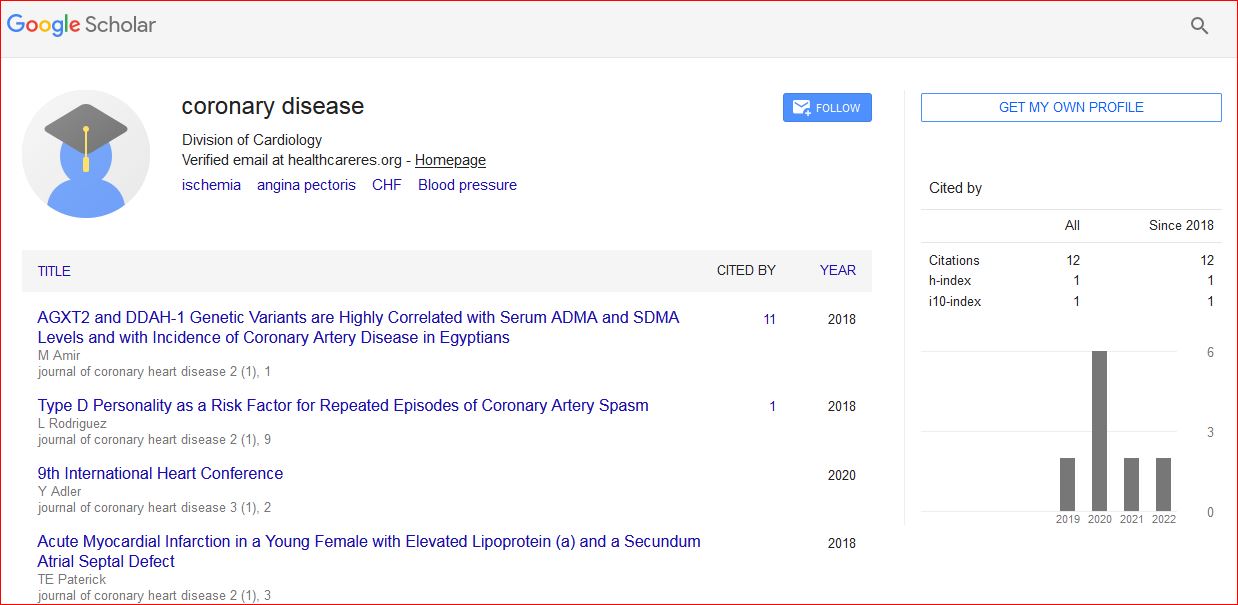
Journal of Coronary Heart Diseases received 15 citations as per Google Scholar report