Perspective - (2025) Volume 9, Issue 4
Received: 01-Jul-2025, Manuscript No. jchd-26-185701;
Editor assigned: 03-Jul-2025, Pre QC No. P-185701;
Reviewed: 17-Jul-2025, QC No. Q-185701;
Revised: 22-Jul-2025, Manuscript No. R-185701;
Published:
29-Jul-2025
, DOI: 10.37421/2684-6020.2024.9.257
Citation: O Connor, Liam. ”Coronary Heart Disease: Atherosclerosis,
Risk Factors, and Treatment.” J Coron Heart Dis 09 (2025):257.
Copyright: © 2025 O’Connor L. This is an open-access article distributed under the terms of the Creative Commons Attribution License, which permits unrestricted use,
distribution and reproduction in any medium, provided the original author and source are credited.
Coronary heart disease (CHD) fundamentally highlights the heart's vulnerability when its own blood supply is compromised. Atherosclerosis, the buildup of plaque in the coronary arteries, is the primary culprit, leading to narrowed or blocked arteries. This reduced blood flow deprives the heart muscle of oxygen and nutrients, causing angina (chest pain) or, in severe cases, myocardial infarction (heart attack). Understanding CHD underscores the critical importance of maintaining healthy arteries and a robust cardiovascular system to ensure the heart's continuous function [1].
The progression of atherosclerosis in CHD is a complex inflammatory process. Endothelial dysfunction, characterized by impaired blood vessel function, often precedes visible plaque formation. This dysfunction allows for the infiltration of lipoproteins, immune cells, and other inflammatory mediators into the arterial wall, initiating and perpetuating the atherosclerotic cascade. Recognizing this inflammatory component is key to developing targeted therapies [2].
Genetic predisposition plays a significant role in an individual's susceptibility to CHD. While lifestyle factors are crucial, certain genetic variants can increase the risk of developing atherosclerosis, high cholesterol, or hypertension. Advanced genetic screening and personalized risk assessment are becoming increasingly important in identifying individuals at higher risk, allowing for proactive preventive measures [3].
Modifiable risk factors, such as unhealthy diet, physical inactivity, smoking, and obesity, are central to the development and progression of CHD. Addressing these factors through lifestyle changes and effective public health interventions can dramatically reduce the incidence and severity of the disease. This emphasizes the power of individual agency and societal support in combating CHD [4].
Hypertension is a potent driver of CHD, accelerating the atherosclerotic process and increasing the mechanical stress on the heart. Chronically elevated blood pressure damages the endothelium, promotes plaque instability, and can lead to left ventricular hypertrophy, all contributing to increased cardiac risk. Effective blood pressure management is therefore a cornerstone of CHD prevention and treatment [5].
Dyslipidemia, particularly elevated levels of LDL cholesterol, is a critical factor in CHD. LDL particles contribute to plaque formation by entering the arterial wall and triggering inflammatory responses. Conversely, HDL cholesterol plays a protective role by facilitating cholesterol removal. Understanding lipid profiles and targeting them with statins and other lipid-lowering therapies is vital for managing CHD risk [6].
Diabetes mellitus, especially when poorly controlled, significantly elevates CHD risk. High blood glucose levels contribute to endothelial dysfunction, inflammation, and accelerated atherosclerosis. The synergistic effect of diabetes with other risk factors like hypertension and dyslipidemia creates a particularly challenging environment for cardiovascular health [7].
The acute manifestation of CHD, such as myocardial infarction, is a critical event where the heart's weakened state is starkly revealed. Prompt recognition of symptoms and rapid intervention, including reperfusion therapies, are crucial to minimize myocardial damage and improve survival. Understanding the pathophysiology of plaque rupture and thrombus formation is key to these interventions [8].
Secondary prevention strategies are paramount in managing patients with established CHD. These include rigorous control of risk factors, antiplatelet therapy, beta-blockers, statins, and lifestyle modifications. The goal is to prevent future cardiovascular events and improve long-term outcomes by reinforcing the heart's resilience [9].
Technological advancements in cardiovascular imaging and intervention have revolutionized the diagnosis and treatment of CHD. Techniques like coronary CT angiography, intravascular ultrasound, and minimally invasive procedures allow for more precise identification of arterial disease and more effective revascularization, offering new hope for patients with weakened hearts [10].
Coronary heart disease (CHD) is a condition where the heart's own blood supply is compromised, primarily due to atherosclerosis, the buildup of plaque within the coronary arteries. This process leads to the narrowing or complete blockage of these vital vessels, consequently restricting the flow of oxygen and nutrients to the heart muscle. The immediate consequences can range from angina, characterized by chest pain, to more severe events such as myocardial infarction, commonly known as a heart attack. Therefore, maintaining the health of the arteries and a strong cardiovascular system is paramount for the heart's sustained functionality [1].
The development of atherosclerosis in the context of CHD is understood as a complex inflammatory process. A key early event is endothelial dysfunction, which impairs the normal functioning of the blood vessel lining. This compromised state makes the arterial wall susceptible to the infiltration of lipoproteins, various immune cells, and other inflammatory substances. These elements initiate and fuel the atherosclerotic cascade, a continuous cycle of inflammation and damage. Recognizing and targeting this inflammatory component is therefore a crucial area for developing effective therapeutic strategies [2].
An individual's susceptibility to CHD is significantly influenced by their genetic makeup. While lifestyle choices play a pivotal role, specific genetic variations can predispose individuals to conditions like atherosclerosis, elevated cholesterol levels, or hypertension. Consequently, the implementation of advanced genetic screening and personalized risk assessments is increasingly important for identifying those at a higher risk and enabling proactive preventive interventions [3].
Modifiable risk factors, encompassing aspects of daily life such as diet, physical activity, smoking habits, and body weight, are central to both the initiation and advancement of CHD. Concerted efforts to address these factors through deliberate lifestyle changes and robust public health initiatives can lead to a substantial reduction in the incidence and severity of the disease. This highlights the significant impact of personal choices and supportive societal structures in the fight against CHD [4].
Hypertension stands out as a powerful determinant in the development of CHD. Elevated blood pressure not only accelerates the atherosclerotic process but also imposes increased mechanical strain on the heart. Sustained high blood pressure damages the arterial endothelium, destabilizes existing atherosclerotic plaques, and can lead to hypertrophy of the left ventricle, all of which elevate cardiovascular risk. Consequently, effective management of blood pressure is indispensable for both the prevention and treatment of CHD [5].
Dyslipidemia, characterized by abnormal levels of lipids in the blood, particularly high levels of low-density lipoprotein (LDL) cholesterol, is a significant contributor to CHD. LDL particles can enter the arterial wall, triggering inflammatory responses that promote plaque formation. In contrast, high-density lipoprotein (HDL) cholesterol exhibits a protective effect by aiding in the removal of excess cholesterol. A thorough understanding of lipid profiles and targeted interventions, such as statins and other lipid-lowering medications, are essential for mitigating CHD risk [6].
Diabetes mellitus, particularly when it is poorly managed, markedly increases the risk of developing CHD. High levels of blood glucose can lead to endothelial dysfunction, promote inflammation, and accelerate the progression of atherosclerosis. The combined effect of diabetes with other cardiovascular risk factors, such as hypertension and dyslipidemia, creates a particularly adverse environment for maintaining cardiovascular health [7].
Acute events stemming from CHD, most notably myocardial infarction, serve as stark indicators of the heart's compromised state. Swift recognition of symptoms and prompt initiation of treatment, including reperfusion therapies aimed at restoring blood flow, are critical for limiting myocardial damage and improving patient survival rates. A deep understanding of the underlying mechanisms of plaque rupture and thrombus formation is fundamental to the success of these emergent interventions [8].
For individuals diagnosed with established CHD, secondary prevention strategies are of utmost importance. These comprehensive approaches typically involve stringent control of all identified risk factors, the administration of antiplatelet medications, beta-blockers, statins, and sustained lifestyle modifications. The overarching objective is to avert subsequent cardiovascular events and enhance long-term prognoses by strengthening the heart's resilience [9].
Recent advancements in diagnostic and interventional cardiovascular technologies have profoundly transformed the landscape of CHD management. Sophisticated imaging techniques, such as coronary CT angiography and intravascular ultrasound, along with the development of minimally invasive procedures, now permit more accurate detection of arterial disease and more effective revascularization strategies. These innovations offer renewed optimism for patients facing the challenges of a weakened heart [10].
Coronary heart disease (CHD) arises from compromised blood supply to the heart, primarily due to atherosclerosis, a process involving plaque buildup in coronary arteries. This narrowing or blockage reduces oxygen and nutrient delivery, leading to angina or heart attacks. The development of atherosclerosis is driven by inflammation and endothelial dysfunction, with genetic predisposition and modifiable risk factors like unhealthy diet, inactivity, smoking, obesity, hypertension, dyslipidemia, and diabetes playing significant roles. Acute CHD events like myocardial infarction require prompt intervention to minimize damage. Secondary prevention focuses on risk factor control and lifestyle changes to prevent future events. Technological advancements in imaging and intervention have significantly improved diagnosis and treatment of CHD.
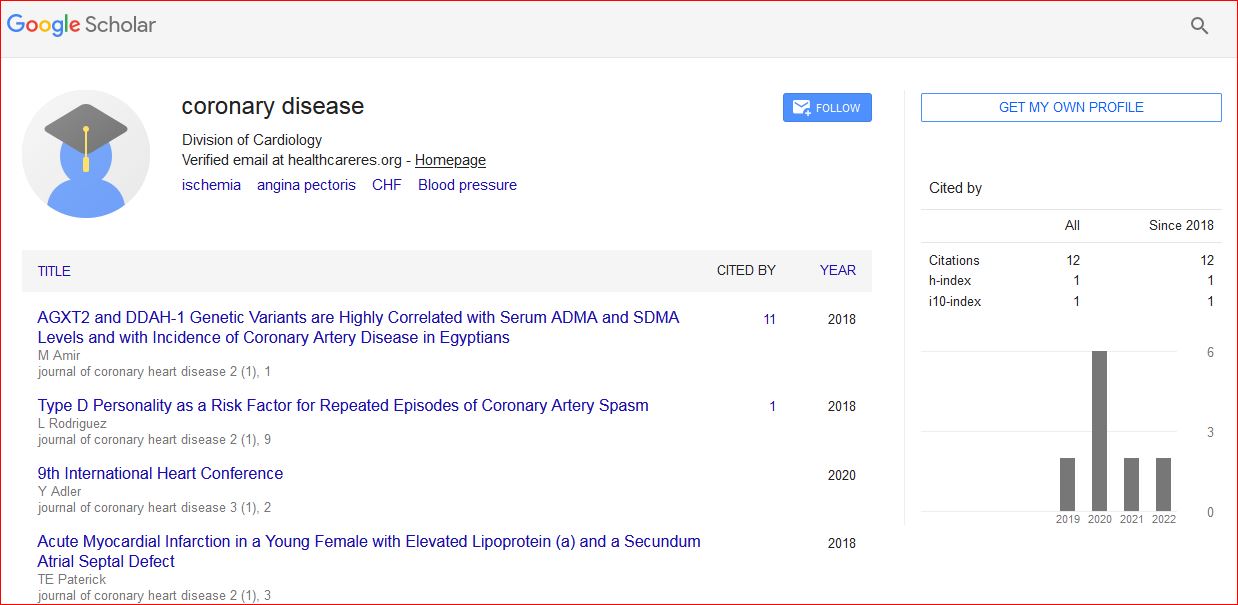
Journal of Coronary Heart Diseases received 15 citations as per Google Scholar report