Perspective - (2025) Volume 11, Issue 5
Received: 02-Sep-2025, Manuscript No. ohcr-25-174322;
Editor assigned: 04-Sep-2025, Pre QC No. P-174322;
Reviewed: 17-Sep-2025, QC No. Q-174322;
Revised: 23-Sep-2025, Manuscript No. R-174322;
Published:
30-Sep-2025
, DOI: 10.37421/2471-8726.2025.11.216
Citation: Olsen, Henrik. ”Comprehensive Oral Care: Vital for Holistic Health.” Oral Health Case Rep 11 (2025):216.
Copyright: © 2025 Olsen H. This is an open-access article distributed under the terms of the Creative Commons Attribution License, which permits unrestricted use, distribution and reproduction in any medium, provided the original author and source are credited.
Oral health interventions delivered by nurses show significant effectiveness in improving a variety of oral health outcomes for patients. What this means is that integrating oral care into routine nursing practice isn't just a good idea; it's a smart strategic move for better patient health overall. This impacts things like plaque scores and gingival health positively, proving the tangible benefits of a holistic approach to patient care[1].
Moving into the educational realm, interventions designed to improve oral hygiene among undergraduate students are generally quite effective. This suggests that focused educational programs truly can enhance students' knowledge, attitudes, and practices concerning oral health. Ultimately, this fosters better, more sustainable long-term habits, setting a foundation for lifelong oral wellness[2].
One of the most profound impacts of oral hygiene interventions is in reducing the risk of respiratory infections. Implementing these interventions significantly lowers the risk of pneumonia in older adults. Here's the thing, routine and thorough oral care is a practical and immensely important strategy for preventing respiratory infections in this vulnerable population, leading to better overall health outcomes and improved quality of life[3].
This preventative power extends to critical care settings. Oral hygiene care is clearly effective in preventing ventilator-associated pneumonia in adult critical care units. This really underscores the necessity of consistent and comprehensive oral care protocols in Intensive Care Unit (ICU) settings to safeguard intubated patients from severe respiratory complications, which can be life-threatening[4].
The importance of diligent oral care for pneumonia prevention is further reinforced in long-term care; consistent and proper oral care can greatly reduce the incidence of aspiration pneumonia among residents in nursing homes, highlighting its critical role in these institutionalized older adult populations[8].
Considering specific demographics, different oral hygiene interventions significantly improve oral health outcomes for children with intellectual disabilities. This highlights the importance of tailored and consistent oral care programs for this specific group, ensuring they receive the necessary support to maintain good oral health, even when facing unique developmental and behavioral challenges[5].
Additionally, oral hygiene interventions during pregnancy are crucial for improving the oral health knowledge, attitudes, and practices of expectant mothers. Targeted education and support can empower pregnant women to better care for their oral health, which, in turn, can positively impact both maternal and fetal well-being, emphasizing the systemic connections of oral health[10].
Even for those undergoing aesthetic or corrective treatments, such as orthodontic treatment, various oral hygiene adjuncts prove effective. This shows that incorporating specific tools and techniques beyond just regular brushing and flossing can significantly improve oral health and reduce complications for individuals with braces, making their treatment more successful and comfortable[9].
The evidence also points to a significant interplay between oral hygiene and systemic diseases. Oral hygiene interventions positively impact both periodontal health and glycemic control in patients with type 2 diabetes mellitus. This reveals a crucial link: improving oral health can actually help manage blood sugar levels, demonstrating how dental care is intertwined with broader systemic health for diabetics, offering a dual benefit[6].
Moreover, oral hygiene interventions are highly effective in preventing oral mucositis in adult cancer patients undergoing treatment. This suggests that diligent oral care is an essential component of supportive care, significantly reducing a common and often painful side effect of cancer therapies, thereby improving patient comfort and treatment adherence[7].
In essence, the collective body of research consistently demonstrates the multifaceted and vital role of oral hygiene interventions. From everyday preventative care to specialized treatment support, these interventions offer proven benefits across a wide spectrum of patient needs and clinical environments, solidifying their place as an indispensable aspect of modern healthcare practices.
Oral hygiene interventions demonstrate broad effectiveness across diverse populations and clinical contexts. For instance, nurses delivering oral health interventions significantly improve various oral health outcomes for patients. This underscores that integrating oral care into routine nursing practice is a smart move for enhancing patient health, positively impacting measures like plaque scores and gingival health[1]. Parallel to this, educational interventions focused on improving oral hygiene among undergraduate students are generally effective, enhancing their knowledge, attitudes, and practices regarding oral health and fostering better long-term habits[2]. These findings collectively emphasize the foundational role of both professional integration and targeted education in promoting widespread oral health improvements.
A critical area where oral hygiene interventions prove invaluable is in preventing respiratory infections. Implementing these interventions significantly lowers the risk of pneumonia in older adults, making routine and thorough oral care a practical and important strategy for preventing these infections in a vulnerable population, ultimately leading to better overall health outcomes[3]. Furthermore, oral hygiene care is clearly effective in preventing ventilator-associated pneumonia in adult critical care units. This highlights the necessity of consistent and comprehensive oral care protocols in ICU settings to safeguard intubated patients from severe respiratory complications, which can be life-threatening[4]. The importance of oral care in preventing pneumonia is consistent across different care environments, as interventions are also effective in preventing pneumonia among residents in nursing homes. What this really means is that consistent and proper oral care can greatly reduce the incidence of aspiration pneumonia in institutionalized older adults, underscoring its importance in long-term care settings[8].
Oral hygiene interventions are also highly beneficial for specific patient groups with unique needs. For children with intellectual disabilities, different oral hygiene interventions significantly improve their oral health outcomes. This underscores the importance of tailored and consistent oral care programs for this specific group, ensuring they receive the necessary support to maintain good oral health, even with unique challenges[5]. Likewise, oral hygiene interventions during pregnancy are crucial for improving the oral health knowledge, attitudes, and practices of expectant mothers. Targeted education and support can empower pregnant women to better care for their oral health, which can positively impact both maternal and fetal well-being, revealing a vital link between maternal oral health and broader health outcomes[10]. Additionally, for patients undergoing orthodontic treatment, various oral hygiene adjuncts prove effective. This shows that incorporating specific tools and techniques beyond just brushing and flossing can significantly improve oral health and reduce complications for individuals with braces, contributing to successful treatment and preventing adverse effects[9].
Beyond direct oral cavity benefits, these interventions exhibit a significant impact on systemic health conditions. Oral hygiene interventions positively influence both periodontal health and glycemic control in patients with type 2 diabetes mellitus. Here's the thing, improving oral health can actually help manage blood sugar levels, showing a crucial link between dental care and systemic health for diabetics and offering a compelling reason for integrated care[6]. Furthermore, oral hygiene interventions are highly effective in preventing oral mucositis in adult cancer patients undergoing treatment. This suggests that diligent oral care is an essential component of supportive care, significantly reducing a common and painful side effect of cancer therapies, thereby enhancing patient comfort and improving their treatment experience[7].
In conclusion, the consistent evidence highlights that oral hygiene interventions are not merely about maintaining clean teeth. They are a powerful, versatile tool for improving patient health across numerous dimensions, from preventing life-threatening infections in critical populations to supporting systemic health management in chronic conditions, and ensuring better outcomes for vulnerable groups. The data underscores the necessity of integrating comprehensive oral care strategies into diverse healthcare frameworks to realize these wide-ranging benefits.
Oral hygiene interventions consistently demonstrate significant effectiveness across a wide range of patient populations and health conditions. Nurses delivering oral care, for example, improve oral health outcomes like plaque scores and gingival health. Educational programs also effectively enhance oral hygiene knowledge and practices among undergraduate students, fostering long-term healthy habits. Critically, these interventions play a vital role in preventing severe respiratory complications: they significantly lower the risk of pneumonia in older adults, prevent ventilator-associated pneumonia in critical care units, and reduce aspiration pneumonia among nursing home residents. Beyond infection prevention, oral hygiene interventions are tailored to specific needs. They improve oral health outcomes for children with intellectual disabilities and are crucial during pregnancy for maternal and fetal well-being. Patients undergoing orthodontic treatment also benefit from specific hygiene adjuncts, leading to fewer complications. Moreover, the impact extends to systemic health, with interventions positively influencing both periodontal health and glycemic control in type 2 diabetes patients. They are also highly effective in preventing oral mucositis in adult cancer patients undergoing treatment, significantly reducing painful side effects. The collective evidence strongly supports that comprehensive oral care is an indispensable component of holistic health management, offering substantial benefits from preventative measures to supportive care across diverse healthcare settings.
None
None
1. Wang H, Sun T, Zhao H. "Effectiveness of oral health interventions delivered by nurses on oral health outcomes: a systematic review and meta-analysis.".BMC Oral Health 23 (2023):978.
Indexed at, Google Scholar, Crossref
2. Al-Maweri SA, Tarakji N, Al-Sufyani D. "Effectiveness of oral health educational interventions on improving oral hygiene knowledge, attitude, and practices among undergraduate students: a systematic review.".BMC Oral Health 22 (2022):649.
Indexed at, Google Scholar, Crossref
3. Ma K, Zhang Y, Wang M. "Effectiveness of oral hygiene interventions in reducing pneumonia risk in older adults: A systematic review and meta-analysis.".J Clin Nurs 30 (2021):3049-3062.
Indexed at, Google Scholar, Crossref
4. Chen Y, Fang X, Zeng H. "Oral hygiene care and its effectiveness in preventing ventilator-associated pneumonia in adult critical care units: a systematic review and meta-analysis.".Int J Nurs Stud 112 (2020):103704.
Indexed at, Google Scholar, Crossref
5. Alshammari A, Alamri H, Almutairi S. "Effectiveness of different oral hygiene interventions for children with intellectual disabilities: A systematic review and meta-analysis.".J Dent Sci 18 (2023):466-476.
Indexed at, Google Scholar, Crossref
6. Liang W, Zhang Y, He Y. "Effectiveness of oral hygiene interventions on periodontal health and glycemic control in patients with type 2 diabetes mellitus: A systematic review and meta-analysis.".J Dent Sci 17 (2022):1458-1466.
Indexed at, Google Scholar, Crossref
7. Wang L, Li Y, Chen R. "Effectiveness of oral hygiene interventions for preventing oral mucositis in adult patients undergoing cancer treatment: A systematic review and meta-analysis.".Support Care Cancer 29 (2021):3625-3636.
Indexed at, Google Scholar, Crossref
8. Lin S, Chang C, Yang C. "Effectiveness of oral hygiene interventions to prevent pneumonia in nursing home residents: a systematic review.".J Clin Nurs 28 (2019):3438-3449.
Indexed at, Google Scholar, Crossref
9. Ma K, Lin H, Lin Y. "Effectiveness of various oral hygiene adjuncts in patients undergoing orthodontic treatment: A systematic review and network meta-analysis.".J Am Dent Assoc 154 (2023):577-586.e2.
Indexed at, Google Scholar, Crossref
10. Singh VP, Gupta A, Sharma S. "Oral hygiene interventions during pregnancy: A systematic review.".J Family Med Prim Care 11 (2022):6078-6083.
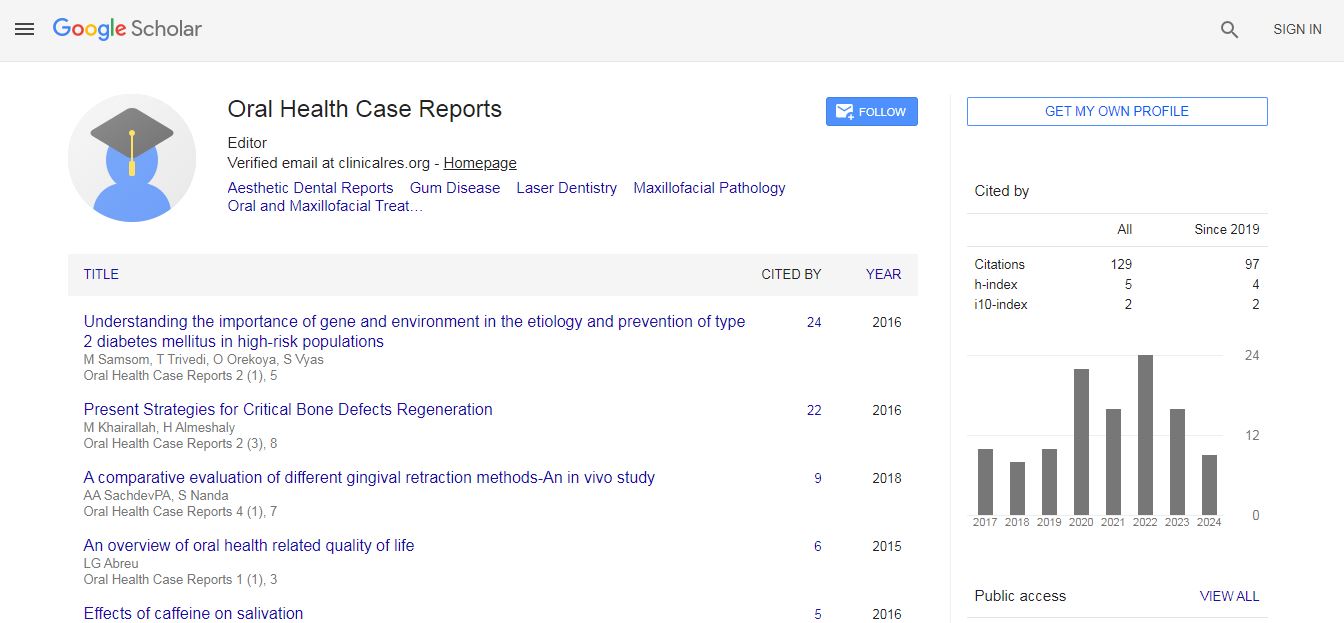
Oral Health Case Reports received 120 citations as per Google Scholar report