Opinion - (127) Volume 14, Issue 4
Received: 01-Dec-2025, Manuscript No. jms-25-177891;
Editor assigned: 03-Dec-2025, Pre QC No. P-177891;
Reviewed: 17-Dec-2025, QC No. Q-177891;
Revised: 22-Dec-2025, Manuscript No. R-177891;
Published:
29-Dec-2025
, DOI: 10.37421/2167-0943.2024.13.426
Citation: Verri, Giacomo. ”Comprehensive Hypertension Guidelines: Prevention to Outcomes.” J Metabolic Synd 14 (2025):426.
Copyright: © 2025 Verri G. This is an open-access article distributed under the terms of the Creative Commons Attribution License, which permits unrestricted use, distribution and reproduction in any medium, provided the original author and source are credited.
This comprehensive guideline from the ACC/AHA and other organizations provides updated recommendations for the prevention, detection, evaluation, and management of high blood pressure in adults. It covers a broad spectrum, from accurate blood pressure measurement to individualized treatment strategies, emphasizing lifestyle modifications and pharmacotherapy. The guideline also addresses specific considerations for various patient populations and clarifies thresholds for hypertension diagnosis and treatment goals to improve cardiovascular outcomes [1].
This scientific statement highlights the critical role of the Dietary Approaches to Stop Hypertension (DASH) diet in preventing and managing high blood pressure. It reviews the evidence supporting the effectiveness of DASH, particularly when combined with sodium reduction, and provides practical guidance for healthcare professionals and patients on implementing this dietary pattern. The statement underscores DASH as a foundational lifestyle intervention for hypertension [2].
This scientific statement provides comprehensive guidance on the diagnosis, evaluation, and treatment of resistant hypertension, defined as blood pressure that remains above goal despite concurrent use of three antihypertensive agents of different classes, including a diuretic. It emphasizes accurate diagnosis, exclusion of pseudoresistance, identification of secondary causes, and outlines pharmacologic and non-pharmacologic strategies for effective management, aiming to improve clinical outcomes [3].
This clinical practice guideline from the Endocrine Society offers comprehensive recommendations for the diagnosis, evaluation, and management of secondary hypertension. It covers various underlying causes such as primary aldosteronism, renal artery stenosis, pheochromocytoma, and Cushingâ??s syndrome, providing algorithms for screening and specific treatment strategies. The guideline underscores the importance of identifying reversible causes to effectively control blood pressure [4].
This executive summary provides updated guidance for the management of hypertension in pregnancy, reflecting the 2022 ISH statement. It addresses the diagnosis and treatment of chronic hypertension, gestational hypertension, and preeclampsia, aiming to optimize maternal and fetal outcomes. The statement emphasizes individualized risk assessment, appropriate blood pressure targets, and the safe use of antihypertensive medications during pregnancy [5].
This review offers a global perspective on the 2017 American Academy of Pediatrics Guidelines for hypertension in children and adolescents, alongside discussions on developments since then. It addresses the challenges in diagnosing and managing hypertension in pediatric populations, highlighting the unique considerations regarding blood pressure measurement, interpretation of results, and the choice of lifestyle and pharmacological interventions. The article underscores the importance of early detection to prevent long-term cardiovascular complications [6].
This review provides insights into the management of hypertension in patients with chronic kidney disease (CKD), a population at high risk for cardiovascular events and CKD progression. It discusses current guidelines and evidence-based approaches to blood pressure control, emphasizing the complexities of achieving target blood pressures while minimizing adverse effects. The article highlights the importance of individualized treatment plans considering the stage of CKD, proteinuria, and comorbid conditions [7].
This article reviews the 2022 standards for blood pressure management in individuals with diabetes, emphasizing the strong link between hypertension and increased cardiovascular risk in this population. It outlines specific blood pressure targets, recommended pharmacotherapy, and lifestyle interventions tailored for diabetic patients. The review highlights the necessity of integrated care approaches to achieve optimal blood pressure control and mitigate diabetes-related complications [8].
This review examines the global epidemiology of hypertension, discussing its prevalence, incidence, and associated risk factors across different regions and populations. It highlights the significant burden of hypertension worldwide and the disparities in awareness, treatment, and control. The article underscores the urgent need for effective public health strategies and clinical interventions to address this leading preventable cause of cardiovascular morbidity and mortality [9].
This review explores the critical link between hypertension and the development of end-organ damage, with a specific focus on vascular stiffness as a key pathological mechanism. It discusses how sustained high blood pressure contributes to structural and functional changes in blood vessels, leading to complications in organs like the heart, brain, and kidneys. The article emphasizes the importance of understanding and targeting vascular stiffness in therapeutic strategies to prevent or mitigate hypertension-related organ damage [10].
Understanding and managing hypertension is critical for improving cardiovascular outcomes. Comprehensive guidelines provide updated recommendations for the prevention, detection, evaluation, and management of high blood pressure in adults. This includes emphasizing accurate measurement, individualized treatment strategies, lifestyle modifications, and appropriate pharmacotherapy [1]. A foundational lifestyle intervention is the Dietary Approaches to Stop Hypertension (DASH) diet, which plays a critical role in preventing and managing high blood pressure, especially when combined with sodium reduction. Practical guidance for implementing this dietary pattern is available for healthcare professionals and patients [2].
Beyond general management, specific forms of hypertension require specialized approaches. Resistant hypertension, defined as blood pressure remaining above goal despite concurrent use of three antihypertensive agents including a diuretic, necessitates comprehensive guidance for diagnosis, evaluation, and treatment. This involves accurate diagnosis, exclusion of pseudoresistance, identification of secondary causes, and outlining effective pharmacologic and non-pharmacologic strategies [3]. Similarly, secondary hypertension, caused by underlying conditions like primary aldosteronism or renal artery stenosis, is a focus of clinical practice guidelines. These guidelines offer recommendations for diagnosis, evaluation, and management, providing algorithms for screening and specific treatment strategies to identify and reverse underlying causes [4].
Hypertension management must be tailored for various patient populations. For instance, updated guidance for hypertension in pregnancy addresses the diagnosis and treatment of chronic hypertension, gestational hypertension, and preeclampsia. The goal is to optimize maternal and fetal outcomes through individualized risk assessment, appropriate blood pressure targets, and the safe use of antihypertensive medications [5]. Pediatric hypertension also presents unique challenges. Guidelines for children and adolescents discuss considerations regarding blood pressure measurement, interpretation of results, and the choice of lifestyle and pharmacological interventions, highlighting the importance of early detection to prevent long-term cardiovascular complications [6].
Patients with comorbidities often require an integrated approach to blood pressure control. Managing hypertension in patients with chronic kidney disease (CKD) is particularly complex due to their high risk for cardiovascular events and CKD progression. Current guidelines and evidence-based approaches focus on achieving target blood pressures while minimizing adverse effects, emphasizing individualized treatment plans based on CKD stage, proteinuria, and comorbid conditions [7]. Similarly, individuals with diabetes face an increased cardiovascular risk, making blood pressure management crucial. Standards of medical care in diabetes outline specific blood pressure targets, recommended pharmacotherapy, and lifestyle interventions tailored for diabetic patients to achieve optimal blood pressure control and mitigate diabetes-related complications [8].
On a broader scale, understanding the global epidemiology of hypertension is vital. Reviews examine its prevalence, incidence, and associated risk factors across diverse regions and populations, underscoring the significant worldwide burden and disparities in awareness, treatment, and control. This highlights the urgent need for effective public health strategies and clinical interventions to address hypertension as a leading preventable cause of cardiovascular morbidity and mortality [9]. Furthermore, the critical link between hypertension and the development of end-organ damage, particularly focusing on vascular stiffness as a key pathological mechanism, is explored. Sustained high blood pressure contributes to structural and functional changes in blood vessels, leading to complications in organs like the heart, brain, and kidneys, emphasizing the importance of targeting vascular stiffness in therapeutic strategies [10].
Comprehensive guidelines provide updated recommendations for the prevention, detection, evaluation, and management of high blood pressure in adults, emphasizing accurate blood pressure measurement, individualized treatment strategies, lifestyle modifications, and pharmacotherapy to improve cardiovascular outcomes. These guidelines also address specific considerations for various patient populations and clarify thresholds for hypertension diagnosis and treatment goals. The critical role of the Dietary Approaches to Stop Hypertension (DASH) diet is highlighted as a foundational lifestyle intervention, particularly when combined with sodium reduction, offering practical guidance for implementation. Specific statements offer comprehensive guidance on the diagnosis, evaluation, and treatment of resistant hypertension, focusing on accurate diagnosis, exclusion of pseudoresistance, and identification of secondary causes, as well as outlining pharmacologic and non-pharmacologic strategies. Similarly, clinical practice guidelines cover secondary hypertension, providing algorithms for screening and specific treatment strategies for underlying causes like primary aldosteronism. Management of hypertension in pregnancy emphasizes individualized risk assessment, appropriate blood pressure targets, and safe medication use, aiming to optimize maternal and fetal outcomes. Pediatric guidelines review challenges in diagnosing and managing hypertension in children and adolescents, underscoring early detection to prevent long-term cardiovascular complications. For patients with chronic kidney disease and diabetes, integrated care approaches are essential, outlining specific blood pressure targets, recommended pharmacotherapy, and lifestyle interventions to mitigate increased cardiovascular risk and complications. Globally, hypertension represents a significant public health burden with disparities in awareness, treatment, and control, necessitating effective public health strategies. Finally, understanding the link between hypertension and end-organ damage, particularly through vascular stiffness, is crucial for therapeutic strategies aimed at preventing or mitigating complications in organs like the heart, brain, and kidneys.
None
None
Indexed at, Google Scholar, Crossref
Indexed at, Google Scholar, Crossref
Indexed at, Google Scholar, Crossref
Indexed at, Google Scholar, Crossref
Indexed at, Google Scholar, Crossref
Indexed at, Google Scholar, Crossref
Indexed at, Google Scholar, Crossref
Indexed at, Google Scholar, Crossref
Indexed at, Google Scholar, Crossref
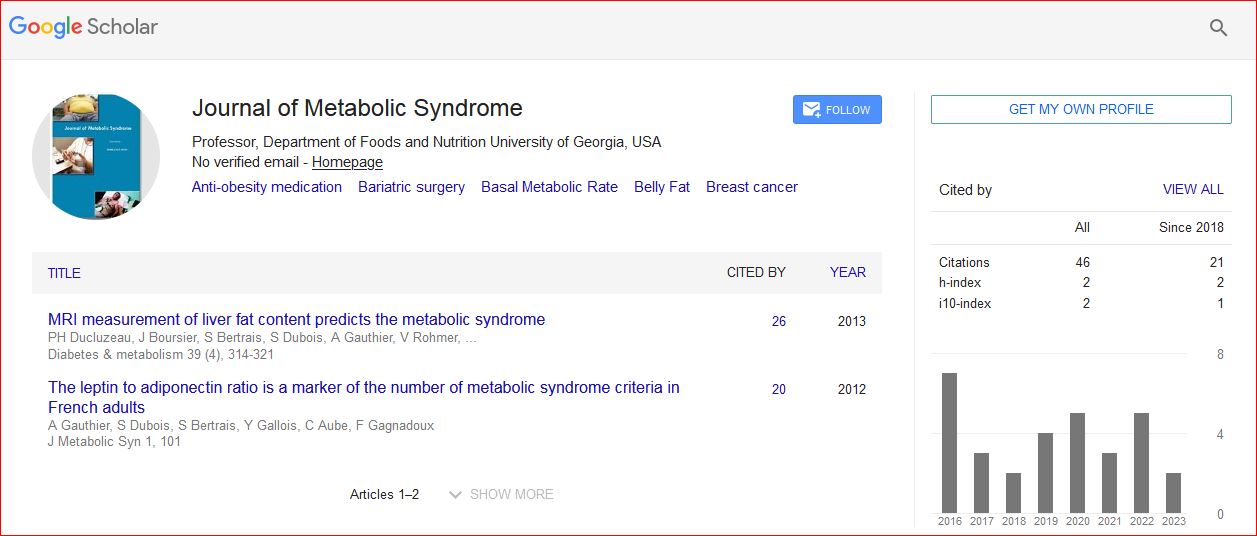
Journal of Metabolic Syndrome received 48 citations as per Google Scholar report