Brief Report - (127) Volume 13, Issue 6
Received: 01-Dec-2025, Manuscript No. JGPR-26-190235;
Editor assigned: 03-Dec-2025, Pre QC No. P-190235;
Reviewed: 17-Dec-2025, QC No. Q-190235;
Revised: 22-Dec-2025, Manuscript No. R-190235;
Published:
29-Dec-2025
, DOI: 10.37421/2329-9126.2025.13.645
Citation: Schmidt, Peter. ”Comprehensive Geriatric Care: A General Practice Blueprint.” J Gen Pract 13 (2025):645.
Copyright: © 2025 Schmidt P. This is an open-access article distributed under the terms of the Creative Commons Attribution License, which permits unrestricted use, distribution and reproduction in any medium, provided the original author and source are credited.
Geriatric care within the realm of general practice necessitates a comprehensive and integrated strategy. This approach prioritizes the early identification of age-related health conditions, ensuring that potential issues are recognized and addressed promptly. A thorough assessment of an older adult's functional capabilities is also paramount, allowing healthcare providers to understand their baseline and any declines. Furthermore, the development of personalized care plans is crucial, tailoring interventions to the unique needs and circumstances of each individual patient. This ensures that care is not only effective but also patient-centered. The management of polypharmacy, a common challenge in older populations, requires meticulous attention to reduce the risk of adverse drug events and improve patient safety. Preventing falls is another critical aspect, as falls can lead to significant morbidity and loss of independence in older adults. Cognitive screening plays a vital role in detecting conditions such as dementia early, enabling timely interventions and support. Addressing the psychosocial needs of elderly patients, including issues like loneliness and depression, is as important as managing their physical health. General practitioners are uniquely positioned to coordinate care with specialists, bridging the gap between primary and secondary healthcare services. This coordination ensures continuity of care for older patients, especially those with complex or multiple health issues. Ultimately, the goal is to promote well-being, maintain independence, and enhance the quality of life for older adults within their community settings. Effective management of polypharmacy in older adults is critically important for minimizing adverse drug events and enhancing medication adherence. This requires a systematic approach involving regular and thorough medication reviews to identify potential problems. Deprescribing, the process of carefully reducing or stopping medications when they are no longer needed or beneficial, is a key strategy. Tools designed to assess drug interactions and the cumulative burden of multiple medications are invaluable in this process. A collaborative effort between general practitioners (GPs) and pharmacists is essential for optimizing medication regimens and ensuring patient safety. This interprofessional collaboration leverages the expertise of both professions to provide the best possible care for older patients taking multiple medications. The potential for interactions and side effects increases with the number of prescriptions, making a structured approach indispensable. Preventing falls among the elderly is a fundamental element of comprehensive geriatric care. This preventive strategy hinges on a detailed assessment of individual risk factors that contribute to falls. Vision impairment, gait disturbances, and the side effects of various medications are common contributors to increased fall risk. General practices can proactively implement screening programs to identify individuals at high risk. Following identification, referral to targeted interventions, such as balance training or home hazard assessments, can significantly reduce the likelihood of falls. The aim is to empower older adults and their caregivers with the knowledge and tools to mitigate these risks effectively. Such measures contribute to maintaining independence and preventing serious injuries. Cognitive impairment, including conditions like dementia, is a highly prevalent concern within older populations, posing significant challenges for individuals, families, and healthcare systems. Early detection and diagnosis within the general practice setting are crucial for initiating timely management strategies. This allows for the provision of appropriate support for both patients and their caregivers, facilitating informed planning for future care needs. Implementing routine cognitive screening as part of regular health assessments should be strongly considered to identify individuals who may benefit from further evaluation and intervention. Proactive identification can lead to better outcomes and improved quality of life. The psychosocial well-being of older patients is of paramount importance, on par with their physical health, and should be a central focus of geriatric care. General practitioners have a crucial role in screening for common psychosocial issues such as loneliness, depression, and social isolation, which can significantly impact overall health. Connecting patients with relevant community resources and support networks is a key strategy in addressing these needs. Adopting a holistic approach that considers the emotional and social aspects of aging is fundamental to providing high-quality geriatric care. This comprehensive perspective ensures that all facets of a patient's life are considered in their treatment plan. Implementing integrated care models within general practice settings holds the potential to significantly improve health outcomes for older adults, particularly those managing chronic conditions. Such models emphasize enhanced communication channels between primary and secondary care providers, fostering a more cohesive approach to patient management. Shared decision-making, where patients are actively involved in choices about their healthcare, is a cornerstone of these models. Developing patient-centered care plans ensures that interventions are aligned with individual preferences and goals, leading to greater engagement and adherence. This collaborative framework aims to streamline care and optimize results for a vulnerable population. The role of technology in supporting geriatric care within general practice is progressively expanding, offering innovative solutions to existing challenges. Telehealth services can extend the reach of healthcare providers, enabling remote consultations and monitoring, which is particularly beneficial for older adults with mobility issues. Remote monitoring devices can track vital signs and other health indicators, allowing for early detection of potential problems. Digital health tools can also enhance patient engagement by providing educational resources and facilitating communication. These technological advancements can improve access to care and facilitate the effective management of chronic diseases among older individuals, promoting greater independence and well-being. Advance care planning is an indispensable component of holistic care for older adults, ensuring that their deeply held values and preferences are respected throughout the course of their lives, especially concerning end-of-life care. General practitioners are ideally positioned to initiate these sensitive yet critical conversations. By fostering open communication and encouraging shared decision-making, GPs can empower patients to articulate their wishes regarding medical treatments and personal care. This proactive approach respects patient autonomy and provides peace of mind for both the individual and their families, ensuring that care aligns with their wishes. Nutritional assessment and subsequent management are vital components of comprehensive geriatric care. Malnutrition is unfortunately common among older adults and can significantly exacerbate existing age-related health issues, leading to a decline in overall health status and functional capacity. General practitioners can play a crucial role in identifying patients who are at risk of malnutrition through routine screenings and assessments. Following identification, they can recommend appropriate dietary interventions and lifestyle modifications to improve nutritional status, thereby supporting better health outcomes and preserving quality of life. A well-nourished older adult is better equipped to manage chronic conditions. Addressing the specific needs of frail older adults within the general practice setting demands a focused approach centered on preserving their independence and enhancing their quality of life. This involves the development of highly personalized care plans that are meticulously tailored to each individual's unique circumstances and preferences. Proactive management of existing health conditions is essential to prevent exacerbations and maintain stability. Furthermore, establishing robust support systems, encompassing both medical and social resources, is critical to ensuring the well-being and continued autonomy of frail older individuals. A proactive and personalized approach is key.
Geriatric care in general practice requires a multifaceted strategy, beginning with the early identification of age-related conditions to ensure timely interventions. A comprehensive assessment of an older adult's functional status is crucial for understanding their capabilities and needs. Developing personalized care plans ensures that treatment is tailored to the individual, maximizing effectiveness. Key areas within this specialized care include the diligent management of polypharmacy to minimize adverse drug reactions and improve patient adherence. Preventing falls is another critical objective, safeguarding older adults from potentially debilitating injuries and maintaining their mobility. Cognitive screening is essential for the early detection of impairments, enabling prompt diagnosis and support. Addressing the psychosocial needs of elderly patients, such as loneliness and depression, is as vital as managing their physical health, promoting overall well-being. General practitioners play a pivotal role in coordinating care with specialists, ensuring a seamless transition and continuity of services for older patients. This interdisciplinary approach fosters a more holistic and effective model of care, enhancing the quality of life for the aging population. The ultimate aim is to support older adults in maintaining their independence and dignity. Effective management of polypharmacy in older adults is a critical imperative, aimed at substantially reducing the incidence of adverse drug events and improving medication adherence. This comprehensive approach necessitates regular, in-depth medication reviews to identify any potential issues or redundancies. A key strategy within this process is deprescribing, which involves the careful and judicious reduction or discontinuation of medications that are no longer indicated or beneficial. The utilization of specialized tools to assess potential drug interactions and the cumulative burden of multiple medications is indispensable for ensuring patient safety. A strong collaborative partnership between general practitioners and pharmacists is paramount to optimizing medication regimens and safeguarding the health of older patients. This interprofessional synergy ensures that medication management is both safe and effective, addressing the complexities of multiple prescriptions. Preventing falls in the elderly stands as a cornerstone of effective geriatric care, requiring a thorough and individualized assessment of each patient's specific risk factors. Common contributors to fall risk include visual impairments, gait disturbances, and medication side effects, all of which must be carefully evaluated. General practices are ideally positioned to implement systematic screening programs to identify individuals who are at elevated risk of falling. Following identification, referral to targeted interventions, such as physical therapy for balance improvement or home safety assessments, can significantly mitigate these risks. The proactive implementation of these measures is crucial for maintaining the independence and safety of older adults. This focus on prevention is key to preserving mobility. Cognitive impairment, a widespread concern in older populations, presents significant challenges that necessitate early detection and diagnosis within general practice. Such timely identification allows for the initiation of appropriate management strategies, including medical interventions and supportive care. Providing comprehensive support for both patients experiencing cognitive decline and their caregivers is essential for navigating the complexities of these conditions. Furthermore, early diagnosis facilitates proactive planning for future care needs, ensuring that individuals' wishes and preferences are taken into account. Routine cognitive screening should be integrated into primary care to identify potential issues at an early stage. The psychosocial well-being of older patients is an integral aspect of their overall health, demanding the same level of attention as their physical conditions. General practitioners are tasked with screening for prevalent psychosocial issues such as loneliness, depression, and social isolation, which can profoundly impact an individual's quality of life. Facilitating connections to community resources and support networks is a vital strategy for addressing these concerns. Embracing a holistic approach that acknowledges and actively manages these psychosocial factors is fundamental to delivering comprehensive and compassionate geriatric care. This broader perspective ensures that patients are treated as whole individuals. The implementation of integrated care models within general practice settings offers a promising avenue for significantly improving health outcomes among older adults, especially those grappling with multiple chronic conditions. These models foster enhanced communication and collaboration between primary care physicians and specialists, ensuring a more cohesive approach to patient management. Shared decision-making, where patients are active participants in their care choices, is a central tenet of these integrated systems. The development of patient-centered care plans ensures that interventions are aligned with individual goals and preferences, leading to greater patient engagement and satisfaction. This approach optimizes the care journey. The increasing integration of technology into geriatric care within general practice is revolutionizing how older adults receive support and medical attention. Telehealth platforms enable remote consultations and monitoring, expanding access to care for individuals with mobility limitations or those living in remote areas. Remote monitoring devices can continuously track vital health indicators, allowing for early detection of deviations and proactive intervention. Digital health tools empower patients by providing accessible health information and facilitating communication with their healthcare providers. These technological advancements contribute to improved chronic disease management and promote greater independence. Advance care planning is a critical element of ethical and patient-centered care for older adults, ensuring that their deeply held values and preferences are honored throughout their lives, particularly concerning end-of-life decisions. General practitioners are ideally positioned to initiate these essential conversations due to their established relationships with patients and families. By cultivating an environment of open communication and encouraging shared decision-making, GPs can empower individuals to articulate their wishes regarding medical treatment and personal care preferences. This proactive approach ensures respect for patient autonomy and provides valuable guidance for future care. Nutritional assessment and appropriate management are indispensable components of comprehensive geriatric care. Malnutrition is a common issue in older populations and can significantly exacerbate age-related health problems, leading to a decline in physical function and an increased susceptibility to illness. General practitioners play a crucial role in identifying older adults at risk of malnutrition through routine screenings. Following identification, they can provide guidance on appropriate dietary interventions and lifestyle modifications to improve nutritional status, thereby supporting better health outcomes and maintaining quality of life. Effectively addressing the specific needs of frail older adults within a general practice context requires a dedicated focus on preserving their independence and maximizing their quality of life. This involves the creation of highly individualized care plans that are meticulously designed to meet each person's unique circumstances and preferences. Proactive and vigilant management of existing health conditions is essential to prevent complications and maintain functional capacity. Furthermore, establishing robust support systems, encompassing both medical and social resources, is vital to ensure the continued well-being and autonomy of frail older individuals. A person-centered approach is paramount.
Geriatric care in general practice demands a multifaceted approach focused on early identification of age-related conditions, comprehensive functional assessment, and personalized care plans. Key areas include polypharmacy management, fall prevention, cognitive screening, and addressing psychosocial needs. General practitioners are vital in coordinating care with specialists to ensure continuity for older patients. Effective polypharmacy management involves medication reviews and deprescribing, with collaboration between GPs and pharmacists. Fall prevention requires assessing individual risk factors and implementing targeted interventions. Early detection of cognitive impairment allows for timely management and support. Psychosocial well-being screening and connection to community resources are crucial for holistic care. Integrated care models improve outcomes for older adults with chronic conditions through enhanced communication and shared decision-making. Technology, such as telehealth and remote monitoring, expands access and improves chronic disease management. Advance care planning ensures patient values are respected, with GPs initiating these conversations. Nutritional assessment and management are vital due to common malnutrition, and GPs can identify at-risk patients. Addressing frailty requires personalized care plans, proactive management, and robust support systems to maintain independence and quality of life.
None
None
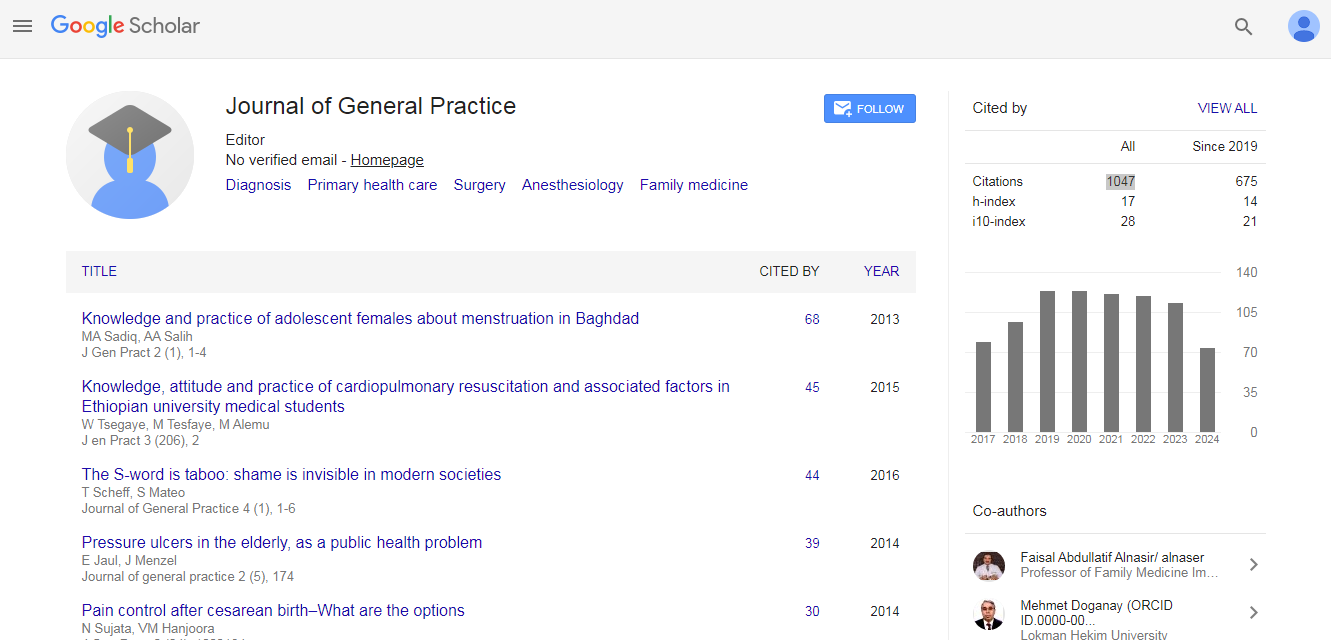
Journal of General Practice received 1047 citations as per Google Scholar report