Commentary - (2025) Volume 13, Issue 2
Received: 01-Apr-2025, Manuscript No. JGPR-26-188012;
Editor assigned: 03-Apr-2025, Pre QC No. P-188012;
Reviewed: 17-Apr-2025, QC No. Q-188012;
Revised: 22-Apr-2025, Manuscript No. R-188012;
Published:
29-Apr-2025
, DOI: 10.37421/2329-9126.2025.13.613
Citation: Wei, Chen. ”Comprehensive Diabetes Management: A General Practice Guide.” J Gen Pract 13 (2025):613.
Copyright: © 2025 Wei C. This is an open-access article distributed under the terms of the Creative Commons Attribution License, which permits unrestricted use, distribution and reproduction in any medium, provided the original author and source are credited.
Effective diabetes management in general practice necessitates a comprehensive and integrated strategy to address the complexities of this chronic condition. A multifaceted approach is paramount, encompassing proactive screening and early diagnosis to identify individuals at risk or in the early stages of diabetes. This includes personalized treatment plans that meticulously incorporate both essential lifestyle modifications and appropriate pharmacotherapy tailored to each patient's unique needs. Crucially, ongoing patient education and robust self-management support are vital to empower individuals to actively participate in their care [1].
The landscape of diabetes care is continually evolving, with technology offering promising avenues for enhancing its delivery within general practice settings. The integration of telehealth and remote monitoring devices presents opportunities to improve patient engagement, facilitate timely interventions, and overcome geographical barriers that may impede access to care. However, the successful implementation of these technological solutions requires careful consideration of factors such as digital literacy among patients, robust data security measures, and the imperative of ensuring equitable access for all individuals, regardless of their socioeconomic background or technological proficiency [2].
Central to modern chronic disease management, including diabetes, is the principle of shared decision-making. This collaborative approach positions the patient as an active partner in their healthcare journey, engaging them in discussions about treatment options, the associated risks, and the potential benefits. By empowering patients to make informed choices that align with their personal values and preferences, shared decision-making fosters greater adherence to treatment plans and ultimately contributes to improved long-term health outcomes [3].
Fundamental to the successful management of diabetes are comprehensive lifestyle interventions. These interventions primarily focus on dietary changes and the promotion of regular physical activity, forming the bedrock of any effective diabetes care plan. General practitioners play a pivotal role in providing evidence-based counseling and consistent support to assist patients in adopting and sustaining these healthy habits. Furthermore, strategic referrals to dietitians and specialized exercise programs can significantly augment these in-practice efforts, creating a more holistic support system for patients [4].
The pharmacological management of diabetes in general practice demands a nuanced understanding of the diverse array of available drug classes. This includes a thorough grasp of their specific mechanisms of action and potential side effects, enabling practitioners to make informed therapeutic decisions. Individualizing treatment regimens based on patient characteristics, the presence of comorbidities, and established treatment goals is paramount to achieving optimal outcomes. The increasing availability of novel antidiabetic agents underscores the necessity for ongoing professional development among primary care providers to stay abreast of these advancements [5].
A critical and often overlooked aspect of comprehensive diabetes care is the proactive prevention and meticulous management of its numerous complications. These complications can range from cardiovascular disease, nephropathy, and retinopathy to neuropathy, each carrying significant implications for patient morbidity and mortality. Regular screening for these complications, aggressive modification of risk factors, and prompt referral to appropriate specialists are essential strategic pillars in the management of diabetes within the general practice setting [6].
Patient education and dedicated self-management support are indispensable components for effectively empowering individuals living with diabetes. This empowerment enables them to assume a more active and informed role in managing their own health. General practitioners and their multidisciplinary teams bear the responsibility of providing clear, accessible, and consistent information regarding diabetes itself, the intricacies of their individual treatment plans, and practical strategies for effectively managing blood glucose levels, nutrition, and physical activity [7].
Team-based care models, characterized by seamless collaboration between general practitioners, nurses, dietitians, and other allied health professionals, have demonstrated remarkable efficacy in the realm of diabetes management. This interdisciplinary approach ensures that patient care is not only comprehensive and holistic but also optimizes the utilization of available healthcare resources. By leveraging the diverse expertise within the team, a more coordinated and effective care pathway can be established for each patient [8].
Addressing the pervasive issue of health inequalities is an indispensable prerequisite for achieving equitable diabetes care across all populations. General practitioners must possess a keen awareness of the socioeconomic determinants that significantly influence health outcomes and proactively implement targeted strategies designed to support vulnerable populations in their efforts to manage diabetes effectively. This requires a commitment to understanding and mitigating the systemic barriers that can impede optimal care [9].
Finally, the application of motivational interviewing and other evidence-based behavioral change techniques holds immense significance in the effective management of diabetes. General practitioners can skillfully leverage these techniques to assist patients in overcoming the multifaceted barriers they often encounter when attempting to adopt and sustain healthy lifestyle behaviors. This ultimately leads to improved glycemic control and an enhanced overall sense of well-being [10].
The multifaceted approach to effective diabetes management in general practice is highlighted, emphasizing proactive screening, early diagnosis, and personalized treatment plans that integrate lifestyle modifications and pharmacotherapy. Crucially, ongoing patient education and self-management support are essential for empowering individuals to actively participate in their care and achieve optimal health outcomes [1].
Technological advancements, including telehealth and remote monitoring devices, present significant opportunities to enhance diabetes care delivery within general practice. These tools can foster improved patient engagement, enable timely interventions, and overcome geographical limitations. However, the successful adoption of these technologies hinges on a careful assessment of digital literacy, robust data security protocols, and a commitment to ensuring equitable access for all patients [2].
Shared decision-making stands as a fundamental tenet of patient-centered diabetes care. This involves actively engaging patients in comprehensive discussions regarding treatment options, potential risks, and anticipated benefits. By fostering an environment where patients can make informed choices aligned with their personal values and preferences, this collaborative approach significantly enhances adherence to treatment and contributes to better long-term health results [3].
Lifestyle interventions, encompassing dietary adjustments and increased physical activity, form the indispensable foundation of diabetes management. General practitioners are instrumental in providing evidence-based counseling and unwavering support to facilitate the adoption and sustained practice of healthy habits. Referrals to specialized professionals like dietitians and the encouragement of participation in exercise programs serve to amplify these crucial efforts [4].
Pharmacological management of diabetes within the general practice setting requires a profound understanding of various drug classes, their specific mechanisms of action, and their potential adverse effects. Individualizing therapeutic strategies based on a patient's unique characteristics, existing comorbidities, and overarching treatment goals is of utmost importance. The continuous emergence of novel therapeutic agents necessitates a commitment to ongoing professional development for primary care providers [5].
Preventing and effectively managing the debilitating complications associated with diabetes, such as cardiovascular disease, nephropathy, retinopathy, and neuropathy, is an absolutely critical aspect of providing comprehensive diabetes care. Regular screening for these complications, diligent modification of modifiable risk factors, and timely referral to specialized medical professionals are indispensable strategic imperatives within the general practice framework [6].
Patient education and dedicated self-management support are vital for equipping individuals with diabetes to assume an active and informed role in managing their own health. General practitioners and their dedicated teams are responsible for delivering clear, readily understandable information regarding diabetes, treatment regimens, and effective strategies for managing blood glucose levels, optimizing nutrition, and engaging in regular physical activity [7].
Team-based care models, which promote collaborative efforts among general practitioners, nurses, dietitians, and other allied health professionals, have proven to be highly effective in the context of diabetes management. This interdisciplinary approach ensures that patient care is holistic, comprehensive, and that healthcare resources are utilized in the most optimal manner possible [8].
Addressing health inequalities is an absolutely crucial step towards achieving equitable diabetes care for all individuals. General practitioners must maintain a strong awareness of the social determinants of health and actively implement targeted strategies designed to support underserved and vulnerable populations in their ongoing management of diabetes [9].
The role of motivational interviewing and other behavioral change techniques in optimizing diabetes management cannot be overstated. General practitioners can effectively employ these skills to assist patients in overcoming obstacles to adopting and maintaining healthy lifestyle behaviors, thereby leading to improved glycemic control and enhanced overall well-being [10].
Effective diabetes management in general practice requires a comprehensive approach including proactive screening, personalized treatment plans with lifestyle modifications and pharmacotherapy, and ongoing patient education. Technology like telehealth can enhance care delivery, while shared decision-making empowers patients. Lifestyle interventions such as diet and exercise are foundational, supported by evidence-based counseling. Pharmacological management necessitates a nuanced understanding of drug classes and individualized therapy. Prevention and management of complications are critical, involving regular screening and risk factor modification. Patient education and self-management support are vital for empowering individuals. Team-based care models improve holistic care, and addressing health inequalities is essential for equitable outcomes. Motivational interviewing and behavioral change techniques are important tools for improving adherence and well-being.
None
None
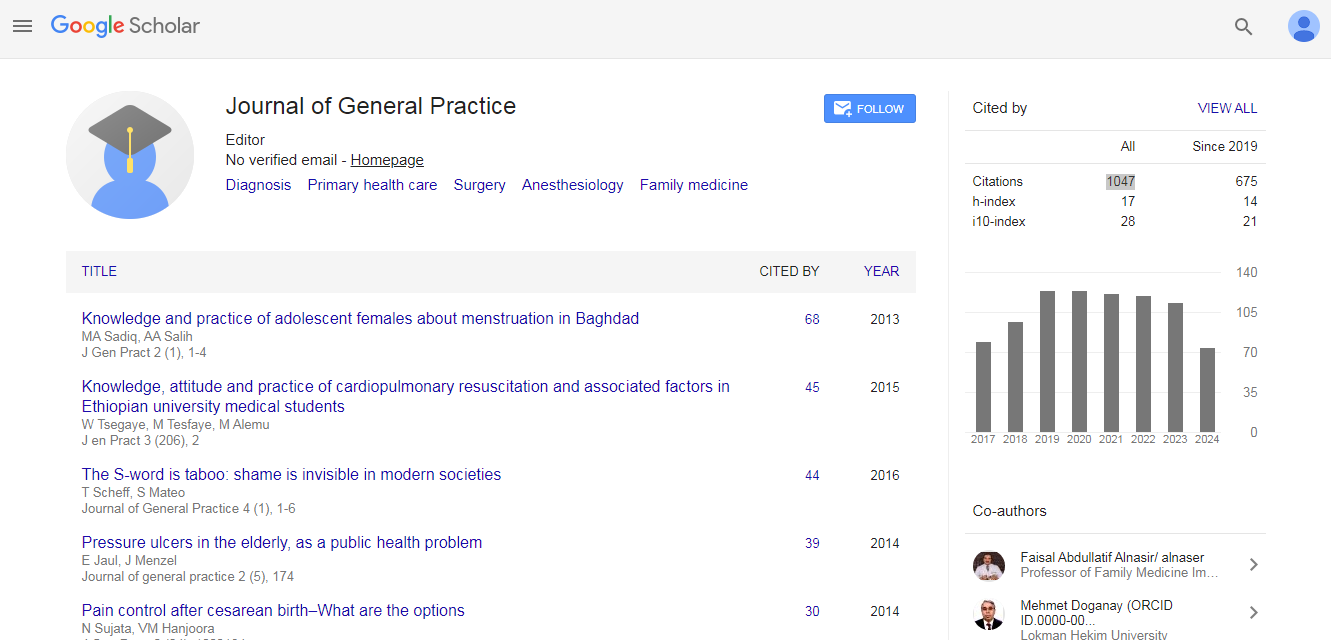
Journal of General Practice received 1047 citations as per Google Scholar report