Short Communication - (2025) Volume 9, Issue 4
Received: 01-Jul-2025, Manuscript No. jchd-26-185703;
Editor assigned: 03-Jul-2025, Pre QC No. P-185703;
Reviewed: 17-Jul-2025, QC No. Q-185703;
Revised: 22-Jul-2025, Manuscript No. R-185703;
Published:
29-Jul-2025
, DOI: 10.37421/2684-6020.2024.9.259
Citation: Fischer, Martin. ”Comprehensive CHD Strategy: Prevention,
Recovery, and Personalized Care.” J Coron Heart Dis 09 (2025):259.
Copyright: © 2025 Fischer M. This is an open-access article distributed under the terms of the Creative Commons Attribution License, which permits unrestricted use,
distribution and reproduction in any medium, provided the original author and source are credited.
Coronary heart disease (CHD) represents a complex and significant global health challenge, necessitating a comprehensive approach that extends beyond symptom management to encompass robust prevention and recovery strategies. Understanding the multifaceted nature of CHD is paramount, involving a deep dive into its underlying mechanisms, from the influence of genetic predispositions to the profound impact of lifestyle choices. This holistic perspective is crucial for developing effective interventions. The focus remains on providing actionable insights for both healthcare providers and patients, underscoring the importance of early detection, proactive risk factor modification, and the application of evidence-based therapeutic interventions. The ultimate goal is to significantly improve long-term cardiovascular health and enhance patient outcomes, thereby mitigating the burden of this widespread condition [1].
Recent advancements in cardiovascular biomarkers are reshaping our understanding and management of coronary heart disease. Novel indicators are emerging that promise to refine risk stratification and enable the personalization of treatment approaches. This involves the sophisticated integration of diverse data types, including genetic, proteomic, and metabolomic information. Such integration allows for a more nuanced appreciation of disease progression and the effectiveness of therapeutic responses. This paves the way for interventions that are not only proactive but also precisely tailored to individual patient needs, offering a more targeted approach to cardiovascular care [2].
Current strategies for the primary and secondary prevention of coronary heart disease are continually being refined, with a strong emphasis on the synergistic effects of lifestyle modifications and pharmacological interventions. Evidence robustly supports the efficacy of established agents such as statins, antihypertensive medications, and antiplatelet therapies. Concurrently, the crucial impact of non-pharmacological interventions, including balanced dietary patterns, regular physical activity, and smoking cessation, cannot be overstated in their role in reducing the incidence of cardiovascular events and improving overall prognosis [3].
The critical role of inflammation in the pathogenesis of coronary heart disease is increasingly being recognized, highlighting its significant contribution to the development and subsequent rupture of atherosclerotic plaques. This understanding opens avenues for novel therapeutic strategies. Emerging anti-inflammatory therapies hold considerable potential to modify disease progression in ways that traditional risk factor management alone cannot achieve. This presents a paradigm shift in how we approach treatment, offering a new perspective that moves beyond established protocols to target a fundamental disease mechanism [4].
Following a myocardial infarction, the focus shifts towards optimized rehabilitation and long-term recovery for patients. Structured cardiac rehabilitation programs, which typically integrate exercise training, comprehensive patient education, and essential psychosocial support, have demonstrated a substantial positive impact. These programs are instrumental in improving functional capacity, enhancing the overall quality of life, and demonstrably reducing the risk of future cardiovascular events, thereby promoting sustained well-being post-event [5].
The intricate genetic underpinnings of coronary heart disease are a subject of ongoing investigation, with significant progress being made in understanding how genetic factors contribute to an individual's risk profile. Research into genetic risk scores and polygenic approaches is proving invaluable in identifying individuals who may be at a substantially higher risk. The emphasis is now on effectively integrating this genetic information into clinical practice, enabling the development and implementation of more personalized prevention and management strategies that are informed by an individual's unique genetic makeup [6].
Lifestyle interventions, particularly those centered around diet and exercise, play a pivotal role in both the prevention and effective management of coronary heart disease. The benefits associated with specific dietary patterns, such as the Mediterranean and DASH diets, along with consistent engagement in regular physical activity, are well-documented. These interventions contribute significantly to improving key cardiovascular risk factors, including lipid profiles and blood pressure, leading to enhanced overall cardiovascular health and resilience [7].
The pharmacological management of coronary heart disease is a dynamic field, continuously evolving with the introduction of new drug classes and refined understanding of existing therapies. While traditional agents remain cornerstones of treatment, novel drug classes are offering expanded therapeutic options. The efficacy and safety profiles of medications such as statins, PCSK9 inhibitors, SGLT2 inhibitors, and GLP-1 receptor agonists are being rigorously evaluated for their impact on reducing cardiovascular risk and improving patient outcomes, providing clinicians with a broader arsenal against the disease [8].
Beyond the physiological aspects, the psychological well-being of individuals living with coronary heart disease is of critical importance. Conditions such as depression, anxiety, and chronic stress can significantly impact a patient's quality of life and adherence to treatment regimens. Therefore, the development and implementation of integrated care models that address mental health concurrently with physical health are essential. Such comprehensive approaches are vital for improving treatment adherence and fostering overall well-being [9].
The application of advanced imaging techniques has become indispensable in the modern diagnosis and management of coronary heart disease. Modalities such as computed tomography angiography (CTA), magnetic resonance imaging (MRI), and positron emission tomography (PET) offer unparalleled insights. These techniques are crucial for accurately assessing coronary artery anatomy, evaluating myocardial perfusion, and detecting inflammation within the heart. This detailed assessment aids significantly in achieving more precise risk stratification and guiding optimal treatment decisions, leading to more effective patient care [10].
Coronary heart disease (CHD) is a complex medical condition that requires a multifaceted approach extending beyond the mere management of symptoms. The contemporary understanding emphasizes comprehensive prevention and robust recovery strategies. A fundamental aspect of this approach involves gaining a thorough understanding of the underlying pathological mechanisms, which are influenced by a spectrum of factors ranging from genetic predispositions to pervasive lifestyle influences. The primary objective is to equip both healthcare providers and patients with actionable insights. This includes a strong focus on the importance of early detection methods, the necessity of modifying identifiable risk factors, and the critical application of evidence-based therapeutic interventions. These concerted efforts are vital for the long-term improvement of cardiovascular health and the enhancement of patient outcomes [1].
The field of cardiovascular biomarkers is experiencing rapid evolution, providing new tools for the assessment of coronary heart disease. Novel indicators are being identified that hold the promise of significantly refining the accuracy of risk stratification for individuals. Furthermore, these advancements are enabling a more personalized approach to treatment strategies. This involves the sophisticated integration of data derived from genetic, proteomic, and metabolomic analyses. Such comprehensive data integration facilitates a more nuanced and precise understanding of how the disease progresses and how individuals respond to various therapies, thereby paving the way for interventions that are both proactive and highly tailored to each patient's unique profile [2].
The review of current strategies for the primary and secondary prevention of coronary heart disease highlights a dual focus on lifestyle modifications and pharmacological interventions. There is substantial evidence supporting the effectiveness of key drug classes, including statins for lipid management, antihypertensives for blood pressure control, and antiplatelet agents for preventing clot formation. Alongside these medical treatments, the profound impact of lifestyle choices, such as adopting healthy dietary habits, engaging in regular physical activity, and successfully quitting smoking, is underscored. These lifestyle factors are critical in reducing the occurrence of adverse cardiovascular events and promoting long-term heart health [3].
A critical examination of the role of inflammation in the pathogenesis of coronary heart disease reveals its significant involvement in the processes of plaque development and subsequent rupture. This understanding is leading to the exploration of novel therapeutic avenues. Emerging anti-inflammatory therapies are showing considerable promise in their potential to modulate disease progression, offering a new perspective that complements traditional risk factor management. This focus on inflammation represents a significant advancement in the ongoing effort to develop more effective treatments for CHD [4].
Following an acute event such as a myocardial infarction, the emphasis shifts to structured cardiac rehabilitation and optimizing long-term recovery. Comprehensive cardiac rehabilitation programs typically incorporate tailored exercise training, extensive patient education on managing their condition, and crucial psychosocial support to address the mental and emotional impact of heart disease. Evidence consistently demonstrates that participation in these programs leads to significant improvements in functional capacity, enhances overall quality of life, and demonstrably reduces the likelihood of recurrent cardiovascular events, contributing to a better long-term prognosis [5].
The exploration of the genetic landscape of coronary heart disease is shedding light on how inherited factors influence susceptibility. Research employing genetic risk scores and polygenic risk models is increasingly effective in identifying individuals at heightened risk. The integration of this genetic information into routine clinical practice is becoming a priority, as it allows for the development of more personalized and precisely targeted prevention and management strategies, moving towards a precision medicine approach for cardiovascular care [6].
Lifestyle interventions, particularly in the domains of diet and exercise, are fundamental to both preventing coronary heart disease and managing it effectively. The benefits derived from specific dietary patterns, such as the well-researched Mediterranean and DASH diets, are substantial. Coupled with regular physical activity, these lifestyle choices contribute significantly to improving key metabolic parameters like lipid profiles and blood pressure, ultimately fostering improved overall cardiovascular health and resilience against disease progression [7].
The pharmacological management of coronary heart disease is a continuously evolving area, encompassing both established treatments and emerging drug classes. While statins remain a cornerstone for cholesterol management, newer agents like PCSK9 inhibitors offer additional benefits for high-risk individuals. Furthermore, drugs such as SGLT2 inhibitors and GLP-1 receptor agonists, originally developed for diabetes management, have demonstrated significant cardiovascular protective effects. The ongoing evaluation of their efficacy and safety profiles is crucial for optimizing treatment strategies and improving patient outcomes in CHD management [8].
The psychosocial dimensions of living with coronary heart disease are integral to a patient's overall well-being. Conditions such as depression, anxiety, and elevated stress levels are frequently associated with CHD and can negatively impact treatment adherence and quality of life. Consequently, the adoption of integrated care models that holistically address mental health alongside physical health is paramount. This comprehensive approach is essential for improving patient engagement with their treatment and fostering better long-term outcomes [9].
Advanced imaging techniques play an increasingly vital role in the accurate diagnosis and effective management of coronary heart disease. Modalities such as computed tomography angiography (CTA) provide detailed anatomical information of the coronary arteries, while cardiac magnetic resonance imaging (MRI) and positron emission tomography (PET) offer insights into myocardial perfusion and inflammation. These sophisticated imaging tools enable a more precise assessment of disease severity and risk, thereby guiding clinicians in making more informed and tailored treatment decisions for their patients [10].
Coronary heart disease (CHD) requires a comprehensive strategy focusing on prevention and recovery, acknowledging the interplay of genetics and lifestyle. Advances in cardiovascular biomarkers offer refined risk stratification and personalized treatments through integrated genetic, proteomic, and metabolomic data. Prevention strategies combine lifestyle modifications like diet and exercise with pharmacological interventions such as statins and antiplatelets. Inflammation is recognized as a key factor in CHD pathogenesis, leading to exploration of anti-inflammatory therapies. Cardiac rehabilitation programs are crucial for post-myocardial infarction recovery, improving functional capacity and quality of life. Genetic research aids in identifying high-risk individuals for personalized care. Pharmacotherapy evolves with new drug classes like PCSK9 inhibitors, SGLT2 inhibitors, and GLP-1 receptor agonists. Psychosocial support is essential for managing depression and anxiety associated with CHD. Advanced imaging techniques, including CTA, MRI, and PET, enhance diagnosis, risk assessment, and treatment planning.
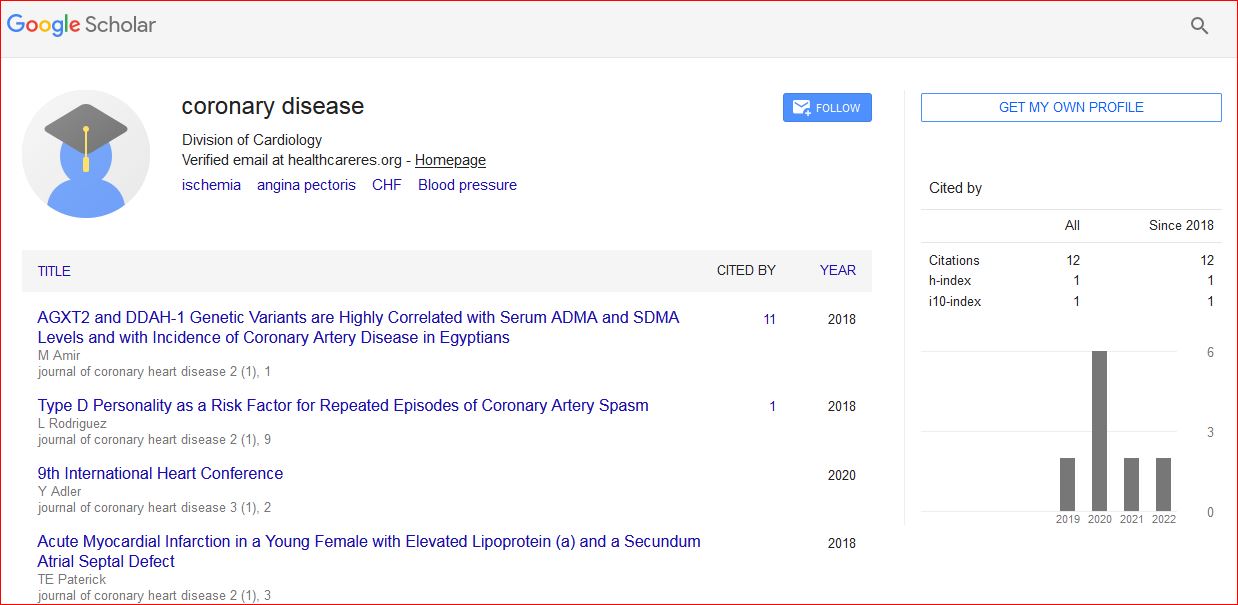
Journal of Coronary Heart Diseases received 15 citations as per Google Scholar report