Perspective - (127) Volume 13, Issue 5
Received: 01-Oct-2025, Manuscript No. JGPR-26-190229;
Editor assigned: 03-Oct-2025, Pre QC No. P-190229;
Reviewed: 17-Oct-2025, QC No. Q-190229;
Revised: 22-Oct-2025, Manuscript No. R-190229;
Published:
29-Oct-2025
, DOI: 10.37421/2329-9126.2025.13.639
Citation: Laurent, Sophie. ”Comprehensive Approach for Patient Treatment Adherence.” J Gen Pract 13 (2025):639.
Copyright: © 2025 Laurent S. This is an open-access article distributed under the terms of the Creative Commons Attribution License, which permits unrestricted use, distribution and reproduction in any medium, provided the original author and source are credited.
Improving patient adherence to treatment in primary care is a critical endeavor for achieving optimal health outcomes. This multifaceted challenge necessitates a comprehensive strategy that addresses a spectrum of influences, ranging from individual patient characteristics to systemic support structures. By understanding and intervening in these various domains, healthcare providers can foster greater patient engagement with prescribed therapies. The following sections will delve into specific strategies and considerations for enhancing medication adherence within primary care settings, drawing upon current research and clinical insights. This involves a multifaceted approach addressing patient-related factors knowledge beliefs motivation healthcare provider communication and shared decision-making and the healthcare systems support mechanisms [1].
Strategies include simplifying medication regimens utilizing motivational interviewing enhancing patient education through accessible materials and leveraging technology for reminders and follow-up. Successful interventions often involve a collaborative effort between patients and primary care teams to overcome barriers and foster long-term engagement with prescribed therapies [1].
Shared decision-making SDM plays a pivotal role in enhancing patient adherence within primary care settings. By actively involving patients in treatment choices healthcare providers can increase patient understanding of their condition and the rationale behind the prescribed regimen thereby boosting motivation and commitment [2].
Training primary care physicians in SDM techniques and developing patient-friendly decision aids are key to its effective implementation [2].
Motivational interviewing MI is a potent therapeutic approach for addressing adherence challenges in primary care. This client-centered directive method helps patients explore and resolve ambivalence towards health behaviors including medication-taking [3].
Its application in chronic disease management has shown promising results in improving adherence rates by fostering intrinsic motivation for change [3].
Simplifying medication regimens often referred to as pill burden reduction is a practical strategy to combat non-adherence in primary care. This includes reducing the number of daily doses consolidating medications with similar actions and exploring alternative formulations like extended-release preparations [4].
Patient feedback on the feasibility of their regimen is essential for successful simplification [4].
Digital health interventions such as mobile apps and text messaging offer promising avenues for improving treatment adherence in primary care. These tools can provide medication reminders educational content and facilitate communication between patients and their providers thereby supporting consistent engagement with treatment plans [5].
Tailoring these interventions to individual patient needs and preferences is key to their effectiveness [5].
Patient education is a cornerstone of adherence improvement in primary care. Providing clear concise and culturally appropriate information about their condition treatment options and potential side effects empowers patients to actively participate in their care [6].
Utilizing a variety of educational formats including visual aids and interactive tools can cater to diverse learning styles [6].
Understanding and addressing patient beliefs and attitudes towards illness and treatment is vital for improving adherence in primary care. Perceived barriers such as side effects cost or complexity coupled with beliefs about treatment necessity or effectiveness significantly influence patient behavior [7].
Exploratory conversations to uncover these beliefs are essential for tailoring adherence support [7].
The primary care setting offers a unique opportunity to build strong patient-provider relationships which are fundamental to fostering adherence. Trust empathy and consistent communication create an environment where patients feel comfortable discussing challenges and concerns related to their treatment [8].
Regular follow-up appointments and proactive outreach can further strengthen this therapeutic alliance [8].
Addressing socioeconomic determinants of health is crucial for improving treatment adherence in primary care particularly for vulnerable populations. Factors such as income education access to transportation and social support networks can significantly impact a patients ability to adhere to treatment plans [9].
Integrated care models that address these social needs alongside medical treatment are essential [9].
Pharmacy interventions within primary care such as medication therapy management MTM can significantly enhance patient adherence. Pharmacists play a key role in medication reconciliation patient education and identifying and resolving medication-related problems [10].
Collaborative practice agreements between physicians and pharmacists can optimize the delivery of MTM services leading to improved adherence and better health outcomes [10].
Optimizing patient adherence to prescribed treatment regimens within the primary care landscape is paramount for achieving desired clinical outcomes and improving overall patient well-being. A holistic approach is required, acknowledging the interplay of patient-specific factors, healthcare provider interactions, and the broader healthcare system's infrastructure. Strategies to enhance adherence are diverse, encompassing modifications to medication schedules, the application of therapeutic communication techniques, and the strategic use of technological aids. The success of these interventions hinges on the synergistic collaboration between patients and their primary care teams. Strategies include simplifying medication regimens, utilizing motivational interviewing, enhancing patient education through accessible materials, and leveraging technology for reminders and follow-up. Successful interventions often involve a collaborative effort between patients and primary care teams to overcome barriers and foster long-term engagement with prescribed therapies [1].
Shared decision-making (SDM) is recognized as a cornerstone in bolstering patient adherence within primary care. By empowering patients to participate actively in therapeutic choices, clinicians can deepen patient comprehension of their health status and the rationale behind treatment plans, thereby cultivating enhanced motivation and commitment. Training primary care physicians in SDM methodologies and the development of patient-centric decision support tools are fundamental for its successful integration [2].
Motivational interviewing (MI), a client-centered and directive therapeutic modality, offers a powerful means to address adherence-related obstacles in primary care. This technique aids patients in exploring and resolving ambivalence concerning health behaviors, including consistent medication intake, and has demonstrated considerable promise in improving adherence rates for chronic disease management by fostering intrinsic motivation [3].
Reducing the complexity of medication regimens, often termed 'pill burden reduction,' presents a pragmatic strategy for mitigating non-adherence in primary care settings. This involves streamlining the frequency of dosing, combining medications with similar pharmacological actions, and considering alternative delivery forms such as extended-release formulations [4].
Crucially, obtaining patient input on the practicality of their prescribed regimen is indispensable for successful simplification efforts [4].
Digital health interventions, encompassing mobile applications and text messaging services, represent an evolving frontier in enhancing treatment adherence within primary care. These technological solutions can deliver timely medication reminders, provide valuable educational content, and facilitate improved communication channels between patients and providers, thereby promoting sustained engagement with therapeutic plans [5].
A critical element for the efficacy of these digital tools is their customization to meet the unique needs and preferences of individual patients [5].
Effective patient education serves as a foundational pillar for enhancing treatment adherence in primary care. Furnishing patients with clear, understandable, and culturally relevant information regarding their condition, available treatment alternatives, and potential adverse effects equips them to become active participants in their own healthcare journey [6].
The strategic deployment of varied educational formats, including visual aids and interactive learning tools, can effectively accommodate a wide range of learning styles [6].
Comprehending and actively addressing patients' beliefs and attitudes towards their illness and prescribed treatments are vital for improving adherence in primary care. Patient perceptions of barriers, such as the occurrence of side effects, financial constraints, or regimen complexity, alongside their beliefs regarding the necessity or efficacy of treatment, profoundly shape their adherence behaviors [7].
Engaging in exploratory dialogue to elicit these underlying beliefs is essential for the development of personalized adherence support strategies [7].
The primary care environment provides a unique context for cultivating robust patient-provider relationships, which are intrinsically linked to fostering adherence. An atmosphere of trust, characterized by empathy and consistent, open communication, enables patients to feel secure in discussing treatment-related challenges and concerns [8].
Regularly scheduled follow-up appointments and proactive patient outreach initiatives can further fortify this vital therapeutic alliance [8].
Addressing the influence of socioeconomic determinants of health is imperative for advancing treatment adherence in primary care, particularly among underserved populations. Factors such as income levels, educational attainment, access to reliable transportation, and the availability of social support networks can substantially influence a patient's capacity to adhere to their treatment plans [9].
The implementation of integrated care models that address these social determinants in conjunction with medical management is paramount [9].
Pharmacy-led interventions within primary care, exemplified by Medication Therapy Management (MTM) services, hold significant potential for enhancing patient adherence. Pharmacists are instrumental in performing medication reconciliation, delivering patient education, and identifying and resolving medication-related issues [10].
The establishment of collaborative practice agreements between physicians and pharmacists can effectively optimize the provision of MTM services, ultimately contributing to improved adherence rates and superior health outcomes [10].
Improving patient adherence to treatment in primary care requires a comprehensive approach addressing patient factors, provider communication, and system support. Key strategies include simplifying medication regimens, employing motivational interviewing and shared decision-making to boost patient engagement and understanding. Effective patient education, utilizing diverse formats, empowers individuals to participate actively in their care. Digital health tools offer reminders and support, while understanding patient beliefs about illness and treatment is crucial for tailored interventions. Strong patient-provider relationships built on trust and empathy foster adherence. Addressing socioeconomic determinants of health and leveraging pharmacy interventions like Medication Therapy Management are also vital for successful outcomes. Collaborative efforts between patients and primary care teams are essential for overcoming barriers and ensuring long-term treatment engagement.
None
None
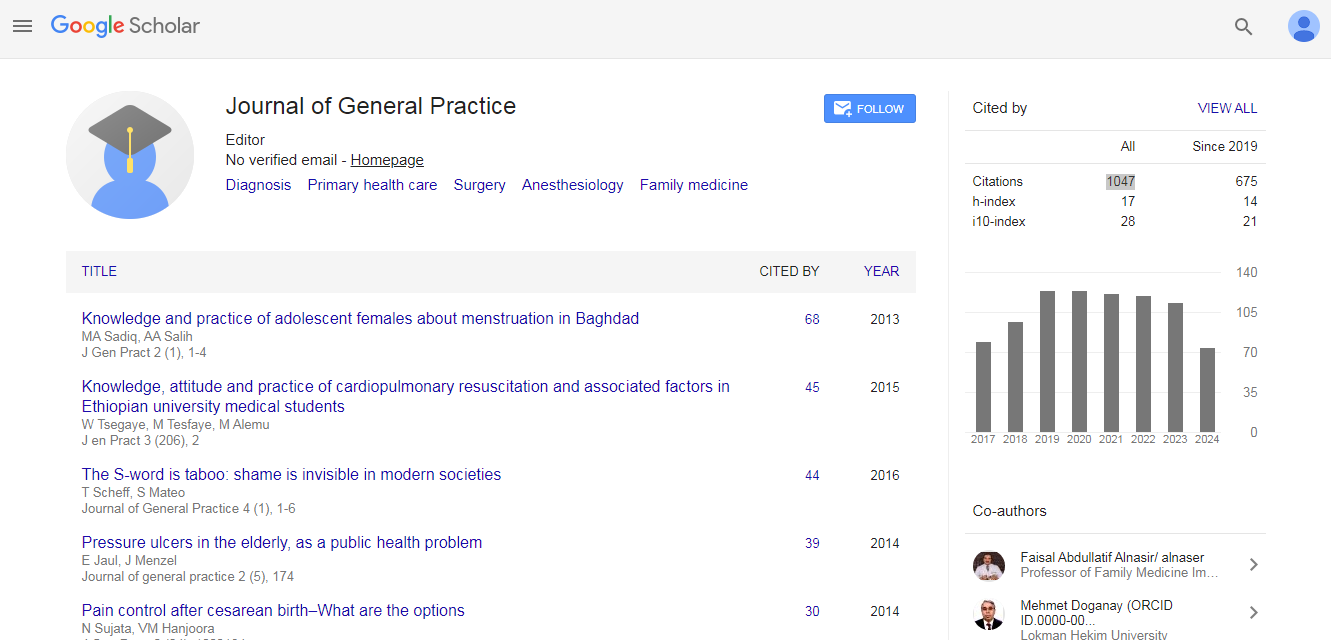
Journal of General Practice received 1047 citations as per Google Scholar report