Brief Report - (2025) Volume 14, Issue 4
Received: 01-Jul-2025, Manuscript No. aim-25-177760;
Editor assigned: 03-Jul-2025, Pre QC No. P-177760;
Reviewed: 17-Jul-2025, QC No. Q-177760;
Revised: 22-Jul-2025, Manuscript No. R-177760;
Published:
29-Jul-2025
, DOI: 10.37421/2427-5162.2025.14.580
Citation: © 2025 Martinez S. This is an open-access article distributed under the terms of the Creative Commons Attribution License, which permits unrestricted use, distribution and reproduction in any medium, provided the original author and source are credited.
Copyright: Martinez, Sofia. ”Complementary Therapies: Effective for Anxiety and Depression.” Alt Integr Med 14 (2025):580.
This systematic review and meta analysis highlight the significant benefits of mindfulnessbased interventions for older adults dealing with anxiety and depression. Its clear these practices can substantially reduce symptoms suggesting theyre a promising nonpharmacological approach for mental health support in this demographic [1].
This systematic review and meta analysis of recent trials shows that yoga is quite effective for managing anxiety and depression. The findings suggest that incorporating yoga into mental health strategies could offer a valuable complementary approach improving overall well being [2].
Exploring the neurobiological underpinnings this review details how meditationbased interventions impact brain function to alleviate anxiety and depression. Its fascinating to see the scientific evidence for how these practices can rewire the brain offering deeper insights into their therapeutic effects [3].
This overview of systematic reviews reveals that acupuncture can be an effective treatment for anxiety and depression especially when these conditions coexist with other medical issues. It highlights the potential for acupuncture as an integrative therapy offering relief beyond conventional treatments [4].
This systematic review and meta analysis shows Tai Chi is a beneficial intervention for older adults struggling with depression and anxiety. It suggests that this gentle mindbody practice can improve mood and reduce symptoms making it a valuable addition to geriatric mental health care [5].
This narrative review looks at Heart Rate Variability Biofeedback and its application for posttraumatic stress disorder depression and anxiety. It suggests biofeedback techniques can empower individuals to regulate their physiological responses offering a promising avenue for improving mental well being [6].
This systematic review and meta analysis explores the therapeutic potential of art therapy for depression and anxiety. It reveals that engaging in creative expression through art can be an effective way to process emotions and reduce symptoms offering a nonverbal healing modality [7].
This systematic review and meta analysis of randomized controlled trials shows that music therapy can be a powerful tool in alleviating depression and anxiety. The findings suggest that structured musical interventions can significantly improve mood and emotional regulation making it a valuable adjunct therapy [8].
This systematic review and meta analysis investigates the efficacy of mindbody interventions for psychological distress in individuals with chronic diseases. It underscores how these practices can significantly reduce anxiety and depression offering critical support for patients managing longterm health challenges [9].
This systematic review and meta analysis delves into mindbody practices for mental health in adolescents. The research indicates that these practices can effectively support young people in managing anxiety and depression pointing to their potential as valuable accessible tools for youth mental wellness [10].
This systematic review and meta analysis highlight the significant benefits of mindfulnessbased interventions for older adults dealing with anxiety and depression. Its clear these practices can substantially reduce symptoms suggesting theyre a promising nonpharmacological approach for mental health support in this demographic [1]. This systematic review and meta analysis of recent trials shows that yoga is quite effective for managing anxiety and depression. The findings suggest that incorporating yoga into mental health strategies could offer a valuable complementary approach improving overall well being [2]. Exploring the neurobiological underpinnings this review details how meditationbased interventions impact brain function to alleviate anxiety and depression. Its fascinating to see the scientific evidence for how these practices can rewire the brain offering deeper insights into their therapeutic effects [3]. This overview of systematic reviews reveals that acupuncture can be an effective treatment for anxiety and depression especially when these conditions coexist with other medical issues. It highlights the potential for acupuncture as an integrative therapy offering relief beyond conventional treatments [4]. This systematic review and meta analysis shows Tai Chi is a beneficial intervention for older adults struggling with depression and anxiety. It suggests that this gentle mindbody practice can improve mood and reduce symptoms making it a valuable addition to geriatric mental health care [5]. This narrative review looks at Heart Rate Variability Biofeedback and its application for posttraumatic stress disorder depression and anxiety. It suggests biofeedback techniques can empower individuals to regulate their physiological responses offering a promising avenue for improving mental well being [6]. This systematic review and meta analysis explores the therapeutic potential of art therapy for depression and anxiety. It reveals that engaging in creative expression through art can be an effective way to process emotions and reduce symptoms offering a nonverbal healing modality [7]. This systematic review and meta analysis of randomized controlled trials shows that music therapy can be a powerful tool in alleviating depression and anxiety. The findings suggest that structured musical interventions can significantly improve mood and emotional regulation making it a valuable adjunct therapy [8]. This systematic review and meta analysis investigates the efficacy of mindbody interventions for psychological distress in individuals with chronic diseases. It underscores how these practices can significantly reduce anxiety and depression offering critical support for patients managing longterm health challenges [9]. This systematic review and meta analysis delves into mindbody practices for mental health in adolescents. The research indicates that these practices can effectively support young people in managing anxiety and depression pointing to their potential as valuable accessible tools for youth mental wellness [10].
Multiple studies underscore the broad efficacy of various nonpharmacological and complementary therapies in addressing anxiety and depression across diverse populations. Mindfulnessbased interventions for instance significantly reduce symptoms in older adults offering a promising approach to geriatric mental health. Yoga has also been identified as an effective method for managing these conditions suggesting its value in holistic well being strategies. Mechanistically meditationbased interventions demonstrate neurobiological impacts influencing brain function to achieve therapeutic effects. Acupuncture emerges as a viable integrative therapy particularly for anxiety and depression cooccurring with other medical conditions. Similarly Tai Chi provides a gentle yet effective intervention for older adults experiencing mood disturbances. Furthermore Heart Rate Variability Biofeedback empowers individuals to selfregulate physiological responses linked to anxiety and depression including posttraumatic stress disorder. Creative modalities such as art therapy facilitate emotional processing and symptom reduction offering a nonverbal healing pathway. Music therapy through structured interventions significantly improves mood and emotional regulation. Beyond specific demographics mindbody interventions generally prove effective in reducing psychological distress among individuals with chronic diseases and are particularly beneficial for adolescents in managing mental health challenges. Collectively this body of research highlights a diverse array of practices that can serve as valuable complementary or standalone approaches to mental health care.
None
None
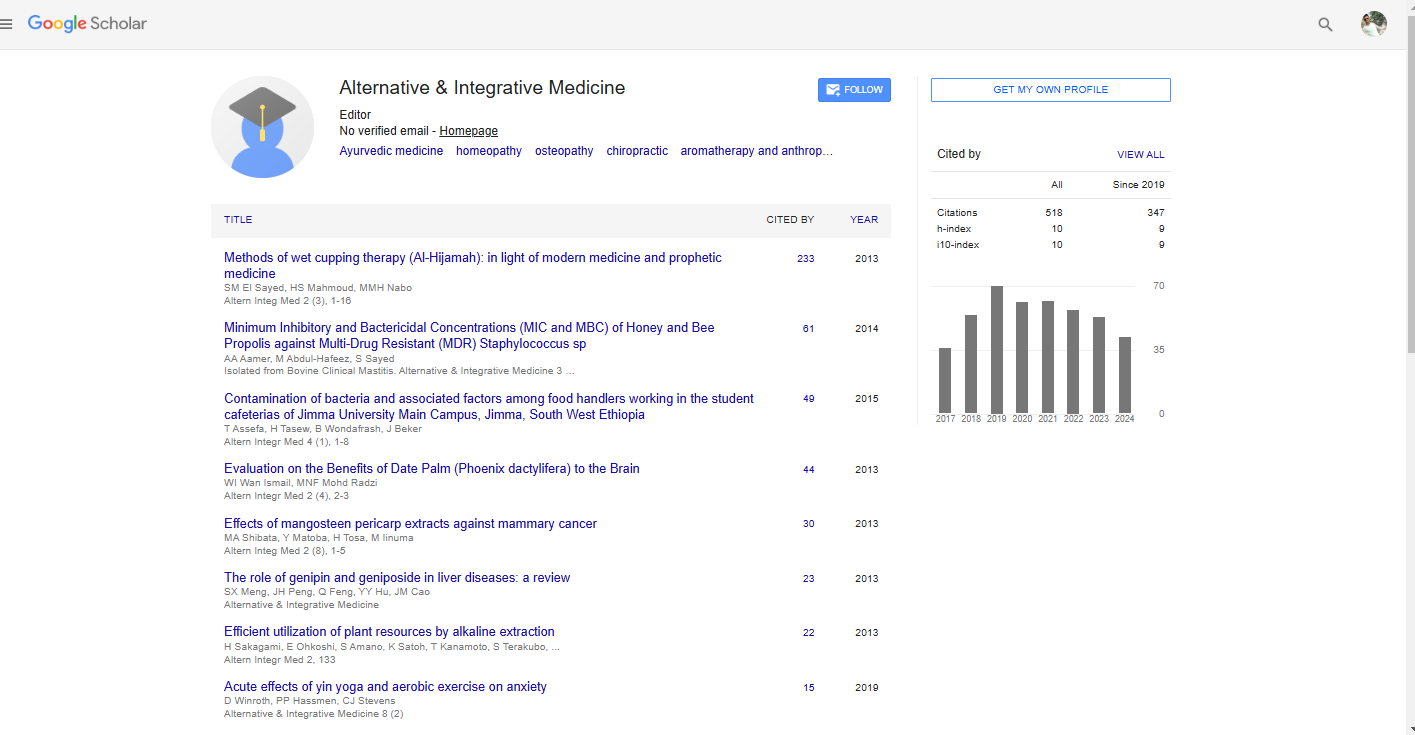
Alternative & Integrative Medicine received 476 citations as per Google Scholar report