Brief Report - (2025) Volume 16, Issue 5
Received: 01-Oct-2025, Manuscript No. jvst-26-188123;
Editor assigned: 03-Oct-2025, Pre QC No. P-188123;
Reviewed: 17-Oct-2025, QC No. Q-188123;
Revised: 22-Oct-2025, Manuscript No. R-188123;
Published:
29-Oct-2025
, DOI: 10.37421/2157-7579.2025.16.318
Citation: Li, Chen. ”Companion Animal Health: Prevention, Detection,
and Owner Education.” J Vet Sci Techno 16 (2025):318.
Copyright: © 2025 Li C. This is an open-access article distributed under the terms of the Creative Commons Attribution License, which permits unrestricted use, distribution
and reproduction in any medium, provided the original author and source are credited.
Preventing infectious diseases in companion animals is a complex endeavor requiring a comprehensive strategy that integrates various preventive measures. A multi-faceted approach is essential, encompassing robust vaccination protocols to stimulate immunity against prevalent pathogens, diligent parasite control to mitigate disease transmission vectors, and stringent hygiene practices to minimize environmental contamination [1].
Vaccination stands as a primary pillar in the prevention of infectious diseases in companion animals, particularly for dogs and cats. Understanding the immunodynamics of different vaccines and strictly adhering to recommended vaccination schedules are critical for establishing adequate protection against common and potentially fatal diseases such as parvovirus, distemper, rabies, and feline leukemia virus [2].
Effective parasite control, addressing both endoparasites (internal) and ectoparasites (external), is fundamentally important for disrupting the transmission cycles of infectious diseases. Regular diagnostic assessments like fecal examinations, coupled with appropriate anthelmintic treatments, are crucial for managing internal parasites, while a variety of topical and systemic parasiticides are necessary for controlling fleas, ticks, and mites, which can act as vectors for serious illnesses [3].
Maintaining high standards of hygiene within the home environment is a significant determinant in reducing the risk of infectious disease transmission between animals and humans. This involves routine cleaning and disinfection of living spaces, feeding areas, and toys, alongside rigorous handwashing protocols after handling pets or their waste to prevent zoonotic disease spread [4].
The increasing prevalence of antimicrobial resistance (AMR) presents a substantial threat to both animal and human health, necessitating a careful approach to antibiotic use. Prudent prescription of antibiotics in companion animals, guided by diagnostic testing and appropriate drug selection, is vital in the fight against AMR, with veterinarians playing a key role in educating owners on judicious use [5].
Zoonotic diseases, which are transmissible between animals and humans, are a critical concern in companion animal practice. It is imperative to cultivate awareness of potential zoonotic pathogens carried by pets, such as Salmonella and E. coli, and to implement comprehensive preventive strategies. Collaboration between veterinarians and pet owners is key to managing these risks and protecting public health [6].
The role of nutrition in bolstering the immune system of companion animals is profoundly important. A balanced diet that is rich in essential vitamins, minerals, and antioxidants can significantly enhance an animal's capacity to fend off infections. Conversely, nutritional deficiencies or imbalances can compromise immune function, rendering animals more vulnerable to disease [7].
Biosecurity measures implemented within veterinary hospitals and animal shelters are of paramount importance for preventing the introduction and subsequent spread of infectious agents. These measures include rigorous disinfection protocols, the isolation of sick animals, the use of appropriate personal protective equipment for staff, and the management of traffic flow within facilities to safeguard all resident and visiting animals [8].
The human-animal bond is profoundly strengthened when pet owners are adequately educated about the health needs of their companions. Providing clear and accessible information on disease prevention, recognizing illness signs, and understanding the necessity of regular veterinary care empowers owners to actively participate in their pet's well-being and contributes to public health by minimizing zoonotic disease risks [9].
Advancements in diagnostic tools are indispensable for the early and accurate identification of infectious agents in companion animals. Modern molecular diagnostics, serological testing, and sophisticated imaging techniques enable timely interventions, thereby preventing disease progression and limiting further transmission within households and broader communities, facilitating effective management of outbreaks [10].
The prevention of infectious diseases in companion animals necessitates a multifaceted strategy that includes robust vaccination protocols, diligent parasite control, and stringent hygiene practices. Early detection and prompt treatment are crucial for minimizing transmission and severity, while owner education on zoonotic risks and responsible pet ownership enhances community health. Biosecurity measures in veterinary clinics and animal shelters are also vital for protecting animal populations [1].
Vaccination remains a cornerstone in the prevention of infectious diseases in dogs and cats. A thorough understanding of vaccine immunodynamics and adherence to recommended schedules are essential for building adequate immunity against prevalent pathogens like parvovirus, distemper, rabies, and feline leukemia virus. Addressing challenges related to vaccination compliance, such as owner education and access to veterinary care, is critical for achieving effective population-level protection [2].
Effective parasite control, encompassing both endoparasites and ectoparasites, is integral to preventing the transmission of infectious diseases. Regular fecal examinations and appropriate anthelmintic treatments are vital for internal parasite management, while topical and systemic parasiticides are essential for controlling fleas, ticks, and mites, which can serve as vectors for serious diseases like Lyme disease and heartworm [3].
Maintaining high standards of hygiene in the home environment significantly reduces the risk of infectious disease transmission to and from companion animals. This includes regular cleaning and disinfection of pet living areas, food and water bowls, and toys, as well as proper handwashing after handling pets or their waste to prevent zoonotic disease spread. Environmental sanitation is a powerful tool in disease prevention [4].
The emergence and spread of antimicrobial resistance (AMR) pose a significant threat to both animal and human health. Judicious use of antibiotics in companion animals, guided by diagnostic testing and appropriate drug selection, is essential to combat AMR. Veterinarians play a critical role in educating owners about the responsible use of antimicrobials and promoting alternatives when available [5].
Zoonotic diseases, transmissible between animals and humans, are a significant area of concern in companion animal practice. Awareness of potential zoonotic pathogens carried by pets is vital, and veterinarians and pet owners must collaborate to implement preventive measures, including hygiene, vaccination, and prompt veterinary care, to protect public health [6].
The role of nutrition in supporting a healthy immune system in companion animals is paramount. A balanced diet rich in essential vitamins, minerals, and antioxidants can enhance an animal's ability to fight off infections. Conversely, malnutrition or imbalanced diets can compromise immune function, making animals more susceptible to disease [7].
Biosecurity measures in veterinary hospitals and animal shelters are crucial to prevent the introduction and spread of infectious agents. These measures include proper disinfection protocols, isolation of sick animals, appropriate personal protective equipment for staff, and controlled traffic flow within the facility. Effective biosecurity protects resident animals and those visiting the premises [8].
The human-animal bond is strengthened when owners are educated about their pets' health needs. Providing clear, accessible information on disease prevention, recognizing signs of illness, and understanding the importance of regular veterinary care empowers owners to be active participants in their pet's well-being and contributes to overall public health by reducing zoonotic disease risks [9].
The development and application of novel diagnostic tools are critical for the early and accurate identification of infectious agents in companion animals. Advances in molecular diagnostics, serology, and imaging allow for timely interventions, preventing disease progression and limiting onward transmission. Rapid diagnostics facilitate effective outbreak management [10].
Preventing infectious diseases in companion animals involves a multi-pronged strategy including vaccinations, parasite control, and hygiene. Early detection and treatment are key to managing infections and minimizing spread. Owner education on zoonotic risks and responsible pet ownership is crucial for community health. Biosecurity in veterinary settings plays a significant role in safeguarding animal populations. Vaccination is fundamental for immunity against common pathogens, requiring adherence to schedules and addressing compliance challenges. Comprehensive parasite control, both internal and external, is essential to prevent disease transmission, as parasites can act as vectors. Proper hygiene at home, including cleaning and handwashing, reduces disease transmission risks. Antimicrobial resistance is a growing concern, emphasizing the prudent use of antibiotics and owner education. Zoonotic disease awareness and collaborative prevention efforts between veterinarians and owners are vital for public health. Nutrition plays a critical role in immune system support, with balanced diets enhancing disease resistance. Biosecurity in veterinary facilities prevents pathogen spread through disinfection and isolation. Owner education empowers them to participate in their pet's health and reduces zoonotic risks. Advanced diagnostic tools are essential for early detection and timely intervention, preventing disease progression and managing outbreaks.
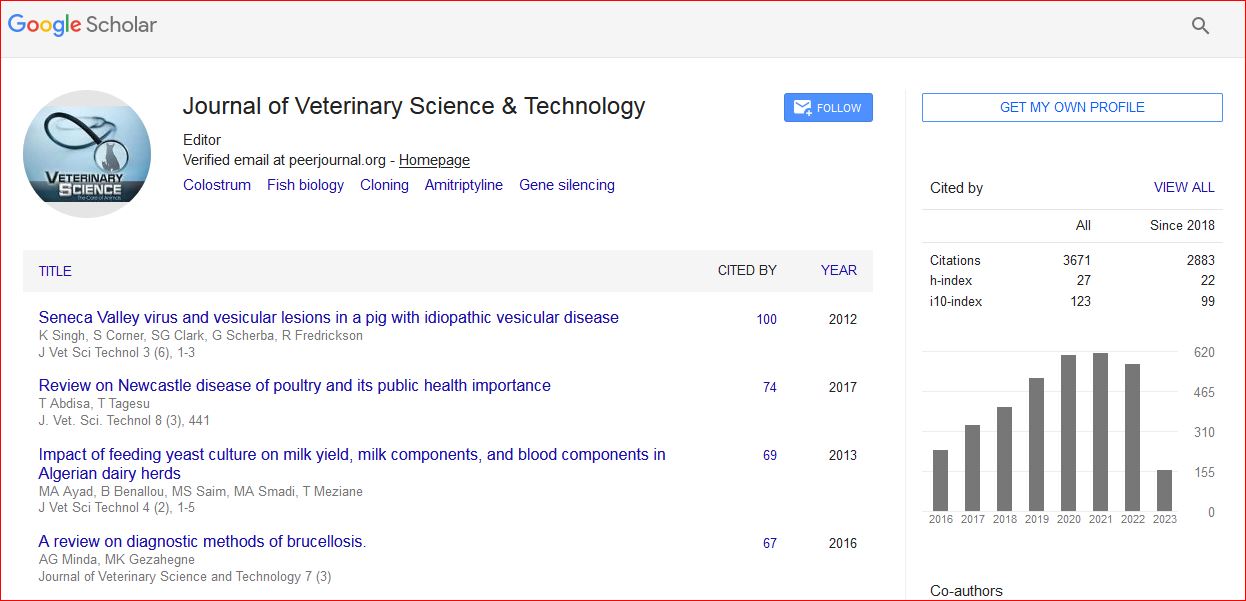
Veterinary Science & Technology received 4472 citations as per Google Scholar report