Perspective - (2025) Volume 14, Issue 6
Received: 02-Nov-2025, Manuscript No. iem-26-179850;
Editor assigned: 04-Nov-2025, Pre QC No. P-179850;
Reviewed: 16-Nov-2025, QC No. Q-179850;
Revised: 23-Nov-2025, Manuscript No. R-179850;
Published:
30-Nov-2025
, DOI: 10.37421/2169- 0316.2025.14.333
Citation: Ivanov, Viktor. âCombating Employee Fatigue For Peak Productivity And Well-being.â J Ind Eng Manag 14 (2025):333.
Copyright: © 2025 Ivanov V. This is an open-access article distributed under the terms of the Creative Commons Attribution License, which permits unrestricted use, distribution and reproduction in any medium, provided the original author and source are credited.
This article delves into the multifaceted issue of employee fatigue, a significant drain on organizational productivity. It highlights how modern work environments, characterized by long hours, high cognitive load, and demanding deadlines, contribute to chronic tiredness. The research emphasizes the importance of proactive strategies, including optimizing work schedules, promoting regular breaks, and fostering a culture that values well-being. It also touches upon the role of individual factors like sleep hygiene and stress management in mitigating fatigue. Ultimately, the piece underscores that addressing fatigue is not just about employee comfort but is a critical element for sustained high performance and innovation [1].
This study explores the relationship between sleep quality, occupational stress, and cognitive function in employees. It provides evidence that poor sleep significantly impairs attention, memory, and decision-making, directly affecting productivity. The findings suggest that interventions aimed at improving sleep hygiene, such as education on sleep routines and stress reduction techniques, can be highly effective. The article advocates for workplace policies that support healthy sleep patterns, recognizing this as a key driver of employee efficiency and error reduction [2].
This paper examines the impact of physical activity and sedentary behavior on employee energy levels and productivity. It demonstrates that regular exercise can significantly combat fatigue and enhance cognitive function. Conversely, prolonged sitting is linked to reduced alertness and increased susceptibility to fatigue. The research supports the implementation of workplace wellness programs that encourage physical activity, such as standing desks, exercise breaks, and access to fitness facilities, as a means to boost employee vitality and output [3].
The study investigates the role of work design in mitigating employee fatigue and improving performance. It suggests that job autonomy, task variety, and manageable workloads are crucial for preventing burnout and maintaining high productivity. The authors propose that organizations should focus on creating jobs that are engaging and challenging, while also ensuring that employees have the resources and support needed to perform their tasks effectively. This approach not only reduces fatigue but also fosters job satisfaction and commitment [4].
This research explores the influence of workplace environment, including lighting, noise, and temperature, on employee fatigue and productivity. It found that suboptimal environmental conditions can lead to increased stress, reduced concentration, and higher fatigue levels. The article recommends creating ergonomically sound and comfortable workspaces that minimize distractions and promote well-being. Adjustments in these areas can have a direct, positive impact on an employee's ability to focus and perform efficiently [5].
This article examines the effectiveness of mindfulness-based interventions in reducing employee stress and fatigue, leading to improved productivity. It details how mindfulness practices can enhance emotional regulation, focus, and resilience, enabling employees to better cope with workplace demands. The study suggests that integrating mindfulness training into organizational wellness programs can yield significant benefits in terms of employee well-being and work performance. This approach addresses both the symptoms and root causes of fatigue [6].
This paper focuses on the detrimental effects of excessive screen time and digital overload on cognitive fatigue and productivity. It outlines how constant connectivity and information bombardment lead to mental exhaustion, reduced attention spans, and increased errors. The article advocates for strategies like digital detox periods, mindful technology use, and setting boundaries to manage digital fatigue. Implementing these can restore mental energy and enhance an employee's capacity for deep work [7].
This research investigates the impact of effective leadership styles on employee well-being and productivity, particularly in relation to fatigue management. It highlights how supportive, transformational leadership can foster a positive work environment, reduce stress, and empower employees, thereby mitigating fatigue. The study emphasizes that leaders play a crucial role in setting expectations, providing resources, and recognizing employee efforts, all of which contribute to sustained productivity and reduced burnout [8].
This article examines the influence of organizational culture on employee fatigue and productivity. It argues that cultures that prioritize excessive overtime, ignore work-life balance, or foster a high-pressure environment contribute significantly to chronic fatigue. Conversely, supportive cultures that promote well-being, offer flexibility, and encourage open communication can help reduce fatigue and boost performance. The research underscores the need for a systemic approach to culture change to foster a more sustainable and productive workforce [9].
This study investigates the impact of nutrition and hydration on employee energy levels and cognitive function. It demonstrates that a balanced diet and adequate fluid intake are essential for maintaining alertness and preventing fatigue. The research highlights how poor nutritional choices and dehydration can lead to decreased concentration, reduced productivity, and increased errors. The article recommends promoting healthy eating habits and ensuring access to clean drinking water in the workplace as simple yet effective strategies to enhance employee performance [10].
The multifaceted issue of employee fatigue significantly impacts organizational productivity, with modern work environments often characterized by long hours and high cognitive loads contributing to chronic tiredness. Proactive strategies such as optimizing work schedules, promoting regular breaks, and fostering a culture that values well-being are crucial. Individual factors like sleep hygiene and stress management also play a vital role in mitigating fatigue, underscoring its critical importance for sustained high performance and innovation [1].
The relationship between sleep quality, occupational stress, and cognitive function is explored, providing evidence that poor sleep impairs attention, memory, and decision-making, thus affecting productivity. Interventions focused on improving sleep hygiene and stress reduction techniques are suggested to be highly effective. The adoption of workplace policies that support healthy sleep patterns is advocated as a key driver for enhanced employee efficiency and reduced errors [2].
The influence of physical activity and sedentary behavior on employee energy levels and productivity is examined. Regular exercise is shown to combat fatigue and improve cognitive function, while prolonged sitting leads to reduced alertness and increased fatigue. The implementation of workplace wellness programs encouraging physical activity, such as standing desks and exercise breaks, is recommended to boost employee vitality and output [3].
Work design is investigated for its role in mitigating employee fatigue and improving performance. Job autonomy, task variety, and manageable workloads are identified as crucial for preventing burnout and maintaining productivity. Organizations are encouraged to create engaging and challenging jobs, providing necessary resources and support to effectively perform tasks, thereby reducing fatigue and fostering job satisfaction [4].
The impact of the physical work environment, including lighting, noise, and temperature, on employee fatigue and productivity is explored. Suboptimal environmental conditions are linked to increased stress, reduced concentration, and higher fatigue levels. Creating ergonomically sound and comfortable workspaces that minimize distractions is recommended to positively influence employee focus and performance efficiency [5].
Mindfulness-based interventions are examined for their effectiveness in reducing employee stress and fatigue, leading to improved productivity. These practices enhance emotional regulation, focus, and resilience, enabling employees to better cope with workplace demands. Integrating mindfulness training into organizational wellness programs can yield significant benefits for employee well-being and work performance, addressing both symptoms and root causes of fatigue [6].
The detrimental effects of excessive screen time and digital overload on cognitive fatigue and productivity are discussed. Constant connectivity and information bombardment contribute to mental exhaustion, reduced attention spans, and increased errors. Strategies like digital detox periods, mindful technology use, and setting boundaries are advocated to manage digital fatigue and restore mental energy for deep work [7].
Effective leadership styles are investigated for their impact on employee well-being and productivity, especially concerning fatigue management. Supportive, transformational leadership fosters a positive work environment, reduces stress, and empowers employees, thereby mitigating fatigue. Leaders play a crucial role in setting expectations, providing resources, and recognizing efforts, all of which contribute to sustained productivity and reduced burnout [8].
Organizational culture's influence on employee fatigue and productivity is examined. Cultures prioritizing excessive overtime, ignoring work-life balance, or fostering high-pressure environments contribute significantly to chronic fatigue. Conversely, supportive cultures promoting well-being, flexibility, and open communication can reduce fatigue and boost performance, necessitating systemic culture change for sustainability [9].
The impact of nutrition and hydration on employee energy levels and cognitive function is investigated. A balanced diet and adequate fluid intake are essential for alertness and preventing fatigue. Poor nutritional choices and dehydration lead to decreased concentration, reduced productivity, and increased errors. Promoting healthy eating habits and ensuring access to clean drinking water are recommended as effective strategies to enhance employee performance [10].
Employee fatigue significantly impacts productivity, stemming from modern work environments, poor sleep, sedentary lifestyles, and job design. Factors such as physical workspace conditions, digital overload, and leadership styles also contribute to or alleviate fatigue. Organizational culture plays a crucial role in either exacerbating or mitigating fatigue through its approach to work-life balance and employee well-being. Mindfulness interventions and proactive strategies like optimizing schedules, promoting breaks, and encouraging physical activity are presented as effective solutions. Furthermore, proper nutrition and hydration are highlighted as essential for maintaining energy levels and cognitive function. Addressing these interconnected factors is key to fostering a more productive and healthy workforce.
None
None
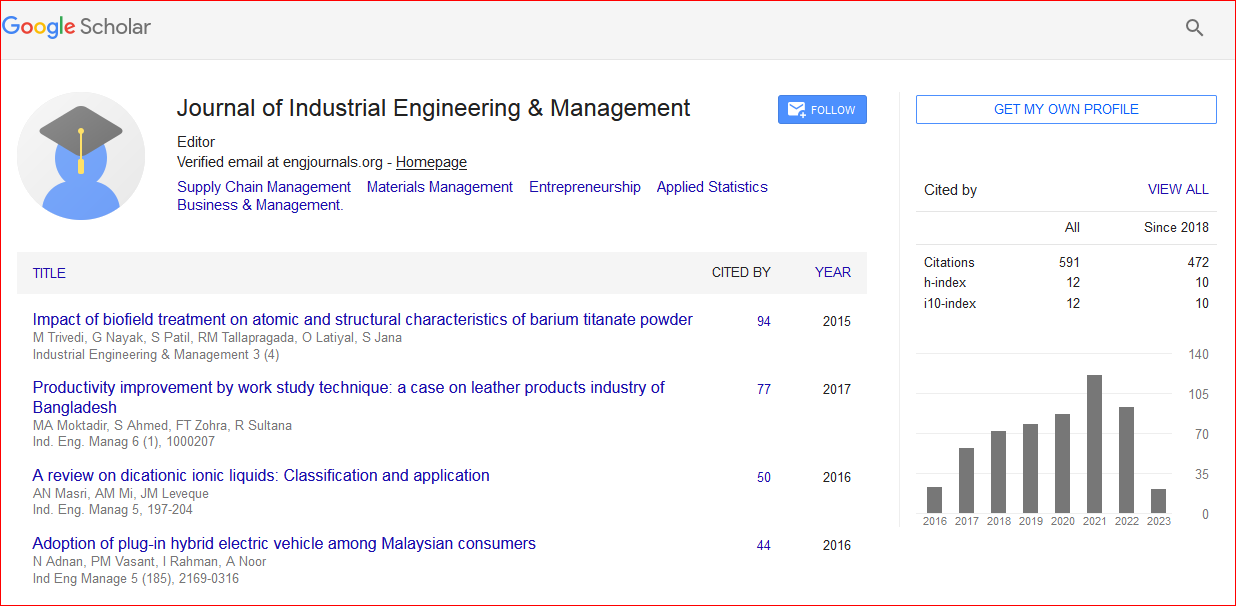
Industrial Engineering & Management received 739 citations as per Google Scholar report