Commentary - (2025) Volume 11, Issue 4
Received: 01-Aug-2025, Manuscript No. cdp-26-185468;
Editor assigned: 04-Aug-2025, Pre QC No. P-185468;
Reviewed: 18-Aug-2025, QC No. Q-185468;
Revised: 24-Aug-2025, Manuscript No. R-185468;
Published:
29-Aug-2025
, DOI: 10.37421/2572-0791.2025.11.187
Citation: El-Sayed, Noura. ”Combating Depression Stigma: A Multi-Pronged Approach.” Clin Depress 11 (2025):187.
Copyright: © 2025 El-Sayed N. This is an open-access article distributed under the terms of the Creative Commons Attribution License, which permits unrestricted use, distribution and reproduction in any medium, provided the original author and source are credited.
The pervasive nature of stigma surrounding clinical depression presents a significant and persistent challenge, negatively impacting individuals' willingness to seek help and their subsequent recovery processes. Addressing this deeply ingrained issue necessitates comprehensive strategies that encompass public education initiatives, responsible media representation, and impactful policy reforms to cultivate a more understanding and supportive societal environment. The overarching consensus is that dismantling the multifaceted stigma associated with depression requires a concerted effort targeting individual attitudes, established societal norms, and systemic barriers that perpetuate discrimination and misunderstanding. Recognizing these challenges, various research efforts have been dedicated to understanding and mitigating the effects of depression stigma. One critical aspect explored is the profound influence of media portrayals on public perception. Biased or sensationalized depictions can inadvertently reinforce negative stereotypes, thereby exacerbating the problem and hindering efforts toward destigmatization. Conversely, accurate and empathetic media narratives have been shown to play a crucial role in fostering greater understanding and reducing the discrimination faced by individuals with depression. In clinical settings, structured psychoeducational programs delivered by healthcare professionals have demonstrated effectiveness in enhancing patient and family comprehension of depression. This improved understanding can lead to a significant reduction in self-stigma and a marked improvement in treatment adherence, highlighting the importance of accessible educational resources. The societal ramifications of depression stigma are extensive, contributing to social exclusion, discrimination in employment, and a reluctance to seek essential professional help. These findings underscore the urgent requirement for public awareness campaigns designed to promote empathy and actively challenge pervasive misconceptions surrounding mental illness. Furthermore, it is crucial to acknowledge that stigma often manifests differently across various cultural groups. Research indicates that culturally sensitive anti-stigma programs are vital, as they must acknowledge and address specific cultural beliefs and practices to achieve greater effectiveness and resonance within diverse communities. The power of lived experience and personal narratives in reducing depression stigma cannot be overstated. Sharing individual journeys of living with depression can humanize the illness, foster empathy, and effectively challenge prejudiced attitudes held by both the general public and within healthcare systems. Policy plays an indispensable role in combating depression stigma. Legislative changes are necessary to protect individuals with depression from discrimination and to ensure equitable access to crucial mental healthcare services, thereby facilitating systemic change and promoting long-term destigmatization efforts. Understanding the intricate link between depression stigma and help-seeking behaviors reveals that stigma is a primary barrier preventing individuals from accessing much-needed treatment. Therefore, interventions focused on reducing perceived stigma are essential for increasing the uptake and utilization of mental health services. Finally, a paradigm shift in how depression is perceived is urgently needed, moving away from viewing it as a moral failing towards recognizing it as a treatable health condition. Integrating mental health care into primary care settings and promoting early detection are key steps in reducing the long-term consequences of untreated depression and its associated stigma.
The pervasive stigma surrounding clinical depression significantly impedes help-seeking behaviors and recovery, necessitating comprehensive strategies that include public education, media representation, and policy changes to foster a more supportive environment. Dismantling this stigma requires a multi-faceted approach targeting individual attitudes, societal norms, and systemic barriers [1].
The role of media in shaping public perception of depression is a critical area of focus; biased or sensationalized portrayals can reinforce negative stereotypes, whereas accurate and empathetic narratives can significantly contribute to destigmatization efforts and reduce discrimination [2].
Within clinical settings, structured psychoeducational programs delivered by healthcare professionals have proven effective in improving patient and family understanding of depression, leading to reduced self-stigma and enhanced treatment adherence [3].
Societal stigma associated with depression contributes to social exclusion, employment discrimination, and reluctance to seek professional help, emphasizing the urgent need for public awareness campaigns that promote empathy and challenge misconceptions about mental illness [4].
Cultural variations in depression stigma necessitate culturally sensitive anti-stigma programs that acknowledge and address specific cultural beliefs and practices to improve their effectiveness within diverse populations [5].
Personal narratives and peer support are powerful tools for stigma reduction; sharing lived experiences of depression humanizes the illness, fosters empathy, and challenges prejudiced attitudes among the public and within healthcare systems [6].
Policy frameworks are crucial for combating depression stigma and promoting mental health equity. Legislative changes can protect individuals with depression from discrimination and ensure equitable access to mental healthcare services, facilitating systemic change and long-term destigmatization [7].
Stigma acts as a primary barrier to help-seeking for depression, and interventions aimed at reducing perceived stigma are essential for increasing the uptake of mental health services [8].
Qualitative explorations of lived experiences reveal themes of shame, isolation, and fear of judgment among individuals encountering stigma daily, underscoring the profound personal impact of societal attitudes and the need for more compassionate responses [9].
A paradigm shift is needed to perceive depression not as a moral failing but as a treatable health condition, integrating mental health into primary care and promoting early detection to mitigate long-term consequences and associated stigma [10].
Depression stigma significantly hinders help-seeking and recovery, requiring a multi-pronged approach involving public education, media responsibility, and policy reform. Media portrayals critically influence public perception, with accurate narratives aiding destigmatization. Psychoeducational programs in clinical settings improve understanding and treatment adherence. Societal stigma leads to exclusion and employment discrimination, necessitating empathy-driven awareness campaigns. Culturally sensitive interventions are vital due to variations in stigma across communities. Lived experiences and peer support humanize the illness and challenge prejudice. Policy changes are essential for anti-discrimination and equitable access to care. Stigma remains a major barrier to treatment, highlighting the need for interventions to reduce perceived stigma. Personal experiences of stigma reveal profound impacts of shame and isolation. A shift in perspective, viewing depression as a treatable illness rather than a moral failing, is crucial, supported by integration into primary care and early detection.
None
None
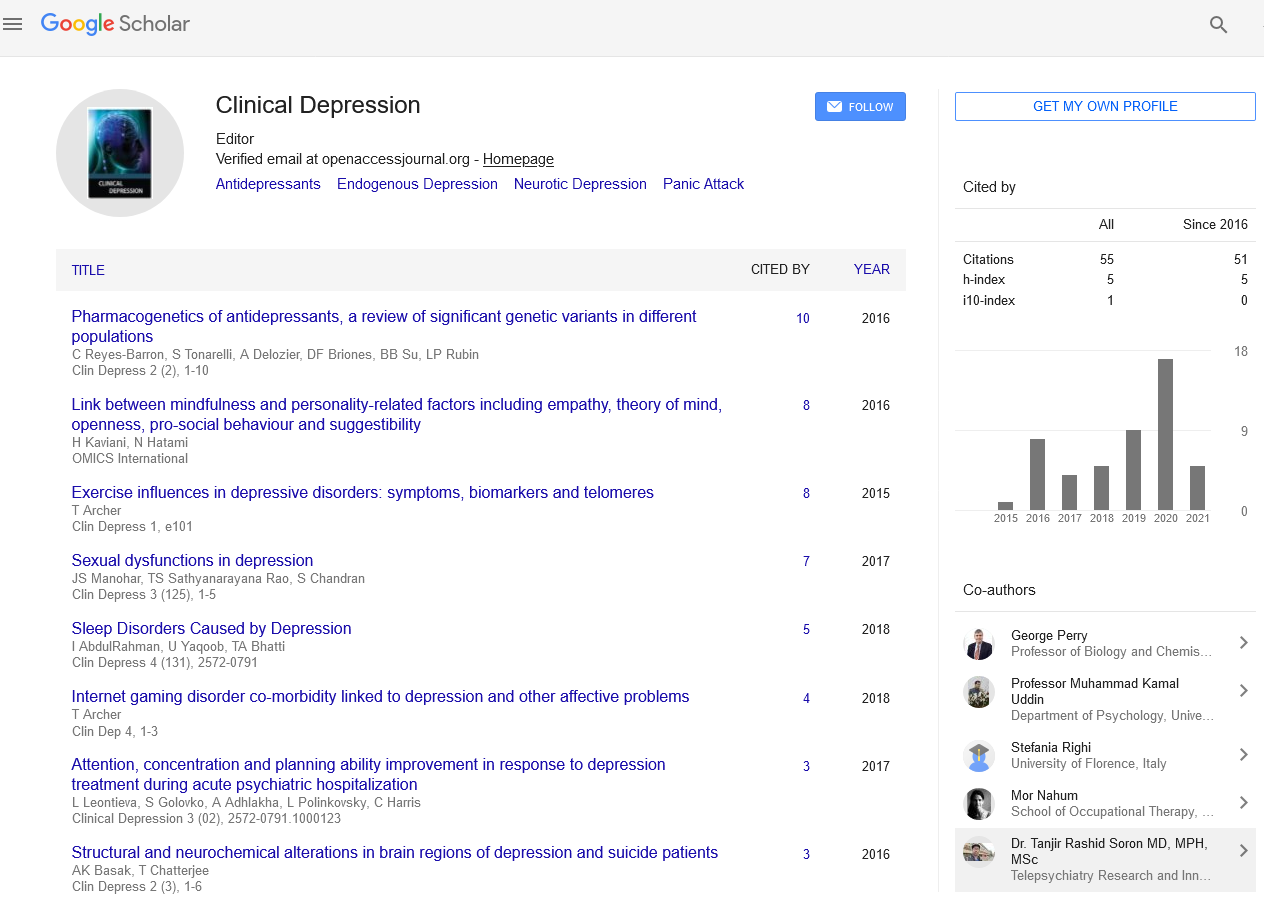
Clinical Depression received 89 citations as per Google Scholar report