Brief Report - (2025) Volume 10, Issue 3
Received: 01-May-2025, Manuscript No. JPNM-26-185779;
Editor assigned: 03-May-2025, Pre QC No. P-185779;
Reviewed: 19-May-2025, QC No. Q-185779;
Revised: 22-May-2025, Manuscript No. R-185779;
Published:
29-May-2025
, DOI: 10.37421/2472-100X.2025.10.343
Citation: Moreau, Daniel. "Childhood Seizure Disorders: Diagnosis and Comprehensive Care." J Pediatr Neurol Med 10 (2025):343.
Copyright: © 2025 Moreau D. This is an open-access article distributed under the terms of the Creative Commons Attribution License, which permits unrestricted use, distribution and reproduction in any medium, provided the original author and source are credited.
Seizure disorders in children represent a complex group of neurological conditions defined by recurrent, unprovoked seizures. These conditions stem from a variety of underlying causes, making a comprehensive understanding essential for effective management. Genetic factors play a significant role, with numerous genes identified that are associated with different epilepsy syndromes. These genetic insights are increasingly guiding more precise prognoses and personalized treatment strategies, including the selection of antiepileptic medications based on specific genetic subtypes [1].
Structural abnormalities within the brain also frequently contribute to focal epilepsy in pediatric populations. Conditions such as cortical dysplasia and hippocampal sclerosis are often detected through advanced neuroimaging techniques like high-resolution MRI. In cases where epilepsy originates from a resectable lesion, surgical intervention can be a highly effective option for reducing or eliminating seizures, potentially improving cognitive function and overall quality of life [2].
Metabolic disorders, particularly inborn errors of metabolism, can manifest as seizures in infants and children. Early detection and prompt intervention are critical to prevent potentially irreversible neurological damage. Screening programs and specialized biochemical tests are vital for identifying these treatable conditions, which encompass a wide spectrum from aminoacidopathies to mitochondrial disorders [3].
Infectious agents can also precipitate seizures in children, with conditions like meningitis and encephalitis being prominent examples. Prompt diagnosis and the timely administration of appropriate antimicrobial or antiviral therapies are paramount in managing these cases. The potential for long-term neurological sequelae underscores the importance of effective management and consistent follow-up care [4].
Beyond these direct etiologies, the broader impact of epilepsy on a child's development is substantial. The condition can profoundly affect cognitive, behavioral, and social development. Therefore, comprehensive management extends beyond seizure control to include vital educational support, psychological well-being, and robust family support systems to optimize overall outcomes [5].
In response to the challenges posed by epilepsy, various treatment modalities have been developed and refined. Antiepileptic medications remain a cornerstone of treatment, with ongoing advances in drug development offering new therapeutic options. Understanding the pharmacokinetic and pharmacodynamic profiles of these agents, along with their potential interactions and side effects, is crucial for safe and effective prescribing in pediatric practice [6].
Dietary therapies, such as the ketogenic diet and its modified versions, have also emerged as valuable adjunctive treatments for children with drug-resistant epilepsy. These diets induce ketosis, a metabolic state believed to possess anticonvulsant properties. However, careful monitoring and nutritional support are indispensable to ensure adherence and manage any potential side effects [7].
For children with intractable focal epilepsy, surgical intervention represents a significant avenue for achieving seizure control and enhancing neurodevelopmental outcomes, provided a resectable epileptogenic zone can be identified. Continuous advancements in surgical techniques, including minimally invasive procedures and neuromodulation, are constantly expanding the available treatment options [8].
Febrile seizures, while common in young children, are typically benign. Nevertheless, prolonged or complex presentations necessitate further investigation to rule out underlying epilepsy or other serious conditions. Educating parents about risk factors for recurrence and potential long-term consequences is an essential component of care [9].
In summary, the landscape of seizure disorders in children is multifaceted, involving a diverse range of causes, varied clinical presentations, and a spectrum of treatment approaches. A holistic and individualized strategy, encompassing medical, dietary, and sometimes surgical interventions, alongside crucial psychosocial support, is essential for maximizing the well-being and developmental trajectory of affected children [10].
Seizure disorders in children encompass a wide spectrum of neurological conditions characterized by recurrent, unprovoked seizures, necessitating a thorough understanding of their diverse etiologies for accurate diagnosis and effective management. Genetic factors are increasingly recognized as significant contributors to childhood epilepsy, with ongoing advancements in genetic testing identifying numerous genes linked to various epilepsy syndromes. This genetic knowledge is instrumental in enabling more precise prognostication and facilitating personalized treatment approaches, including the guided selection of antiepileptic drugs based on specific genetic subtypes [1].
Structural brain abnormalities represent another common cause of focal epilepsy in children. Lesions such as cortical dysplasia and hippocampal sclerosis are routinely identified using sophisticated neuroimaging techniques, particularly high-resolution magnetic resonance imaging (MRI). For cases of intractable focal epilepsy originating from a surgically resectable lesion, epilepsy surgery can lead to substantial seizure reduction or even complete remission, with positive impacts on cognitive function and overall quality of life [2].
Metabolic disorders, including a range of inborn errors of metabolism, can present with seizures in infancy and childhood. The critical importance of early diagnosis and prompt intervention cannot be overstated, as it is essential for preventing irreversible neurological damage. Comprehensive screening programs and targeted biochemical tests are vital for the identification of these treatable conditions, which span from aminoacidopathies to complex mitochondrial disorders [3].
Infectious causes are also significant contributors to seizures in pediatric populations. Conditions such as meningitis, encephalitis, and even febrile seizures can trigger seizure activity. Prompt recognition of these infections and the appropriate initiation of antimicrobial or antiviral treatments are paramount. The potential for long-term neurological sequelae following such infections highlights the critical need for effective management and diligent follow-up care [4].
Beyond the direct biological causes, the profound impact of epilepsy on a child's overall development warrants careful consideration. The condition can significantly affect cognitive abilities, behavioral patterns, and social integration. Therefore, comprehensive management strategies must extend beyond mere seizure control to encompass essential educational support, psychological well-being, and adequate family support to optimize developmental trajectories and improve life outcomes [5].
Treatment for pediatric seizure disorders involves a multifaceted approach. Antiepileptic drug (AED) therapy remains a primary modality, with continuous advancements in AED development providing new therapeutic avenues. A thorough understanding of the pharmacokinetic and pharmacodynamic properties of newer AEDs, alongside their potential for drug interactions and adverse effects, is fundamental for safe and effective prescription practices in children [6].
Dietary interventions, most notably the ketogenic diet and its variations like the modified Atkins diet, have gained prominence as effective adjunctive therapies for children experiencing drug-resistant epilepsy. These diets induce a metabolic state of ketosis, which is believed to exert anticonvulsant effects. Successful implementation requires careful monitoring and adequate nutritional support to ensure patient adherence and manage potential side effects [7].
Epilepsy surgery offers a substantial opportunity for seizure control and improved neurodevelopmental outcomes in children with intractable seizures, particularly when a well-defined epileptogenic zone can be identified and surgically removed. Ongoing progress in surgical techniques, including the development of minimally invasive approaches and neuromodulation strategies, continues to broaden the range of treatment options available [8].
Febrile seizures, the most common seizure type in young children, are generally benign and transient. However, instances of prolonged or complex febrile seizures necessitate further evaluation to exclude underlying epilepsy or other serious medical conditions. Providing parents with clear information regarding risk factors for recurrence and potential long-term consequences is an integral part of managing these events [9].
In conclusion, the management of seizure disorders in children requires a comprehensive and individualized approach that addresses the multifaceted nature of these conditions. This includes accurate etiological diagnosis, selection of appropriate medical, dietary, or surgical interventions, and crucial psychosocial support to ensure the best possible outcomes for affected children [10].
Seizure disorders in children are neurological conditions characterized by recurrent seizures with diverse causes including genetic factors, structural brain abnormalities, metabolic disorders, and infections. Accurate diagnosis relies on understanding these varied etiologies and clinical presentations. Treatment is multifaceted, involving antiepileptic medications, dietary therapies like the ketogenic diet, and sometimes surgery, all aimed at improving seizure control and quality of life. The impact on neurodevelopment and psychosocial aspects is significant, requiring comprehensive support. Advances in genetic testing, neuroimaging, and surgical techniques continue to refine diagnostic and therapeutic approaches.
None
None
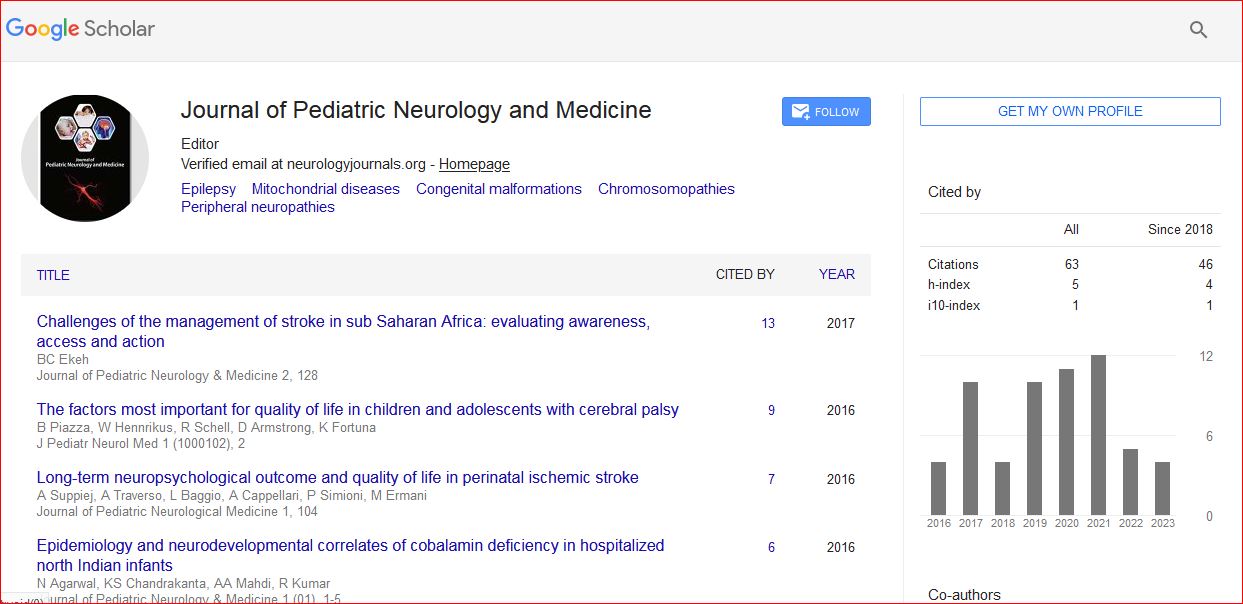
Journal of Pediatric Neurology and Medicine received 68 citations as per Google Scholar report