Brief Report - (127) Volume 11, Issue 6
Received: 01-Dec-2025, Manuscript No. cdp-26-185480;
Editor assigned: 03-Dec-2025, Pre QC No. P-185480;
Reviewed: 17-Dec-2025, QC No. Q-185480;
Revised: 22-Dec-2025, Manuscript No. R-185480;
Published:
29-Dec-2025
, DOI: 10.37421/2572-0791.2025.11.205
Citation: Kim, Hana. ”Challenging Guilt Through Cognitive Therapy and Self-Compassion.” Clin Depress 11 (2025):205.
Copyright: © 2025 Kim H. This is an open-access article distributed under the terms of the Creative Commons Attribution License, which permits unrestricted use, distribution and reproduction in any medium, provided the original author and source are credited.
This exploration delves into the pervasive and complex nature of guilt within the context of major depressive disorder, a condition frequently accompanied by significant emotional distress. Research consistently highlights the intricate relationship between maladaptive thought patterns and the exacerbation of guilt, suggesting that cognitive distortions play a pivotal role in maintaining and intensifying depressive symptoms. These distorted thoughts, often insidious and self-critical, can create a self-perpetuating cycle that is challenging to break without targeted intervention [1].
Furthermore, the literature underscores the propensity for individuals experiencing depression to engage in self-blame, attributing negative events to internal, stable, and global causes. This attributional style is strongly associated with an elevated sense of guilt and self-condemnation, emphasizing the need to address these cognitive processes in therapeutic settings [2].
Specific types of cognitive distortions, such as the use of 'should' statements and the tendency to magnify negative aspects while minimizing positive ones, have been identified as significant contributors to persistent guilt in recurrent major depression. These distortions foster unrealistic self-expectations and an inflated sense of responsibility for adverse outcomes, thereby reinforcing feelings of guilt and inadequacy [3].
Beyond psychological mechanisms, emerging research is beginning to illuminate the neurobiological underpinnings of guilt in major depressive disorder. Dysregulation in brain circuits responsible for emotion processing and self-referential thought, including heightened amygdala activity and impaired prefrontal cortex function, appears to amplify negative self-evaluations and contribute to heightened guilt [4].
In the realm of therapeutic interventions, mindfulness-based cognitive therapy (MBCT) has shown promise in mitigating guilt and addressing cognitive distortions in chronic depression. By encouraging individuals to observe their thoughts and feelings, including guilt, without judgment, MBCT can help to diminish the impact of maladaptive cognitive patterns [5].
For individuals experiencing their first episode of major depression, the interplay between rumination, guilt, and cognitive distortions is particularly noteworthy. Prolonged rumination on perceived past failures, coupled with cognitive distortions like personalization, significantly predicts the intensity of guilt experienced, suggesting that early intervention aimed at disrupting rumination cycles is crucial [6].
In cases of treatment-resistant depression, specific cognitive biases, such as catastrophizing and emotional reasoning, are implicated in the development and maintenance of guilt. These biased thinking patterns can lead to an unwarranted sense of responsibility and self-criticism, necessitating the exploration of alternative therapeutic approaches for this challenging population [7].
Investigating the role of early maladaptive schemas further illuminates the roots of guilt and cognitive distortions in chronic major depression. Schemas related to defectiveness, shame, and unrelenting standards predispose individuals to intense guilt and the persistent use of cognitive distortions that reinforce these negative self-beliefs [8].
A comprehensive review of psychotherapeutic interventions indicates that cognitive behavioral therapy and schema therapy exhibit the strongest evidence base for effectively reducing guilt and challenging maladaptive thought patterns in major depressive disorder. This review offers valuable guidance for clinicians seeking to address these issues [9].
Finally, the concept of self-compassion emerges as a critical mediator in the relationship between cognitive distortions and guilt. Lower levels of self-compassion are associated with increased guilt and a greater tendency to endorse cognitive distortions, suggesting that fostering self-compassion can serve as a protective factor against guilt in individuals with depression [10].
The intricate relationship between guilt and cognitive distortions in major depressive disorder is a central theme in contemporary psychiatric research, with various studies investigating its multifaceted nature. One significant line of inquiry explores how maladaptive thought patterns, such as overgeneralization and personalization, actively fuel feelings of guilt, thereby creating a vicious cycle that perpetuates depressive symptoms. Therapeutic interventions targeting these specific cognitive distortions are highlighted as crucial for alleviating guilt and improving patient outcomes [1].
The role of self-blame in the experience of guilt among depressed patients is another area of considerable focus. Research indicates a distinct tendency for individuals with major depression to attribute negative events to internal, stable, and global causes, a cognitive style that significantly elevates their sense of guilt. This underscores the importance of challenging such attributional patterns within therapeutic frameworks to reduce self-condemnation [2].
Delving deeper into the specific mechanisms, studies have identified particular cognitive distortions, including 'should' statements and magnification/minimization, as key contributors to persistent feelings of guilt in individuals with recurrent major depression. These distortions cultivate unrealistic self-expectations and an exaggerated sense of responsibility for negative occurrences, thereby solidifying and reinforcing guilt [3].
Beyond the psychological manifestations, recent research has begun to explore the neurobiological correlates of guilt in major depressive disorder. Findings suggest a link between guilt and the dysregulation of brain circuits involved in emotion processing and self-referential thought. Specifically, heightened amygdala activity and impaired prefrontal cortex function, commonly observed in depression, are posited to amplify negative self-evaluations and contribute to increased feelings of guilt [4].
In terms of therapeutic approaches, mindfulness-based cognitive therapy (MBCT) has demonstrated efficacy in reducing guilt and cognitive distortions in patients with chronic depression. This intervention facilitates a non-judgmental observation of thoughts and feelings, including guilt, thereby weakening the influence of maladaptive cognitive patterns and offering a complementary strategy for managing guilt-related distress [5].
For individuals experiencing their first episode of major depression, the interplay of rumination, guilt, and cognitive distortions presents a critical area for intervention. It has been observed that prolonged rumination on perceived past failures, particularly when combined with cognitive distortions like personalization, is a significant predictor of guilt intensity. This highlights the recommendation for early interventions designed to break rumination cycles [6].
In the context of treatment-resistant depression, cognitive biases such as catastrophizing and emotional reasoning are implicated in the etiology and perpetuation of guilt. These biased thinking patterns can lead to an unwarranted sense of responsibility and self-criticism, suggesting a need to explore alternative therapeutic modalities for this patient group [7].
The influence of early maladaptive schemas on guilt and cognitive distortions in chronic major depression has also been investigated. Schemas characterized by defectiveness, shame, and unrelenting standards predispose individuals to develop intense guilt and to engage in cognitive distortions that serve to reinforce these deeply ingrained beliefs, underscoring the importance of addressing these foundational schemas in therapy [8].
A systematic review evaluating the efficacy of various psychotherapeutic interventions for guilt and cognitive distortions in major depressive disorder provides valuable clinical guidance. The review identifies cognitive behavioral therapy and schema therapy as interventions with the strongest evidence base for effectively reducing guilt and modifying maladaptive thought processes [9].
Finally, the role of self-compassion as a mediator between cognitive distortions and guilt in major depressive disorder is an important finding. Studies indicate that lower levels of self-compassion are associated with higher levels of guilt and a greater propensity for cognitive distortions, suggesting that cultivating self-compassion may act as a protective factor against the development and maintenance of guilt in individuals with depression [10].
Guilt is a common and debilitating symptom in major depressive disorder, often exacerbated by maladaptive cognitive distortions. These distortions, such as overgeneralization, personalization, and 'should' statements, create a cycle of self-blame and excessive responsibility. Research indicates that targeting these cognitive patterns through therapies like cognitive behavioral therapy (CBT) and mindfulness-based cognitive therapy (MBCT) can be effective in reducing guilt. Neurobiological factors and early maladaptive schemas also contribute to the experience of guilt. Furthermore, cultivating self-compassion may act as a protective factor. Interventions focusing on challenging distorted thinking, breaking rumination cycles, and addressing deep-seated beliefs are crucial for improving outcomes in individuals with depression.
None
None
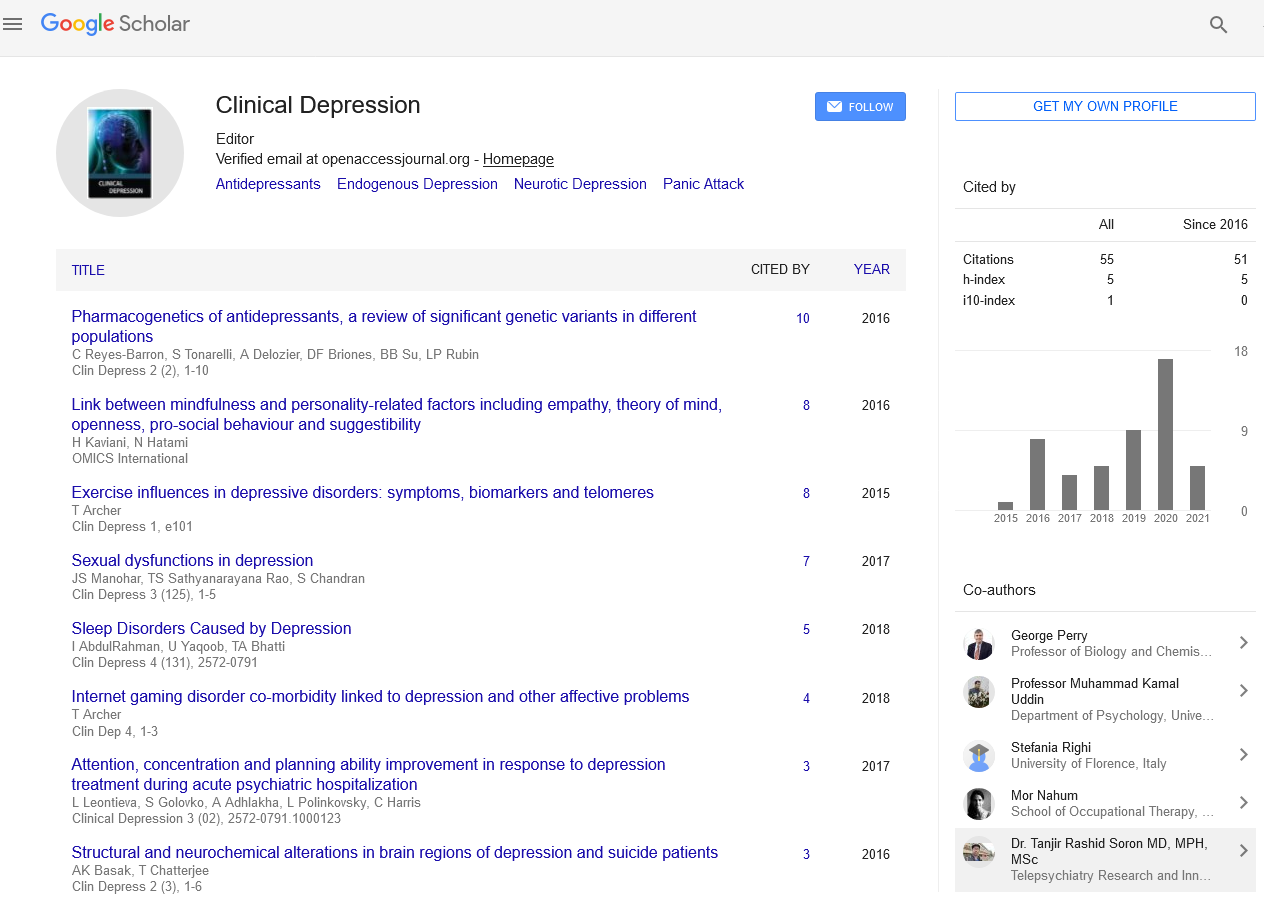
Clinical Depression received 89 citations as per Google Scholar report