Commentary - (127) Volume 11, Issue 6
Received: 01-Dec-2025, Manuscript No. cdp-26-185476;
Editor assigned: 03-Dec-2025, Pre QC No. P-185476;
Reviewed: 17-Dec-2025, QC No. Q-185476;
Revised: 22-Dec-2025, Manuscript No. R-185476;
Published:
29-Dec-2025
, DOI: 10.37421/2572-0791.2025.11.209
Citation: Gonzalez, Sofia. ”CBT: Effective Skills For Depression Recovery.” Clin Depress 11 (2025):209.
Copyright: © 2025 Gonzalez S. This is an open-access article distributed under the terms of the Creative Commons Attribution License, which permits unrestricted use, distribution and reproduction in any medium, provided the original author and source are credited.
Cognitive Behavioral Therapy (CBT) has emerged as a cornerstone in the effective treatment of depression, meticulously targeting maladaptive thought patterns and behaviors that perpetuate depressive symptoms. The scientific literature consistently affirms CBT as a primary therapeutic approach, demonstrating efficacy comparable to antidepressant medication for individuals experiencing mild to moderate depression, and serving as a valuable adjunct in managing severe cases. Its efficacy is rooted in its capacity to equip individuals with practical coping skills, enhance emotional regulation, and cultivate a more optimistic perspective on life. Recent research underscores that CBT's positive influence on depression extends beyond mere symptom reduction; it actively promotes long-term relapse prevention, a crucial aspect of sustained mental well-being. The inherent structured nature of CBT facilitates the systematic identification and subsequent modification of negative cognitive biases and behavioral avoidance patterns, which are hallmarks of depressive disorders. Furthermore, emerging evidence suggests that digital or online delivery formats of CBT can achieve comparable effectiveness to traditional face-to-face therapy for a significant number of individuals. The profound effectiveness of CBT in depression treatment is often attributed to its inherent skill-building component. Through this therapeutic modality, patients are systematically taught to challenge irrational thought processes, develop robust problem-solving strategies, and actively engage in activities that are inherently rewarding. This dynamic, collaborative approach empowers individuals to assume an active role in their recovery journey, fostering sustained improvements in their mental health. While CBT is widely recognized for its broad effectiveness, the importance of tailoring treatment to the unique needs of each individual cannot be overstated, as this personalization can significantly enhance therapeutic outcomes. Factors such as the severity of the depressive episode, the presence of co-occurring conditions, and the patient's personal preference for a specific therapy modality can all influence the success of the treatment. Consequently, personalized CBT approaches, which may judiciously integrate elements from other therapeutic frameworks, represent an active and promising area of ongoing research. The enduring benefits of CBT in managing depression are substantiated by studies that consistently report reduced rates of relapse when compared to treatments that solely concentrate on symptom alleviation. By providing individuals with a comprehensive toolkit of cognitive and behavioral strategies, CBT fosters remarkable resilience against the recurrence of future depressive episodes. This profound long-term impact is a critical determinant of its overall therapeutic value. A comprehensive comparison of CBT with other psychotherapeutic modalities and pharmacotherapy, as revealed through extensive meta-analyses, consistently positions CBT as a highly effective intervention for depression. Its structured, time-limited framework, coupled with a focus on actionable strategies, renders it a particularly appealing choice for both patients seeking relief and clinicians administering care. The substantial evidence base supporting CBT's effectiveness continues to expand, reinforcing its prominent role in mental health treatment. The application of CBT principles within group settings has also demonstrated considerable effectiveness in treating depression, offering a therapeutic modality that is both cost-efficient and provides valuable social support. Group CBT enables individuals to share their personal experiences, gain encouragement from their peers, and learn from the progress of others, thereby reinforcing the core techniques learned in therapy. The effectiveness of CBT is not confined to general adult populations; it is also notably observed in specific demographic groups, including adolescents and older adults experiencing depression. Tailored adaptations of CBT protocols designed for these distinct age cohorts have been rigorously developed and validated, underscoring its inherent versatility and wide-ranging applicability in addressing depressive disorders across the entire lifespan. The integration of advanced technology, such as virtual reality (VR), into CBT practices is showing considerable promise as an innovative method for treating depression. VR creates immersive environments that allow patients to practice coping skills in simulated situations. Although this remains an evolving field, VR-enhanced CBT holds the potential to offer novel approaches for engaging patients and significantly augmenting therapeutic outcomes. Further research is actively exploring the neural correlates underlying CBT's efficacy in depression treatment. Neuroimaging studies are beginning to elucidate how CBT influences specific brain circuits responsible for emotion regulation, cognitive control, and reward processing. These findings offer crucial biological validation for the psychological mechanisms through which CBT exerts its therapeutic effects.
Cognitive Behavioral Therapy (CBT) has demonstrated considerable efficacy in treating depression, targeting maladaptive thought patterns and behaviors that contribute to depressive symptoms. Research consistently shows CBT as a first-line treatment, comparable to antidepressant medication for mild to moderate depression, and often as an adjunct for severe cases. Its effectiveness stems from teaching individuals practical coping skills, improving emotional regulation, and fostering a more positive outlook [1].
A review of recent studies highlights that CBT's impact on depression extends beyond symptom reduction, promoting long-term relapse prevention. The structured nature of CBT allows for the systematic identification and modification of negative cognitive biases and behavioral avoidance, which are hallmarks of depressive disorders. Emerging evidence also suggests that digital or online delivery of CBT can be as effective as traditional face-to-face therapy for many individuals [2].
The effectiveness of CBT in depression treatment is often attributed to its skill-building component. Patients learn to challenge irrational thoughts, develop problem-solving strategies, and engage in more rewarding activities. This active, collaborative approach empowers individuals to become agents of their own recovery, leading to sustained improvements [3].
While CBT is widely effective, tailoring treatment to individual needs can enhance outcomes. Factors such as the severity of depression, presence of comorbid conditions, and patient preference for therapy modality influence treatment success. Personalized CBT approaches, which might integrate elements from other therapeutic models, are an active area of research [4].
The lasting effects of CBT on depression are supported by studies showing reduced rates of relapse compared to treatments that focus solely on symptom alleviation. By equipping individuals with cognitive and behavioral tools, CBT fosters resilience against future depressive episodes. This long-term benefit is a critical aspect of its overall effectiveness [5].
Comparing CBT to other psychotherapies and pharmacotherapy, meta-analyses consistently place CBT as a highly effective intervention for depression. Its structured, time-limited nature and focus on actionable strategies make it an attractive option for both patients and clinicians. The evidence base for CBT's effectiveness is robust and continues to grow [6].
The application of CBT principles in group settings has also proven effective for depression, offering a cost-effective and socially supportive treatment modality. Group CBT allows individuals to share experiences, receive peer support, and learn from each other's progress, reinforcing the core CBT techniques [7].
CBT's effectiveness is also observed in specific populations, such as adolescents and older adults with depression. Adaptations of CBT protocols for these age groups have been developed and validated, demonstrating its versatility and broad applicability in treating depressive disorders across the lifespan [8].
The integration of technology, such as virtual reality (VR) in CBT, is showing promise for treating depression by creating immersive environments to practice coping skills. While still an evolving area, VR-enhanced CBT could offer new avenues for engaging patients and enhancing therapeutic outcomes [9].
Understanding the neural correlates of CBT's effectiveness in depression treatment is an ongoing area of research. Neuroimaging studies are beginning to shed light on how CBT modifies brain circuits involved in emotion regulation, cognitive control, and reward processing, offering biological validation for its psychological mechanisms [10].
Cognitive Behavioral Therapy (CBT) is a highly effective first-line treatment for depression, comparable to medication for mild to moderate cases and a valuable adjunct for severe depression. It empowers individuals by teaching practical coping skills, improving emotional regulation, and fostering a positive outlook. CBT not only reduces symptoms but also promotes long-term relapse prevention through systematic identification and modification of negative thought patterns and behaviors. Its effectiveness is further enhanced by its structured, skill-building approach, allowing patients to actively participate in their recovery. Evidence supports the efficacy of digital and group CBT formats, as well as adaptations for specific populations like adolescents and older adults. Emerging technologies like virtual reality are also showing promise in augmenting CBT's impact. The underlying neural mechanisms of CBT's success are increasingly being understood through neuroimaging studies.
None
None
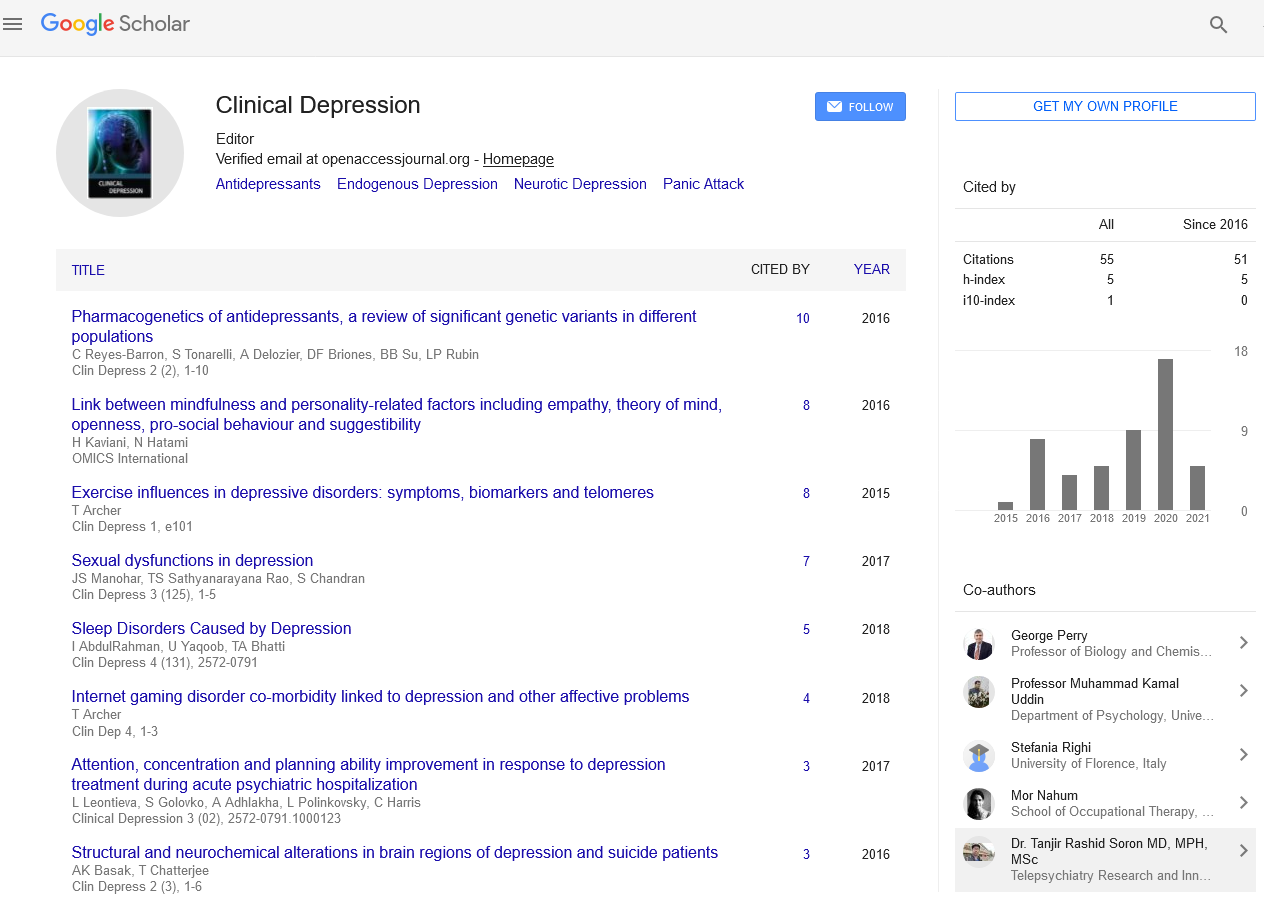
Clinical Depression received 89 citations as per Google Scholar report