Commentary - (2025) Volume 17, Issue 3
Received: 01-May-2025, Manuscript No. jcst-25-172455;
Editor assigned: 05-May-2025, Pre QC No. P-172455;
Reviewed: 19-May-2025, QC No. Q-172455;
Revised: 22-May-2025, Manuscript No. R-172455;
Published:
29-May-2025
, DOI: 10.37421/1948-5956.2025.17.704
Citation: Bianchi, Sofia. ”Carcinogenesis: Mechanisms, Drivers,
and Targets.” J Cancer Sci Ther 17 (2025):704.
Copyright: © 2025 Bianchi S. This is an open-access article distributed under the terms of the Creative Commons Attribution License, which permits unrestricted use,
distribution and reproduction in any medium, provided the original author and source are credited.
Carcinogenesis, the process of normal cells transforming into cancer cells, involves complex molecular mechanisms. Key aspects include genetic mutations affecting oncogenes and tumor suppressor genes, epigenetic alterations like DNA methylation and histone modification, and the role of the tumor microenvironment in promoting tumor progression and metastasis. Understanding these intricate pathways is crucial for developing targeted therapies[1].
Chronic inflammation significantly contributes to carcinogenesis by creating a pro-tumorigenic microenvironment. Both the innate and adaptive immune systems play dual roles, sometimes promoting tumor growth and other times acting as protective barriers. Understanding the intricate interplay between inflammation, immunity, and cancer development is vital for therapeutic interventions that target inflammatory pathways[2].
Cancer cells often exhibit distinct metabolic reprogramming, such as increased glycolysis even in the presence of oxygen (Warburg effect), to support their rapid proliferation and survival. These metabolic shifts provide crucial building blocks and energy for tumor growth. Targeting these altered metabolic pathways represents a promising strategy for anti-cancer therapy, as they offer unique vulnerabilities compared to normal cells[3].
The tumor microenvironment (TME) is a complex ecosystem comprising cancer cells, stromal cells, immune cells, and extracellular matrix, all interacting dynamically. The TME plays a pivotal role in every stage of carcinogenesis, from initiation and progression to metastasis and resistance to therapy. Modulating components of the TME, such as cancer-associated fibroblasts or immunosuppressive cells, offers promising avenues for novel anti-cancer treatments[4].
Certain viruses are significant contributors to human cancers, driving carcinogenesis through various mechanisms including chronic inflammation, immune evasion, and direct integration of viral oncogenes into host DNA. Examples include HPV, HBV, HCV, and EBV. Understanding how these viruses subvert cellular processes to promote malignant transformation offers critical insights for vaccine development and antiviral therapies that can also prevent cancer[5].
DNA damage is a constant threat to genomic integrity, and dysfunctional DNA repair mechanisms are a hallmark of cancer. When DNA damage accumulates or is improperly repaired, it can lead to mutations that activate oncogenes or inactivate tumor suppressor genes, driving carcinogenesis. Understanding these repair pathways provides opportunities for developing targeted therapies, such as PARP inhibitors, that exploit cancer cells' reliance on specific repair mechanisms[6].
Cancer stem cells (CSCs) are a subpopulation of tumor cells with self-renewal capacity and multipotency, driving tumor initiation, growth, metastasis, and resistance to conventional therapies. They are thought to originate from normal tissue stem cells or differentiated cells that acquire stem-like properties. Targeting CSCs is a promising approach to eradicate tumors and prevent relapse, by addressing the root cause of tumor growth[7].
Cellular senescence is a state of irreversible growth arrest that can act as a potent tumor-suppressive mechanism by preventing the proliferation of damaged or pre-malignant cells. However, senescent cells also secrete a pro-inflammatory secretome (SASP) which can paradoxically contribute to chronic inflammation, tissue damage, and the promotion of carcinogenesis in the long term, thus presenting a complex dual role[8].
Exosomes, small extracellular vesicles, act as critical mediators of intercellular communication, playing significant roles in carcinogenesis. They transfer various biomolecules like proteins, lipids, and nucleic acids between cells, influencing tumor growth, metastasis, angiogenesis, and immune evasion. Understanding exosomal cargo and their interactions offers new avenues for cancer diagnosis, prognosis, and developing exosome-based therapies[9].
Autophagy, a cellular process involving the degradation and recycling of cellular components, has a complex and context-dependent role in carcinogenesis. It can act as a tumor-suppressive mechanism by removing damaged organelles and proteins or by inducing senescence. Conversely, in established tumors, autophagy can promote cancer cell survival under stress conditions, support tumor growth, and contribute to therapy resistance. Modulating autophagy holds potential for cancer treatment[10].
The journey of normal cells transforming into cancer, known as carcinogenesis, involves intricate molecular mechanisms. This transformation often hinges on genetic mutations, which can activate oncogenes or disarm tumor suppressor genes. Alongside these genetic shifts, epigenetic alterations like DNA methylation and histone modification play a crucial role in regulating gene expression, profoundly influencing tumor progression and metastasis [1]. Maintaining genomic integrity is a constant battle, and dysfunctional DNA repair mechanisms are a hallmark of cancer development. When DNA damage accumulates or is improperly repaired, it directly fuels carcinogenesis by creating mutations. Understanding these repair pathways also unlocks opportunities for targeted therapies, such for example with PARP inhibitors [6].
The tumor microenvironment (TME) serves as a complex ecosystem where cancer cells interact dynamically with stromal cells, immune cells, and the extracellular matrix. The TME is a key player at every stage of carcinogenesis, from its very beginning to progression, metastasis, and eventual resistance to therapies. Modulating elements within the TME, such as cancer-associated fibroblasts or immunosuppressive cells, represents promising avenues for new anti-cancer treatments [4]. Furthermore, chronic inflammation is a significant contributor to carcinogenesis, actively creating an environment that promotes tumor growth. Both the innate and adaptive immune systems are involved, sometimes paradoxically promoting tumor growth while at other times acting as protective barriers. Deciphering this intricate interplay between inflammation, immunity, and cancer progression is essential for developing therapeutic interventions that specifically target inflammatory pathways [2].
Let's look at how cancer cells handle energy. They often exhibit distinct metabolic reprogramming, like increased glycolysis even in the presence of oxygen â?? a phenomenon known as the Warburg effect. These metabolic changes provide crucial building blocks and energy for tumor growth. By targeting these altered metabolic pathways, researchers aim to develop effective anti-cancer therapies that exploit vulnerabilities unique to cancer cells [3]. Beyond intrinsic cellular changes, certain viruses are known to be significant contributors to human cancers. They drive carcinogenesis through various mechanisms, including inducing chronic inflammation, enabling immune evasion, and directly integrating viral oncogenes into host DNA. Well-known examples include HPV, HBV, HCV, and EBV. A deeper understanding of how these viruses subvert cellular processes to promote malignant transformation offers critical insights for vaccine development and antiviral therapies that can also prevent cancer [5].
A particular subpopulation of tumor cells, known as cancer stem cells (CSCs), possess remarkable self-renewal capacity and multipotency. These cells are fundamental drivers of tumor initiation, growth, metastasis, and resistance to conventional therapies. It is thought that CSCs either originate from normal tissue stem cells or are differentiated cells that acquire these stem-like properties. Focusing on targeting CSCs is a promising strategy to eradicate tumors entirely and prevent relapse, effectively addressing the root cause of tumor growth [7]. Separately, exosomes, which are small extracellular vesicles, act as critical mediators of intercellular communication and play significant roles throughout carcinogenesis. They facilitate the transfer of various biomolecules, including proteins, lipids, and nucleic acids, between cells. This intercellular exchange influences tumor growth, metastasis, angiogenesis, and immune evasion. Unlocking the secrets of exosomal cargo and their interactions provides new opportunities for cancer diagnosis, prognosis, and developing innovative exosome-based therapies [9].
Finally, cellular senescence, a state of irreversible growth arrest, typically functions as a potent tumor-suppressive mechanism, halting the proliferation of damaged or pre-malignant cells. However, the role of senescent cells is complex; they also secrete a pro-inflammatory secretome (SASP), which can paradoxically contribute to chronic inflammation, tissue damage, and long-term promotion of carcinogenesis, thus presenting a double-edged sword [8]. Autophagy, a fundamental cellular process involving the degradation and recycling of cellular components, also exhibits a complex and context-dependent role in carcinogenesis. It can act as a tumor-suppressive mechanism by clearing damaged organelles and proteins or by inducing senescence. Conversely, in established tumors, autophagy can promote cancer cell survival under stress conditions, support tumor growth, and contribute to therapy resistance. Therefore, strategically modulating autophagy holds considerable potential for cancer treatment [10].
Carcinogenesis, the process of normal cells transforming into cancer cells, involves complex molecular mechanisms including genetic mutations, epigenetic alterations, and the critical role of the tumor microenvironment [1, 4]. Key aspects contributing to cancer development include chronic inflammation, which creates a pro-tumorigenic microenvironment, and the dual roles of the innate and adaptive immune systems [2]. Cancer cells also exhibit distinct metabolic reprogramming, such as increased glycolysis, to support rapid proliferation, presenting therapeutic targets [3]. Furthermore, certain viruses like HPV, HBV, HCV, and EBV are significant contributors, driving carcinogenesis through mechanisms like immune evasion and integration of viral oncogenes [5]. Dysfunctional DNA repair mechanisms, leading to accumulated DNA damage, are a hallmark of cancer, contributing to mutations that activate oncogenes or inactivate tumor suppressor genes [6]. Cancer stem cells (CSCs) are a subpopulation of tumor cells with self-renewal capacity, driving tumor initiation, growth, and metastasis, making them crucial targets for eradicating tumors [7]. Cellular senescence, while a tumor-suppressive mechanism, can paradoxically promote carcinogenesis through its pro-inflammatory secretome [8]. Exosomes, acting as critical mediators of intercellular communication, influence tumor growth, metastasis, and immune evasion by transferring biomolecules [9]. Finally, autophagy, a cellular recycling process, plays a complex, context-dependent role, either suppressing tumors or promoting cancer cell survival and therapy resistance [10]. Understanding these intricate pathways and mechanisms is vital for developing targeted therapies and preventative strategies.
Indexed at, Google Scholar, Crossref
Indexed at, Google Scholar, Crossref
Indexed at, Google Scholar, Crossref
Indexed at, Google Scholar, Crossref
Indexed at, Google Scholar, Crossref
Indexed at, Google Scholar, Crossref
Indexed at, Google Scholar, Crossref
Indexed at, Google Scholar, Crossref
Indexed at, Google Scholar, Crossref
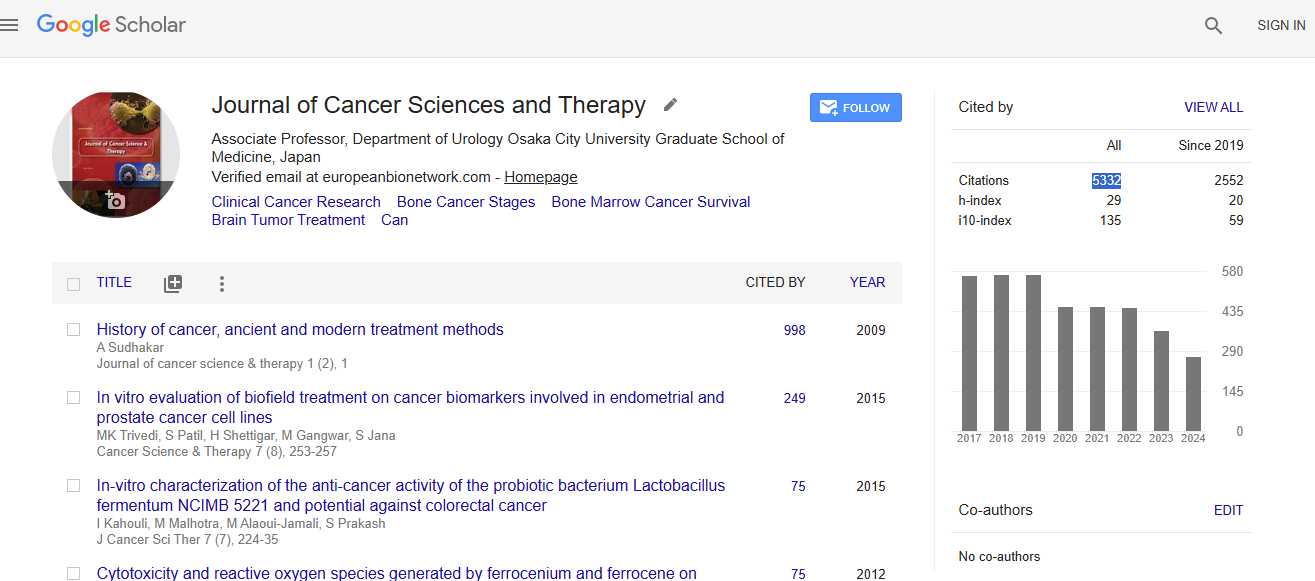
Cancer Science & Therapy received 5332 citations as per Google Scholar report