Opinion - (2025) Volume 16, Issue 4
Received: 01-Jul-2025, Manuscript No. bej-26-182462;
Editor assigned: 03-Jul-2025, Pre QC No. P-182462;
Reviewed: 17-Jul-2025, QC No. Q-182462;
Revised: 22-Jul-2025, Manuscript No. R-182462;
Published:
29-Jul-2025
, DOI: 10.37421/2161-6219.2025.16.567
Citation: Valdez, Patricia. ”Businesses: Engines Of Economic
Progress And Development.” Bus Econ J 16 (2025):567.
Copyright: © 2025 Valdez P. This is an open-access article distributed under the terms of the Creative Commons Attribution License, which permits unrestricted use, distribution
and reproduction in any medium, provided the original author and source are credited.
Business enterprises are widely recognized as fundamental drivers of economic progress. They achieve this by fostering innovation, creating employment opportunities, and enhancing overall productivity across various sectors. The inherent ability of these entities to efficiently allocate capital and respond dynamically to evolving market demands acts as a powerful engine for sustained growth and the betterment of living standards for populations. This article aims to delve into the multifaceted ways in which diverse business models contribute to the advancement of national and global economies, highlighting their indispensable role. Small and medium-sized enterprises (SMEs) are particularly crucial for fostering economic resilience. Their inherent agility and deep-rooted local embeddedness make them vital engines for job creation and income generation, especially during periods of economic instability or shock.
The diversification they bring to economies is a significant factor in mitigating risks and promoting balanced development. Innovation emerging from within business enterprises stands out as a paramount determinant of long-term economic progress and competitiveness. Research consistently shows that significant investment in research and development (R&D) by firms directly translates into crucial technological advancements and substantial productivity gains, thereby propelling economic advancement on a national and international scale. Corporate social responsibility (CSR) is increasingly being recognized not just as an ethical imperative but also as a strategic driver of economic value. Businesses that proactively adopt responsible practices contribute positively to societal well-being, while simultaneously enhancing their long-term financial sustainability and solidifying their market reputation.
This dual benefit underscores the integrated nature of business and society. Multinational corporations (MNCs) play a complex and significant role in the economic development of emerging economies. Their contributions are often multifaceted, including vital technology transfer, substantial capital investment, and seamless integration into global value chains. However, it is also important to acknowledge and address the potential challenges that may arise from their operations. The transformative power of digital transformation is profoundly impacting business productivity and, consequently, overall economic growth. The widespread adoption of advanced digital technologies by enterprises is enabling unprecedented levels of efficiency, expanding market access, and facilitating the creation of entirely new and innovative business models, reshaping industries. Entrepreneurship, in its essence, serves as a critical catalyst for business-driven economic progress. New ventures, driven by entrepreneurial spirit, are instrumental in generating employment, spurring technological innovation, and fostering healthy competition.
This dynamic process ultimately stimulates greater economic dynamism and growth. Effective supply chain management has emerged as a strategic imperative for enhancing business efficiency and, by extension, bolstering economic competitiveness. Well-managed supply chains are crucial for reducing operational costs, improving delivery reliability, and enabling businesses to adapt swiftly to dynamic market changes, thereby supporting broader economic advancement. Foreign direct investment (FDI) holds considerable potential for significantly impacting the economic progress of host countries. Businesses that engage in FDI can introduce much-needed capital, advanced technology, and valuable managerial expertise, which collectively foster productivity gains and stimulate job creation, leading to substantial development. Robust corporate governance structures are essential for promoting sustainable business practices and ensuring long-term economic development. Strong governance within enterprises fosters accountability, transparency, and the efficient allocation of resources, all of which are indispensable for sustainable and equitable economic progress.
Business enterprises are fundamental pillars of economic progress, acting as catalysts for innovation, job creation, and productivity growth. Their capacity to strategically deploy capital and adapt to market dynamics is essential for economic advancement and improved living standards, making the exploration of their varied business models crucial for understanding national and global economic trajectories. Small and medium-sized enterprises (SMEs) are indispensable for building resilient economies. Their agility and local connections are vital for generating employment and income, particularly during times of economic downturns, and their role in economic diversification is substantial and often underestimated. Innovation emanating from business enterprises is a primary driver of sustained economic development.
Investment in research and development (R&D) by companies is directly linked to technological breakthroughs and enhanced productivity, which are critical for maintaining and improving economic competitiveness in the global landscape. Corporate social responsibility (CSR) significantly influences business performance and economic value. Companies that embrace responsible practices contribute to societal welfare while simultaneously bolstering their financial stability and market standing, demonstrating a strong link between ethical conduct and economic success. Multinational corporations (MNCs) exert a considerable influence on the economic development of host nations, especially in emerging economies. Their contributions through technology transfer, capital infusion, and integration into global networks are significant, though potential drawbacks must also be considered and managed. Digital transformation is revolutionizing business operations, leading to increased productivity and economic growth.
The adoption of digital technologies by enterprises enhances efficiency, broadens market reach, and enables the development of novel business strategies, fundamentally reshaping the economic landscape. Entrepreneurship serves as a vital engine for economic progress powered by business activities. The emergence of new ventures generates employment, drives technological innovation, and intensifies market competition, collectively fostering a more dynamic and responsive economy.
Effective supply chain management is crucial for optimizing business operations and bolstering economic competitiveness. Streamlined supply chains reduce costs, expedite delivery, and allow businesses to navigate market fluctuations more effectively, thereby contributing to overall economic stability and growth. Foreign direct investment (FDI) plays a key role in the economic development of recipient countries. The capital, technology, and expertise that businesses bring through FDI can lead to significant improvements in productivity and employment levels, fostering economic upliftment. Sound corporate governance is integral to fostering sustainable business practices and long-term economic prosperity. Well-governed enterprises exhibit greater accountability, transparency, and efficiency in resource management, which are essential prerequisites for sustainable economic advancement.
Business enterprises are crucial for economic progress, driving innovation, employment, and productivity. SMEs contribute significantly to economic resilience and job creation. Investment in R&D fuels technological advancements and competitiveness. Corporate social responsibility enhances financial sustainability and market reputation. Multinational corporations impact emerging economies through investment and technology transfer. Digital transformation boosts productivity and economic growth. Entrepreneurship stimulates economic dynamism by creating jobs and fostering innovation. Efficient supply chains improve business efficiency and competitiveness. Foreign direct investment brings capital and technology to host countries. Strong corporate governance ensures accountability and sustainable economic development. These various facets highlight the multifaceted role of businesses in shaping economies.
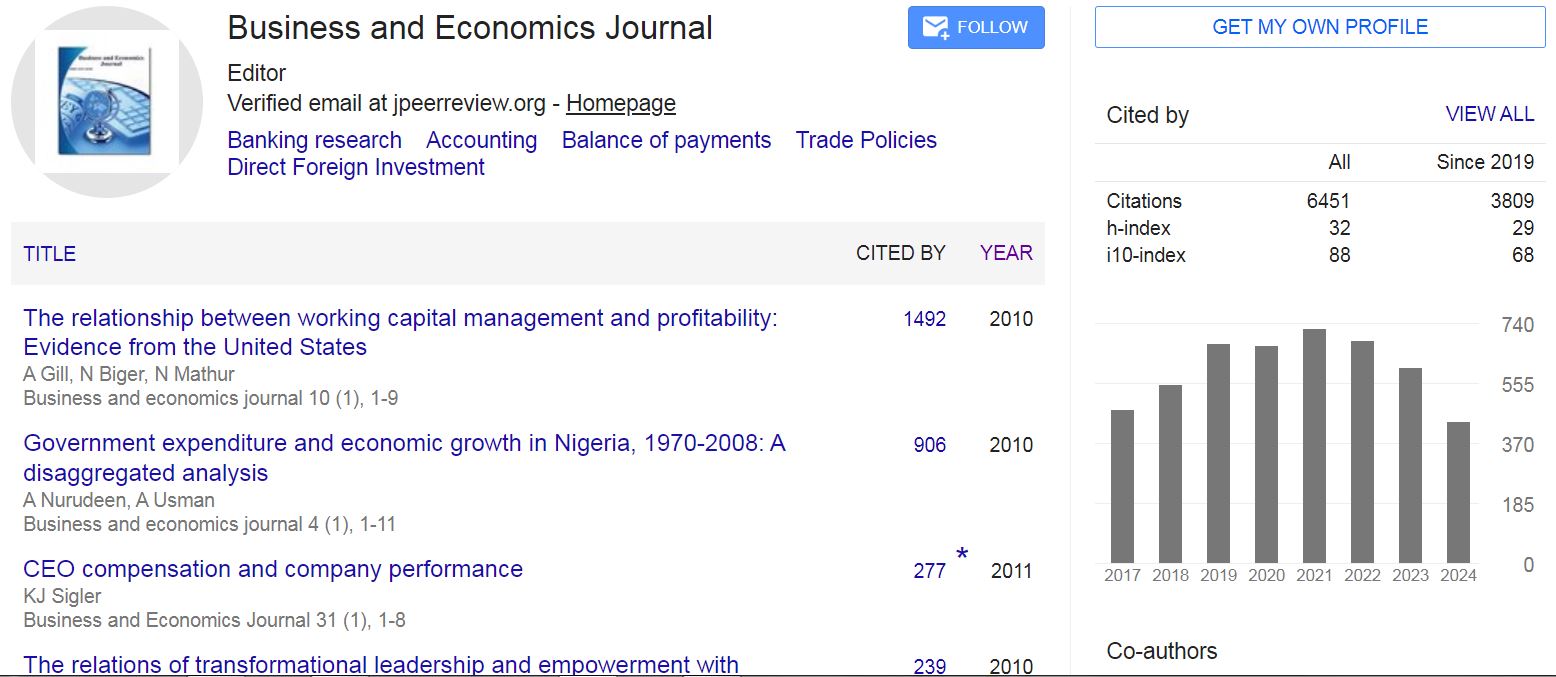
Business and Economics Journal received 6451 citations as per Google Scholar report