Short Communication - (2025) Volume 16, Issue 6
Received: 01-Nov-2025, Manuscript No. bej-26-182561;
Editor assigned: 03-Nov-2025, Pre QC No. P-182561;
Reviewed: 17-Nov-2025, QC No. Q-182561;
Revised: 22-Nov-2025, Manuscript No. R-182561;
Published:
29-Nov-2025
, DOI: 10.37421/2161-6219.2025.16.590
Citation: Dimitriou, Katerina. ”Businesses Drive Economic Prosperity
and Growth.” Bus Econ J 16 (2025):590.
Copyright: © 2025 Dimitriou K. This is an open-access article distributed under the terms of the Creative Commons Attribution License, which permits unrestricted use,
distribution and reproduction in any medium, provided the original author and source are credited.
Businesses serve as the fundamental bedrock of wealth creation, acting as primary catalysts for innovation, the generation of employment opportunities, and the efficient deployment of resources, all of which are indispensable drivers of robust economic growth. Their inherent drive to invest in novel technologies and advanced processes directly translates into amplified productivity and, consequently, elevated living standards for populations. [1] Furthermore, the significant role of investment and capital formation by businesses cannot be overstated, as these activities are critical engines for the expansion of productive capacity and the overall acceleration of economic expansion across diverse economies. This encompasses substantial investments in physical assets, the development of human capital through training and education, and dedicated funding for research and development initiatives. [2]
Technological advancement, a phenomenon frequently spearheaded and propelled by the dedicated research and development endeavors undertaken within businesses, stands as a principal determinant of productivity gains and sustained long-term economic growth. This constant pursuit of innovation allows for the creation of new products, services, and more efficient production methods. [3] The adoption and implementation of effective business practices, which include the meticulous optimization of supply chains and a keen responsiveness to market dynamics, significantly contribute to the prudent allocation of resources and enhance overall economic efficiency. These practices ensure that resources are utilized in the most productive manner possible. [4] The direct creation of essential employment opportunities by businesses plays a pivotal role in the equitable distribution of wealth and the enhancement of social well-being, thereby fostering a climate of greater economic stability and security for individuals and communities. [5] Globalization and the subsequent expansion of international trade, phenomena largely facilitated by the operational scope of businesses, can foster increased specialization among nations, unlock economies of scale, and consequently, lead to enhanced wealth creation and sustained economic growth on a global level. [6] The crucial role played by financial markets, within which businesses actively operate and procure vital capital, is absolutely critical for the effective channeling of savings into productive investments that serve as the lifeblood for fueling comprehensive economic growth. [7] While often perceived by some as an additional cost, the practice of corporate social responsibility can actually cultivate long-term value creation. This is achieved through the enhancement of corporate reputation, increased employee engagement, and the stimulation of innovation, all of which indirectly bolster and support economic growth. [8] The inherent efficiency and dynamic nature of various business sectors are directly and positively correlated with a nation's overall economic competitiveness and its inherent capacity to generate sustainable and equitable wealth for its citizens. [9] Moreover, the establishment and maintenance of effective regulatory frameworks that actively support and enable robust business operations, such as secure property rights and reliable contract enforcement, are fundamentally essential for cultivating an environment that is highly conducive to wealth creation and sustained economic growth. [10]Businesses are the cornerstones of wealth creation, driving progress through innovation, job generation, and efficient resource allocation, thereby fueling economic expansion. Their willingness to invest in new technologies and processes directly enhances productivity and improves living standards. [1] The capacity of businesses to invest and form capital is a key driver for expanding productive capabilities and promoting economic growth. This investment spans physical infrastructure, human capital development, and research and development. [2]
Technological advancements, predominantly emerging from business-led research and development, are a primary force behind productivity increases and long-term economic advancement. This continuous innovation leads to more efficient production and new economic opportunities. [3] Effective business strategies, including streamlined supply chains and market adaptability, are vital for optimizing resource use and boosting overall economic efficiency. These strategies ensure that the economy operates at its highest potential. [4] The creation of jobs by businesses is a direct contributor to wealth distribution and societal well-being, promoting economic stability. This employment is crucial for individuals and the broader economy. [5] Globalization and international trade, facilitated by businesses, enable greater specialization and economies of scale, leading to increased wealth creation and economic growth worldwide. This interconnectedness benefits all participating economies. [6] Financial markets, where businesses raise capital, are essential for directing savings into investments that stimulate economic growth. These markets act as vital conduits for capital. [7] Corporate social responsibility, though sometimes seen as a cost, can lead to long-term value through improved reputation, employee morale, and innovation, indirectly supporting economic development. This approach fosters sustainable business practices. [8] The efficiency and vitality of business sectors are closely linked to a country's economic competitiveness and its ability to generate lasting wealth. A thriving business environment is indicative of a strong economy. [9] Supportive regulatory environments, which guarantee property rights and contract enforcement, are critical for creating conditions favorable to business growth and wealth generation. These legal frameworks provide necessary stability. [10]Businesses are fundamental to economic prosperity, driving wealth creation through innovation, job generation, and efficient resource allocation. Their investments in technology and human capital expand productive capacity and foster long-term growth. Effective business practices, optimized supply chains, and market responsiveness contribute to economic efficiency, while job creation aids wealth distribution and stability. Globalization and international trade, facilitated by businesses, enhance specialization and economic growth. Financial markets are crucial for directing capital to productive investments, and corporate social responsibility can lead to sustainable value creation. Overall, a dynamic and efficient business sector correlates with national economic competitiveness, and supportive regulatory frameworks are essential for a conducive business environment. Businesses are integral to a healthy and growing economy, impacting multiple facets of economic development and societal well-being.
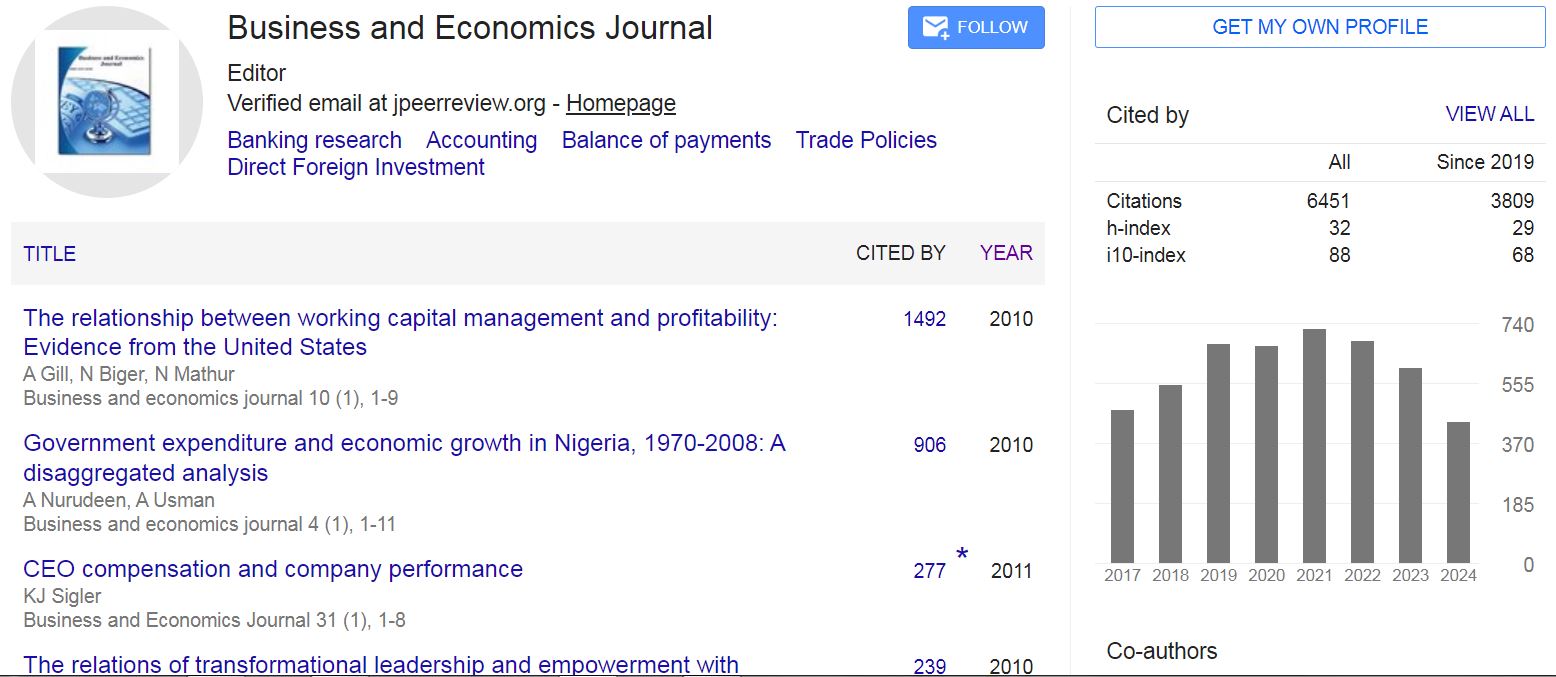
Business and Economics Journal received 6451 citations as per Google Scholar report